
Iran-US Nuclear Framework: Strategic Stakes for Beijing in the 60-Day Technical Phase
Iran-US Nuclear Framework: Strategic Stakes for Beijing in the 60-Day Technical Phase In a recent CGTN report examining whether a nuclear deal can be reached within the newly established 60-day framework, analysts highlighted the fragile balance between the 14-point Memorandum of Understanding signed by US and Iranian presidents and the deep technical complexities that lie ahea
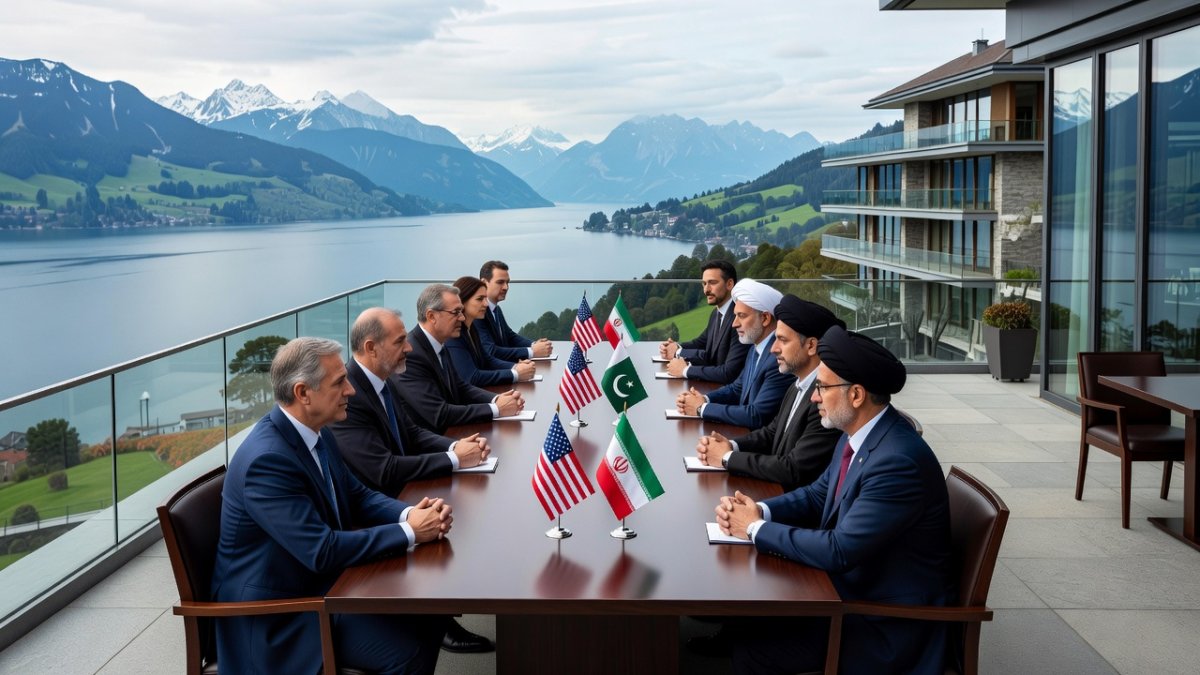
The Verification Gap: One Year Without IAEA Access
The absence of IAEA inspectors from Iranian nuclear facilities since June 2025 has created a profound verification gap that now threatens the entire 60-day technical phase. Without on-site access, the agency has been unable to account for approximately 440kg of uranium enriched to 60 percent, portions of which sustained damage during earlier US-Israeli strikes. This blackout represents more than a procedural inconvenience; it erodes the foundational premise of any agreement that relies on transparency to build confidence. IAEA Director General Rafael Grossi has repeatedly warned of the "near-total loss of monitoring," noting that remote cameras and seals alone cannot substitute for physical inspections when material may have been moved or reconfigured.
The IAEA Board resolution adopted on June 10, 2026, explicitly demanded renewed transparency measures, including the reinstallation of surveillance equipment and the provision of detailed accounting records. Verification after such an extended period would require a phased re-entry protocol: first, the restoration of monitoring at declared sites such as Natanz and Fordow; second, environmental sampling to detect any undeclared activities; and third, access to centrifuge manufacturing workshops to confirm production limits. Each step carries technical risks, as degraded equipment and potential corrosion of seals complicate baseline measurements. Iranian authorities have signaled willingness to discuss access but insist that verification must be reciprocal and time-bound, reflecting sovereignty concerns over perpetual inspections.
From Beijing's perspective, this verification challenge directly affects energy security calculations. Chinese policymakers at the MFA have consistently advocated for diplomatic channels at the IAEA to prevent escalation that could disrupt Hormuz transit routes. The NDRC, responsible for long-term energy planning, monitors these developments closely because any return to conflict would spike global oil prices and threaten Belt and Road energy corridors. A realistic verification regime emerging from the 60-day window would likely begin with interim confidence-building measures rather than immediate full access, allowing both sides to test compliance before committing to longer-term arrangements. Without such incremental steps, the risk of miscalculation remains high, potentially drawing in regional actors and complicating China's mediation role.
Enrichment, Breakout Timelines, and the Stockpile Challenge
Iran's current enrichment posture centers on a substantial stockpile of uranium enriched to 60 percent, a level that sits uncomfortably close to the 90 percent threshold required for weapons-grade material. Technical assessments indicate that converting this stockpile into weapons-usable form could occur within weeks if political decisions shift, underscoring why the stockpile constitutes the most contentious element of the 60-day negotiations. Down-blending, the process of mixing highly enriched uranium with natural or low-enriched material to reduce its concentration, offers one technical pathway forward, yet it demands precise verification protocols and raises questions about reversibility. Iranian negotiators view any multi-year suspension of enrichment activities as an infringement on sovereign rights to peaceful nuclear technology, while US positions emphasize extended limitations to extend breakout timelines beyond one year.
The negotiation dynamics reveal asymmetric leverage. Iran possesses the physical material and domestic political consensus around enrichment as a symbol of technological autonomy, whereas the United States holds sanctions relief as its primary inducement. Achieving a workable compromise would require agreement on quantitative caps, such as limiting the 60 percent stockpile to a few hundred kilograms under continuous monitoring, alongside commitments to refrain from further accumulation. These parameters must be codified in ways that survive changes in administration or regional tensions. Chinese analysts note that prolonged enrichment disputes could accelerate parallel diplomatic tracks involving Russia and European powers, diluting Beijing's influence in multilateral forums.
Strategic calculations in Beijing prioritize stability over maximalist demands. MFA statements have emphasized that enrichment issues should be resolved through IAEA technical channels rather than unilateral pressure, aligning with China's doctrine of non-interference. For the NDRC, predictable energy flows through the Strait of Hormuz outweigh ideological alignments, making a technically sound stockpile agreement essential to safeguarding oil imports that previously reached significant volumes before sanctions intensified. The 60-day phase therefore functions as a stress test for whether both sides can translate political will into measurable, reversible technical commitments without triggering domestic backlash in either capital.
China's Strategic Calculus: Energy Security and Multilateral Diplomacy
China's position as Iran's largest oil importer prior to intensified sanctions shapes its approach to the current framework. Beijing has maintained consistent advocacy for diplomatic resolution through the UN Security Council and IAEA, viewing escalation as contrary to its interests in stable energy markets. This stance aligns with broader Middle East strategy, including the 2023 Saudi-Iran détente that demonstrated China's capacity to facilitate regional de-escalation. MOFCOM officials track sanctions relief mechanisms closely, as renewed Iranian oil exports could stabilize supply chains critical to domestic refining and petrochemical sectors overseen by the NDRC.
Geopolitically, Beijing seeks to preserve multilateral avenues that constrain unilateral actions by any single power. The 60-day timeline intersects with China's calculations regarding Hormuz connectivity and Belt and Road infrastructure projects that rely on secure maritime routes. A successful framework would reduce the likelihood of secondary sanctions affecting Chinese entities while reinforcing Beijing's image as a responsible stakeholder in non-proliferation. Conversely, collapse could push Iran toward closer alignment with other actors, complicating China's hedging strategy between Gulf partners and Tehran.
Strategic calculus also incorporates domestic political considerations. Chinese leadership prioritizes economic resilience amid global uncertainties, making energy price volatility a direct concern for NDRC planning. MFA diplomacy therefore focuses on incremental progress within the 60-day window, such as agreed verification benchmarks, rather than ambitious final-status agreements. This measured approach reflects awareness that leverage remains limited; Beijing can facilitate dialogue but cannot compel either Washington or Tehran to accept terms that contradict core red lines. The outcome will test whether China's multilateral preferences can translate into tangible influence during the technical phase.
The 14-Point MoU: What the Framework Actually Commits Both Sides To
The 14-point Memorandum of Understanding establishes a skeletal structure for the 60-day phase, encompassing commitments on Hormuz reopening, sanctions relief through oil export waivers, renewed IAEA access, discussions on down-blending, support for a Lebanon ceasefire, and adherence to the compressed timeline. Concrete elements include explicit references to sanctions waivers tied to verified steps and the restoration of monitoring equipment, while aspirational language surrounds broader regional de-escalation and long-term enrichment limits. Competing interpretations have already surfaced, with US readings emphasizing irreversible Iranian concessions and Iranian versions stressing reciprocal sanctions relief as a precondition for further transparency.
Analysis of the text reveals that verification and sanctions relief form the most operational pillars, whereas provisions on Lebanon and Hormuz function more as confidence-building signals. The 60-day deadline itself serves as both incentive and constraint, forcing prioritization of technical issues over political theater. Iranian negotiators have highlighted sovereignty protections embedded in the MoU, while US counterparts stress that waivers remain conditional on measurable progress. These divergences necessitate careful drafting of implementation annexes during the current phase.
From a Chinese vantage point, the MoU's emphasis on multilateral oversight resonates with Beijing's preference for institutionalized diplomacy. MFA engagement has focused on ensuring that any sanctions relief mechanisms do not inadvertently disadvantage Chinese commercial interests. The framework's success hinges on whether the parties can convert aspirational clauses into binding protocols before the deadline expires, a process that will require sustained mediation by Pakistan and Qatar. Beijing's role remains supportive rather than directive, consistent with its doctrine of facilitating rather than imposing outcomes.
Regional Shockwaves: Israel, the Gulf States, and the Global South
Israeli reactions to the framework reveal strains within the US alliance, as security concerns over shortened breakout timelines clash with Washington's diplomatic priorities. Netanyahu's government has voiced reservations about any arrangement that leaves Iran with residual enrichment capacity, prompting quiet consultations with Gulf counterparts. GCC states, meanwhile, pursue hedging strategies that combine limited normalization with economic diversification, seeking to insulate themselves from potential oil market disruptions. UAE initiatives in non-oil sectors illustrate this adaptive posture, while Saudi Arabia balances its détente with Iran against security partnerships.
Global oil price implications extend beyond the region, affecting energy-dependent economies across the Global South. Sustained volatility could exacerbate fiscal pressures in import-reliant nations, prompting calls for diversified supply sources. Chinese analysts at the NDRC assess these ripple effects as relevant to broader trade stability, given interconnected commodity markets. The Global South's stake lies in predictable energy costs that support development agendas, making a durable framework indirectly beneficial to South-South cooperation initiatives.
Strategic dynamics suggest that regional actors will calibrate responses based on the 60-day outcome. Partial progress could encourage further bilateral diplomacy, whereas breakdown risks renewed proxy tensions. Beijing's interest centers on preventing spillover that affects its economic partnerships, reinforcing the value of sustained multilateral engagement through existing channels.
The 60-Day Countdown: What a Realistic Outcome Looks Like
Achievable results within the 60-day window center on an extended framework incorporating interim verification steps, phased sanctions relief, and a roadmap for comprehensive resolution rather than a finalized treaty. Such an outcome would include initial IAEA equipment reinstallation, agreed stockpile caps pending down-blending, and conditional oil export waivers tied to compliance milestones. This incremental model reduces the risk of overcommitment while preserving negotiating space for contentious issues such as enrichment duration.
Collapse remains a plausible alternative if verification disputes or domestic political pressures derail momentum. Return to heightened tensions could manifest through renewed sanctions enforcement or regional posturing, undermining the mediators' progress reported from Bürgenstock. Chinese assessments emphasize that even limited agreements provide diplomatic breathing room, allowing energy markets to stabilize and Belt and Road projects to proceed without immediate disruption.
Realistic expectations therefore favor managed continuity over breakthrough. The technical phase serves primarily to establish verification baselines and test sanctions relief mechanisms, setting conditions for subsequent negotiations. Beijing's MFA will continue to support this measured trajectory, recognizing that durable outcomes require alignment between technical feasibility and political sustainability across all parties involved.
By Prof. Marcus Chen, Staff WriterThis article was produced with AI-assisted research and editorial support. Reporting is based on sources cited in the article.
What's Your Reaction?
 Like
0
Like
0
 Dislike
0
Dislike
0
 Love
0
Love
0
 Funny
0
Funny
0
 Wow
0
Wow
0
 Sad
0
Sad
0
 Angry
0
Angry
0

World Politics Analyst at Global1.News. Based in Beijing, covering US-China relations, global trade, and geopolitical strategy. Brings deep analytical perspective to the power dynamics shaping international affairs.









Comments (0)