
Iran Halts Attacks on Israel, Warns IDF on Lebanon Strikes
In a recent i24NEWS report, Iran's Khatam al-Anbiya Central Headquarters announced the cessation of armed forces operations against Israel on Monday, bringing a temporary halt to a weekend of ballistic missile exchanges that began after the IDF struck a Hezbollah command center in Beirut's southern Dahiyeh suburb. The development marks the latest chapter in the ongoing confront
In a recent i24NEWS report, Iran's Khatam al-Anbiya Central Headquarters announced the cessation of armed forces operations against Israel on Monday, bringing a temporary halt to a weekend of ballistic missile exchanges that began after the IDF struck a Hezbollah command center in Beirut's southern Dahiyeh suburb. The development marks the latest chapter in the ongoing confrontation between Israel and Iran, with Tehran explicitly warning of "harsher and more crushing actions" should Israeli operations continue in Lebanon.
Iran Declares Halt to Attacks Against Israel — But Warns of "Harsher" Response if IDF Continues Operations in Lebanon
Jerusalem, Israel — June 9, 2026 — Iran's emergency military command, the Khatam al-Anbiya Central Headquarters, announced on Monday the cessation of armed forces operations against Israel, but attached a critical condition: any further Israeli strikes on Lebanon would trigger "much harsher and more crushing actions than before." The announcement followed a weekend of tit-for-tat exchanges that raised fears of a broader regional conflagration.
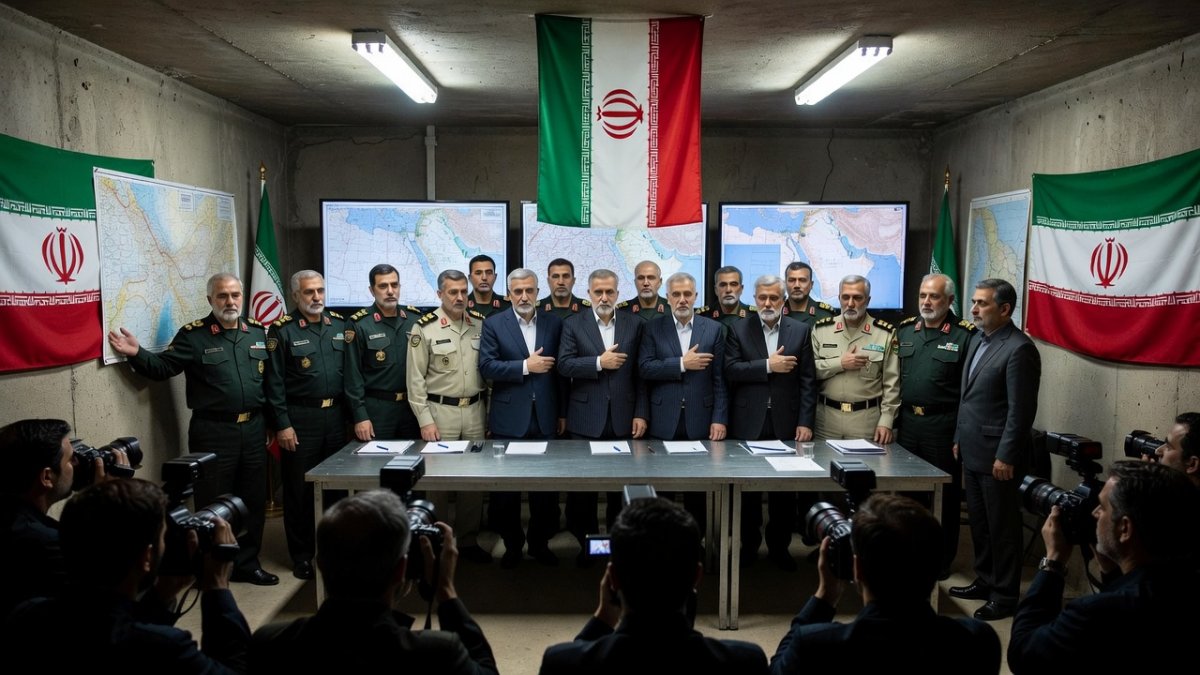
The Escalation: From Dahiyeh to Mahshahr
The immediate trigger for the latest round of hostilities was an Israeli airstrike on a Hezbollah command center in Beirut's southern Dahiyeh suburb, authorized by Prime Minister Benjamin Netanyahu in response to what the PMO described as prior Hezbollah ceasefire violations along Israel's northern border. The strike killed at least two people and drew immediate condemnation from both Hezbollah and its Iranian backers.
Iran retaliated with multiple ballistic missile salvos directed at Israel. Air raid sirens sounded across central and northern Israel, including in Samaria in the West Bank, where homes sustained damage from incoming projectiles. Israeli defense systems, including Iron Dome and Arrow interceptors, successfully engaged most of the incoming missiles, limiting casualties and structural damage.
The IDF confirmed that it had struck a petrochemical facility in Mahshahr, southwestern Iran, as part of Operation Roaring Lion. The target was infrastructure used to produce and export raw materials for Iran's ballistic missile program. The military described the strike as a precision operation based on actionable intelligence, aimed at degrading Tehran's ability to manufacture missiles capable of threatening Israeli civilian population centers.
Netanyahu: "Our Campaign Is Not Over"
Prime Minister Netanyahu released a video statement on Monday addressing the situation directly. "Our campaign against Iran and Hezbollah is not over," Netanyahu said. "Over the past 24 hours, they tried to impose a new equation on us. This equation is intolerable and unacceptable. If Iran makes a mistake and resumes attacks against Israel, we will respond forcefully."
Defense Minister Israel Katz reinforced this message, stating that any attack on northern Israel would trigger an immediate response against Dahieh. He rejected any Iranian attempt to link Lebanon to the broader conflict, framing Iran's conditional ceasefire as an unacceptable attempt to tie Israel's hands in Lebanon.

Trump's Intervention: Ceasefire Call and Private Warning
US President Donald Trump weighed in heavily on the crisis, posting on Truth Social that "Both sides, Israel and Iran, are looking to do an immediate CEASEFIRE! Final negotiations on 'Peace' are proceeding." The post came after Trump spoke directly with Netanyahu by phone.
According to Israeli media reports, Trump delivered a pointed warning to the Prime Minister during their conversation, cautioning that Israel "might soon be left alone against Iran" if operations continued. The message underscored growing US frustration with the cycle of escalation, even as Washington continues to back Israel's right to self-defense against Iranian aggression.
EU Sanctions and US Embassy Precautions
The European Union imposed its first-ever freedom of navigation sanctions on Iran in response to Tehran's blockade of the Strait of Hormuz. The sanctions target Iranian entities involved in disrupting maritime traffic through the strategic waterway, which handles roughly one-fifth of global oil consumption. The move adds significant diplomatic pressure on Tehran as it pursues ceasefire negotiations through Pakistani mediation.
In a sign of ongoing security concerns, the US Embassy in Israel announced the closure of its consular sections in Jerusalem and Tel Aviv on Tuesday, June 9. The embassy directed all American government employees and their families to shelter in place and be prepared to move to protected spaces in the event of red alerts. Ben Gurion Airport remains operational, though travelers have been advised to confirm flight status directly with airlines.
Regional Dynamics and Diplomatic Efforts
Iran's UN envoy, Amir-Saeid Iravani, confirmed that US-Iran talks continue through Pakistani mediation and expressed optimism that a comprehensive ceasefire deal could be concluded by the end of June. He indicated that the proposed agreement would extend beyond Iran to include Lebanon as part of a broader regional framework. An Israeli source noted that while the current round of fire is likely over, the central challenge ahead is separating Iran negotiations from the Lebanon theater.
IRGC Quds Force Commander Esmaeil Qaani announced plans to establish a new "security belt of Resistance" stretching from the Strait of Hormuz to the Bab El-Mandeb Strait off Yemen, signaling Iran's intent to maintain a posture of regional deterrence even as it pursues diplomatic channels.
Lebanese President Joseph Aoun, in a CNN interview, called for dialogue rather than military force, stating that no military solution could guarantee long-term security for residents of northern Israel. Aoun's comments reflect the delicate balancing act facing Beirut, which seeks to maintain ties with Tehran while asserting Lebanese sovereignty and resisting Hezbollah's military dominance.
Implications for Israeli Security
The rapid sequence of events — from the Dahiyeh strike to the Mahshahr counterstrike, from ballistic missile salvos to conditional ceasefires — underscores the volatile security environment facing Israel on multiple fronts. The IDF has stated it is preparing for at least several days of continued fighting with Iran, even as Tehran signals a willingness to de-escalate.
For Israeli civilians, the return of air raid sirens across central Israel and the West Bank is a stark reminder that the country's multi-front conflict shows no signs of resolution. The Home Front Command's updated defensive guidelines, which removed restrictions across most of Israel earlier this year, may now be reconsidered as the security establishment assesses the trajectory of Iranian missile capabilities and the potential for Lebanese-based attacks.
The key question facing Israeli decision-makers in the coming days is whether Iran's conditional cessation represents a genuine opening for de-escalation or a tactical pause designed to regroup and rearm. With Trump pushing for a ceasefire, Netanyahu insisting the campaign is not over, and Iran drawing a red line around Lebanon, the fragile calm could break at any moment.
By Hannah Berg, Staff Writer
This article was produced with AI-assisted research and editorial support. Reporting is based on sources cited in the article.
What's Your Reaction?
 Like
0
Like
0
 Dislike
0
Dislike
0
 Love
0
Love
0
 Funny
0
Funny
0
 Wow
0
Wow
0
 Sad
0
Sad
0
 Angry
0
Angry
0

Israel Correspondent at Global1.News. Based in Tel Aviv, covering Israeli politics, security, technology, and society. Provides balanced, deeply-sourced reporting on one of the most closely-watched regions in the world.













Comments (0)