
Record Ukrainian Drone Attack on Moscow: Kremlin Responds
The Scale of the Largest Ukrainian Drone Assault on Moscow The attack launched on Thursday represented the largest Ukrainian drone operation against the Russian capital since the full-scale invasion began in February 2022. Multiple reports indicate that over 100 drones participated in coordinated waves targeting the Gazprom Neft-operated Moscow Oil Refinery in Kapotnya, located
The Scale of the Largest Ukrainian Drone Assault on Moscow
The attack launched on Thursday represented the largest Ukrainian drone operation against the Russian capital since the full-scale invasion began in February 2022. Multiple reports indicate that over 100 drones participated in coordinated waves targeting the Gazprom Neft-operated Moscow Oil Refinery in Kapotnya, located just south of the city. This marked the second strike on the same facility within days, following an earlier raid on June 16.
Russian air defense systems engaged the incoming drones around the capital, yet the scale of the assault overwhelmed protective measures in several sectors. The refinery sustained significant damage from fires that erupted across storage and processing areas. Ukrainian forces demonstrated an increasing capacity to penetrate layered defenses protecting key infrastructure near Moscow.
The operation highlighted evolving tactics in which multiple waves struck the identical target within a short period. This approach aimed to compound damage before repairs could begin on affected units. Sources cited by Reuters confirmed that the June 16 strike hit a distillation unit responsible for 53 percent of the refinery's capacity, while the June 18 attack damaged the more modern Euro+ unit accounting for the remaining 47 percent.
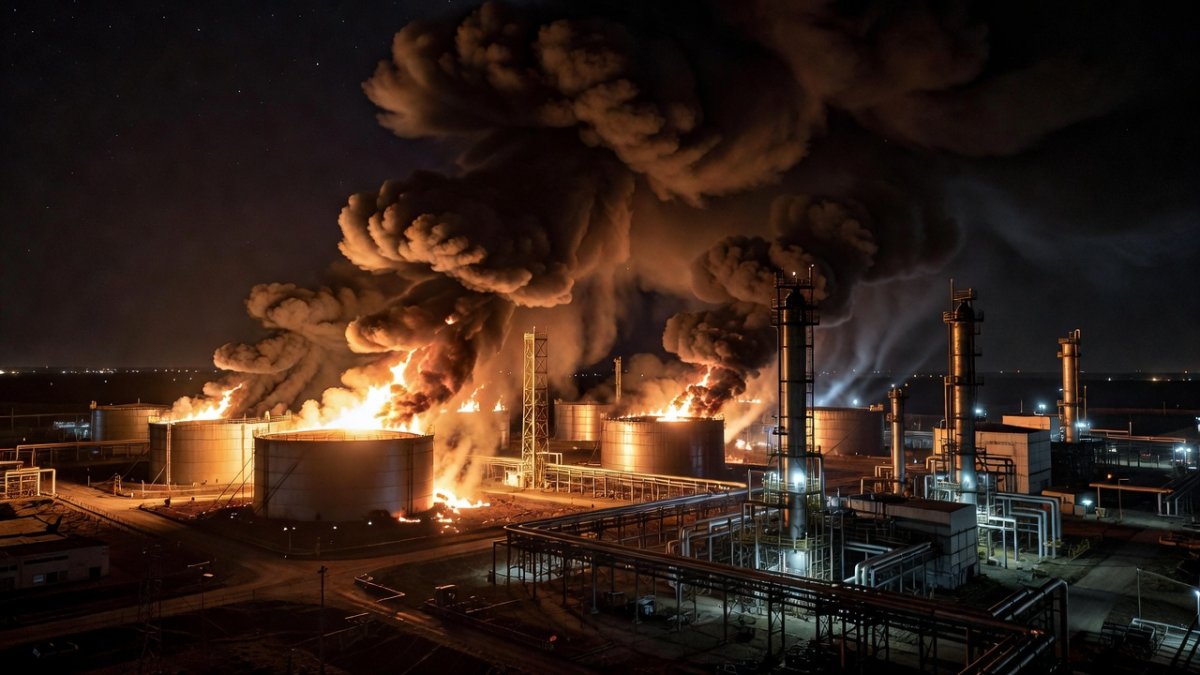
Smoke and flames rise from the Gazprom Neft-operated Moscow Oil Refinery following the largest Ukrainian drone attack on the capital since the start of the war. (Global 1 News)
Airport Closures and Flight Disruptions Across the Capital
Three major Moscow airports—Sheremetyevo, Domodedovo, and Vnukovo—were forced to close temporarily during the drone assault. Hundreds of flights faced delays or cancellations as authorities implemented security protocols amid the incoming threats. These closures affected both domestic and international routes serving the Russian capital.
The temporary shutdowns underscored the direct reach of Ukrainian long-range capabilities into the heart of Russia's transportation network. Passengers experienced widespread disruptions while air traffic controllers managed the evolving situation. No specific casualty figures emerged from the airport incidents themselves.
Post-Soviet infrastructure vulnerabilities became evident as civilian aviation hubs required protection alongside military assets. The closures lasted several hours before operations resumed under heightened alert status. This event illustrated how energy and transport targets can intersect during escalated phases of the conflict.
Human Toll from the Thursday Strikes
An eight-year-old girl was killed and at least 17 other individuals suffered wounds during the drone attack on the Kapotnya refinery. The casualties occurred in areas surrounding the facility south of Moscow. Russian authorities confirmed these figures in the immediate aftermath.
The loss of civilian life near critical energy infrastructure raised questions about the proximity of residential zones to high-value targets. Medical services responded to the injured, though detailed breakdowns of the wounds remained limited in official statements. The incident added to the growing list of non-combatant victims on Russian territory.
Separate reports from Ukrainian authorities described parallel Russian strikes that killed an eight-year-old girl in Pavlohrad and injured 10 people in the Kharkiv region on the same day. Additional drone attacks in the Black Sea killed one crew member and wounded five others aboard civilian merchant vessels flying Panamanian and Saint Kitts and Nevis flags. These cross-border incidents reflected the mutual targeting patterns that have characterized the war.
Kremlin Spokesman Peskov's Assessment of Air Defenses
On Friday, Kremlin spokesman Dmitry Peskov publicly praised the performance of Russian air defense systems during the record raid. He stated that the systems were "performing highly, no matter what," emphasizing their effectiveness despite the visible damage at the refinery. Peskov delivered these remarks more than 24 hours after the assault during a regular press briefing.
The spokesman sought to minimize the extent of destruction by redirecting attention to ongoing Russian strikes on Ukrainian cities. He claimed that footage from various Ukrainian locations would demonstrate the impressive scale of Russian military operations. Peskov also asserted that Russian forces maintain the upper hand on the battlefield in eastern Ukraine.
Regarding Ukrainian President Volodymyr Zelensky's suggestion that the Moscow attack should compel Russia toward negotiations, Peskov responded that Kyiv's drone campaign "is not a path toward negotiations." This statement aligned with the Kremlin's consistent position that military pressure from Ukraine will not alter Russia's strategic objectives.
President Putin's Continued Silence on the Incident
President Vladimir Putin has not issued any public comment on the large-scale air raid as of the latest reports. This absence of direct presidential remarks stands in contrast to the scale of the attack and the visible fires at a major fuel facility. Kremlin communications have instead relied on Peskov to shape the official narrative.
The silence occurs within established power structures where the president typically addresses significant threats to the capital. Observers note that such restraint may reflect internal assessments of air defense performance or broader strategic calculations. No statements emerged from the Defense Ministry addressing specific allegations raised by independent outlets.
This pattern of delayed or absent commentary from the highest levels connects to post-Soviet traditions of centralized control over crisis messaging. Lower-ranking officials handle initial responses while the president maintains distance from operational details. The approach allows flexibility in framing events as they develop.
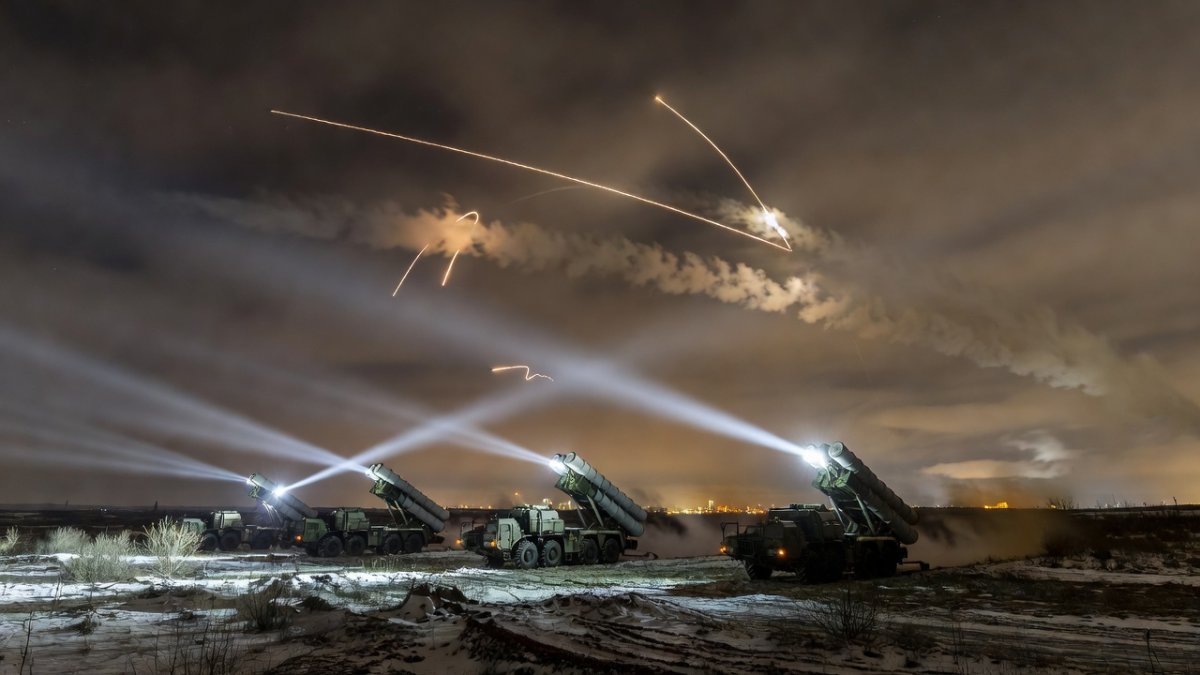
Russian air defense systems were activated across the Moscow region as Ukrainian drones penetrated multiple layers of protection around the capital. (Global 1 News)
Friendly Fire Controversy and Missile Impact Reports
Multiple reports and Russian military bloggers cited video footage suggesting that stray Russian air defense missiles may have contributed to damage at the Gazprom Neft refinery. The exiled outlet IStories reported that a surface-to-air missile appeared to strike an oil storage tank directly, sending a dome-shaped roof several hundred feet into the air. The Moscow Times could not independently verify these accounts.
Independent Russian media and bloggers have amplified questions about the effectiveness of Moscow's layered air defense network, including S-400 and Pantsir systems. These systems are designed to intercept aerial threats yet carry risks of debris and missile malfunctions over populated areas. The Defense Ministry has offered no comment on the friendly fire allegations.
State media coverage instead emphasized the heroism of air defense crews rather than the extent of refinery damage. This selective focus reflects efforts to maintain public confidence in protective capabilities around the capital. The controversy highlights tensions between official claims and evidence circulating on social media and independent platforms.
Strategic Importance of the Kapotnya Refinery to Moscow's Fuel Supply
The Moscow Oil Refinery in Kapotnya, operated by Gazprom Neft, produces approximately 30 to 40 percent of the fuel consumed in the Moscow region. It also accounts for about 8 percent of Russia's total refining capacity. Repeated strikes since the start of 2026 have tested the facility's resilience and the broader energy logistics supporting the capital.
Damage to both the older distillation unit and the Euro+ processing unit threatens short-term fuel availability for civilian and military needs in central Russia. The back-to-back nature of this week's attacks compounds repair challenges and exposes vulnerabilities in concentrated refining infrastructure. Energy politics in the post-Soviet space have long centered on such facilities as levers of economic stability.
Ukrainian targeting of these assets mirrors Russian strikes on Ukrainian energy grids that began in 2022. The campaign seeks to disrupt fuel supplies reaching Russian military operations while generating internal economic pressure. Analysts note that sustained pressure on refining capacity could affect logistics across multiple fronts.
Broader War Context and Energy Infrastructure Targeting
The strikes form part of a Ukrainian strategy to target Russia's energy infrastructure in response to sustained Russian attacks on Ukrainian power facilities. This reciprocal approach has escalated since early 2026, with both sides demonstrating willingness to strike deep behind front lines. The Kapotnya incidents represent a tactical escalation in reach and frequency.
Russian officials have framed their own operations as necessary responses to Ukrainian aggression, while Ukrainian statements emphasize the need to degrade Russia's war-making capacity. The involvement of civilian merchant ships in the Black Sea further illustrates how energy-related targets extend beyond land-based refineries. Both sides continue to attribute responsibility for civilian harm to the opposing party.
These developments occur against the backdrop of entrenched post-Soviet energy dependencies that shape military and diplomatic calculations. Control over refining and distribution networks remains central to sustaining prolonged operations. The current phase suggests that energy infrastructure will continue to feature prominently in future exchanges.
Analysis of Implications for the Ongoing Conflict
The record drone attack and subsequent responses could indicate a shift toward sustained pressure on Russian rear-area assets. Ukrainian forces have shown improved coordination in overwhelming defenses around high-value targets near the capital. This development may prompt adjustments in Russian air defense deployment and resource allocation.
From the Russian perspective, Peskov's emphasis on battlefield advantages in eastern Ukraine suggests that leadership views the drone campaign as a secondary concern rather than a decisive factor. Yet the visible damage at a facility supplying a major share of Moscow's fuel raises questions about long-term resilience. Independent reporting on potential friendly fire incidents adds internal scrutiny to official narratives.
Overall, the events point to a conflict in which energy targeting serves both military and political objectives. The absence of presidential commentary combined with continued strikes on Ukrainian cities reflects established patterns of asymmetric messaging. Future developments will likely hinge on whether either side achieves measurable degradation of the other's logistical foundations.
By Irina Volkov, Staff Writer
This article was produced with AI-assisted research and editorial support. Reporting is based on sources cited in the article.
What's Your Reaction?
 Like
0
Like
0
 Dislike
0
Dislike
0
 Love
0
Love
0
 Funny
0
Funny
0
 Wow
0
Wow
0
 Sad
0
Sad
0
 Angry
0
Angry
0

Russia/Eastern Europe Correspondent at Global1.News. Covering Russian politics, energy, security, and the shifting dynamics of the post-Soviet space. Provides clear-eyed analysis on one of the world's most opaque regions.












Comments (0)