
India-Pakistan Water Tensions Threaten Broader Asian Stability
The 1960 Indus Waters Treaty allocated the waters of the Indus basin between India and Pakistan under World Bank mediation. Three eastern rivers went primarily to India while the western rivers, including the Chenab, were assigned to Pakistan. This arrangement supported agriculture for hundreds of millions in Pakistan's Indus basin and has survived multiple wars between the nuc
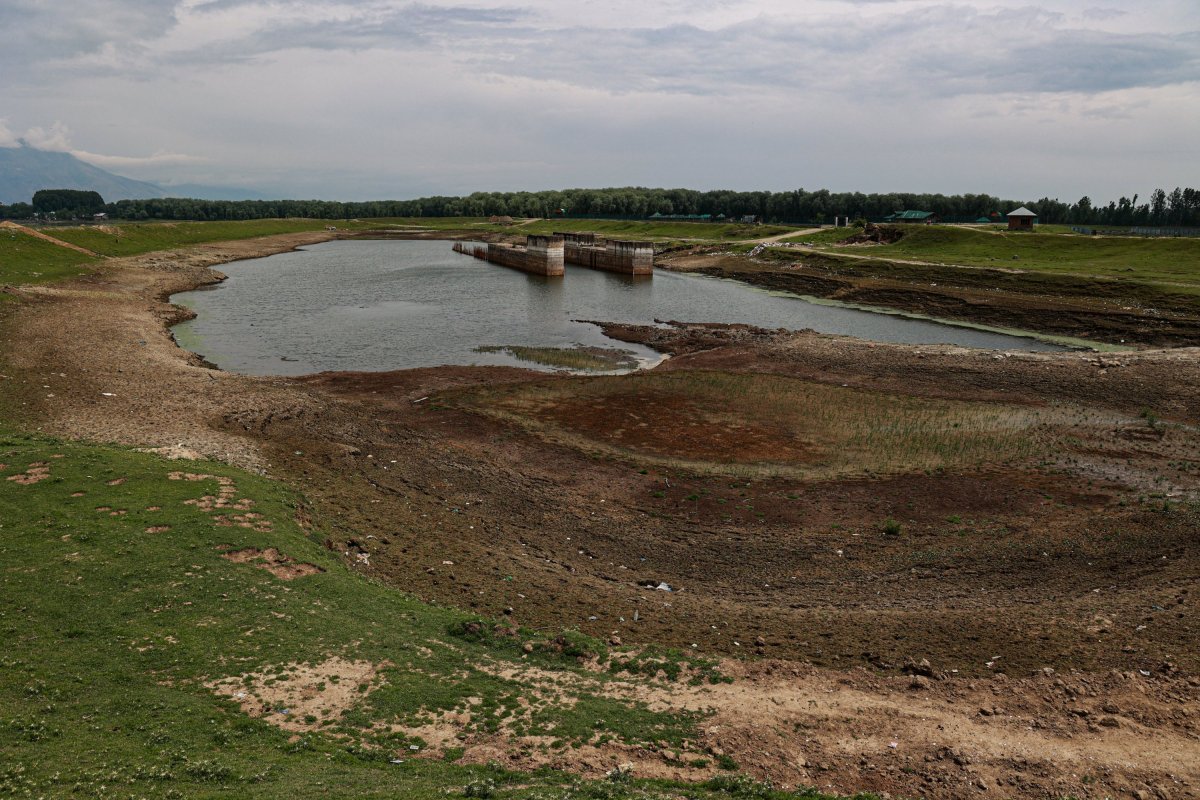
The 1960 Indus Waters Treaty allocated the waters of the Indus basin between India and Pakistan under World Bank mediation. Three eastern rivers went primarily to India while the western rivers, including the Chenab, were assigned to Pakistan. This arrangement supported agriculture for hundreds of millions in Pakistan's Indus basin and has survived multiple wars between the nuclear-armed neighbors.
India-Pakistan Water Tensions Threaten Broader Asian Stability
Beirut, Lebanon – June 10, 2026 — India has vowed to halt all water flows to Pakistan under its suspended Indus Waters Treaty framework, a move that threatens to escalate one of the most volatile bilateral relationships in Asia. Water Minister C.R. Patil announced Tuesday that not a single drop would reach Pakistan in the coming years, citing directives from Prime Minister Narendra Modi — a declaration Islamabad has called preparation for a slow-motion act of war.
Historical Foundations of the Indus Waters Treaty
The 1960 Indus Waters Treaty allocated the waters of the Indus basin between India and Pakistan under World Bank mediation. Three eastern rivers went primarily to India while the western rivers, including the Chenab, were assigned to Pakistan. This arrangement supported agriculture for hundreds of millions in Pakistan's Indus basin and has survived multiple wars between the nuclear-armed neighbors. The treaty is frequently cited as one of the most successful water-sharing agreements in modern diplomatic history, having endured through the 1965 and 1971 wars, the Kargil conflict, and countless cross-border crises. Its resilience rested on a dispute-resolution mechanism that included neutral expert reports and International Court of Arbitration referrals, mechanisms India has now abandoned.
India's 2025 Suspension and the Four-Day Conflict
India suspended its participation in the treaty in May 2025 after accusing Pakistan of supporting an attack on tourists in Indian-controlled Kashmir. Pakistan rejected the charges. The suspension followed a brief but intense four-day conflict involving drone, missile, and artillery exchanges that killed nearly 70 people. No formal mechanism exists for unilateral withdrawal, and Pakistan maintains the treaty remains legally binding. The International Court of Arbitration has not ruled on whether a signatory can unilaterally withdraw from the treaty's framework, leaving both sides in a legal grey zone that analysts say favors the upstream power — India.
Recent Indian Announcements on Chenab River Projects
Water Minister C.R. Patil stated on Tuesday that India would ensure not a single drop of water reaches Pakistan in the coming years, citing directives from Prime Minister Narendra Modi. Two initiatives on the Chenab River section under Indian control have drawn Pakistani accusations of weaponizing water. These include a proposed tunnel to transfer water from the Chenab Basin to the Beas Basin and sediment removal work at the Salal Power Station. Pakistan's Ministry of Foreign Affairs has said these projects violate the spirit, if not the letter, of the original treaty. Experts note that current infrastructure allows only flow regulation rather than outright diversion, meaning Pakistan's immediate supply is not at risk, but the long-term trajectory is deeply concerning for Islamabad.
Practical Timelines and Agricultural Risks for Pakistan
Officials in Indian-controlled Kashmir indicate that major construction cannot begin before mid-2027 and would require at least five years to complete. Pakistan's agriculture and economy depend heavily on timely Indus flows. The Indus Basin irrigation system is the largest contiguous irrigation network in the world, supporting approximately 90 percent of Pakistan's food production. Pakistan's water storage capacity covers roughly 30 days of river flow, leaving the country acutely vulnerable to any sustained reduction. Nearly 11 million Pakistanis were in acute food insecurity in 2025, according to UN reports, a figure that could rise sharply if water supplies are meaningfully disrupted. Any sustained reduction would create severe second-order effects on food production, rural employment, and political stability in a nuclear-armed state of 240 million people.
Strategic Calculus for Both Sides
India seeks leverage following the Kashmir attack and the brief conflict, using water as a pressure point while advancing hydroelectric and diversion plans. For New Delhi, the water card is a relatively low-cost lever that carries high potential returns in terms of diplomatic pressure on Islamabad. Pakistan views any alteration of flows as an existential threat and has previously labeled such moves an act of war. Both sides possess nuclear capabilities, raising the stakes of any escalation beyond manageable levels. Leverage remains asymmetric: India controls the headwaters, yet Pakistan retains diplomatic options through the United Nations, the Shanghai Cooperation Organization, and its strategic relationship with China. The China-Pakistan Economic Corridor, a flagship Belt and Road Initiative project, gives Beijing a direct stake in Pakistani stability and regional water security.
Connections to Middle East Water Security and Alliances
Water disputes in South Asia mirror tensions over the Nile and Tigris-Euphrates basins involving Egypt, Turkey, and Iraq — where upstream dam construction has reshaped downstream access to water for millions. Gulf states such as Saudi Arabia and the UAE, which have pursued agricultural investments abroad to support Vision 2030 diversification goals, watch these developments closely because regional instability can affect global energy markets and food supply chains. Abraham Accords normalization between Israel and several Arab states adds another layer, as India maintains strong ties with both Israel and Gulf capitals while Pakistan cultivates relations with Turkey and Iran. The interlocking alliance structures mean that a water crisis between India and Pakistan does not remain contained to South Asia — it ripples through the entire Indian Ocean rim and Gulf security architecture.
Great Power Competition and Nuclear Dimensions
China's investments in Pakistan through the China-Pakistan Economic Corridor give Beijing a direct stake in Pakistani stability, while the United States has deepened defense and technology cooperation with India through the Indo-Pacific framework and joint military exercises. Russia maintains energy ties across the region and has positioned itself as a potential mediator. The presence of nuclear arsenals on both sides of the Indus dispute amplifies risks of miscalculation similar to concerns surrounding Iran's nuclear program and its regional proxy networks. Any prolonged water crisis could draw external powers into diplomatic or material involvement, potentially reshaping alliance configurations across both South Asia and the broader Middle East. The United States, which brokered the original 1960 treaty through World Bank mediation, has thus far remained publicly neutral but privately concerned about the erosion of one of the region's few functioning multilateral agreements.
Outlook for Regional Stability
Projects capable of meaningfully altering flows remain years away from operation. Nevertheless, the rhetoric and project planning already heighten mistrust between the two nuclear-armed neighbors, undermining whatever deterrence stability has been maintained through post-conflict ceasefires and back-channel diplomacy. Sunni-Shia geopolitical competition and shifting alliances across the wider Middle East and South Asia mean that water security issues in one theater can influence calculations in others, particularly where energy prices and migration pressures intersect with existing rivalries. Sustained diplomatic engagement — whether through the UN, the SCO, or revived World Bank mediation — will be required to prevent localized water disputes from feeding wider instability that could draw in Gulf capitals, Beijing, Washington, and Moscow.
By Malik Hassan, Staff Writer
This article was produced with AI-assisted research and editorial support. Reporting is based on sources cited in the article.
What's Your Reaction?
 Like
0
Like
0
 Dislike
0
Dislike
0
 Love
0
Love
0
 Funny
0
Funny
0
 Wow
0
Wow
0
 Sad
0
Sad
0
 Angry
0
Angry
0

Middle East Correspondent at Global1.News. Based in Beirut, covering politics, conflict, energy, and society across the Middle East. Brings context and depth to a region often reduced to headlines.













Comments (0)