
IAEA Warns of Limited Iran Nuclear Access as Tensions Rise
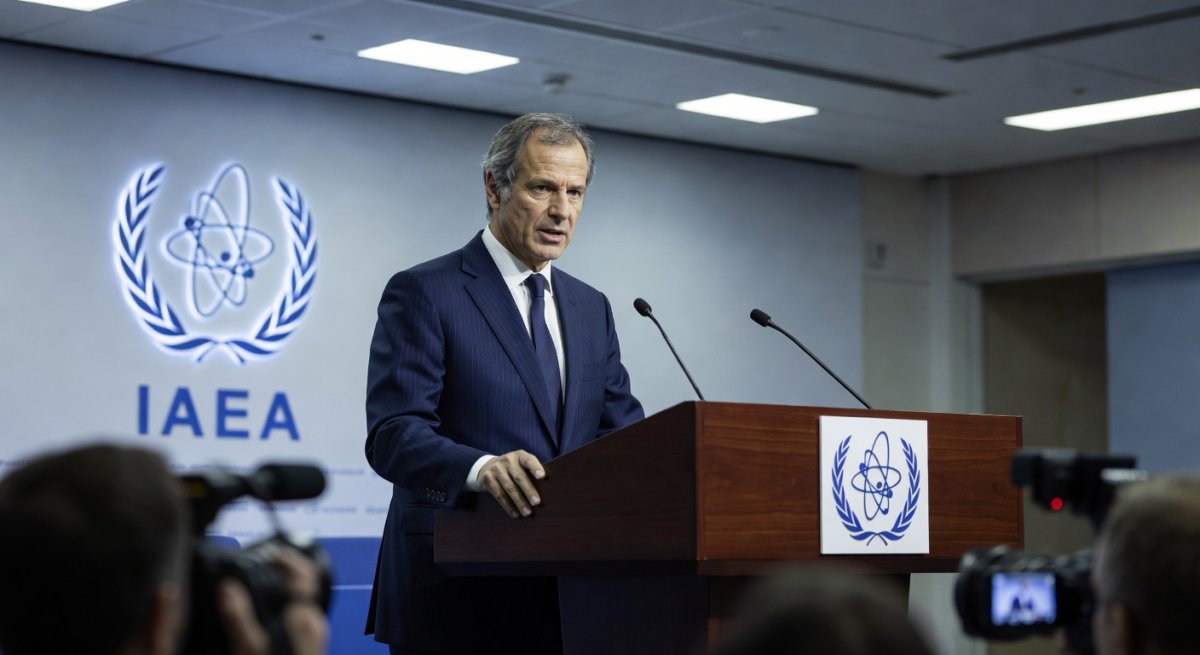
The International Atomic Energy Agency faces mounting verification challenges at Iran’s key nuclear facilities, with Director General Rafael Grossi publicly stating that inspectors hold only limited access despite Tehran’s formal obligations under existing safeguards agreements. IAEA Chief Signals Restricted Oversight of Iran’s Nuclear Program at Natanz and Fordow Beirut, Leban
The International Atomic Energy Agency faces mounting verification challenges at Iran’s key nuclear facilities, with Director General Rafael Grossi publicly stating that inspectors hold only limited access despite Tehran’s formal obligations under existing safeguards agreements.
IAEA Chief Signals Restricted Oversight of Iran’s Nuclear Program at Natanz and Fordow
Beirut, Lebanon – June 5, 2026 — IAEA Director General Rafael Grossi confirmed that agency inspectors retain only limited access to Iran’s nuclear plants, even as Tehran remains bound by verification commitments. The statement underscores persistent gaps in monitoring at the Natanz and Fordow enrichment sites, where Iran has maintained uranium enrichment levels reaching 60 percent since 2021.
JCPOA Framework and Post-2018 Monitoring Erosion
The 2015 Joint Comprehensive Plan of Action established stringent IAEA inspection protocols across declared Iranian sites. Following the United States withdrawal in 2018, Iran progressively reduced cooperation, culminating in the removal of IAEA monitoring cameras in 2022. Vienna talks aimed at restoring limits have remained stalled, leaving enrichment activities at Natanz and Fordow without full real-time oversight.
Iran’s decision to deploy advanced IR-6 centrifuges has accelerated output at both facilities, creating a technical reality that exceeds JCPOA caps. Grossi’s recent remarks highlight that current access arrangements fall short of the comprehensive verification the agency requires to confirm peaceful intent.
Strategic Calculus at Natanz and Fordow
Iran views its enrichment infrastructure as critical leverage in any future sanctions relief negotiations. By sustaining 60 percent enrichment and expanding IR-6 cascades, Tehran signals it can rapidly approach weapons-grade material if talks collapse. At the same time, Iranian officials continue to assert that all activities remain under IAEA safeguards, albeit under the restricted modalities now in place.
The IAEA’s limited presence reduces transparency on material flows and centrifuge operations, complicating efforts to establish accurate stockpile figures. This opacity amplifies uncertainty for regional actors who must calibrate responses without complete data on breakout timelines.
Gulf Arab States and Israeli Security Calculations
Gulf Cooperation Council members, particularly Saudi Arabia and the United Arab Emirates, monitor Iran’s program through the lens of regional power balance and energy market stability. Unverified advances at Natanz and Fordow could shift the deterrence equation, prompting Gulf states to accelerate their own defense procurements and deepen security coordination with the United States.
Israel regards the current access shortfall as an immediate proliferation risk. Israeli officials have repeatedly signaled willingness to conduct unilateral action should diplomatic channels fail to restore robust verification. Such moves would carry second-order effects on Arab-Israeli normalization efforts and potential escalation involving Iranian proxy networks across Lebanon, Syria, and Iraq.
Great Power Competition and Diplomatic Pathways
China and Russia maintain economic and diplomatic ties with Iran that could influence Tehran’s willingness to expand IAEA access. Beijing’s interest in stable Gulf energy flows and Moscow’s focus on sanctions-evasion mechanisms create overlapping incentives that might support incremental confidence-building measures.
One plausible pathway involves phased restoration of camera coverage at Natanz and Fordow in exchange for targeted sanctions relief. Another scenario envisions trilateral understandings among the United States, European powers, and Iran that sidestep full JCPOA revival while addressing the most urgent verification gaps. Both options require careful sequencing to avoid domestic political backlash in Tehran or Washington.
Absent renewed access, the risk of miscalculation grows. Regional states may pursue parallel nuclear hedging strategies, further fragmenting the non-proliferation regime and complicating energy investment decisions across the Gulf.
By Malik Hassan, Staff Writer
This article was produced with AI-assisted research and editorial support. Reporting is based on sources cited in the article.
What's Your Reaction?
 Like
0
Like
0
 Dislike
0
Dislike
0
 Love
0
Love
0
 Funny
0
Funny
0
 Wow
0
Wow
0
 Sad
0
Sad
0
 Angry
0
Angry
0

Middle East Correspondent at Global1.News. Based in Beirut, covering politics, conflict, energy, and society across the Middle East. Brings context and depth to a region often reduced to headlines.













Comments (0)