
China Condemns US Visa Crackdown on Students and Journalists
The United States has unveiled sweeping new visa restrictions that will impose fixed admission periods on foreign students, exchange visitors and journalists, prompting an immediate and pointed condemnation from Beijing. The measures, which replace the longstanding duration of status system with strict time limits, threaten to disrupt educational exchanges and media operations at a moment of already heightened bilateral tension.
The United States has unveiled sweeping new visa restrictions that will impose fixed admission periods on foreign students, exchange visitors and journalists, prompting an immediate and pointed condemnation from Beijing. The measures, which replace the longstanding duration of status system with strict time limits, threaten to disrupt educational exchanges and media operations at a moment of already heightened bilateral tension. British students and correspondents will feel the effects directly, while UK universities may find themselves positioned to capture redirected international talent.
US Visa Restrictions Prompt Sharp Rebuke from Beijing
China has demanded that the United States withdraw new visa regulations published this week by the Department of Homeland Security, describing the measures as discriminatory and contrary to mutual interests. The final rule, issued on Thursday 16 July 2026, removes the longstanding duration of status provision for F-1 student, J-1 exchange visitor and I media visa holders. If implemented after the required 60-day period following publication in the federal register and any congressional review, the changes would impose fixed admission periods and additional restrictions on programme transfers.
Details of the Proposed Changes to Admission Periods
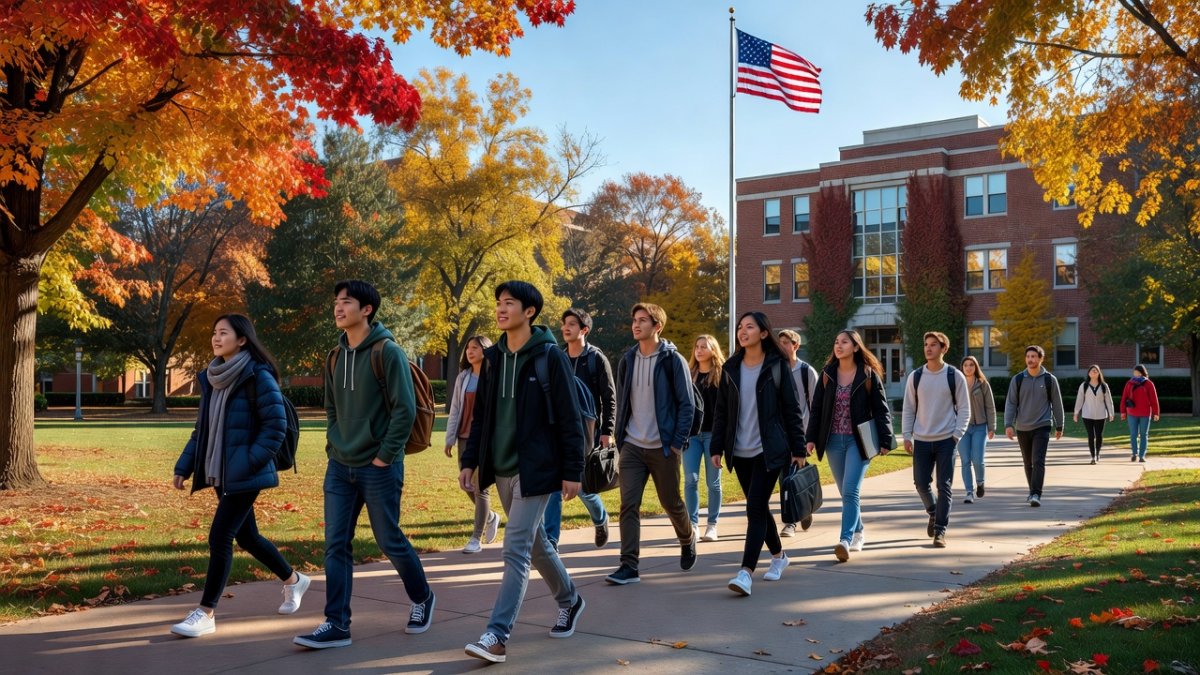
Under the new framework, foreign students and exchange visitors would face a maximum stay of four years, replacing the previous indefinite duration of status arrangement. Foreign journalists holding I visas would be admitted for up to 240 days at a time, a reduction from the prior maximum of five years. Chinese nationals on journalist visas would face a further limit of 90 days. The rule also introduces stricter conditions for transferring between schools and changing academic programmes at graduate level. These provisions form part of a broader tightening of immigration procedures that has already contributed to a 20 per cent decline in international student enrolment in the United States during 2026. With more than 1.8 million student visa admissions recorded in the United States in 2024, an increase of over 11 per cent on the previous year, the shift to fixed admission periods removes the flexibility that previously supported longer academic programmes and research commitments.
China Reserves Right to Reciprocal Measures
Foreign ministry spokesperson Lin Jian stated on Friday that Beijing strongly opposes the policy and reserves the right to adopt reciprocal countermeasures. The ministry emphasised that the regulations run counter to the interests of both countries and could damage educational and cultural exchanges. Lin Jian's remarks follow earlier expressions of concern from Chinese officials about the cumulative effect of successive US immigration restrictions on bilateral relations. No specific retaliatory steps have been outlined at this stage, though the possibility of mirrored limitations on American citizens studying or working in China remains under active consideration in Beijing. This development fits within a pattern of escalating US-China tensions over visa policy and access. Previous disputes, including journalist visa limitations, have already strained bilateral educational and media links. Any Chinese retaliation could target American journalists operating in China or impose parallel restrictions on US citizens, further complicating people-to-people exchanges at a time when both governments continue to navigate wider strategic competition.
Historical precedent underscores the risk of escalation. When the first Trump administration imposed 90-day limits on Chinese journalists in 2020, Beijing responded by expelling American correspondents and forcing the closure of several US media bureaus, a cycle that left lasting gaps in bilateral reporting. The current measures echo that approach, raising the prospect of tit-for-tat expulsions or tightened access for US personnel in China.
These visa curbs also advance the wider narrative of strategic decoupling. Alongside export controls on semiconductors and Huawei equipment, plus successive tariff rounds, restrictions on people-to-people movement now extend the contest into educational and journalistic spheres, eroding the remaining channels for direct engagement between the two powers.
Consequences for British Nationals and Institutions
The regulations would apply equally to British nationals holding F-1, J-1 or I visas. The new restrictions will directly disrupt British students already enrolled at American universities, who must now navigate fixed four-year admission periods instead of the previous flexible duration of status. Those planning future study face added uncertainty, as extensions will require more rigorous justification and programme transfers at graduate level become harder to secure. British journalists on I visas will encounter repeated 240-day renewal cycles, forcing media organisations to manage frequent administrative burdens for correspondents based in Washington and New York. The Committee to Protect Journalists has warned that such time-bound admissions risk restricting press freedom, as correspondents may feel pressure to avoid critical coverage lest renewal applications be denied. Whitehall sources have indicated that the Foreign, Commonwealth and Development Office is monitoring the situation closely, given the direct impact on British citizens and institutions. Media organisations employing correspondents in Washington and New York are reviewing contingency arrangements for visa renewals, underscoring the practical consequences for independent journalism across the Atlantic.
International students already inject roughly $44 billion into the US economy each year, with British nationals forming one of the larger European cohorts whose spending on tuition, accommodation and living costs would be at risk if enrolment patterns shift. Any sustained drop would therefore carry measurable fiscal consequences for American universities and surrounding communities.
British outlets with the largest US bureaus, including the BBC, The Guardian, The Times, The Telegraph and Sky News, would shoulder repeated renewal workloads that divert resources from reporting. At the same time, PhD candidates and postdoctoral researchers reliant on multi-year laboratory or archival work face the sharpest practical disruption, as fixed four-year caps and transfer hurdles threaten to truncate projects that routinely exceed that timeframe.
Potential Shifts in Global Student Flows
UK universities, including those represented by the Russell Group, could attract redirected applications from Chinese and other international students seeking more predictable visa arrangements. The Foreign, Commonwealth and Development Office is monitoring developments closely, while Universities UK International assesses potential shifts in application volumes. Devolved administrations in Scotland, Wales and Northern Ireland have already emphasised the economic value of international students to regional economies and research output, positioning the United Kingdom's stable post-study work provisions as a comparative advantage. Officials at the Department of Homeland Security have framed the changes as necessary to close perceived loopholes and enhance oversight of temporary visa categories. Critics, including academic organisations and press freedom advocates, argue that the cumulative restrictions undermine the United States' longstanding role as a destination for global talent and independent journalism. The pending implementation timeline leaves room for congressional scrutiny and potential legal challenges before the measures take full effect.
Broader Implications for Transatlantic Links
The July 2026 rule builds on earlier measures introduced during the current administration that have already reduced international enrolment by one-fifth this year. The contrast with previous five-year maximum stays highlights how the new framework reduces operational stability for media organisations. The episode underscores the interconnected nature of immigration policy across the Atlantic and the potential for regulatory shifts in one jurisdiction to reshape flows of students and journalists in another. UK higher education institutions stand to gain if prospective students from China and other countries redirect applications toward British universities, with institutions in Canada and Australia also positioned to capture a larger share of mobile talent previously directed toward American campuses. This redirection could reshape global education flows at a time when both governments continue to navigate wider strategic competition.
Taken together, the tightening of US visa rules intensifies friction with China, imposes fresh administrative and financial pressures on British students and journalists, and accelerates the redistribution of global talent toward more stable destinations such as the United Kingdom. Over the coming years, sustained implementation could entrench a more fragmented landscape in which educational and media exchanges become additional arenas of geopolitical contest rather than bridges between societies.
By Erica Thornton, Staff WriterThis article was produced with AI-assisted research and editorial support. Reporting is based on sources cited in the article.
What's Your Reaction?
 Like
0
Like
0
 Dislike
0
Dislike
0
 Love
0
Love
0
 Funny
0
Funny
0
 Wow
0
Wow
0
 Sad
0
Sad
0
 Angry
0
Angry
0

US Politics and Policy Correspondent at Global1.News. Based in Washington DC, covering American politics, policy, elections, and the courts. Knows how the system works and tells you what it actually means.










Comments (0)