
Four Places Russia Could Test NATO: Security Brief Analysis at Ankara Summit
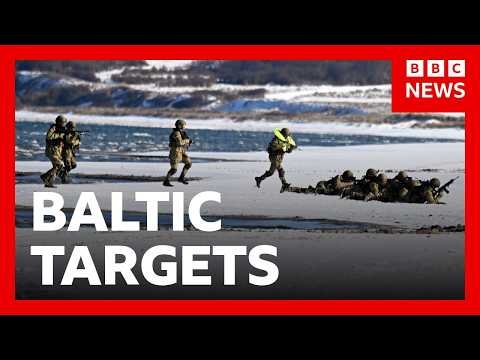
In a recent BBC News Security Brief episode, Christian Fraser and military analyst Mikey Kay examined four strategic locations where Russia could test NATO's defences, as the alliance's leaders gathered in Ankara for a pivotal summit on 7-8 July 2026 that will reshape transatlantic security. Four Places Russia Could Test NATO: The Security Brief Analysis of Eastern Flank Vulner
In a recent BBC News Security Brief episode, Christian Fraser and military analyst Mikey Kay examined four strategic locations where Russia could test NATO's defences, as the alliance's leaders gathered in Ankara for a pivotal summit on 7-8 July 2026 that will reshape transatlantic security.
Four Places Russia Could Test NATO: The Security Brief Analysis of Eastern Flank Vulnerabilities at the Ankara Summit
Ankara, Turkey – 7 July 2026 — As NATO leaders gather in the Turkish capital for the 36th NATO summit, the BBC's Security Brief has identified four strategic locations along the alliance's eastern flank where Russia could probe NATO's defences. The analysis comes as Ukraine makes an urgent plea for air defence systems against escalating Russian ballistic missile attacks.
The NATO Summit in Ankara — A Defining Moment
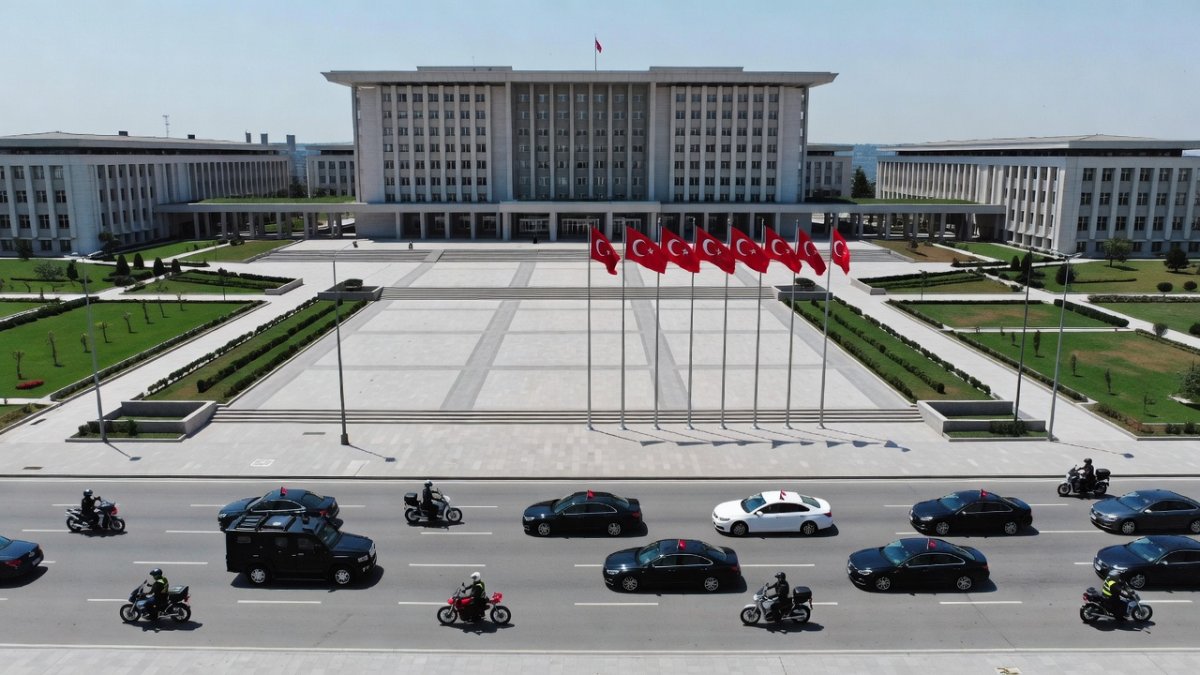
The 2026 NATO summit convened at the Presidential Complex in Ankara on 7-8 July, marking only the second time Turkey has hosted the alliance's leaders after the 2004 Istanbul meeting. US President Donald Trump arrived in the Turkish capital and was greeted by President Recep Tayyip Erdogan, setting the stage for intense discussions on collective defence. NATO Secretary General Mark Rutte placed defence spending at the forefront of the agenda, urging allies to "pull their weight" amid shifting transatlantic priorities. The 36th NATO summit occurs as European nations confront mounting pressure from Trump to assume greater responsibility for their own security. Sweden's prime minister also contributed to the Security Brief discussion, highlighting Nordic perspectives on the eastern flank. Poland's delegation pressed for immediate reinforcement of the Suwalki Corridor, while Baltic states coordinated positions on rapid reaction forces. The Defence Industry Forum announced multibillion-dollar contracts for air defence production across allied nations, with commitments from Germany and the Netherlands to expand Patriot missile output.
The gathering unfolds against a backdrop of intensified Russian strikes on Ukraine. Ballistic missiles launched by Russian forces have killed over 50 civilians in Kyiv in less than a week. Ukraine has responded with long-range drone strikes that have triggered fuel shortages across Russia. Moscow mayor Sergei Sobyanin reported that 430 drones targeted the capital overnight, underscoring the escalating aerial campaign on both sides. These developments frame the Ankara discussions with urgency, as NATO members weigh support for Kyiv while managing their own vulnerabilities.
Four Locations on NATO's Eastern Flank
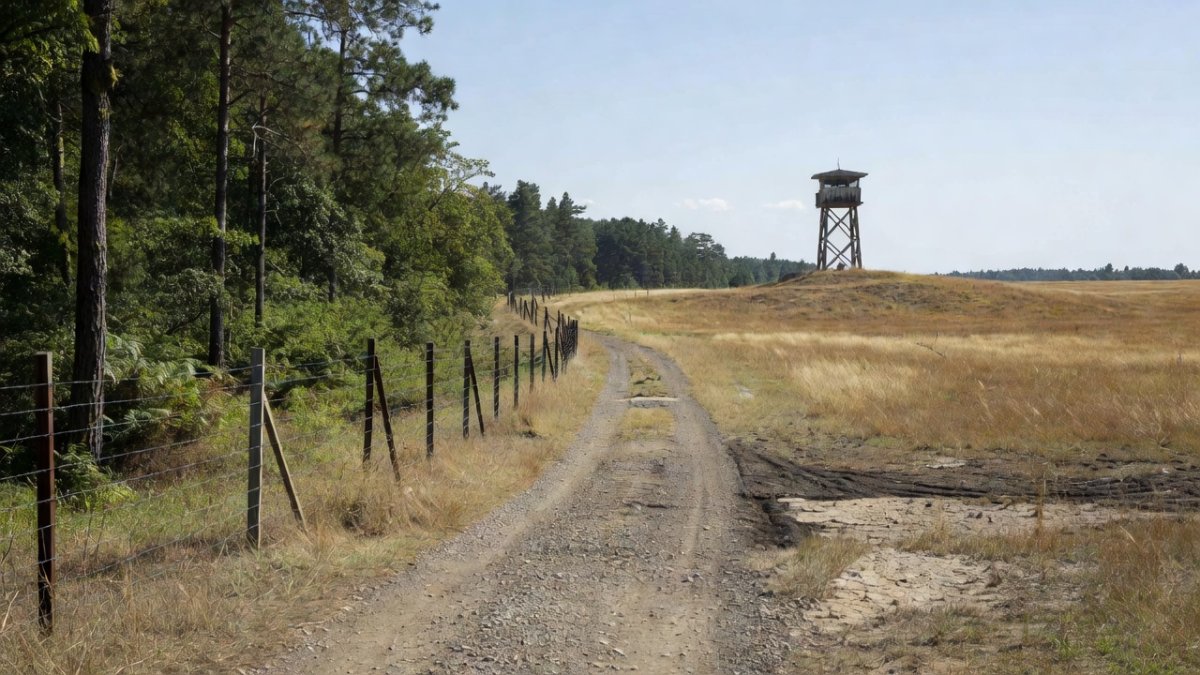
According to the BBC Security Brief analysis with Mikey Kay, the four strategic locations are the Suwalki Corridor between Poland and Lithuania, Finland's 1,343km border with Russia, the Kola Peninsula, and the Black Sea region. The Suwalki Corridor represents NATO's narrowest and most vulnerable point, where Russian forces from Kaliningrad and Belarus could potentially cut off the Baltic states. Finland's border constitutes the longest NATO-Russia land frontier, where a new NATO force has already been inaugurated following accession. The Kola Peninsula hosts Russia's Northern Fleet and strategic nuclear submarines, now positioned directly adjacent to NATO territory. The Black Sea region remains an active theatre, with Ukrainian drone strikes targeting Russia's Black Sea Fleet and energy infrastructure. The Suwalki Corridor's strategic significance lies in its role as the sole land link to the Baltic states, making any closure a direct challenge to alliance cohesion. Finland's extended frontier demands sustained surveillance and rapid reinforcement capabilities due to its proximity to Russian bases. The Kola Peninsula's importance stems from its concentration of nuclear assets that could project power across the Arctic and into the North Atlantic. In the Black Sea, control of maritime routes affects energy exports and regional stability for multiple NATO members including Romania and Bulgaria. Each location presents distinct challenges ranging from hybrid warfare and border provocations to direct military confrontation. The Kremlin has accused NATO of provocations along the eastern flank, a framing that analysts suggest masks Moscow's own aggressive posture. Vladimir Putin oversees these calculations from the Kremlin, drawing on established power structures that integrate military, energy, and information tools.
Ukraine's Urgent Plea for Air Defence
Volodymyr Zelensky addressed the summit on Tuesday, delivering an impassioned plea for Patriot missile systems. "We are capable of doing everything else ourselves, but when it comes to air defence, we need our partners' determination," he stated. The appeal follows devastating Russian ballistic missile attacks that Ukraine's air force admitted it could not stop, recording zero interceptions of 23 ballistic missiles fired at Kyiv on Sunday. In total, the weekend assault involved 68 missiles and 351 drones. During his bilateral meeting with President Trump, Zelensky detailed the interceptor shortage that has left Ukrainian cities exposed, noting that existing stockpiles cover only a fraction of incoming threats. The civilian impact includes widespread power outages and displacement in Kyiv, with hospitals operating on emergency generators. The Ukrainian president argued that Russia is placing its bets on ballistic weapons and urged allies to release their stockpiles. Patriot systems remain in short supply worldwide. Analysts suggest that even if US and European stockpiles were pooled, scaling up production to match the scale of Russia's ballistic campaign would take years. Zelensky has also emphasised that Russia's attacks demonstrate weakness rather than strength, while calling for pressure on Putin to enter talks toward a dignified peace.
Europe's Defence Spending Dilemma
The summit has been dominated by burden-sharing questions. NATO Secretary General Mark Rutte has highlighted the "Trump 47 effect," noting increased spending by members after Trump's return to office. The Hague summit in 2025 established a target of 5% of GDP on defence by 2035, yet several members remain below the existing 2% threshold. Germany has permanently deployed troops to Lithuania for the first time, representing a historic shift in Berlin's post-war posture. Poland and the Baltic states already exceed 3% of GDP on defence, while Spain and Italy continue below the 2% mark despite recent pledges. Germany's Lithuania deployment involves a brigade of 5,000 troops stationed near the border, signalling a departure from decades of restraint. Without full US support, European members face a stark choice between dramatically increasing defence spending and industrial production or accepting continued vulnerability on NATO's eastern flank. The four locations identified by the Security Brief remain the most probable flashpoints where Moscow could test Article 5 commitments.
The Kremlin's Calculus
From Moscow's perspective, the timing appears advantageous. Russia has learned from years of conflict in Ukraine that hybrid warfare, including energy coercion, disinformation, border provocations, and cyber attacks, can achieve strategic effects without triggering full NATO response. The Kremlin has systematically militarised Kaliningrad, deploying Iskander ballistic missiles and air defence systems that effectively hold the Suwalki Corridor at risk, supported by more than 15,000 troops. Moscow accuses Kyiv of terrorism for strikes on oil refineries. Kaliningrad's militarisation includes advanced S-400 systems and naval assets that extend Russia's anti-access capabilities into the Baltic Sea. Hybrid warfare methods encompass GPS jamming along Finnish borders, orchestrated migrant flows at crossing points, and cyberattacks on energy grids in Poland and Lithuania. The Kremlin has systematically militarised Kaliningrad, deploying Iskander ballistic missiles and air defence systems that effectively hold the Suwalki Corridor at risk, supported by more than 15,000 troops. Moscow accuses Kyiv of terrorism for strikes on oil refineries. Analysts suggest that Russia may be emboldened by perceived weakening of US commitment to European security under Trump. The Kremlin's calculation, according to experts cited in the Security Brief, is that a limited probe carefully calibrated below the Article 5 threshold could expose divisions within the alliance that Moscow could exploit.
Analysis — What Comes Next
The Ankara summit is widely regarded as the most consequential NATO meeting in years, potentially marking the beginning of what some analysts call NATO 3.0, an alliance reconfigured for a new Cold War. The four locations identified represent not only military vulnerabilities but political ones as well. A Russian provocation in the Suwalki Gap, a hybrid attack on Finland's border, or a naval incident in the Black Sea could each test whether NATO's mutual defence clause remains credible amid transatlantic divergence. The next summit is scheduled for Tirana in 2027, where leaders will assess progress on the 5% spending trajectory and eastern flank reinforcements. The Ankara summit is widely regarded as the most consequential NATO meeting in years, potentially marking the beginning of what some analysts call NATO 3.0, an alliance reconfigured for a new Cold War. The four locations identified represent not only military vulnerabilities but political ones as well. A Russian provocation in the Suwalki Gap, a hybrid attack on Finland's border, or a naval incident in the Black Sea could each test whether NATO's mutual defence clause remains credible amid transatlantic divergence. The next summit is scheduled for Tirana in 2027. For now, the alliance's focus remains on Ukraine and ensuring that the window created by Kyiv's drone campaign is not wasted. Yet the long-term question posed by the Security Brief analysis remains unanswered: can NATO defend all four of its exposed flanks simultaneously, or will the Kremlin find the one the alliance cannot protect? The answer may determine European security for a generation. Post-Soviet dynamics and energy politics continue to shape Moscow's options, with Gazprom and Rosneft playing central roles in coercion strategies.
By Irina Volkov, Staff Writer
This article was produced with AI-assisted research and editorial support. Reporting is based on sources cited in the article.
What's Your Reaction?
 Like
0
Like
0
 Dislike
0
Dislike
0
 Love
0
Love
0
 Funny
0
Funny
0
 Wow
0
Wow
0
 Sad
0
Sad
0
 Angry
0
Angry
0
Russia/Eastern Europe Correspondent at Global1.News. Covering Russian politics, energy, security, and the shifting dynamics of the post-Soviet space. Provides clear-eyed analysis on one of the world's most opaque regions.














Comments (0)