
Carney Sets August Byelections to Test Minority Grip
for three ridings that will test his minority Liberal government's stability ahead of the next general election. The contests in Beaches—East York, North Vancouver—Capilano, and Chicoutimi—Le Fjord come after key vacancies and feature high-profile candidates tied to the Prime Minister's Office. These races will influence parliamentary dynamics on housing, the economy, and regional priorities.
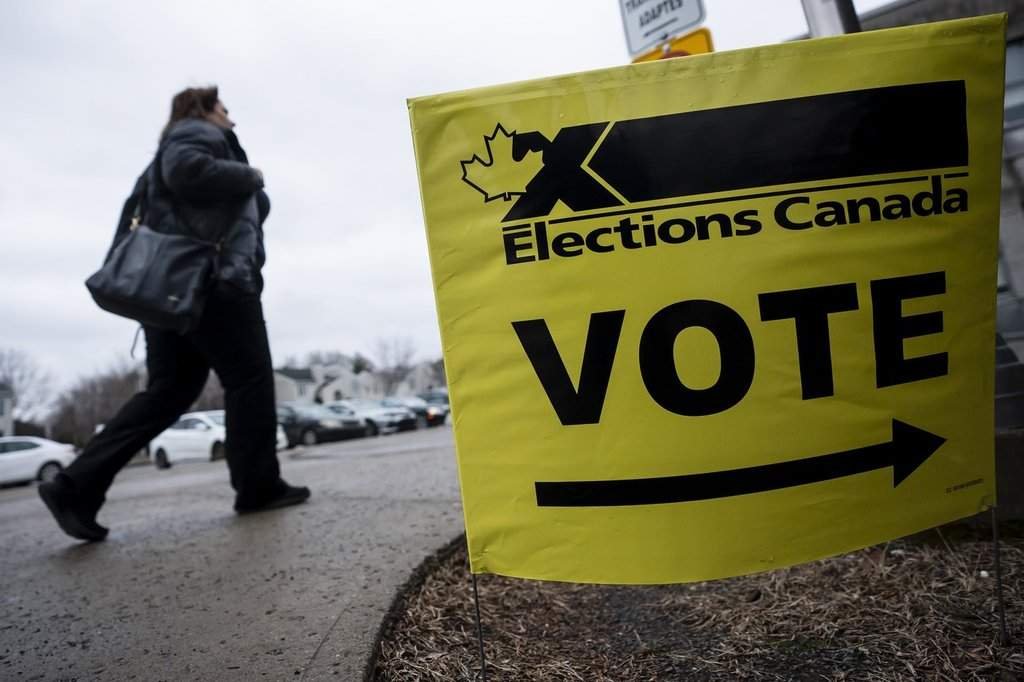
Prime Minister Mark Carney has announced byelections for three ridings that will test his minority Liberal government's stability ahead of the next general election. The contests in Beaches—East York, North Vancouver—Capilano, and Chicoutimi—Le Fjord come after key vacancies and feature high-profile candidates tied to the Prime Minister's Office. These races will influence parliamentary dynamics on housing, the economy, and regional priorities.
Carney Sets August Byelections to Test Minority Grip
Ottawa, Ontario — The contests in Beaches—East York, North Vancouver—Capilano, and Chicoutimi—Le Fjord come after key vacancies and feature high-profile candidates tied to the Prime Minister's Office, with implications for housing policy, economic legislation, and regional representation in Parliament.
Prime Minister Carney Sets Byelection Date
Prime Minister Mark Carney announced on July 26, 2026 that three byelections will take place on August 31, 2026. The contests will fill vacancies in Beaches—East York in Toronto, Ontario; North Vancouver—Capilano in British Columbia; and Chicoutimi—Le Fjord in Quebec. These ridings became open after former Liberal MP Nate Erskine-Smith left federal politics, former Liberal MP Jonathan Wilkinson accepted the post of ambassador to the European Union, and former Conservative MP Richard Martel was appointed to the Senate.
The Three Ridings and Their Recent History
Beaches—East York has long been a Liberal stronghold in the Toronto area. Nate Erskine-Smith represented the riding since 2015 and built a reputation for independent thinking on issues such as pharmacare and housing affordability. His departure leaves a seat that the Liberals will defend vigorously in a city where cost-of-living pressures remain a central voter concern.
In the 2021 federal election, Beaches-East York saw Liberal incumbent Nathaniel Erskine-Smith secure 48 per cent of the vote against the Conservative candidate's 22 per cent and the NDP's 21 per cent. The margin narrowed from the 2019 result where Liberals held 52 per cent. Demographically, Beaches-East York features a diverse urban population of roughly 110,000 with high education levels and median incomes around $85,000, driven by tech and professional sectors.
North Vancouver—Capilano covers affluent suburban and coastal communities north of Vancouver. Jonathan Wilkinson held the riding for the Liberals before his diplomatic appointment. The area features strong support for environmental policies and trade initiatives, reflecting British Columbia's broader economic ties to Asia and the energy sector. North Vancouver-Capilano's 105,000 inhabitants enjoy median incomes exceeding $95,000, with a focus on trade, tourism, and green industries amid a younger, highly educated electorate.
Chicoutimi—Le Fjord in the Saguenay region of Quebec presents a more competitive landscape. Richard Martel captured the seat for the Conservatives in the April 2025 general election by roughly 1,500 votes over Bloc Québécois and Liberal opponents. His subsequent Senate appointment by Prime Minister Carney has created an opening that both the Liberals and the Bloc Québécois are now contesting. Chicoutimi-Le Fjord, home to about 85,000 residents in a resource-based economy, shows lower median incomes near $65,000 and an older demographic reliant on forestry and aluminium production.
Historically, Beaches-East York has leaned Liberal since its creation in 1988, save for brief NDP surges in the 1990s. Chicoutimi-Le Fjord has flipped between Conservatives and the Bloc since the 1990s, underscoring Quebec's volatile regional politics. North Vancouver-Capilano has stayed Liberal-leaning since the 1960s, with occasional Conservative challenges during national waves.
Liberal Candidates and Campaign Preparations
The Liberal Party has confirmed three nominees. In Beaches—East York the candidate is Tanveer Shahnawaz, who brings experience in community organising and local economic development. Daniel Gobeil, a dairy farmer from the Saguenay region, will carry the Liberal banner in Chicoutimi—Le Fjord. In North Vancouver—Capilano the party has selected Braeden Caley, currently deputy chief of staff to Prime Minister Carney, a choice that signals direct involvement from the Prime Minister's Office.
These selections reflect an effort to balance local credentials with connections to the federal government. The minority status of the Liberal government means every seat carries added weight in maintaining or expanding the party's position in the House of Commons.
In Beaches-East York, Tanveer Shahnawaz emphasises affordable housing initiatives amid rising rents that have climbed 15 per cent since 2022. The Conservative Party has not yet confirmed a candidate for the riding, while the NDP has yet to name its nominee. Chicoutimi-Le Fjord presents a three-way contest between Liberal dairy farmer Daniel Gobeil, Bloc Québécois candidate Caroline Dubé, and potentially a Conservative contender. In North Vancouver-Capilano, Braeden Caley's role as deputy chief of staff to the Prime Minister signals the importance of this riding to the Liberal campaign strategy.
Bloc Québécois Response in Quebec
The Bloc Québécois has named Caroline Dubé as its candidate in Chicoutimi—Le Fjord. The party views the riding as fertile ground given its strong performance in the 2025 election and ongoing regional concerns over resource development and federal transfers. Bloc strategists are expected to emphasise Quebec's distinct interests in Parliament and criticise the appointment of a former Conservative MP to the Senate by a Liberal prime minister.
Observers note that turnout in Quebec byelections can vary significantly depending on the salience of sovereignty-related issues and local economic conditions. The outcome here could influence perceptions of the Bloc's strength heading into the next general election.
Implications for the Minority Parliament
The Liberal government currently operates with a minority in the House of Commons. The three byelections could shift the balance of power depending on which parties prevail. A clean sweep by the Liberals would strengthen their position, while any losses could embolden opposition parties to press for concessions or even trigger confidence votes.
With the Liberals holding 153 seats and Conservatives at 120, the NDP at 25, and the Bloc at 32, these three byelections could tip the balance toward a slim majority or force further reliance on opposition support. A Liberal sweep would bring them to 156 seats, easing passage of budgets, while losses might drop them below 150 and heighten instability.
Past minority governments, such as the 2004-2006 Liberal minority under Paul Martin, saw byelection shifts erode confidence and trigger elections within 18 months. The Conservative Party under Pierre Poilievre has signalled aggressive targeting of these ridings to highlight inflation and housing affordability concerns. The NDP under Jagmeet Singh may prioritise North Vancouver-Capilano to expand urban progressive influence, potentially extracting concessions on pharmacare in exchange for continued confidence. The Bloc Québécois under Yves-François Blanchet focuses on Chicoutimi-Le Fjord to defend Quebec interests.
Parliamentary analysts point to past minority parliaments where byelection results altered legislative agendas on matters such as carbon pricing, immigration levels, and defence spending. With the next general election still more than a year away, these contests serve as an early test of voter sentiment toward Prime Minister Carney's leadership.
What This Means for Canadians
Byelection outcomes will shape federal approaches to housing by determining whether Liberals can advance budget measures without NDP amendments, potentially delaying construction incentives if seats are lost. Healthcare funding negotiations could stall if opposition parties gain leverage to demand more provincial transfers, affecting wait times in provinces like Quebec and British Columbia. Climate policies may face renewed scrutiny, with Conservatives pushing to weaken carbon pricing if they secure rural gains.
The timeline requires candidates to file nominations by early August ahead of the August 31 vote, giving parties limited time to organise ground campaigns. Voters in these ridings will directly influence minority stability, as results could prompt policy adjustments or an early election call. Practical effects include heightened attention to local economies, with Beaches-East York residents seeing faster housing approvals if Liberals hold firm, while Chicoutimi-Le Fjord workers might benefit from resource subsidies if the Bloc strengthens its hand.
Historical Context and Voter Behaviour
Byelections in Canada have often functioned as barometers of public opinion between general elections. Turnout tends to be lower than in general elections, which can favour parties with strong local organisations. In recent decades, governing parties have sometimes lost seats in byelections, though the pattern is not universal.
The ridings span three provinces with distinct political cultures. Ontario's urban ridings often focus on housing and transit, British Columbia's coastal seats highlight environmental and trade priorities, and Quebec's regional ridings frequently centre on language, culture, and federal-provincial fiscal arrangements. Campaign messaging will need to address these varied concerns while also speaking to national themes of economic stability and reconciliation with Indigenous peoples.
Prime Minister Carney's decision to call the votes for late August aligns with the conventional practice of allowing sufficient time for nominations and campaigning without unduly prolonging vacancies. Elections Canada will oversee the process, ensuring compliance with the Canada Elections Act across all three ridings.
Tags: Mark Carney, byelections, Beaches-East York, North Vancouver-Capilano, Chicoutimi-Le Fjord, Liberal Party, Bloc Québécois, minority government, House of Commons, Canadian politics
By Alex Thompson, Staff Writer
This article was produced with AI-assisted research and editorial support. Reporting is based on sources cited in the article.
What's Your Reaction?
 Like
0
Like
0
 Dislike
0
Dislike
0
 Love
0
Love
0
 Funny
0
Funny
0
 Wow
0
Wow
0
 Sad
0
Sad
0
 Angry
0
Angry
0

Canada Correspondent at Global1.News. Based in Toronto, covering Canadian politics, energy, trade, and US-Canada relations. Provides the Canadian perspective on North American and global affairs.












Comments (0)