
Erdoğan convinced US to halt plan to arm Iranian opposition: Report
President Recep Tayyip Erdoğan's reported success in persuading U.S. President Donald Trump to abandon a covert plan to arm Iranian opposition groups represents a significant moment in the intricate diplomatic dance among Ankara, Washington, and Tehran. The episode, disclosed by Israeli media citing security sources, reveals the extent to which Turkey's security concerns can ov
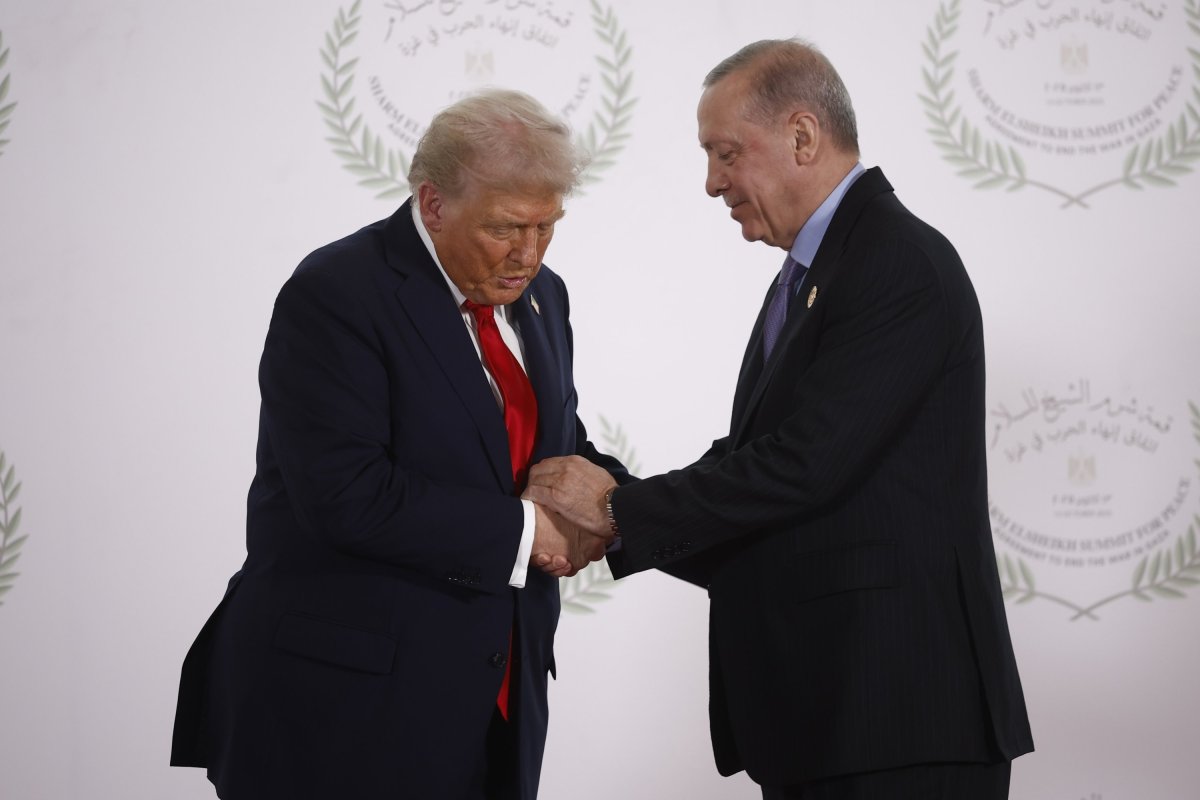
President Recep Tayyip Erdoğan's reported success in persuading U.S. President Donald Trump to abandon a covert plan to arm Iranian opposition groups represents a significant moment in the intricate diplomatic dance among Ankara, Washington, and Tehran. The episode, disclosed by Israeli media citing security sources, reveals the extent to which Turkey's security concerns can override U.S.-Israeli strategic designs against the Islamic Republic, and underscores the complex interplay of Kurdish interests, great-power competition, and regional rivalries that define Middle East geopolitics.
Erdoğan's Diplomatic Intervention Halts Covert Arming Plan
Beirut, Lebanon – Saturday, June 6, 2026 — Israeli media reports claim that President Recep Tayyip Erdoğan successfully persuaded U.S. President Donald Trump to abandon a proposal to arm Iranian opposition groups and Iraqi Kurdish factions aimed at pressuring Tehran. The plan allegedly included Israeli air support and weapons seized from Hamas and Hezbollah. According to The Jerusalem Post, details reached Ankara through White House channels, allowing Erdoğan to raise the matter directly with Trump and secure its cancellation. This episode underscores Turkey's ongoing effort to shape outcomes in the Iran confrontation without direct confrontation. Ankara has consistently opposed any escalation that could empower Kurdish militants or destabilize its southern border.
Israeli Calculations and the Proposed No-Fly Zone
The reported initiative envisioned Israel establishing a no-fly zone over parts of western Iran to protect advancing Kurdish forces. Israeli officials reportedly believed the scheme could increase pressure on the Islamic Republic without committing U.S. troops. Weapons were to come from stockpiles captured in Gaza and Lebanon, a detail that drew attention to the scale of Israeli seizures from Iranian-backed groups.
Former Israeli Military Intelligence Directorate (AMAN) chief Tamir Hayman later confirmed that Israel had examined multiple covert destabilization options, including support for anti-Tehran Kurdish networks. Publication of these claims received approval from Israeli military censors, indicating official willingness to signal capability even after the plan was shelved. Hayman had previously told U.S. broadcaster PBS that discussions included encouraging attacks by groups opposed to Tehran, including organizations linked to the PKK terrorist group.
Turkey's Strategic Calculus on Kurdish Militancy
Erdoğan's intervention reflected Ankara's long-standing priority of preventing the emergence of armed Kurdish entities along its borders. The reported inclusion of groups linked to the PKK in earlier Israeli discussions heightened Turkish concerns. Turkey has conducted multiple cross-border operations against PKK infrastructure in Iraq and Syria precisely to deny such groups safe havens or external backing.
By blocking the arming scheme, Ankara avoided a scenario in which U.S. and Israeli support could indirectly strengthen Kurdish factions hostile to Turkish interests. This move aligns with Turkey's broader policy of treating Kurdish separatism as an existential security threat rather than a tactical asset against Iran. The Turkish Ministry of Foreign Affairs has consistently maintained that any external military support for Kurdish groups along Turkey's borders constitutes a direct threat to national security.
The JD Vance Leak Allegations and Washington's Internal Dynamics
Israeli sources reportedly accused U.S. Vice President JD Vance of leaking information about the proposal to Turkish officials. However, Vance's special assistant and press secretary, Luke Schroeder, denied the allegation. The leak accusation, if substantiated, would represent a serious breach of interagency discipline within the Trump administration and could complicate Washington's relationship with both Jerusalem and Ankara.
For Turkey, the alleged leak — whether intentional or inadvertent — provided diplomatic intelligence that allowed Erdoğan to preemptively block the plan. This pattern of information flows between Washington and Ankara reflects the unusually direct channel of communication that has characterized Trump-Erdoğan relations, where personal diplomacy has often bypassed traditional bureaucratic processes on both sides.
Iran-Turkey Rivalry in a Shifting Regional Landscape
The episode occurs against the backdrop of deepening Sunni-Shia geopolitical competition across the Middle East. While Turkey and Iran have managed pragmatic economic ties, including energy trade and the TurkStream pipeline cooperation, they compete for influence in Iraq, Syria, and the South Caucasus. Tehran maintains extensive proxy networks through the Islamic Revolutionary Guard Corps (IRGC) and affiliated groups such as Hezbollah in Lebanon and various Iraqi Shia militias.
Ankara, for its part, has expanded military and political reach through operations in northern Syria — targeting both ISIS remnants and Kurdish YPG forces — and through strategic partnerships with Qatar and select Libyan factions. Erdoğan's ability to influence a U.S. decision on arming Iranian opposition illustrates Turkey's remaining leverage in Washington despite periodic tensions over the S-400 missile system procurement and human rights concerns.
Mossad Operations and the Shadow War with Iran
Separate reports in the Israeli press alleged that Mossad had already supplied weapons to Iranian opposition Kurdish groups as part of ongoing efforts to undermine the government in Tehran. Under the broader plan, Israel intended to supply opposition groups with weapons seized from Hamas in Gaza and Hezbollah in Lebanon — an approach that would have recycled captured Iranian-supplied arms against Tehran's own proxies.
This fits the established pattern of Israel-Iran shadow warfare: covert operations, targeted assassinations of nuclear scientists, cyberattacks on Iranian infrastructure, and support for opposition groups, all conducted below the threshold of open military conflict. Although the specific arming plan was halted by Erdoğan's intervention, the underlying dynamic of low-intensity confrontation between Jerusalem and Tehran continues across multiple domains.
Implications for U.S.-Turkey Relations and Great-Power Competition
For Washington, the decision to stand down from the plan likely reflected a calculation that alienating Turkey carried higher costs than the marginal gains from arming disparate opposition elements. Turkey remains a vital NATO ally controlling access to the Black Sea, hosting Incirlik Air Base, and wielding significant influence over refugee flows from Syria.
In the wider contest involving the United States, China, and Russia, Turkey's move reinforces its position as an independent actor unwilling to subordinate its Kurdish security concerns to American or Israeli priorities. This autonomy complicates efforts to build a unified front against Iran's nuclear program and regional proxies, while also creating diplomatic openings that Moscow and Beijing can exploit.
Regional Implications
Turkey's demonstrated willingness to use its relationship with the United States to constrain Israeli options adds another layer of complexity to any future planning against Tehran. As Gulf states pursue economic diversification under frameworks such as Saudi Vision 2030 and the UAE's post-oil strategy, the risk of renewed instability emanating from Iranian territory remains a shared concern among Gulf Cooperation Council members.
For Iran, the episode serves as a reminder that external powers remain willing to exploit internal ethnic fissures — particularly the Kurdish minority's long-standing grievances — even if execution remains politically and logistically difficult. Meanwhile, for Kurdish groups in Iraq, Syria, and Iran, the episode illustrates their persistent vulnerability to being used as pawns in larger geopolitical games, with their security interests often subordinated to the strategic calculations of Ankara, Washington, Jerusalem, and Tehran.
The broader lesson from this episode is clear: in the Middle East's complex web of alliances and rivalries, no covert plan proceeds in isolation. Turkey's ability to intercept and veto a U.S.-Israeli scheme against Iran demonstrates that regional players — not just great powers — continue to shape the strategic landscape of the Middle East in decisive ways.
By Malik Hassan, Staff Writer
This article was produced with AI-assisted research and editorial support. Reporting is based on sources cited in the article.
What's Your Reaction?
 Like
0
Like
0
 Dislike
0
Dislike
0
 Love
0
Love
0
 Funny
0
Funny
0
 Wow
0
Wow
0
 Sad
0
Sad
0
 Angry
0
Angry
0

Middle East Correspondent at Global1.News. Based in Beirut, covering politics, conflict, energy, and society across the Middle East. Brings context and depth to a region often reduced to headlines.













Comments (0)