
China Rebukes UK Over Nationalisation of British Steel as Tensions Between London and Beijing Escalate
The UK nationalised British Steel on Thursday, seizing full ownership from Chinese-owned Jingye Group. Beijing said the move "severely undermined" Chinese firms' confidence in investing in the UK. With 2,700 jobs and £1.3m daily losses, incoming PM Burnham inherits a major diplomatic crisis.
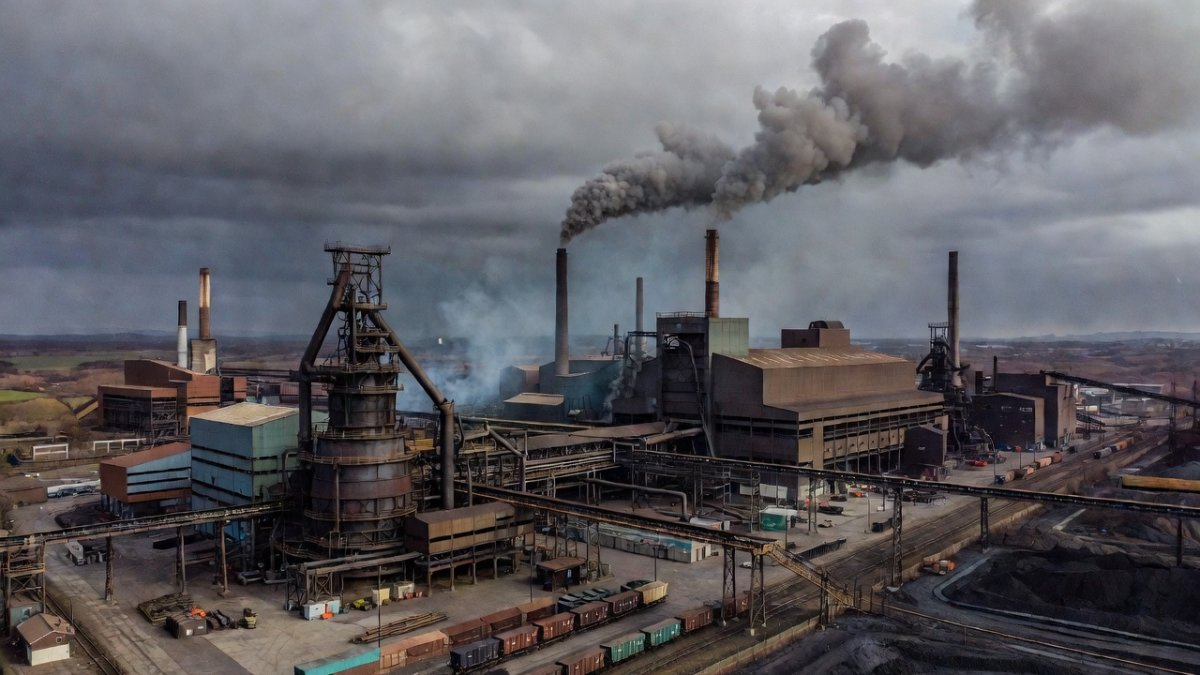
Folks, we've got a major escalation in the UK-China relationship, and it's not about trade disputes or diplomatic posturing — it's about steel. On Thursday, the UK government officially nationalised British Steel, taking full ownership of the country's last working primary steelmaking facility in Scunthorpe. And Beijing is not happy about it — not even a little bit.
The Nationalisation That Shook the Markets
The UK moved on Thursday to bring British Steel fully into public ownership, nationalising the loss-making company after more than a year of escalating financial turmoil and operational uncertainty. The move, which Parliament authorised through legislation passed on Wednesday, transfers ownership from Chinese-owned Jingye Group to the British government under a public interest test.
British Steel is the only source of primary steelmaking left in the United Kingdom. The Scunthorpe facility directly employs approximately 2,700 people and supports thousands more across the wider supply chain. Its blast furnaces are considered a "vital national capability" — the kind of industrial infrastructure no major economy can afford to lose entirely.
Business Secretary Peter Kyle told the BBC that the government would need to cover the facility's operating costs "for the immediate future." And those costs are staggering — the National Audit Office estimated in March that the Scunthorpe steelworks was costing the government approximately £1.3 million ($1.75 million) per day to keep running.
How British Steel Ended Up in Chinese Hands
To understand why this matters globally, let's rewind. Chinese steelmaker Jingye — one of the 100 biggest companies in China — bought British Steel in 2020 for 70 million pounds, or about $94 million. At the time, it was seen as a strategic investment by a Chinese industrial giant into a struggling but strategically important UK asset.
But by 2025, the financial picture had turned dire. Jingye reported it was losing 700,000 pounds ($942,000) every single day. In March 2025, the company carried out a consultation that concluded the Scunthorpe blast furnaces were simply not financially sustainable under its ownership. The following month, Jingye quietly cancelled orders for a key material used in the steelmaking process — a move that industry watchers interpreted as preparation for a complete shutdown.
The UK government stepped in that same month, seizing operational control of British Steel while Jingye retained legal ownership. For over a year, an uneasy arrangement held: the UK ran the plant, and Jingye owned it. But that arrangement was never going to be permanent.
Beijing Fires Back: "Severely Undermined" and "Forcibly Taken"
China's Ministry of Commerce issued a strongly worded statement on Friday that left absolutely no ambiguity about Beijing's position. The ministry said the nationalisation had "seriously damaged" Jingye's legitimate rights and interests and "severely undermined" Chinese companies' confidence in investing in the UK.
The language is significant. China accused the UK of having "forcibly" taken over the company and "disregarded" Jingye's contributions to the British economy and society. In diplomatic terms, this is about as sharp as it gets short of sanctions or retaliatory measures.
The ministry urged the UK to "faithfully fulfil" its obligations under the China-UK Bilateral Investment Treaty — a 1986 agreement that governs investment protections between the two countries. Beijing also said it would monitor developments "closely" and assist Chinese companies in protecting their rights, though it stopped short of specifying what form that assistance might take.
The Compensation Question
One of the thorniest issues facing both governments is compensation. The UK government says it will appoint an independent valuer to assess "whether any compensation is payable" to Jingye. That wording — "whether any" — suggests London is keeping its options open, and possibly signalling that no payout is guaranteed.
Jingye, for its part, has already demanded compensation. In June 2026, the company formally asked the UK to compensate it for losses from investments made before London took over operational control in April 2025. The amount Jingye is seeking has not been publicly disclosed, but given that the company paid £70 million for British Steel and then lost roughly £700,000 per day for years, the figure could be substantial.
China's commerce ministry didn't specifically mention compensation in its Friday statement, but the demand for "faithful fulfilment" of the bilateral investment treaty is widely interpreted as a legal foundation for a compensation claim.
Steel Prices and the European Dimension
This nationalisation doesn't happen in a vacuum. European steel markets are already under severe pressure. The EU has proposed 50 percent tariffs on certain steel imports, a move that British industry groups have warned amounts to a "crisis" for UK producers who rely on European export markets.
Post-Brexit, UK steelmakers face a complicated set of trade barriers that their EU competitors don't. The nationalisation gives the British government direct control over production and pricing decisions — meaning it can potentially prioritise domestic infrastructure projects and defence needs over purely commercial considerations.
Globally, steel prices have been volatile throughout 2026, driven by Chinese overcapacity, the ongoing conflict-related disruptions in the Middle East affecting shipping routes, and shifting tariff regimes across major economies. British Steel's nationalisation adds a new political dimension to an already turbulent market.
The Burnham Factor: A New Prime Minister Faces an Early Test
The timing of this crisis is particularly awkward. Andy Burnham is set to become Prime Minister on Monday, inheriting both the nationalised steelworks and an increasingly frayed relationship with the world's second-largest economy. The incoming PM will have to weigh the economic benefits of maintaining strong ties with China against the political realities of a nationalisation that Beijing clearly views as a hostile act.
Burnham's approach to China has been pragmatic in the past, but the British Steel nationalisation leaves him with limited room to manoeuvre. The UK cannot both nationalise a Chinese-owned company and expect business-as-usual relations — something has to give. Whether Burnham pursues a conciliatory path — offering compensation and investment guarantees to rebuild trust — or a confrontational one will signal the tone of his entire premiership.
There's also the question of what the UK does with British Steel now that it owns it. Running the plant is costing more than £1 million a day. Selling it to another buyer — possibly a British or European industrial group — would be the cleanest exit, but finding a willing buyer for a loss-making steelworks in a high-cost regulatory environment is far from guaranteed.
What This Means: A Defining Moment for UK-China Investment Relations
This isn't just a story about one steel plant in northern England. The British Steel nationalisation represents a watershed moment for Chinese investment in Western countries. China's commerce ministry has explicitly linked this case to broader confidence among Chinese companies investing in the UK — and by extension, the West.
If Beijing follows through on its warning, we could see Chinese firms pulling back from UK infrastructure investments, energy projects, and technology partnerships. Given China's role as a major investor in UK utilities, real estate, and financial services, the ripple effects could be felt across multiple sectors.
For the UK, the calculus is brutally simple: keep British Steel alive and lose Chinese investment confidence, or alienate domestic steelworkers and protect the bilateral relationship. There is no painless option. But after more than a year of running the plant at a loss, the government clearly decided that protecting a "vital national capability" — and 2,700 direct jobs — was worth the diplomatic cost.
The independent valuer's decision on compensation will be the first major test. If the UK pays Jingye a meaningful amount, it may defuse some of Beijing's anger. If it pays nothing, China's warning about "undermined confidence" could become a self-fulfilling prophecy. Either way, the relationship between London and Beijing will not be the same after this.
By Jessica Ali, Staff Writer
This article was produced with AI-assisted research and editorial support. Reporting is based on sources cited in the article.
What's Your Reaction?
 Like
0
Like
0
 Dislike
0
Dislike
0
 Love
0
Love
0
 Funny
0
Funny
0
 Wow
0
Wow
0
 Sad
0
Sad
0
 Angry
0
Angry
0

West Africa/Sahel Correspondent at Global1.News. Dakar-based journalist covering politics, security, climate, and development across Francophone and Anglophone West Africa. Tells the stories of a region undergoing profound transformation.














Comments (0)