
Ceasefire in Ashes: US and Iran Trade Blows for Sixth Straight Night as Hormuz Blockade Returns
Ceasefire in Ashes: US and Iran Trade Blows as Hormuz Blockade Returns Atlanta, GA — The US-Iran ceasefire is dead, and right now, the United States military is pounding Iranian targets for a sixth straight night. The Strait of Hormuz blockade has returned with full force, sending oil prices soaring and threatening global energy supplies. Both sides show no signs of backing down as strikes continue unabated. Ceasefire in Ashes: US and Iran Trade Blows for Sixth Straight Night as Hormuz Blocka...
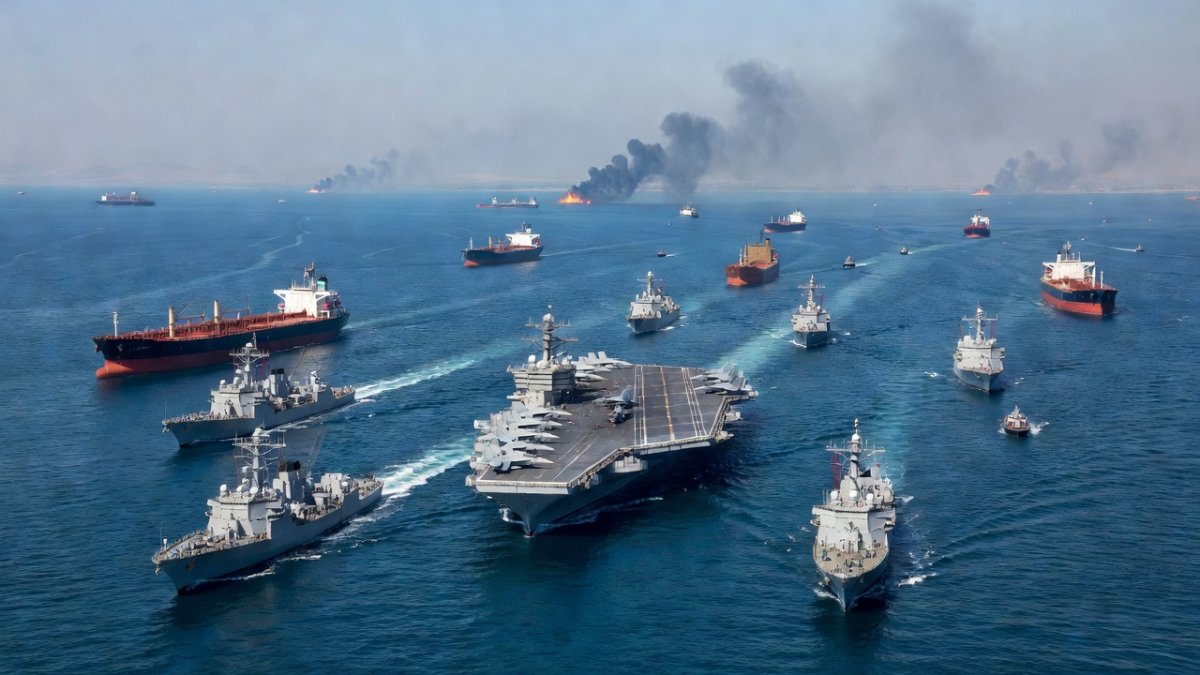
Ceasefire in Ashes: US and Iran Trade Blows as Hormuz Blockade Returns
Atlanta, GA — The US-Iran ceasefire is dead, and right now, the United States military is pounding Iranian targets for a sixth straight night. The Strait of Hormuz blockade has returned with full force, sending oil prices soaring and threatening global energy supplies. Both sides show no signs of backing down as strikes continue unabated.
Ceasefire in Ashes: US and Iran Trade Blows for Sixth Straight Night as Hormuz Blockade Returns
I'm Jessica Ali, and here's what you need to know: the US-Iran ceasefire is dead, buried, and burning. Folks, we are six nights into open strikes, the Strait of Hormuz is back under blockade, and both sides are doubling down with no off-ramp in sight. This is not posturing. This is real, and it is hitting global oil flows right now.
How We Got Here: The Ceasefire That Never Was
Folks, let's cut the nonsense. The February 2026 US-Israel joint strikes on Tehran marked the real start of this war, hitting nuclear sites and Revolutionary Guard command posts in a single night that killed dozens and shattered any illusion of containment. Pakistan stepped in weeks later, shuttling envoys between Washington and Tehran under the cover of Islamic summit talks in Islamabad. The resulting April 2026 deal was little more than a public handshake: Iran agreed to pause tanker harassment while the US eased some secondary sanctions, but neither side withdrew forces or dismantled trigger mechanisms.
Hours after the ceasefire text was released, Iranian missiles and drones slammed into ports in Kuwait and the UAE, killing three workers and damaging an LNG loading terminal. Tehran called the attacks "unrelated incidents," but the timing made clear the pause was already unraveling. Trump responded by ordering the Navy to re-impose the Hormuz exclusion zone that same week, stationing destroyers to shadow every Iranian-flagged vessel. Skirmishes never truly stopped; IRGC speedboats continued weekly harassment of commercial traffic while US aircraft flew daily electronic-warfare missions along the Iranian coast. Both capitals treated the April agreement as a temporary breathing space rather than a foundation for trust.
When Iran struck three commercial tankers in the Strait of Hormuz on July 7, President Trump declared the ceasefire over on July 8. That was the match. Everything since has been predictable escalation because neither side trusted the deal from day one. You can blame Iran for firing first this round or blame the US for maximum pressure, but the result is the same: we are back to nightly exchanges.
Six Nights of Fire: What CENTCOM Is Hitting
The US has now bombed Iran for six consecutive nights from July 11 through July 16. CENTCOM confirmed the first wave alone struck more than 170 Iranian military targets — command centers, air defense sites, missile and drone facilities, and coastal surveillance posts along the Gulf. By the sixth night, cumulative Iranian casualties reached at least forty-seven military personnel, including crews lost when two missile boats were sunk at Bandar Abbas and technicians killed at an underground drone facility near Bushehr.
CENTCOM's nightly targeting list has zeroed in on Iran's coastal surveillance radars first, then IRGC naval vessels tied to mine-laying and fast-attack groups, followed by layered air-defense nodes protecting those assets. The sequence mirrors the opening nights of the 2026 campaign but with greater persistence; earlier waves lasted two or three days before political pauses, whereas this run has already doubled that duration without visible de-escalation.
The campaign has degraded Iran's ability to maintain continuous radar coverage of the strait and has forced surviving IRGC vessels into port or under hardened cover, yet Tehran still manages sporadic launches from mobile launchers farther inland. That mixed result suggests the strikes are achieving tactical suppression rather than strategic paralysis. Iranian state media now frames each night's losses as proof of resilience, while US officials privately acknowledge that full degradation would require weeks more of sustained pressure and far higher civilian-adjacent risk.
Iran Strikes Back: Fifth Fleet in the Crosshairs
Iran is not taking this lying down. The IRGC launched ballistic missiles and drones at the US Fifth Fleet headquarters in Bahrain and a US air base in Jordan. Air sirens sounded four times in Bahrain on Tuesday alone. This is direct retaliation aimed at US forward bases. Tehran is signaling that American forces in the region will pay a price for every night of strikes. The message is clear: if the US keeps bombing, the war spreads to every US installation within range. That is not rhetoric. Those sirens in Bahrain prove the threat is active.
Trump's Hormuz Gamble: A 20% Toll That Lasted One Day
Trump reimposed the naval blockade of Iranian ports in the Strait of Hormuz and floated a 20 percent transit fee for ships using the strait. That fee would have added roughly 32 million dollars to the cost of a fully loaded very large crude carrier. It lasted exactly one day. Iran struck two ADNOC tankers in response, and the fee idea collapsed. The blockade itself remains in force, slowing daily traffic dramatically. Twenty-two Japan-linked vessels have already left the Gulf since Tuesday. Iran is warning that the war will spread if US strikes continue. The strait carries 20 percent of global petroleum every day. When you choke that chokepoint, the entire world feels it within hours.
Oil Markets in Turmoil: What This Means at the Pump
Brent crude opened the week before the ceasefire collapsed at $78 a barrel and has since spiked past $103 — the sharpest six-day surge since the 2022 Ukraine shock. US retail gasoline prices have already climbed eleven cents nationally, with Gulf Coast refiners posting the steepest jumps as they scramble for alternative crude sources. Japan's decision to divert its twenty-two vessels has hit LNG cargoes hardest; spot prices for cargoes headed to Tokyo and Seoul jumped 14 percent in two days, threatening summer power-generation contracts that were already tight after last winter's drawdowns.
The two ADNOC tankers struck while attempting the 20 percent transit run sent an unmistakable signal to every Gulf producer: any vessel accepting the US fee becomes an Iranian target. Abu Dhabi and Riyadh have since quietly rerouted several loadings through the longer Red Sea route, adding days and insurance costs that will eventually appear in European diesel prices. If Hormuz traffic remains at half its normal volume into September, analysts now project a sustained $15–20 risk premium that could shave 0.6 percent off global GDP growth by year-end, with import-dependent economies in South Asia and East Africa absorbing the largest share of the pain.
Shipping companies are rerouting or canceling transits because the risk premium just spiked. The 20 percent of global oil that normally flows through Hormuz is now moving slower and at higher cost. That means higher prices at the pump, higher costs for plastics and fertilizers, and pressure on every economy that imports energy. Europe and Asia are watching their supply lines tighten. This is not abstract. When traffic through the world's most important oil artery slows, inflation ticks up and growth slows.
The Bottom Line: Where This Ends
Folks, both sides are dug in with no visible diplomatic exit. The US is committed to degrading Iranian military capabilities. Iran is committed to showing it can hit back at US bases and disrupt the strait. Each night of strikes hardens positions further. The April ceasefire proved there is no trust left. The 20 percent fee experiment proved economic pressure triggers immediate Iranian retaliation. We are watching a cycle of escalation with no brake.
The next moves will likely involve more strikes on Iranian infrastructure or more Iranian attacks on shipping and bases. Global oil markets will stay volatile until one side calculates the cost is too high. Right now, that calculation has not been made. Stay with Global 1 News. We are tracking every development because this one touches every gas tank on the planet.
By Jessica Ali, Lead Anchor — Global 1 News
This article was produced with AI-assisted research and editorial support. Reporting is based on sources cited in the article.
What's Your Reaction?
 Like
0
Like
0
 Dislike
0
Dislike
0
 Love
0
Love
0
 Funny
0
Funny
0
 Wow
0
Wow
0
 Sad
0
Sad
0
 Angry
0
Angry
0

Editor-in-Chief at Global1.News. Atlanta-based journalist who cuts through the BS and tells it like it is. Lead anchor, host, and the voice you hear when the spin stops and the truth starts.












Comments (0)