
Israeli Airstrikes Kill Dozens in Gaza, Ceasefire Collapses
The article examines mid-July 2026 Israeli airstrikes in Gaza that killed dozens, including a restaurant strike claiming 17 lives, police post attacks, and family casualties.
In a recent Middle East Eye report titled "Israeli strike on a restaurant kills at least 17 Palestinians in Gaza City," fresh footage captured the immediate aftermath of an airstrike that leveled a crowded eatery in central Gaza City. The video shows rescue workers pulling bodies from rubble amid scenes of chaos, underscoring the latest wave of deadly airstrikes that killed at least a dozen people across Gaza between July 15 and 16, 2026, including several police officers. These incidents come as international mediators scramble to prevent the October 2025 ceasefire from collapsing entirely.
The Restaurant Strike and Civilian Casualties
The strike on the restaurant in Gaza City claimed at least 17 lives, many of them civilians gathered for an evening meal. Among the confirmed deaths were three members of a single family — a father, mother, and their six-year-old daughter — killed when an air attack struck an apartment building in central Gaza on July 15. A separate strike in the Muwasi area west of Rafah on July 12 killed a nine-year-old girl. These cases illustrate the direct toll on families attempting to maintain daily routines under persistent threat.
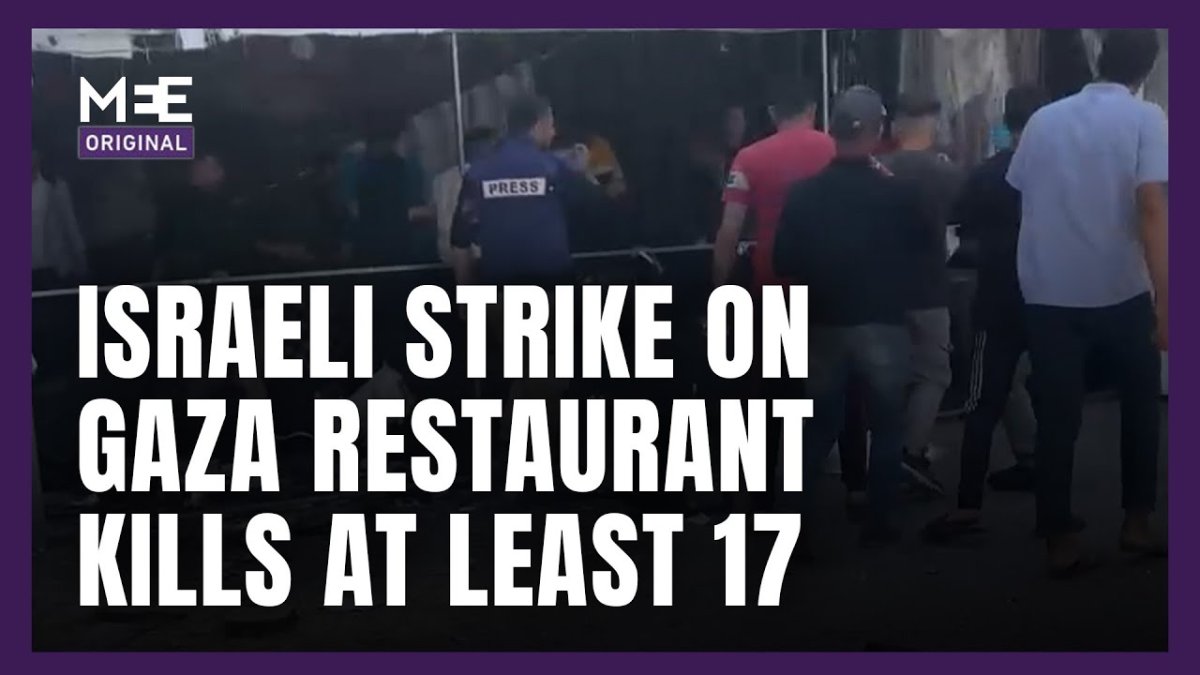
Local residents described the restaurant as a modest gathering spot frequented by workers and families. The sudden loss of so many in one location has left entire neighborhoods in mourning, with survivors facing the added burden of identifying remains and arranging burials amid restricted movement.
Such strikes on civilian congregation sites have become a recurring feature, echoing earlier attacks on markets, cafés, and aid distribution points. The challenge of recovering and identifying bodies amid repeated bombardments compounds the trauma for surviving relatives, who often wait days for confirmation while hospitals operate beyond capacity. Human-rights monitors note that these incidents systematically erode safe spaces, leaving communities with nowhere to gather without fear of instantaneous destruction.
Attacks on Police and Civil Infrastructure
Israeli forces also targeted a Gaza police post, killing seven people including the station chief, according to reporting from The New York Times on July 14, 2026. The UN human rights office has condemned repeated attacks on Gaza police personnel, noting that such forces have been struck at least a dozen times throughout 2026. Israel maintains that its targets are individuals it describes as terrorists or militants linked to the October 7, 2023 attack.
These strikes disrupt basic law enforcement and emergency response capabilities at a time when civilian protection remains critical. Police stations often serve multiple community functions, including traffic control and coordination with health services during crises.
Broader Pattern of Ceasefire Violations Since October 2025
Since the ceasefire deal was signed in October 2025 after 13 months of war, Israeli violations have killed more than 1,108 Palestinians and wounded over 3,578 others, according to Gaza Health Ministry figures. The total death toll since October 2023 now exceeds 73,000 Palestinians killed and 173,000 wounded. Each new incident erodes the fragile truce and raises questions about the sustainability of mediated agreements.
Mediators from several countries continue talks aimed at salvaging the ceasefire, yet the pattern of strikes suggests limited progress on core implementation issues. Palestinian officials have repeatedly called for independent monitoring mechanisms to document violations in real time.
The ceasefire framework outlined phased steps beginning with hostage and prisoner exchanges, followed by incremental Israeli withdrawals and reconstruction corridors. However, daily violations — ranging from tank fire into residential zones to targeted airstrikes — have averaged several incidents per 24-hour period, according to field reports compiled by local medics and international observers.
Official statements continue to affirm adherence to the deal's terms, yet the on-ground reality reveals a persistent gap: humanitarian access remains throttled, reconstruction materials blocked, and civilian movement severely restricted. This pattern mirrors earlier collapses, where initial calm gave way to incremental escalations that ultimately nullified negotiated pauses.
Humanitarian Toll on Hospitals, Displacement, and Children
Hospitals across Gaza remain overwhelmed, struggling with limited medical supplies because of the ongoing blockade. Staff report shortages of anesthesia, antibiotics, and basic equipment needed to treat blast injuries and shrapnel wounds. The cumulative effect leaves medical teams forced to make difficult triage decisions daily.
Children continue to bear a disproportionate share of the suffering. The deaths of the six-year-old girl in central Gaza and the nine-year-old in Muwasi highlight how violence interrupts education, play, and family life. Displacement has intensified as families flee repeated strikes, often moving between temporary shelters with little access to clean water or consistent food supplies.
International Response and Legal Framework
The UN human rights office has issued explicit condemnations of attacks on police infrastructure, emphasizing that such personnel are protected under international humanitarian law when not directly participating in hostilities. Legal experts note that repeated strikes on civilian-adjacent sites risk violating principles of distinction and proportionality.
UN Security Council Resolution 2728 and subsequent calls for sustained de-escalation remain unimplemented, while the International Court of Justice continues to examine allegations of collective punishment and disproportionate force. Qatar and Egypt, the primary mediators, have issued joint appeals urging both parties to honor exchange timelines, whereas several European governments have signaled willingness to consider targeted sanctions but have yet to enact them.
Diplomatic communiqués routinely emphasize accountability and international humanitarian law, yet the absence of concrete enforcement leaves affected populations exposed. This disconnect between stated commitments and practical outcomes perpetuates a cycle in which violations accumulate without meaningful consequence.
Despite these statements, enforcement mechanisms remain limited. International mediators continue shuttle diplomacy, yet no new binding protections have been secured for Gaza's civilian population since the original ceasefire framework.
What This Means
The recent airstrikes signal a steady deterioration of the post-October 2025 arrangements. Each incident compounds existing trauma and deepens distrust in the ceasefire process. For communities already living with the memory of over 73,000 deaths since 2023, the latest losses reinforce a sense that safety remains elusive.
Historical patterns show that once small-scale breaches go unaddressed, they rapidly expand into full-scale resumption of hostilities, undermining hostage negotiations and eroding trust between mediators. Regionally, renewed fighting in Gaza intersects with heightened US-Iran tensions following the July 2026 strikes, potentially drawing additional actors into the conflict.
Inside Israel, domestic political pressures from coalition partners favoring maximalist positions further complicate restraint. Should the ceasefire dissolve entirely, Gaza faces the prospect of intensified blockade conditions and repeated displacement, with reconstruction indefinitely postponed and civilian suffering compounded by the absence of any viable political horizon.
Local economies suffer further as markets and gathering places become targets, reducing opportunities for work and social connection. The blockade's persistence prevents meaningful recovery, leaving reconstruction efforts stalled and aid delivery unpredictable.
Looking ahead, the success of ongoing mediator talks will determine whether the ceasefire can be stabilized or whether further escalation becomes inevitable. Palestinian civil society groups continue to document incidents and advocate for accountability, insisting that sustained international attention is required to protect civilian lives.
By Fatima Al-Rashid, Staff WriterThis article was produced with AI-assisted research and editorial support. Reporting is based on sources cited in the article.
What's Your Reaction?
 Like
0
Like
0
 Dislike
0
Dislike
0
 Love
0
Love
0
 Funny
0
Funny
0
 Wow
0
Wow
0
 Sad
0
Sad
0
 Angry
0
Angry
0

Gulf/MENA Correspondent at Global1.News. Based in Doha, covering Gulf politics, energy markets, diplomacy, and development across the Middle East and North Africa. Tracks the economic transformation of the Gulf states.












Comments (0)