
Venezuela Earthquake Death Toll Nears 5,000 as 50,000 Remain Missing
Venezuela's earthquake death toll has climbed to nearly 5,000 with 50,000 missing. US sanctions blocking 1bn in frozen assets are hampering relief efforts as 14 US lawmakers urge the White House to ease restrictions for humanitarian recovery.
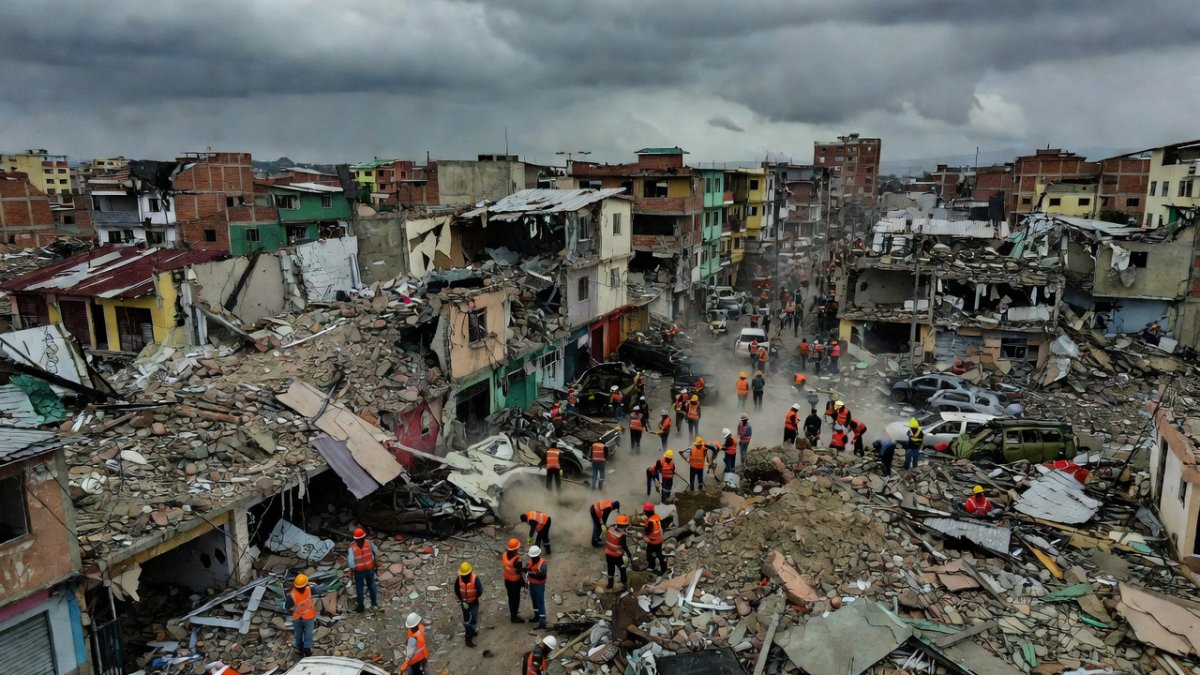
Venezuela Earthquake Death Toll Nears 5,000 as 50,000 Remain Missing
Caracas, Venezuela — Nearly one month after a catastrophic earthquake devastated swaths of Venezuela, the known death toll has climbed to nearly 5,000, with the United Nations estimating that as many as 50,000 people remain unaccounted for. The scale of the disaster, which has also left more than 17,000 wounded and displaced tens of thousands more, is testing the limits of a nation already battered by years of economic sanctions and political isolation.
A Disaster Within a Crisis
The earthquake, which struck with little warning nearly a month ago, has carved a path of destruction across multiple Venezuelan states. Entire neighborhoods have been reduced to rubble. Roads, hospitals, and schools — infrastructure that was already fragile after years of underinvestment — have been shattered. The UN's estimate of 50,000 missing suggests that the final death count could rise dramatically as search and rescue operations transition into recovery efforts.
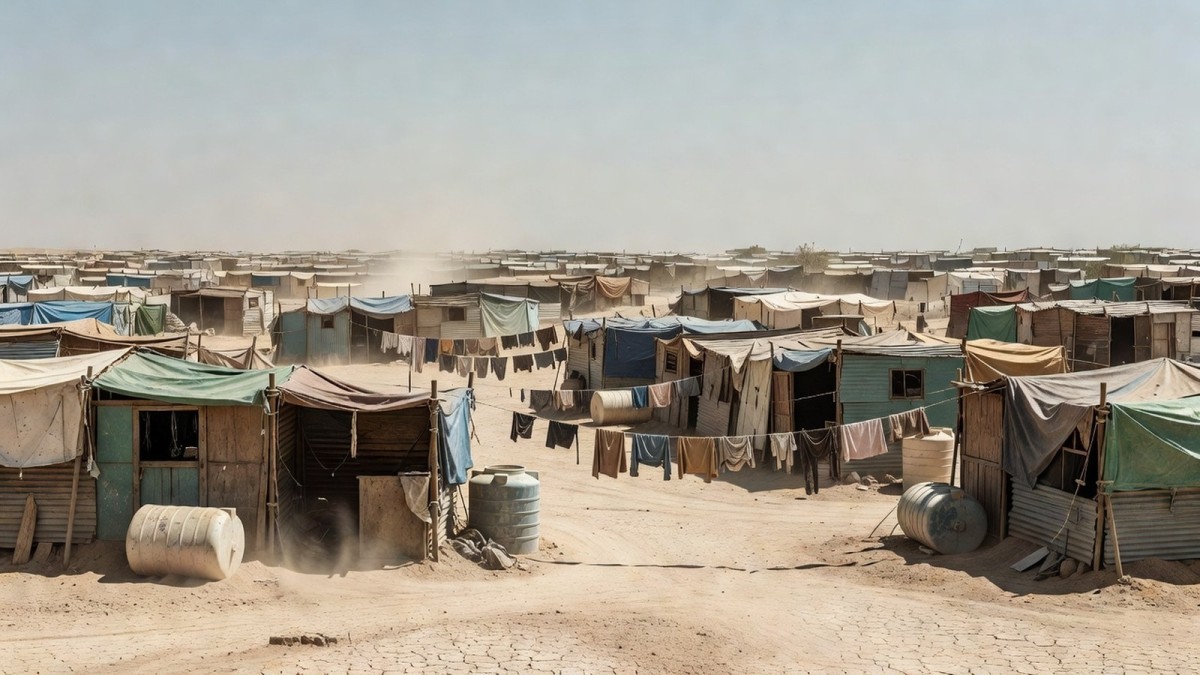
Nearly 21,120 survivors are currently living in shelters, many of them makeshift camps set up in sports stadiums, schoolyards, and open fields. The displaced describe a desperate situation: limited access to clean water, sporadic food distribution, and the constant fear of aftershocks. International rescue teams that arrived in the immediate aftermath of the quake have now departed, shifting the burden entirely onto local responders and civilian volunteers who have been working around the clock since day one.
Civilians Lead the Response as State Machinery Drags
One of the most striking themes to emerge from the disaster is the gap between civilian and state response. Cinthia Pulido, a Venezuelan displaced by the earthquake, told Al Jazeera: "From the very first moment, from when the earthquake happened, there was an immediate response, but from civilians. Civilians and independent people. The state's response is only being seen now. We're watching and waiting for some kind of answer."
Her words echo a sentiment widely shared across affected communities. In the absence of rapid state intervention, ordinary Venezuelans — neighbors, church groups, local businesses — mobilized to dig through rubble, distribute food, and provide shelter. But as weeks pass and the immediate crisis gives way to long-term recovery, the limits of grassroots response are becoming clear. Without coordinated government action and international support, the rebuilding effort faces an uphill battle.
Louismarez Paez, another displaced Venezuelan, described the harsh reality facing families: "The little I can get is just for me to survive, support my children, and help my mum." Her mother, she said, receives no assistance beyond what Louismarez herself can provide — a snapshot of the cascading hardship that the earthquake has unleashed.
Sanctions Block Access to Critical Resources
Venezuela's ability to respond to the disaster has been severely constrained by international economic sanctions, particularly those imposed by the United States since 2015. The sanctions freeze approximately $11 billion in Venezuelan assets held abroad — money that the government and experts say is desperately needed for relief and reconstruction.
Mark Weisbrot, senior economist and co-director at the Center for Economic and Policy Research, put it bluntly: "Venezuela has crucial resources that it is not being allowed to access." The $11 billion blocked by the US and European nations, he said, are funds Venezuela "should legally have."
This financial stranglehold has direct consequences on the ground. Medical equipment, heavy machinery for rubble clearance, temporary housing materials, and fuel for transport — all of these are in critically short supply. The sanctions regime restricts not only the Venezuelan government's access to its own reserves but also deters foreign companies and organizations from engaging in trade and aid efforts, for fear of running afoul of US Treasury enforcement.
US Lawmakers Push for Sanctions Relief
In a rare bipartisan appeal, a group of 14 Democratic lawmakers in the United States has urged the White House to ease economic sanctions on Venezuela specifically to facilitate earthquake recovery efforts. In a letter reported by Spanish newspaper El Pais, the lawmakers wrote that sanctions are "severely hampering urgent relief efforts" and have "severely undermined the country's response and reconstruction efforts."
The letter marks a significant political development. While US policy toward Venezuela has hardened under successive administrations, the sheer scale of the humanitarian catastrophe appears to be shifting some calculations. Whether the White House will act on the appeal remains uncertain — the political calculus around Venezuela sanctions is deeply entangled with broader US foreign policy objectives, including Iran relations and energy geopolitics in Latin America.
The UN estimates that the full cost of recovery and reconstruction in Venezuela could reach $37 billion — a staggering figure for an economy that has already contracted dramatically over the past decade. By comparison, the $11 billion locked in frozen assets would cover roughly a third of that estimate, making sanctions relief not just a political gesture but a practical necessity.
The Human Toll: Stories from the Rubble
Beyond the statistics and diplomatic maneuvering are the individual stories of loss and survival. Families separated by the quake are still searching for loved ones. Makeshift morgues are overwhelmed. Mental health services, already scarce in Venezuela, are virtually nonexistent in the disaster zones. Trauma counselors warn that the psychological impact of the earthquake — the loss of homes, livelihoods, and loved ones — will persist for years, even if the physical rebuilding proceeds smoothly.
Children are especially vulnerable. Thousands have been orphaned or separated from their families. Schools that survived the quake have been converted into shelters, disrupting education for an entire generation at a time when Venezuela's youth already faced limited opportunities. Aid organizations on the ground report rising cases of malnutrition and waterborne diseases in crowded shelter conditions, adding a public health crisis to the list of emergencies the country must confront simultaneously.
What This Means: A Test of Global Solidarity
The Venezuela earthquake is more than a national tragedy — it is a test of how the international community responds when a politically isolated nation faces a natural disaster of catastrophic proportions. The tension between geopolitical considerations and humanitarian imperatives is on full display. On one hand, there is a clear moral case for suspending sanctions to allow relief supplies and financial resources to flow freely. On the other, the strategic interests that drove those sanctions in the first place have not disappeared, and governments are understandably wary of setting precedents that could be exploited.
But the people buried under rubble, the families sleeping in tents, and the mothers rationing meager supplies are not geopolitical chess pieces. They are human beings in desperate need. The question facing Washington, Brussels, and the wider international community is whether they will treat this disaster as a moment to set aside differences and prioritize saving lives — or whether political considerations will continue to obstruct the most basic humanitarian response.
For now, Venezuelans like Louismarez Paez and Cinthia Pulido are left waiting — for the state to show up, for sanctions to ease, for the world to notice. The clock is ticking, and for 50,000 missing people, time is running out.
By Sarah Okafor, Staff Writer
Meta Title: Venezuela earthquake death toll nears 5,000 as 50,000 remain missing
Meta Description: Nearly 5,000 confirmed dead and 50,000 missing in Venezuela's catastrophic earthquake, as sanctions block $11bn in relief funds and lawmakers urge US to act.
Keywords: Venezuela, earthquake, earthquake 2026, Venezuela earthquake death toll, Venezuela sanctions, US sanctions Venezuela, humanitarian crisis, Caracas earthquake, UN Venezuela, Venezuela relief
This article was produced with AI-assisted research and editorial support. Reporting is based on sources cited in the article.
What's Your Reaction?
 Like
0
Like
0
 Dislike
0
Dislike
0
 Love
0
Love
0
 Funny
0
Funny
0
 Wow
0
Wow
0
 Sad
0
Sad
0
 Angry
0
Angry
0

Africa Correspondent at Global1.News. Based in Lagos, covering politics, business, technology, and culture across the continent. Focused on telling African stories beyond the headlines — the innovation, entrepreneurs, and communities shaping the region's future.










Comments (0)