
Global Opinion Shifts: China Now Viewed More Favorably Than United States in Landmark Pew Study
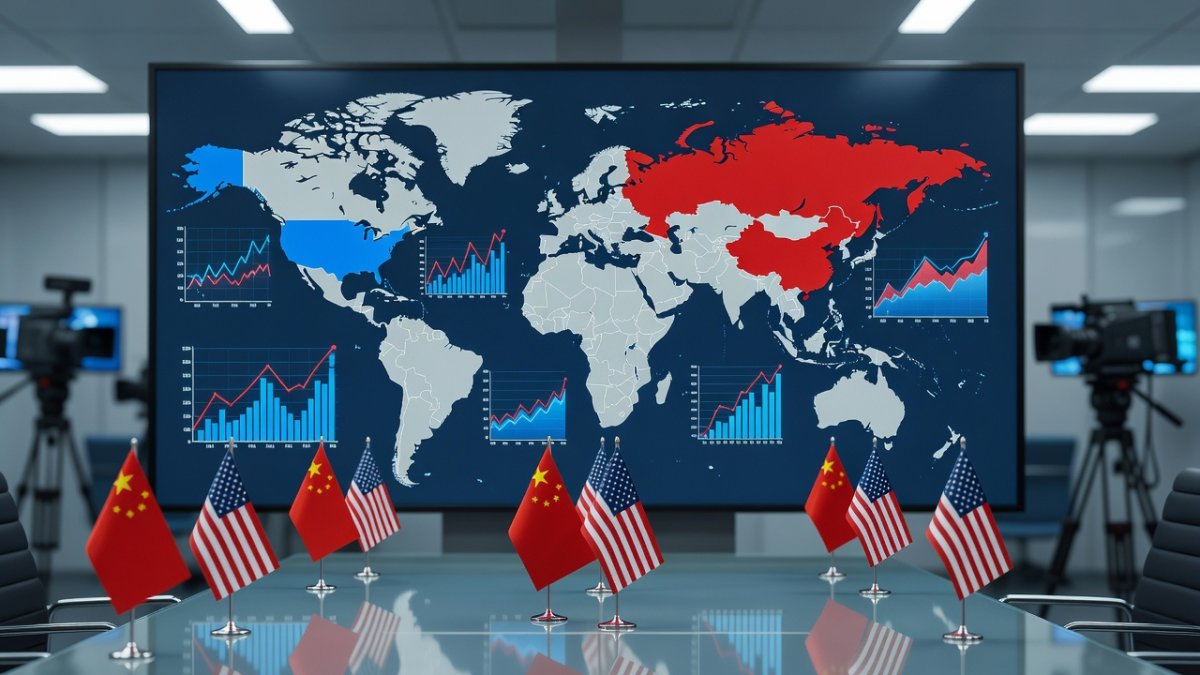
Pew Research Center survey reveals for the first time that more countries view China favorably than the US, with record highs in developing nations and significant swings toward Beijing in middle-income countries, while US favorability declines amid perceptions of policy volatility.
Methodology and Scope of the Pew Survey
Pew researchers employed standardized questionnaires asking participants to rate their views of both countries as very favorable, somewhat favorable, somewhat unfavorable, or very unfavorable. The polling covered a diverse geographic spread, including nations in Europe, Asia, Latin America, the Middle East, and Africa. Jonathan Schulman, a researcher involved in the study, emphasized to the BBC that this represents an unprecedented outcome in the center's longitudinal data. Previous dips in US favorability, such as those recorded in 2008 during the final year of the George W. Bush administration and in 2017 at the outset of Donald Trump's first term, had never before been accompanied by such a broad reversal favoring China. The current results therefore stand apart not merely in degree but in their structural implications for great power competition.
Importantly, the survey also probed confidence in national leaders. Both US President Donald Trump and Chinese President Xi Jinping received generally low marks, with median confidence levels below 50 percent in most countries. However, Xi consistently outperformed Trump in direct comparisons across many of the surveyed nations. This nuance suggests that while neither leader inspires widespread trust in handling world affairs, perceptions of predictability and stability appear to tilt in Beijing's favor in several key regions. Such findings must be interpreted within China's broader foreign policy doctrine, which prioritizes non-interference rhetoric while simultaneously expanding influence through multilateral mechanisms such as the Belt and Road Initiative.
Geographic Distribution of Shifting Sentiments
The data reveals pronounced regional variations. In 25 of the 36 countries polled, favorable views of China exceeded those of the United States. Among the nations registering the most substantial swings toward Beijing were Spain, Indonesia, Italy, Greece, and Canada. These shifts reflect differing strategic calculations: European states grappling with economic uncertainties post-pandemic, Southeast Asian countries balancing relations between competing powers, and North American neighbors reassessing traditional alignments.
Conversely, only six countries continued to express stronger favorability toward the US: Poland, the Philippines, South Korea, India, Japan, and Israel. These are, without exception, longstanding security partners of Washington, many of which maintain formal alliances or quasi-alliances aimed at managing regional security dynamics in Europe and the Indo-Pacific. Their continued preference for the United States underscores the enduring importance of military partnerships even as economic and cultural perceptions evolve.
Within the Asia-Pacific, the contrast was particularly stark. Approximately 90 percent of respondents in Pakistan expressed favorable views of China, while just 11 percent in Japan did so. This polarization mirrors Beijing's strategic investments in South Asia through infrastructure projects and its longstanding "all-weather" partnership with Islamabad, juxtaposed against persistent territorial disputes and alliance structures that bind Tokyo firmly to Washington.
Economic Development as a Predictor of Attitudes
A clear pattern emerges when disaggregating the data by national income levels. Middle-income countries tended to view China more positively, while wealthier economies leaned toward more negative assessments. This correlation aligns with Beijing's foreign policy emphasis on South-South cooperation and its narrative of shared development experiences. Nations in Latin America, Southeast Asia, and Africa that have benefited from Chinese trade, investment, and infrastructure financing appear more receptive to Beijing's model of state-led growth.
Singapore represents a notable outlier. Despite possessing the highest GDP per capita among surveyed countries, it registered high positivity toward China. This exception likely stems from deep economic interdependence, cultural affinities, and pragmatic diplomacy that has allowed the city-state to maintain productive relations with Beijing even while strengthening security ties with the United States and its partners. Such cases illustrate the sophisticated balancing acts many states in the Global South and middle powers are undertaking amid intensifying US-China strategic rivalry.
Record highs in favorable opinions of China were recorded this year in Italy, Spain, Colombia, Mexico, Indonesia, Malaysia, Nigeria, and Turkey. These gains suggest that Beijing's sustained diplomatic and economic outreach, particularly in the Global South, is yielding measurable returns in public sentiment. From the perspective of China's domestic politics, these results validate the leadership's focus on expanding regional influence and building coalitions within multilateral institutions as a counterweight to perceived containment efforts by Washington and its allies.
Perceptions of Leadership and Governance
While China's country image has improved, confidence in President Xi Jinping remains modest. His highest rating came from Pakistan at 83 percent, with the lowest in Japan at 7 percent. For President Trump, the range spanned from 68 percent in the Philippines to just 4 percent in the West Bank and East Jerusalem. Schulman observed that respondents appeared less polarized about Xi than about Trump, with fewer extreme opinions registered regarding the Chinese leader.
This distinction is analytically significant. It suggests that many global publics differentiate between the Chinese state as an economic actor and deliverer of tangible infrastructure versus the personal leadership style and governance approach associated with Xi. As Dr. Chong Ja Ian, a non-resident scholar with Carnegie China, noted in commentary on the survey, positive associations with technological advancement and economic opportunity tend to be attributed to China broadly, while more coercive elements of foreign policy are often linked more directly to Xi himself.
Under Xi's leadership, China has pursued more assertive positions on territorial issues, intensified its diplomatic demands for alignment with its "core interests," and expanded its global governance ambitions. These developments reflect Beijing's strategic objective of reshaping international norms to better accommodate its rise. Yet the Pew data indicates that in many developing countries, the benefits of engagement with China continue to outweigh concerns about its political system or human rights record in public perception.
Views on Freedoms, Interference, and Foreign Policy Behavior
The survey found that the United States continues to hold an advantage in perceived respect for personal freedoms, though the gap has narrowed compared with previous years. More telling, perhaps, were responses to questions about foreign policy conduct posed in several middle-income countries. A median of 75 percent of respondents believed the US interferes in other nations' affairs "a great deal" or "a fair amount," while only 45 percent held the same view of China.
This perception gap represents a notable success for Beijing's narrative of peaceful development and non-interference, even as its economic statecraft and diplomatic pressure tactics have grown more sophisticated. It also highlights how recent US policy decisions, including military engagements and unilateral sanctions, appear to have reinforced longstanding criticisms of American interventionism. From Beijing's standpoint, these findings reinforce the wisdom of its "community of shared future" rhetoric and its efforts to position itself as a stabilizing force in contrast to what it portrays as Washington's destabilizing actions.
The timing of the fieldwork is relevant here. Polling occurred against the backdrop of heightened US rhetoric regarding territorial ambitions, the detention of Venezuelan leadership figures, and the outbreak of conflict with Iran. Such events likely amplified perceptions of American unpredictability and willingness to employ force, playing into China's preferred framing of itself as a predictable partner focused on economic cooperation rather than ideological confrontation.
Comparative Insights from Other Polling Organizations
Pew's conclusions find partial corroboration in other recent surveys, though important nuances exist. Gallup polling last year indicated that China had surpassed the United States in global approval ratings, recording the widest margin in China's favor in two decades. However, the Asia Society's annual Global Public Opinion on China survey suggested only a modest recovery in China's image following sharp declines during the early stages of the COVID-19 pandemic.
These varying results underscore the complexity of measuring soft power in an era of polarized information environments and competing narratives. While economic engagement appears to be driving improved perceptions in many developing economies, concerns about governance practices, treatment of ethnic minorities, and expanding military capabilities continue to shape views in wealthier democracies and among certain regional actors wary of Chinese assertiveness.
For Chinese policymakers, the Pew data offers both encouragement and caution. The gains in favorability, particularly across the Global South, align with Beijing's strategic interest in cultivating alternative networks of partnerships that reduce reliance on Western-dominated institutions. Yet the relatively low confidence in Xi personally, combined with persistent skepticism in key US allies, indicates that challenges remain in translating economic influence into broader ideological or political appeal.
Strategic Calculus Behind the Shifts
What each side wants in this evolving contest is relatively clear. Washington seeks to preserve its primacy in setting global rules, maintain technological superiority, and consolidate alliances to manage China's rise. Beijing, by contrast, aims to achieve technological self-sufficiency as outlined in the 14th Five-Year Plan, expand its regional influence through economic statecraft, and gradually reshape multilateral institutions to better reflect its interests and those of developing nations.
The leverage each possesses differs markedly. The United States retains advantages in military alliances, control over key financial infrastructure, and leadership in cutting-edge innovation sectors. China, however, has become the largest trading partner for more than 120 countries and maintains substantial leverage through its position in global supply chains, its vast domestic market, and its willingness to deploy development financing without the governance conditionalities often attached to Western assistance.
Second-order effects are already visible across multiple regions. In ASEAN, member states are increasingly hedging between the two powers, seeking to extract maximum economic benefit from China while looking to the US and its partners for security guarantees. The EU finds itself internally divided, with some members prioritizing economic opportunities with China while others align more closely with Washington on strategic concerns. For the Global South, the Pew findings suggest that many nations see China's rise as presenting more opportunities than threats, at least in the economic domain, potentially accelerating trends toward a more multipolar international order.
These dynamics connect directly to China's domestic political priorities. The Chinese Communist Party has long justified its governance model through its ability to deliver economic growth and international respect. Improving global perceptions, even if uneven, bolster narratives of national rejuvenation and validate the leadership's foreign policy approach. At the same time, Beijing must carefully manage the expectations these positive views create, as unmet aspirations or perceived overreach could trigger backlash.
What This Means
The Pew Research Center's landmark survey carries profound strategic implications for the future of US-China competition and the evolving architecture of global governance. For Beijing, the data validates its long-term investment in economic diplomacy, infrastructure development, and narrative-shaping efforts targeted at the Global South. It suggests that China's model of authoritarian capitalism combined with non-interference rhetoric resonates in many developing economies seeking rapid growth without Western-style political conditionalities. This creates opportunities for China to deepen multilateral partnerships, advance initiatives such as the Digital Silk Road, and gradually erode the universality of liberal democratic norms in international institutions.
However, the findings also reveal important limitations. The persistence of low confidence in Xi Jinping personally, alongside strongly negative views in key US allies and wealthy democracies, indicates that China has yet to overcome fundamental concerns about its political system, transparency, and long-term intentions. Beijing's continued emphasis on "core interests," its treatment of ethnic minorities, and its military modernization program remain significant obstacles to broader acceptance of Chinese leadership.
For the United States, the survey represents a clear warning about the costs of policy volatility and the perception of unilateralism. If Washington wishes to restore its comparative advantage in global public opinion, it will need to demonstrate greater consistency, recommit to multilateral engagement, and more effectively highlight the distinctive benefits of partnership with democratic allies. The narrowing gap on perceptions of personal freedoms suggests that traditional American advantages in this domain cannot be taken for granted.
Looking ahead, these shifting sentiments are likely to encourage further strategic autonomy among middle powers and developing nations. Countries from Indonesia to Nigeria to Mexico appear increasingly comfortable maintaining robust economic ties with China while selectively engaging with the United States on security matters. This hedging behavior complicates efforts by either superpower to build exclusive blocs and points toward a more fragmented, multi-aligned international system.
Ultimately, the Pew study underscores that soft power in the 21st century rests as much on economic opportunity, predictability, and development partnership as on traditional measures of military strength or ideological appeal. As China continues its pursuit of technological self-sufficiency and regional influence expansion, and as the United States recalibrates its global posture, the battle for global public opinion will remain a critical domain of great power competition with far-reaching consequences for international stability and prosperity.
By Prof. Marcus Chen, Staff Writer
This article was produced with AI-assisted research and editorial support. Reporting is based on sources cited in the article.
What's Your Reaction?
 Like
0
Like
0
 Dislike
0
Dislike
0
 Love
0
Love
0
 Funny
0
Funny
0
 Wow
0
Wow
0
 Sad
0
Sad
0
 Angry
0
Angry
0

World Politics Analyst at Global1.News. Based in Beijing, covering US-China relations, global trade, and geopolitical strategy. Brings deep analytical perspective to the power dynamics shaping international affairs.














Comments (0)