
Ein Hawd: The Ethnically Cleansed Palestinian Village That Became an Israeli Artists' Colony
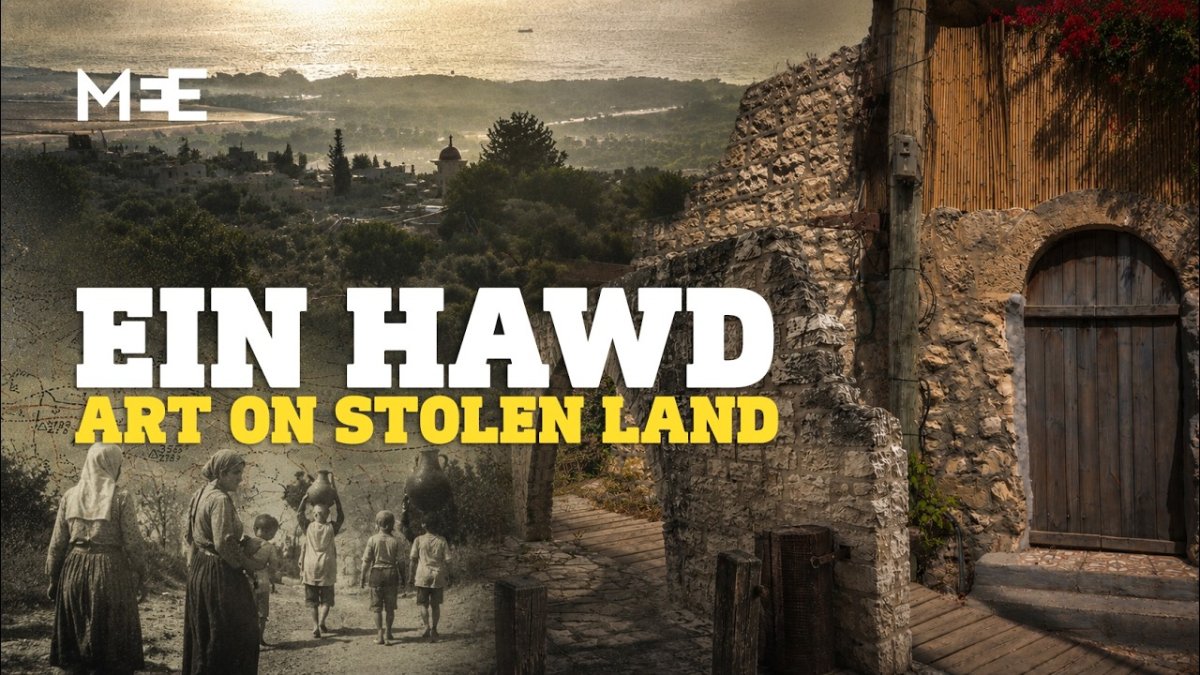
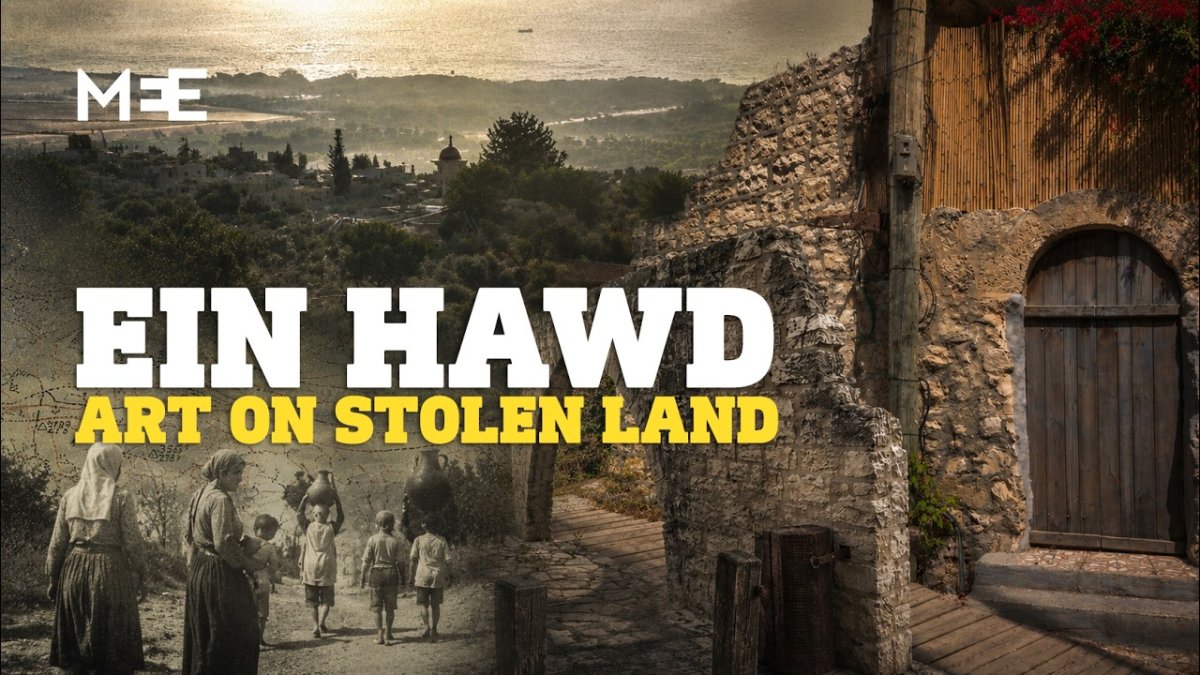
The Middle East Eye video opens with sweeping footage of stone houses nestled on the slopes of Mount Carmel, where the camera lingers on arched doorways and narrow lanes now lined with galleries and cafes. It captures the quiet tension between the preserved Palestinian architecture and the bustling activity of visitors who come to experience what is now promoted as an Israeli a
The Middle East Eye video opens with sweeping footage of stone houses nestled on the slopes of Mount Carmel, where the camera lingers on arched doorways and narrow lanes now lined with galleries and cafes. It captures the quiet tension between the preserved Palestinian architecture and the bustling activity of visitors who come to experience what is now promoted as an Israeli artists' village. This visual record sets the stage for understanding how a single place can embody both displacement and reinvention.
The Village on Mount Carmel
Ein Hawd stood on the western slopes of Mount Carmel near Haifa, home to roughly 800 to 850 residents who belonged almost entirely to the Abu al-Hija clan. The family traces its roots to fighters who arrived with Salah al-Din al-Ayyubi during the Crusader period, giving the community deep historical layers that shaped daily life and social structures for generations. Stone houses clustered around a central mosque reflected centuries of continuous presence in the landscape.
Residents maintained olive groves and small plots of land that sustained the village economy. The Abu al-Hija lineage fostered tight kinship networks, with extended families sharing responsibilities for agriculture and community decisions. This rooted existence formed part of the broader tapestry of Palestinian villages across historic Palestine before 1948.
Local traditions and oral histories passed down through the clan emphasized connection to the land and to the fighters of earlier eras. Such continuity gave Ein Hawd a distinct identity even among neighboring communities on the Carmel range.
Displacement During the 1948 War
Ein Hawd fell in July 1948 after the capture of Haifa, when residents fled amid fears of massacres similar to those reported at Tantura and Deir Yassin. The village's location made it vulnerable once surrounding areas came under Israeli control, prompting families to leave their stone homes with little more than what they could carry. Most expected a swift return once fighting subsided.
Unlike the majority of depopulated Palestinian villages whose structures were systematically demolished, Ein Hawd's buildings remained intact. This preservation created an unusual physical record of the community that once lived there, setting the site apart from hundreds of other locations where rubble replaced homes within months.
The decision to spare the stone houses would later enable their conversion for new purposes, though at the time it offered no immediate relief to the displaced families who sought shelter elsewhere.
Transformation Into an Artists' Colony
In the early 1950s, Dada artist Marcel Janco initiated the conversion of Ein Hawd into Ein Hod, an artists' colony. Janco and his colleagues repurposed the existing Palestinian houses for studios, living quarters, and exhibition spaces, establishing a cultural project that drew international attention over subsequent decades. The Janco Dada Museum now anchors the site, alongside numerous galleries and workshops.
Today the former mosque functions as a restaurant and bar, while cafes and exhibition halls occupy spaces that once served village families. International recognition has grown for the colony's artistic output, yet the Palestinian history embedded in the architecture receives little mention in standard tourist narratives.
This selective presentation creates a surreal contrast: the physical remains of one community now host creative activities framed entirely within an Israeli cultural context, with minimal acknowledgment of prior ownership or displacement.
Palestinian Artists Confront the Space
Palestinian artist Yara Mahajneh, who studied at the University of Haifa, exhibited work at the Janco Dada Museum and later reflected on the experience. She stated, "I started asking myself: why here? There are galleries everywhere. Why this place specifically?" Her questions arose from the dissonance between the site's artistic presentation and its unaddressed past.
Mahajneh also noted the educational gaps she encountered: "During my four years studying art at the University of Haifa, no one taught us the history of Ein Hawd." She continued, "We studied European and Israeli art, but not Palestinian art or the story of the village itself." These omissions shaped how Palestinian students interacted with institutions built on former village lands.
During her exhibition, Mahajneh observed, "At some point, I felt that we also became objects in the gallery. We were serving a purpose inside this space." Her words highlight the emotional weight carried by Palestinian creators who engage with such venues while the original residents remain excluded from the narrative.
Historians Document Ongoing Realities
Historian Sameer Abu al-Hija, a descendant of the original clan, described contemporary conditions: "The mosque is still there, but people avoid going near it after it was turned into a restaurant and bar." He added that "There are people here who pass their father's house every morning on the way to work, but they still cannot enter it." These observations capture the daily reminders of loss faced by those who remained nearby.
Sameer Abu al-Hija recounted how his seven-year-old grandson asked to visit Ein Hawd, remarking, "That's my answer. The young did not forget." The request underscores the persistence of memory across generations despite official efforts to reshape the site's identity.
Historian Mustafa Kabha offered broader analysis: "They are using one of the highest forms of human expression and documentation on the remains of other people." He further noted, "Hundreds of Palestinian village stories were never really told." Kabha's comments situate Ein Hawd within a pattern of selective historical preservation that favors certain narratives over others.
The Displaced Community on the Hillside
After 1948, displaced residents of Ein Hawd rebuilt on a nearby hillside, replacing initial tin and mud shelters with concrete homes over time. This new settlement, often described as unrecognized by Israeli planning authorities, lacks many basic services afforded to recognized communities. Families maintained connections to their former lands through proximity and continued advocacy.
The contrast between the developed artists' colony below and the hillside community above illustrates differing trajectories shaped by displacement. While Ein Hod attracts cultural tourism and investment, the adjacent Palestinian village contends with restricted access to resources and formal recognition.
Golda Meir's statement that "The old will die and the young will forget" has been invoked in discussions of these parallel realities, yet accounts from descendants indicate that memory has endured rather than faded. The hillside community continues to transmit stories of the original village to new generations.
Questions of Memory and Narrative Control
Ein Hawd represents one of hundreds of Palestinian villages depopulated in 1948, yet its preservation distinguishes it as a site where displacement remains visibly inscribed in the landscape. The conversion into an artists' colony raises persistent questions about ownership, historical documentation, and the power to shape public memory through cultural institutions.
Museums such as the Janco Dada Museum receive international acclaim while the Palestinian history of the location stays largely absent from guided tours and promotional materials. This selective framing reflects wider patterns in which Palestinian experiences are sidelined within spaces built directly on former village sites.
The story of Ein Hawd therefore extends beyond a single location to illuminate ongoing tensions over whose histories receive recognition and whose remain marginalized in the cultural geography of the region. Descendants and researchers continue to document these layers in pursuit of fuller historical accounting.
By Fatima Al-Rashid, Staff WriterThis article was produced with AI-assisted research and editorial support. Reporting is based on sources cited in the article.
What's Your Reaction?
 Like
0
Like
0
 Dislike
0
Dislike
0
 Love
0
Love
0
 Funny
0
Funny
0
 Wow
0
Wow
0
 Sad
0
Sad
0
 Angry
0
Angry
0
Gulf/MENA Correspondent at Global1.News. Based in Doha, covering Gulf politics, energy markets, diplomacy, and development across the Middle East and North Africa. Tracks the economic transformation of the Gulf states.















Comments (0)