
Colombia Crisis: De la Espriella Accuses Petro of Coup
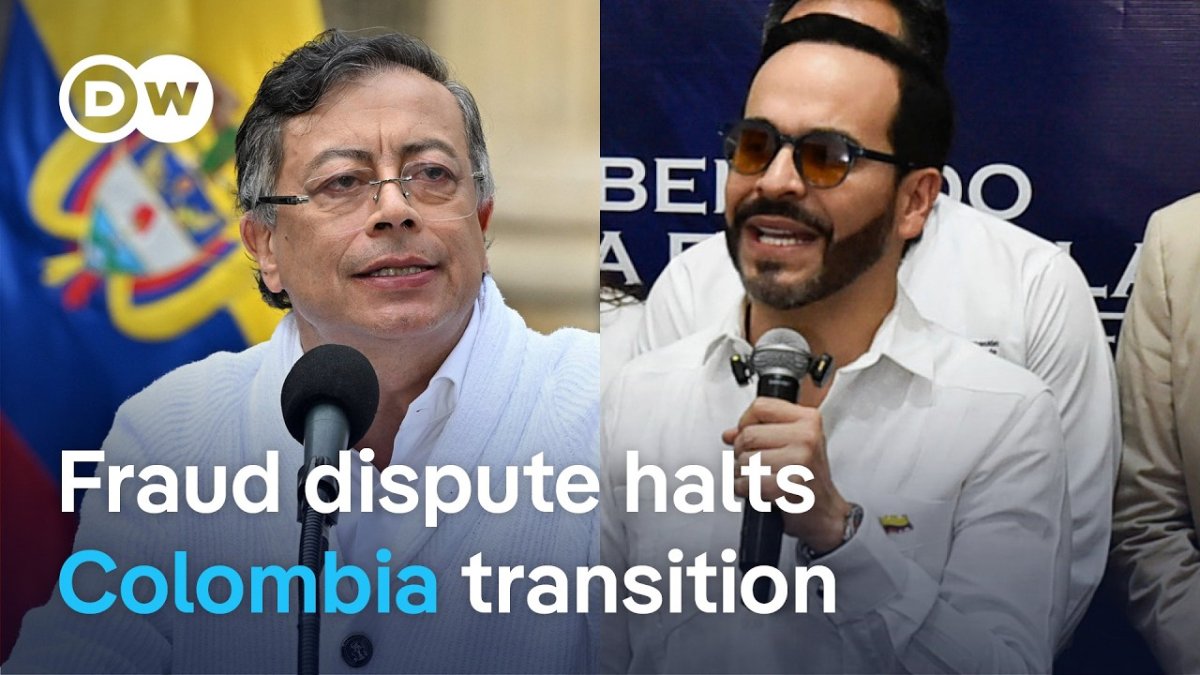
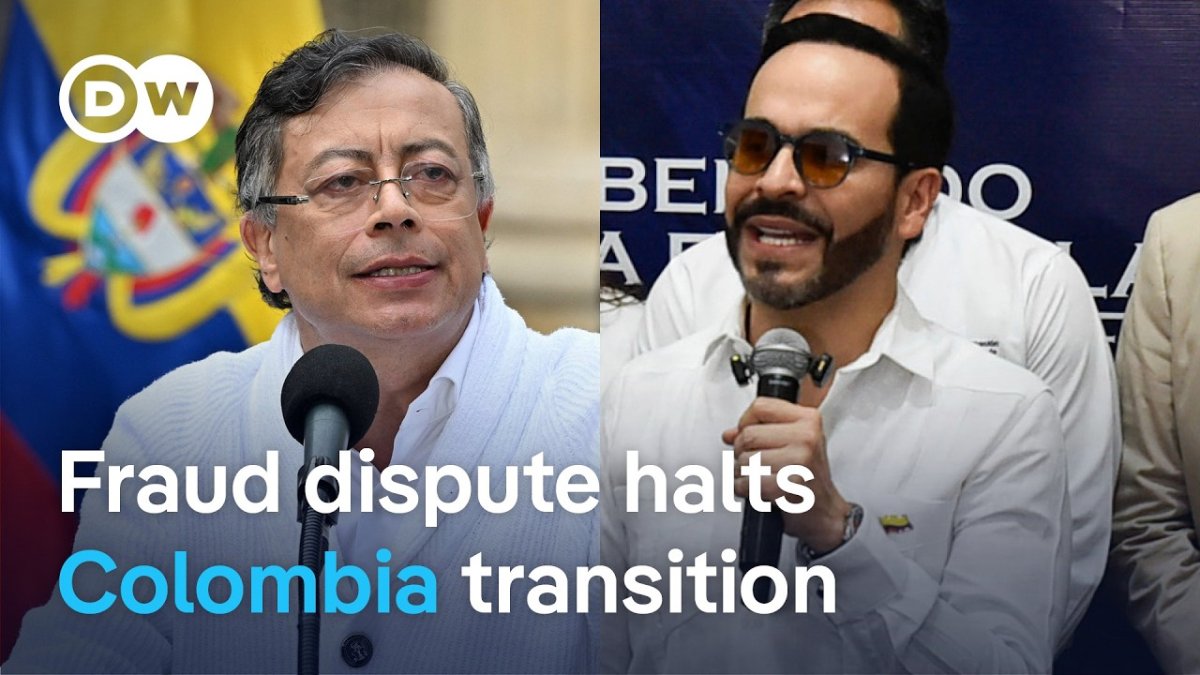
In a recent DW News report, Glaeldys Gonzales of the International Crisis Group described the breakdown in talks between President-elect Abelardo de la Espriella and outgoing President Gustavo Petro as a direct threat to institutional stability in Bogotá. De la Espriella suspended Colombia's presidential transition process on July 7, 2026, just five days after it began, accusin
In a recent DW News report, Glaeldys Gonzales of the International Crisis Group described the breakdown in talks between President-elect Abelardo de la Espriella and outgoing President Gustavo Petro as a direct threat to institutional stability in Bogotá. De la Espriella suspended Colombia's presidential transition process on July 7, 2026, just five days after it began, accusing Petro of plotting a coup to remain in power. Petro has refused to recognize the June 21 runoff results, where de la Espriella secured 49.66 percent of the vote against Senator Iván Cepeda of the Pacto Histórico by a margin of roughly 250,000 votes, while the Consejo Nacional Electoral and international observers have confirmed no evidence of fraud.
Colombia Crisis: De la Espriella Accuses Petro of Coup
Bogotá, Colombia — President-elect Abelardo de la Espriella, a 47-year-old lawyer and businessman who admires Donald Trump, issued a suspension order from his campaign headquarters in Bogotá on July 7, directing his vice president-elect to immediately halt all scheduled transition meetings with the outgoing administration at the Casa de Nariño. The transition mechanism, which normally involves coordination across the Fiscalía General, the Procuraduría, and the Corte Constitucional, had operated for just five days before the freeze took effect.
De la Espriella stated that Petro's continued public challenges to the certified election results constituted an institutional attack requiring immediate defensive measures. Both leaders have refused any in-person meetings despite calls from the Congreso and from Cambio Radical party leaders for direct dialogue. De la Espriella emphasized that he would prosecute Petro for alleged crimes once inaugurated on August 7. Petro responded by labeling de la Espriella unprepared for office and repeating unsubstantiated fraud claims through his Pacto Histórico network.
The suspension directly affects coordination on key portfolios including energy policy and security, leaving mid-level officials in the Registraduría and the CNE without clear directives for the remaining handover period. Colombian business associations have reported immediate uncertainty among investors monitoring the oil extraction sectors in the Llanos and Amazon regions.
The June 21 Runoff and the Fraud Allegations
Abelardo de la Espriella, backed by the Centro Democrático and allied parties, won the June 21 runoff against Iván Cepeda, a close Petro ally from the Pacto Histórico coalition. Official tallies showed de la Espriella receiving 49.66 percent of the national vote, representing a roughly 250,000-vote margin in a contest certified by the CNE and observed by international missions. Voter turnout reached significant levels in coffee-growing regions where campesinos expressed concerns over future agricultural support programs.
De la Espriella's platform centered on expanding oil, gas, and mining operations while realigning Colombia with the United States and Israel, positions that received public endorsement from Donald Trump during the campaign. US Secretary Marco Rubio issued a formal congratulatory statement shortly after the results, highlighting potential strengthened bilateral ties on trade and security matters.
The election exposed deep regional divides, with strong support for de la Espriella in urban centers and among business communities while Cepeda maintained backing in rural areas and among displaced communities still recovering from prior conflicts. The Registraduría completed its audit without irregularities, a finding upheld by the Corte Constitucional in preliminary reviews. Despite this, Petro has continued to insist without evidence that the election was fraudulent, a position that has fueled the current crisis.
The Colombian Institutions Under Strain
The CNE reaffirmed its certification of the June 21 results on July 6, stating that all challenges from the Petro camp lacked supporting documentation. The Fiscalía General and Procuraduría have remained publicly neutral but have noted that any formal coup allegations would require specific evidence presented through established legal channels before the August 7 inauguration.
Leaders from the Partido Liberal and Cambio Radical have urged both sides to resume transition talks at the Casa de Nariño to avoid disruptions to ongoing social programs. The Corte Constitucional scheduled emergency sessions to review potential disputes over the handover timeline, emphasizing the need to protect democratic continuity.
De la Espriella's legal team has prepared documentation for future prosecutions targeting alleged misconduct during Petro's term, focusing on fiscal matters and security coordination. Meanwhile, Petro's administration has continued limited operations through the Procuraduría, though coordination with incoming officials has stalled completely since the July 7 suspension.
International Reactions and Diplomatic Stakes
Donald Trump's endorsement of de la Espriella during the campaign carried significant weight among Colombian voters favoring closer US ties, while Rubio's post-election congratulations signaled early support for the incoming administration's foreign policy shift. European Union observers who monitored the runoff praised the transparency of the CNE process and called for calm during the transition period.
Diplomatic cables from Washington have indicated concern over the suspended transition meetings, particularly regarding security cooperation and energy agreements. De la Espriella's planned realignment with Israel has drawn attention from regional actors monitoring Colombia's evolving role in Latin American diplomacy.
Glaeldys Gonzales of the International Crisis Group, speaking to DW News, highlighted risks to institutional stability if the standoff continues into August. She noted that Colombia's democratic framework, anchored by the Corte Constitucional and Congreso, has historically managed similar tensions without collapse, but that the current refusal of both leaders to engage through established channels tests the strength of those guardrails.
Economic Stakes and the Policy Pivot Ahead
De la Espriella's proposed cabinet signals a clear departure from Petro's environmental restrictions, with priorities on expanding oil extraction in the Llanos and Amazon basins alongside increased activity at the Cartagena port. Energy prices remain a focal point for small businesses and households still adjusting to recent fluctuations in fuel costs.
Investor confidence dipped slightly in early trading on July 7 as markets reacted to the transition freeze, though analysts noted that certified election results provide a foundation for eventual stability once the handover proceeds. Mining sector representatives expressed optimism about regulatory changes expected after the August 7 inauguration.
The shift in policy direction could affect long-term contracts in the energy sector, where previous Petro initiatives emphasized reduced fossil fuel dependence. De la Espriella has indicated plans to accelerate licensing processes for new projects while maintaining fiscal oversight through the existing institutional structure.
Impact on Colombian Families and Communities
Campesinos in the coffee regions of central Colombia have expressed anxiety over potential delays in agricultural subsidies tied to the stalled transition meetings, with many families relying on consistent government support programs for their livelihoods. In Buenaventura, Afro-Colombian communities have voiced concerns that port expansion plans under de la Espriella could bring both economic opportunities and environmental challenges to their coastal neighborhoods.
Displaced communities in rural areas continue to await resolution on land restitution cases that involve coordination between the Fiscalía General and incoming officials. Students at public universities in Bogotá and Medellín have organized informal discussions about how the political impasse might influence education funding allocations in the coming semester.
Small business owners across Cali have reported cautious inventory decisions amid uncertainty over energy prices and trade policies, while local leaders in the Llanos region have prepared for possible increases in oil-related employment once the new administration takes office.
What to Watch For
Organizers in Bogotá, Medellín, and Cali have discussed potential demonstrations in the coming weeks if the transition remains suspended, though major parties including Centro Democrático have called for restraint to preserve public order. The Congreso continues to serve as a venue for cross-party dialogue aimed at restoring communication between the two camps.
De la Espriella has reiterated his commitment to assuming office on August 7 regardless of ongoing disputes, with plans to prosecute Petro once legal authority transfers. Petro's team maintains its fraud narrative but has not outlined specific next steps beyond public statements.
Colombian civil society groups emphasize the resilience of institutions such as the CNE and Corte Constitucional in navigating the current tensions, urging all actors to prioritize the peaceful transfer of power scheduled for next month. The coming days will determine whether Colombia's democracy can weather its most serious political crisis in a generation.
By Rosa Martinez, Staff Writer
This article was produced with AI-assisted research and editorial support. Reporting is based on sources cited in the article.
What's Your Reaction?
 Like
0
Like
0
 Dislike
0
Dislike
0
 Love
0
Love
0
 Funny
0
Funny
0
 Wow
0
Wow
0
 Sad
0
Sad
0
 Angry
0
Angry
0
Latin America/Andes Correspondent at Global1.News. Based in Bogota, covering politics, environment, energy, and social movements across the Andean region. Passionate about environmental journalism and communities protecting their land.











Comments (0)