
Can China Repeat Its EV Success With Robotaxis?
Can China Repeat Its EV Success With Robotaxis? Geopolitical Framing of China's Autonomous Driving Ambitions China's push into robotaxis represents a calculated extension of its broader geopolitical strategy to achieve technological self-sufficiency and reshape global mobility standards. As the United States and its allies seek to contain Chinese advances in critical technologi
Geopolitical Framing of China's Autonomous Driving Ambitions
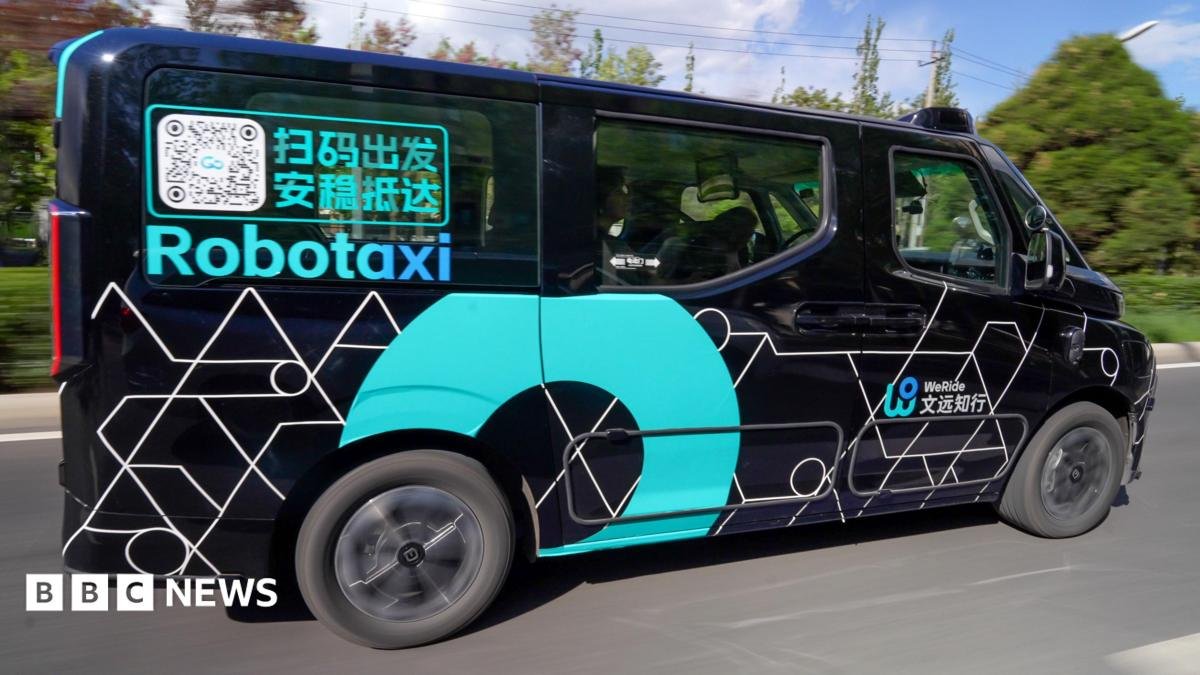
China's push into robotaxis represents a calculated extension of its broader geopolitical strategy to achieve technological self-sufficiency and reshape global mobility standards. As the United States and its allies seek to contain Chinese advances in critical technologies, Beijing views autonomous vehicles as a domain where integrated industrial capabilities can deliver decisive advantages. This effort aligns with longstanding objectives of reducing reliance on foreign innovation while exporting Chinese standards to emerging markets. The robotaxi sector builds directly on the electric vehicle momentum that has already positioned Chinese manufacturers as global leaders, creating overlapping ecosystems that amplify influence across supply chains and data networks. In this context, success in robotaxis would not only bolster domestic economic resilience but also enhance Beijing's leverage in multilateral technology governance discussions, particularly as ASEAN and Global South nations evaluate partnerships that bypass Western-dominated platforms.
The strategic calculus involves leveraging China's vast manufacturing base to outpace competitors in cost and scale. While Western firms like Waymo emphasize proprietary systems and regulatory caution, Chinese entities benefit from state-supported testing environments that accelerate iteration. This dynamic underscores a fundamental divergence in approaches: one prioritizes rapid commercialization through ecosystem integration, the other focuses on controlled deployment amid labor and safety concerns. Second-order effects could reshape alliances, as partnerships between Chinese firms and American ride-hailing giants like Uber and Lyft illustrate pragmatic adaptation rather than outright confrontation. For the EU, this competition raises questions about technology transfer risks and the viability of independent European autonomous initiatives amid intensifying US-China rivalry.
Integration with the 14th Five-Year Plan and Made in China 2025
China's autonomous driving initiatives dovetail explicitly with the 14th Five-Year Plan's emphasis on high-quality manufacturing and digital infrastructure, as well as the Made in China 2025 blueprint for technological independence. These frameworks prioritize sectors where domestic capabilities can spill over into adjacent industries, creating self-reinforcing cycles of innovation. Robotaxis exemplify this approach by drawing on existing electric vehicle supply chains for batteries, sensors, and computing hardware, allowing firms to bypass the lengthy development timelines that constrain overseas rivals. Policymakers have embedded autonomous technology targets within broader goals of workforce optimization, positioning automation as a solution to demographic pressures from a shrinking labor pool rather than a threat to employment.
Named officials and ministries have framed these policies as essential for national rejuvenation, with the National Development and Reform Commission coordinating pilot programs that test vehicles on public roads in designated zones. This policy architecture provides the regulatory sandboxes necessary for companies like Baidu, WeRide, and Pony.ai to refine algorithms under real-world conditions. The result is a deliberate alignment between industrial policy and commercial deployment, where government support mitigates risks that private capital alone might avoid. Historical parallels with the EV sector demonstrate how such coordinated strategies enabled China to surpass initial foreign leads, suggesting similar trajectories for robotaxis if execution remains consistent. Limitations in overseas data applicability, however, highlight that domestic policy advantages do not automatically translate globally without adaptation.
The Overlapping Industrial Ecosystems Fueling Robotaxi Development
China's robotaxi progress stems from the same overlapping tech industrial ecosystems that propelled its electric vehicle dominance, as articulated by Kyle Chan, a foreign policy fellow at the Brookings Institution. Unlike Tesla's vertically integrated model, Chinese development relies on a distributed network where established automakers such as BYD, Chery, Geely, and SAIC produce the underlying vehicles, while specialists handle software. This division of labor exploits pre-existing supply chains for batteries, chips, and onboard computers at unprecedented scale, enabling faster iteration and lower costs. The pace of adaptation in these ecosystems, according to Chan, remains unmatched globally, allowing incremental improvements in autonomous systems to leverage EV-derived components without starting from scratch.
This structure generates compounding advantages: data from millions of electric vehicles informs sensor calibration and energy management for robotaxis, while shared manufacturing infrastructure reduces capital expenditure. Companies like QCraft extend this model beyond passenger transport to buses and delivery vehicles already operating in over 20 Chinese cities. The ecosystem's resilience lies in its modularity, permitting rapid pivots as technologies mature. Yet this very integration raises questions about intellectual property flows and dependency risks for international partners seeking to engage these networks. For ASEAN economies, such ecosystems offer affordable entry points into advanced mobility but could entrench long-term reliance on Chinese standards and components.
US-China Competition and Divergent Commercial Pathways
Competition between Chinese robotaxi developers and US leaders like Waymo reveals contrasting philosophies in scaling autonomous technology. Waymo maintains an edge in user experience and app sophistication, having refined customer service protocols over years of operation in California cities, according to Tu Le, founder of Sino Auto Insights. Chinese firms, by contrast, prioritize volume and affordability through partnerships with Uber and Lyft, granting immediate access to millions of potential riders without building standalone platforms. This approach allows commercialization at lower price points, though Tu Le notes that Waymo's interface currently sets a higher benchmark for seamless integration into daily transportation routines.
Amazon-owned Zoox and Tesla pursue more measured expansions in the United States, while Chinese entities advance through designated urban pilots in Beijing's Yizhuang district and similar zones. The competitive landscape hinges on data volume versus regulatory maturity: China's complex traffic environments generate diverse training datasets, whereas US markets emphasize liability frameworks and union concerns over job displacement. These differences create asymmetric leverage, with Chinese cost efficiencies pressuring American firms to accelerate or concede market segments. Second-order effects include potential bifurcation of global standards, where regions align with either cost-driven or safety-centric models, influencing everything from insurance protocols to urban planning.
Government Policy, Domestic Conditions, and Data Advantages
Chinese government policy has created fertile ground for autonomous testing by designating pilot areas and tolerating the intricate road conditions that generate valuable training data. Maeve Zhang, chief marketing officer at WeRide, emphasizes how Beijing's mix of buses, cyclists, scooters, and pedestrians forces algorithms to handle unpredictability at scale, accelerating software refinement. This domestic advantage complements the 14th Five-Year Plan's focus on smart infrastructure, turning everyday congestion into a strategic asset rather than a hindrance. Pilot programs across multiple cities further institutionalize this process, allowing commercial services to operate within bounded zones while collecting operational insights.
Policy also frames automation positively as a demographic offset, contrasting with US union warnings about impacts on taxi and freight workers. The result is a feedback loop where regulatory support and environmental complexity reinforce each other, producing vehicles resilient to dense, mixed-traffic scenarios. However, Maeve Zhang cautions that this data richness does not fully address foreign variables such as extreme heat in the Middle East or heavy rains in Southeast Asia, which degrade battery and sensor performance. Policymakers thus balance domestic acceleration with measured international outreach, recognizing that ecosystem strengths require localization to achieve broader influence.
Strategic Implications for Global Supply Chains and the Technology Race
The trajectory of Chinese robotaxi development carries profound implications for global supply chains and the ongoing technology race between major powers. By extending EV-derived ecosystems into autonomy, China positions itself to influence standards in sensors, computing hardware, and data protocols across continents. James Yu, chairman and chief executive of QCraft, projects that within five to ten years such technologies could permeate everyday life, underscoring the compressed timelines enabled by integrated manufacturing. This acceleration challenges Western efforts to diversify away from Chinese components, as cost and scale advantages prove difficult to replicate.
For the Global South and EU alike, engagement offers efficiency gains but risks ceding control over critical digital infrastructure. US partnerships with Chinese firms illustrate tactical convergence amid strategic rivalry, yet underlying tensions over data sovereignty and security persist. Ultimately, the outcome will hinge on whether China's ecosystem model sustains its momentum or encounters friction from export market adaptations and geopolitical pushback. The robotaxi sector thus serves as a microcosm of broader contests over technological leadership, where industrial integration and policy alignment determine long-term winners.
By Prof. Marcus Chen, Staff WriterThis article was produced with AI-assisted research and editorial support. Reporting is based on sources cited in the article.
What's Your Reaction?
 Like
0
Like
0
 Dislike
0
Dislike
0
 Love
0
Love
0
 Funny
0
Funny
0
 Wow
0
Wow
0
 Sad
0
Sad
0
 Angry
0
Angry
0

World Politics Analyst at Global1.News. Based in Beijing, covering US-China relations, global trade, and geopolitical strategy. Brings deep analytical perspective to the power dynamics shaping international affairs.














Comments (0)