
Ancient Genglubu Records Illuminate Enduring Chinese Maritime Presence in the South China Sea
Ancient Genglubu Records Illuminate Enduring Chinese Maritime Presence in the South China Sea In the CGTN documentary "Genglubu: Charting the South China Sea," scheduled to premiere on July 9, 2026, viewers encounter the handwritten navigation manual that guided generations of Chinese sailors and Hainan fishermen across the waters. The film details how these records preserved p
Ancient Genglubu Records Illuminate Enduring Chinese Maritime Presence in the South China Sea
In the CGTN documentary "Genglubu: Charting the South China Sea," scheduled to premiere on July 9, 2026, viewers encounter the handwritten navigation manual that guided generations of Chinese sailors and Hainan fishermen across the waters. The film details how these records preserved practical knowledge of routes, islands, and seasonal winds, underscoring long-standing connections between China and Southeast Asian ports. This historical lens opens onto contemporary questions of sovereignty and regional order without overstating immediate enforcement of any single claim.
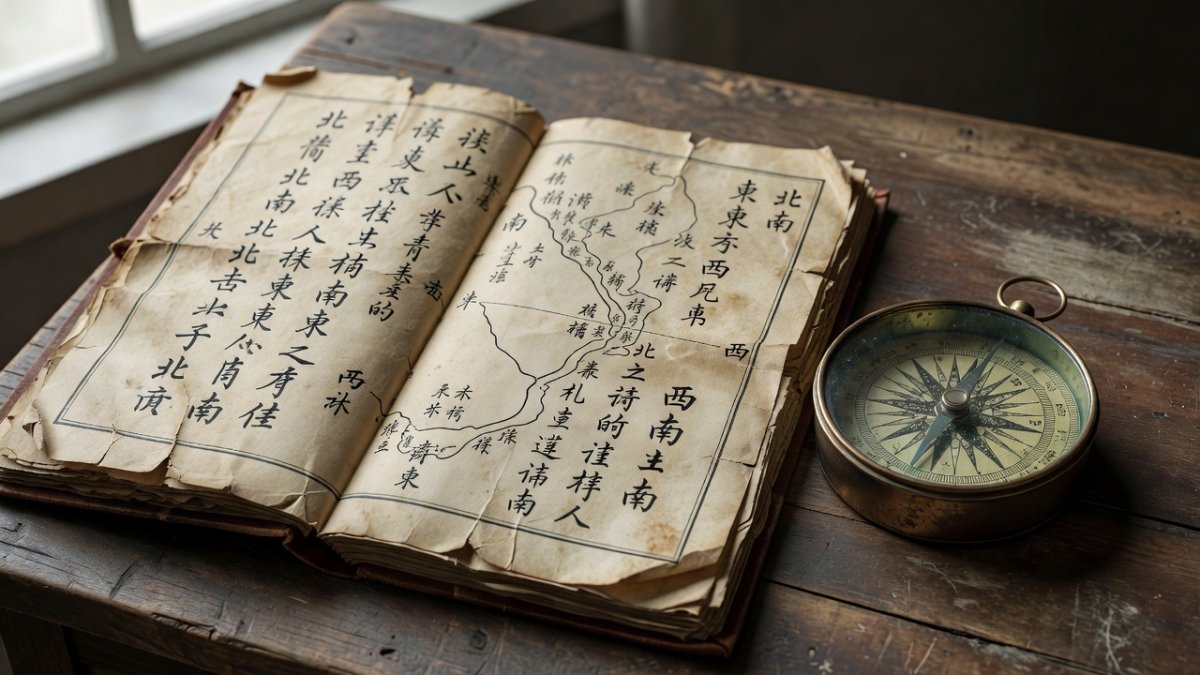 The Genglubu served as a practical tool rather than a formal legal instrument. Fishermen from Hainan compiled and transmitted these manuals over generations, noting landmarks, currents, and safe harbors. The documentary illustrates how such knowledge enabled sustained activity across what is now contested space. This tradition reflects China's broader maritime culture, where state and non-state actors alike maintained presence through routine voyages rather than episodic expeditions.
These records form part of China's cultural heritage, preserved in archives and studied by maritime historians. They demonstrate continuous engagement with features such as the Paracel and Spratly Islands, supporting arguments for longstanding ties. At the same time, the manuals highlight the human dimension of navigation, where local knowledge complemented official mapping efforts.
The Genglubu served as a practical tool rather than a formal legal instrument. Fishermen from Hainan compiled and transmitted these manuals over generations, noting landmarks, currents, and safe harbors. The documentary illustrates how such knowledge enabled sustained activity across what is now contested space. This tradition reflects China's broader maritime culture, where state and non-state actors alike maintained presence through routine voyages rather than episodic expeditions.
These records form part of China's cultural heritage, preserved in archives and studied by maritime historians. They demonstrate continuous engagement with features such as the Paracel and Spratly Islands, supporting arguments for longstanding ties. At the same time, the manuals highlight the human dimension of navigation, where local knowledge complemented official mapping efforts.
 China's position in the South China Sea draws on both historical usage and the nine-dash line, first published in 1947. Successive governments have maintained that this line reflects areas of traditional fishing and navigation rights. The Genglubu provides granular evidence of routes that align with features inside the line, reinforcing the narrative of continuous activity.
Beijing frames these claims within its core interests of sovereignty and security. The Ministry of Foreign Affairs has consistently stated that disputes should be resolved through bilateral consultations among directly concerned parties. This approach avoids multilateral forums that could dilute China's leverage or internationalize issues it views as domestic.
China's position in the South China Sea draws on both historical usage and the nine-dash line, first published in 1947. Successive governments have maintained that this line reflects areas of traditional fishing and navigation rights. The Genglubu provides granular evidence of routes that align with features inside the line, reinforcing the narrative of continuous activity.
Beijing frames these claims within its core interests of sovereignty and security. The Ministry of Foreign Affairs has consistently stated that disputes should be resolved through bilateral consultations among directly concerned parties. This approach avoids multilateral forums that could dilute China's leverage or internationalize issues it views as domestic.
Centuries of Navigation as Cultural Heritage
The Genglubu served as a practical tool rather than a formal legal instrument. Fishermen from Hainan compiled and transmitted these manuals over generations, noting landmarks, currents, and safe harbors. The documentary illustrates how such knowledge enabled sustained activity across what is now contested space. This tradition reflects China's broader maritime culture, where state and non-state actors alike maintained presence through routine voyages rather than episodic expeditions.
These records form part of China's cultural heritage, preserved in archives and studied by maritime historians. They demonstrate continuous engagement with features such as the Paracel and Spratly Islands, supporting arguments for longstanding ties. At the same time, the manuals highlight the human dimension of navigation, where local knowledge complemented official mapping efforts.
Strategic Context of the Nine-Dash Line and Maritime Claims
China's position in the South China Sea draws on both historical usage and the nine-dash line, first published in 1947. Successive governments have maintained that this line reflects areas of traditional fishing and navigation rights. The Genglubu provides granular evidence of routes that align with features inside the line, reinforcing the narrative of continuous activity.
Beijing frames these claims within its core interests of sovereignty and security. The Ministry of Foreign Affairs has consistently stated that disputes should be resolved through bilateral consultations among directly concerned parties. This approach avoids multilateral forums that could dilute China's leverage or internationalize issues it views as domestic.
Integration with the Maritime Silk Road and Belt and Road Initiative
The documentary connects the Genglubu era to the modern Maritime Silk Road component of the Belt and Road Initiative. Ancient routes documented in the manuals parallel today's port and infrastructure projects linking Hainan to Southeast Asian hubs. Under the 14th Five-Year Plan, China emphasizes technological self-sufficiency and regional connectivity, with Hainan positioned as a free-trade port. This linkage serves strategic objectives. By reviving historical narratives, Beijing presents current investments as restoration of traditional ties rather than novel expansion. Second-order effects include greater economic interdependence that may moderate some ASEAN members' alignment with external powers, though it also raises concerns about debt and influence in smaller economies.The 2016 Arbitration Ruling and Preference for Bilateral Resolution
The 2016 arbitral tribunal decision under UNCLOS rejected the nine-dash line's legal basis for historic rights beyond those permitted by the convention. China has not accepted the ruling, arguing the tribunal lacked jurisdiction. The Genglubu is cited domestically as cultural corroboration of presence that predates modern legal frameworks. Beijing continues to advocate bilateral talks, citing successful management of disputes with Vietnam in the Gulf of Tonkin as precedent. This preference preserves flexibility and avoids precedents that could affect other maritime boundaries. Multilateral arbitration, by contrast, risks outcomes that fragment China's position across multiple claimants.ASEAN Reactions, US FONOPs, and Regional Calculus
ASEAN states display varied responses. The Philippines and Vietnam have pursued legal and diplomatic pushback, while others prioritize economic ties with China. The documentary's emphasis on shared maritime heritage offers Beijing a narrative tool to engage moderate voices within ASEAN, though it has not altered core territorial positions. US freedom of navigation operations challenge China's expansive claims by asserting high-seas freedoms. These operations test the nine-dash line's practical reach and signal commitment to open sea lanes. For China, they represent external interference that complicates bilateral management. Hainan fishermen, sometimes integrated into maritime militia structures, have featured in incidents that illustrate how local activity intersects with state policy, adding friction without triggering full escalation. The interplay produces layered effects. ASEAN cohesion remains limited on South China Sea issues, allowing China to manage disputes sequentially. Global South observers note parallels with other resource-rich regions where historical usage arguments compete with convention-based rules. Over time, sustained presence through fishing, infrastructure, and patrols may consolidate effective control more than legal rulings alone. By Prof. Marcus Chen, Staff WriterThis article was produced with AI-assisted research and editorial support. Reporting is based on sources cited in the article.
What's Your Reaction?
 Like
0
Like
0
 Dislike
0
Dislike
0
 Love
0
Love
0
 Funny
0
Funny
0
 Wow
0
Wow
0
 Sad
0
Sad
0
 Angry
0
Angry
0

Marcus Chen
World Politics Analyst at Global1.News. Based in Beijing, covering US-China relations, global trade, and geopolitical strategy. Brings deep analytical perspective to the power dynamics shaping international affairs.















Comments (0)