
The Detention of U Min Zin: A Window into US-China Competition and Beijing's Security Posture in the Borderlands
The Detention of U Min Zin: A Window into US-China Competition and Beijing's Security Posture in the Borderlands The Circumstances Surrounding the Arrest The Chinese Ministry of Foreign Affairs has confirmed the detention of U Min Zin, a US-based scholar and executive director of the Myanmar Institute for Strategic and Policy Studies. The arrest occurred in early June in Kunmin
The Circumstances Surrounding the Arrest
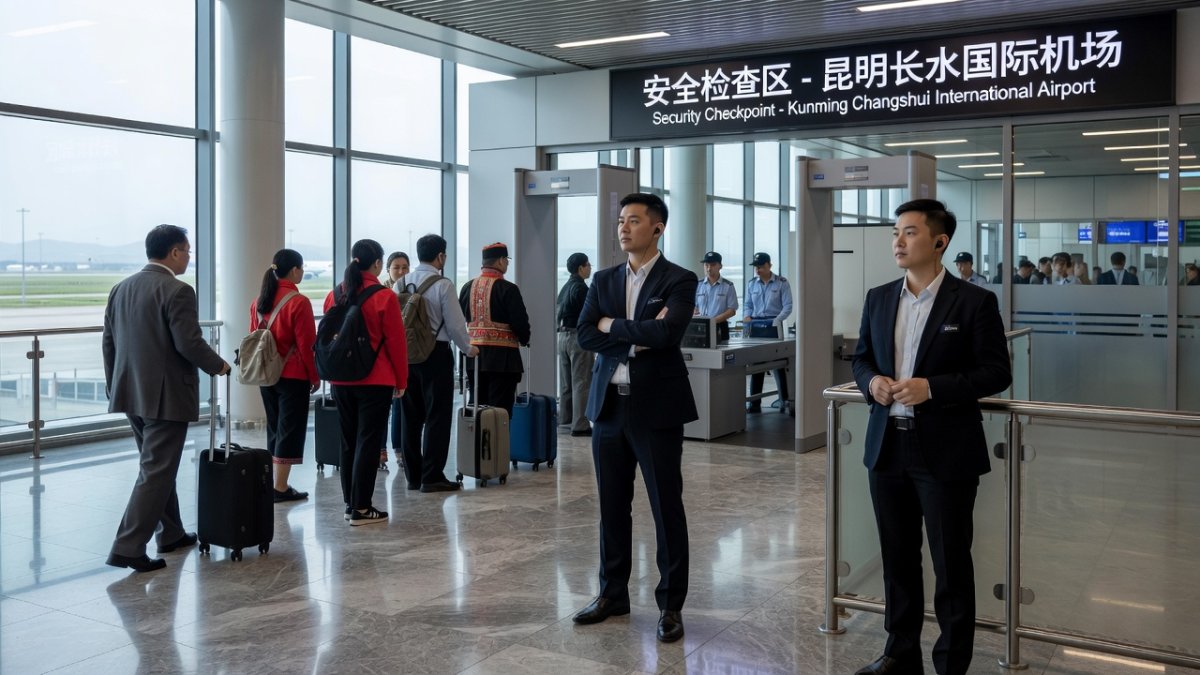
The Chinese Ministry of Foreign Affairs has confirmed the detention of U Min Zin, a US-based scholar and executive director of the Myanmar Institute for Strategic and Policy Studies. The arrest occurred in early June in Kunming, a city in Yunnan province that serves as a key gateway to Myanmar. According to multiple reports, U Min Zin was taken into custody at the airport following a meeting, on charges of espionage and endangering national security.
Details remain sparse, as is typical in such cases. U Min Zin, a former student activist from Myanmar's 1988 pro-democracy movement who later pursued studies in the United States and now resides primarily in Thailand, was scheduled to participate in academic events in the region. His work focuses on China's economic and political engagement with Myanmar, including infrastructure projects and influence operations along the shared border.
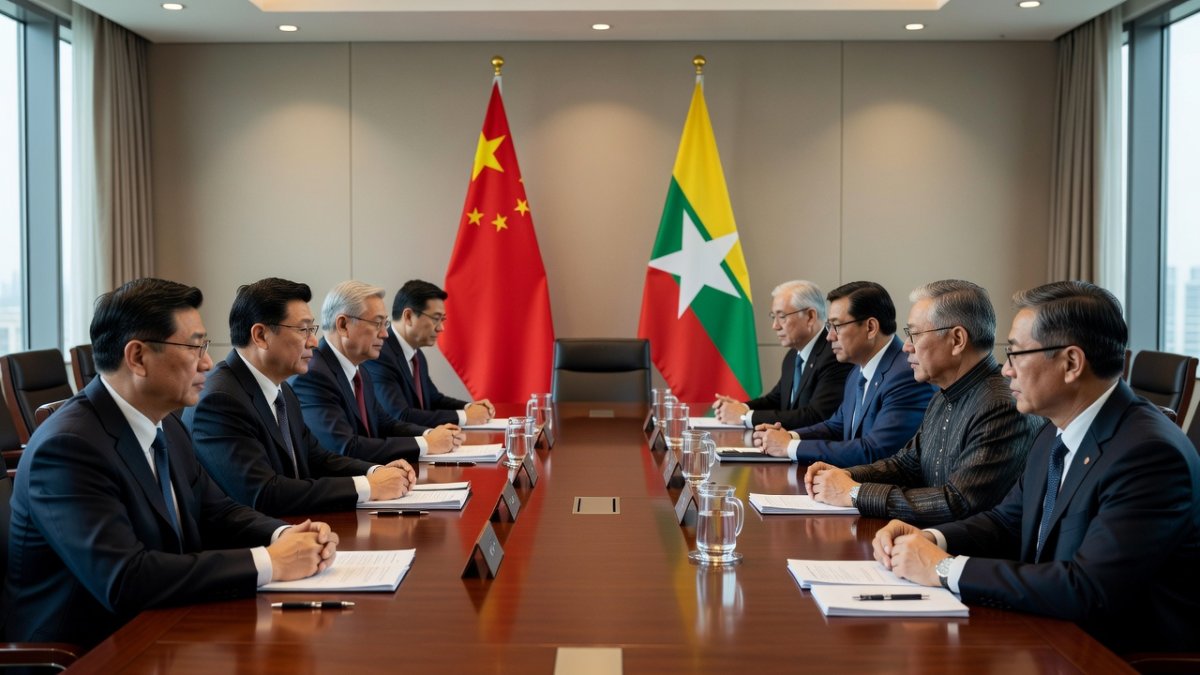
The timing is notable. The detention followed a high-level meeting between US President Donald Trump and Chinese President Xi Jinping in Beijing, during which the American leader received an elaborate state welcome. It also precedes a planned visit to China by Myanmar's military leader, Senior General Min Aung Hlaing. These diplomatic sequences suggest the case may intersect with ongoing bilateral sensitivities rather than representing an isolated enforcement action.
Beijing's Approach to National Security and Foreign Researchers
China's legal framework for national security has expanded considerably in recent years, with statutes that grant broad authority to authorities when foreign nationals are suspected of activities that could affect state interests. The Ministry of Foreign Affairs statement frames the case explicitly around espionage, a charge that carries significant weight under Chinese law and often limits consular access in the initial phases.
While arrests of US citizens on such grounds remain uncommon, they are not unprecedented when individuals conduct research on sensitive border regions or maintain ties to political movements that Beijing views as destabilizing. U Min Zin's background as a dissident from Myanmar's earlier democratic struggles and his current affiliation with a think tank examining Chinese regional influence place him at the intersection of these concerns.
Foreign researchers operating near China's periphery frequently encounter heightened scrutiny. Kunming's proximity to Myanmar makes it a focal point for monitoring cross-border flows of people, information, and capital. Beijing's calculus prioritizes preventing external actors from shaping narratives around its investments and political relationships in neighboring states.
US-China Strategic Competition and Leverage Dynamics
The case unfolds against the backdrop of intensifying competition between Washington and Beijing across multiple domains. Each side seeks to constrain the other's influence in Southeast Asia while advancing its own economic and security partnerships. For the United States, supporting scholars and institutions that document authoritarian consolidation in Myanmar aligns with broader efforts to promote transparency and counterbalance Chinese economic dominance.
Beijing, in turn, regards such activities as potential vectors for interference in its periphery. The strategic value of Myanmar lies in its role as a corridor for energy imports and as a buffer against Indian and Western influence. Any research that highlights the political costs of Chinese engagement risks complicating Beijing's objectives of securing stable access to resources and political alignment from the military government.
Leverage in this environment is asymmetric. China controls physical access to its territory and can impose costs on individuals through detention and legal processes. The United States retains diplomatic channels, including consular notifications and potential quiet negotiations, but lacks direct means to compel release in the short term. Second-order effects may include reduced willingness among academics to conduct fieldwork in China or along its borders, thereby narrowing the information available to policymakers in both capitals.
Myanmar's Position in China's Regional Calculations
Beijing maintains close ties with Myanmar's military authorities following the 2021 coup. These relations serve multiple purposes: ensuring continuity for infrastructure corridors, managing refugee and insurgent flows along the border, and preventing Myanmar from drifting toward alignments with rival powers. The upcoming visit by Senior General Min Aung Hlaing underscores the priority Beijing assigns to sustaining this partnership.
U Min Zin's research institute examines precisely these dynamics, including Chinese commercial interests and political influence inside Myanmar. From Beijing's perspective, external scrutiny of these relationships can amplify domestic opposition within Myanmar and invite international criticism. The arrest therefore functions as both a legal measure and a signal that such inquiries carry personal risks for those involved.
Regional actors in ASEAN watch these developments closely. A pattern of detentions targeting researchers could chill cross-border academic exchange and reinforce perceptions that China seeks to monopolize information flows about its activities in the Mekong region.
Implications for Political Dissidents and Academic Freedom
The detention highlights the vulnerabilities faced by individuals who combine scholarly work with prior political activism. U Min Zin's trajectory—from 1988 protests through exile, US education, and return to Myanmar—embodies the transnational networks that authoritarian governments often view with suspicion. Beijing's willingness to act against such figures, even when they hold US affiliations, reflects a broader doctrine that treats political history as relevant to current security assessments.
Foreign researchers must now weigh the professional value of on-the-ground inquiry against the possibility of prolonged detention. Universities and think tanks may respond by restricting travel or requiring additional risk assessments for projects involving Chinese border provinces. Over time, this could narrow the epistemic base on which both US and Chinese policymakers rely when formulating strategies toward Myanmar and the wider region.
Diplomatic Ramifications and Future Trajectories
US consular officials in Guangzhou have been contacted by the scholar's family, initiating standard notification procedures. The Ministry of Foreign Affairs has provided minimal public information, consistent with its practice in national security matters. Any resolution will likely occur through quiet diplomacy rather than public confrontation, given the recent high-level engagement between the two presidents.
Second-order effects extend beyond the bilateral relationship. If similar cases proliferate, they may accelerate the fragmentation of research communities and encourage greater reliance on remote analysis or third-country intermediaries. For ASEAN states, the episode reinforces the need to navigate between Chinese economic incentives and Western normative pressures without becoming collateral in great-power frictions.
Beijing's strategic objectives—technological self-reliance, stable periphery relations, and influence within multilateral forums—remain unchanged by this single incident. Yet the arrest illustrates how enforcement of domestic security statutes can intersect with, and occasionally complicate, those larger ambitions when foreign nationals are involved.
By Prof. Marcus Chen, Staff WriterThis article was produced with AI-assisted research and editorial support. Reporting is based on sources cited in the article.
What's Your Reaction?
 Like
0
Like
0
 Dislike
0
Dislike
0
 Love
0
Love
0
 Funny
0
Funny
0
 Wow
0
Wow
0
 Sad
0
Sad
0
 Angry
0
Angry
0
World Politics Analyst at Global1.News. Based in Beijing, covering US-China relations, global trade, and geopolitical strategy. Brings deep analytical perspective to the power dynamics shaping international affairs.













Comments (0)