
Typhoon Bavi Challenges East Asia's Disaster Readiness
Typhoon Bavi Tests East Asia's Disaster Readiness Amid Climate Pressures The Scale of Typhoon Bavi and Its Projected Path Typhoon Bavi spans approximately 1,000 kilometres across the Pacific, a dimension comparable to the width of France, as it advances toward Taiwan. Forecasts indicate potential rainfall totals reaching one metre in affected zones, with particular intensity ex
The Scale of Typhoon Bavi and Its Projected Path
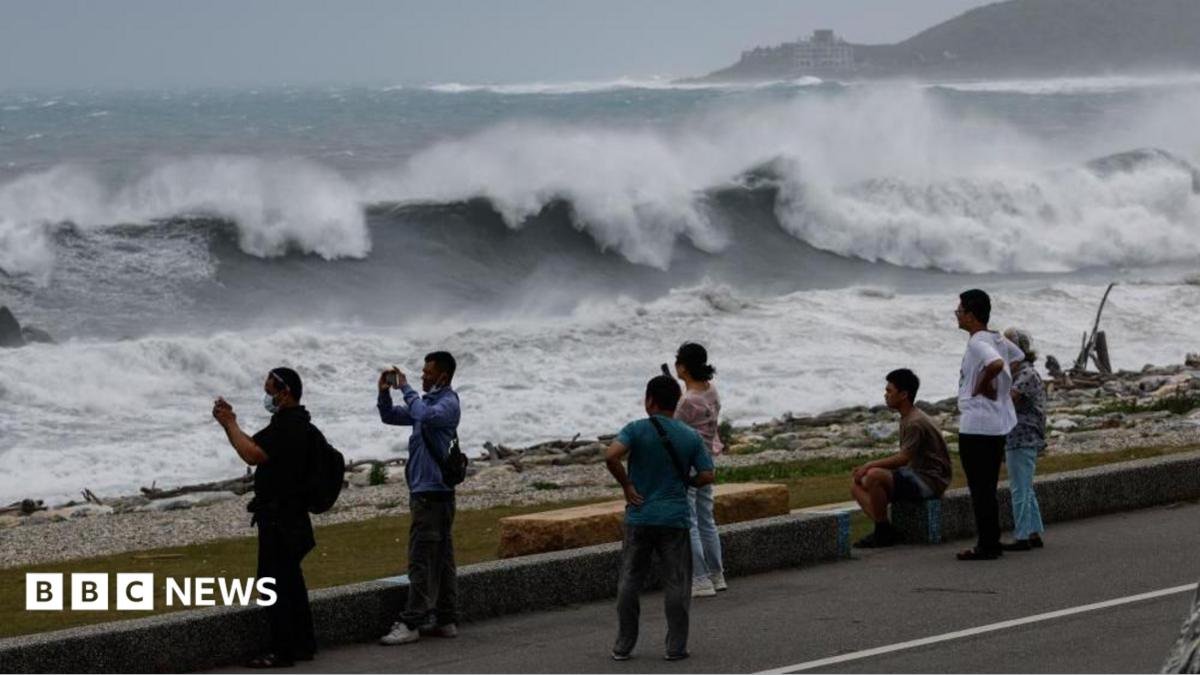
Typhoon Bavi spans approximately 1,000 kilometres across the Pacific, a dimension comparable to the width of France, as it advances toward Taiwan. Forecasts indicate potential rainfall totals reaching one metre in affected zones, with particular intensity expected across Taiwan's northern and eastern regions as well as remote Japanese islands. Landfall in southeastern China is anticipated on Saturday, with some projections suggesting the possibility of two separate landfalls along the Chinese coast.
Deadly Precursor Events in the Philippines
Landslides triggered by earlier weather systems in Mindanao have already claimed at least 15 lives, underscoring the immediate human costs that precede Bavi's arrival. These incidents highlight vulnerabilities in mountainous terrain where heavy precipitation rapidly destabilises slopes. Regional authorities across East Asia are monitoring how Bavi's scale could compound such risks further north.
Preparations Across Taiwan and Japan
Taiwan has mobilised 29,000 soldiers to support emergency operations, while dozens of flights have been cancelled and schools closed in anticipation of severe conditions. Japan's airlines have suspended more than 260 flights, affecting around 40,000 passengers. Taiwan's Central Weather Administration has emphasised the storm's status as the largest to threaten the island since 1987, prompting coordinated evacuations and infrastructure checks.
China's Disaster Preparedness and Infrastructure Focus
China's response draws on established frameworks managed by relevant ministries, including coordination between meteorological services and local governments. Ma Jun, director of the Institute of Public and Environmental Affairs, has noted the potential for significant impact. Earlier in the week, Typhoon Maysak claimed 39 lives in China and produced rare tornadoes in Hubei province, providing recent context for evaluating current readiness measures. Beijing's investments in resilient infrastructure aim to mitigate flooding and wind damage in coastal provinces.
Climate Patterns and Broader Asia-Pacific Vulnerabilities
Successive typhoons this season reflect intensifying weather extremes across the Asia-Pacific, consistent with observed shifts in storm frequency and intensity. China's strategic interests in regional stability include advancing early-warning systems and cross-border information sharing. These developments carry implications for ASEAN partners and the Global South, where similar climate pressures strain development gains and test collective response capacities.
Strategic Calculus for Taiwan and Regional Actors
Each actor weighs immediate humanitarian needs against longer-term positioning. Taiwan's military mobilisation serves dual purposes of civilian protection and demonstration of operational capacity. For China, effective management of Bavi reinforces narratives of competent governance while highlighting the value of mainland infrastructure investments. Second-order effects may include temporary disruptions to supply chains linking East Asia with Southeast Asian economies, alongside opportunities for enhanced dialogue on disaster cooperation that could indirectly influence cross-strait dynamics.
By Prof. Marcus Chen, Staff WriterThis article was produced with AI-assisted research and editorial support. Reporting is based on sources cited in the article.
What's Your Reaction?
 Like
0
Like
0
 Dislike
0
Dislike
0
 Love
0
Love
0
 Funny
0
Funny
0
 Wow
0
Wow
0
 Sad
0
Sad
0
 Angry
0
Angry
0

World Politics Analyst at Global1.News. Based in Beijing, covering US-China relations, global trade, and geopolitical strategy. Brings deep analytical perspective to the power dynamics shaping international affairs.












Comments (0)