
Chelan Hills Fire Explodes Across Washington, Destroying Dozens of Homes During July 4 Weekend
The Ignition Point That Set the Stage for Disaster Folks, the Chelan Hills Fire erupted with startling speed at 12:05 a.m. Saturday, July 4, 2026, right at the intersection of U.S. 97 and Chelan Hills Acres Road in Douglas County, Washington. Watch Duty documented the initial call as a vegetation fire with immediate threats to nearby structures. This location sits between Orond
The Ignition Point That Set the Stage for Disaster
Folks, the Chelan Hills Fire erupted with startling speed at 12:05 a.m. Saturday, July 4, 2026, right at the intersection of U.S. 97 and Chelan Hills Acres Road in Douglas County, Washington. Watch Duty documented the initial call as a vegetation fire with immediate threats to nearby structures. This location sits between Orondo and Chelan Falls, roughly 150 miles east of Seattle, placing it in a remote yet accessible corridor that complicated early response. Let me be clear, the timing on a holiday weekend meant resources were already stretched thin across the region.
Here's the deal, the blaze began under conditions ripe for rapid escalation, with dry vegetation lining the highway corridor. KIRO 7 reported that first responders arrived to find flames licking at the edges of rural properties almost immediately. The fire's origin point allowed it to draw on continuous fuel sources along the roadside, turning a single spark into a growing threat within minutes. Washington State DNR stated that initial assessments focused on preventing any jump across key access routes.
Early reports from the scene highlighted the isolation of the area, which sits in a canyon-like setting that funnels winds. Douglas County Sheriff's Office confirmed to KIRO 7 that the fire's start coincided with peak holiday travel, adding layers of complexity to evacuation planning from the outset. Source ONE News documented the first hours as chaotic, with spot fires appearing along Chelan Hills Acres Road. This set the tone for what would become a multi-day battle against nature's fury.
Winds and Dry Conditions Drive Explosive Growth
The fire expanded dramatically thanks to 30 mph wind gusts that pushed flames across open terrain with alarming efficiency. KIRO 7 reported how low humidity levels allowed embers to travel far ahead of the main front, igniting new spots in minutes. Here's the deal, these conditions turned what might have been a containable vegetation fire into a landscape-scale event by Saturday afternoon. Washington State DNR stated that the combination of wind and fuel dryness created perfect storm dynamics.
Folks, the blaze jumped McNeil Canyon on Saturday afternoon, leaping natural barriers that firefighters had hoped would slow its progress. Douglas County Sheriff's Office confirmed to KIRO 7 that peak size estimates reached between 15,000 and 20,000 acres during this aggressive push. AP noted the role of sustained gusts in carrying burning material across canyons and roads. Let me be clear, such rapid movement left little time for preemptive measures along the fire's path.
By Sunday, cooler temperatures and calmer winds brought some relief, shrinking the active perimeter to 1,842 acres with 40 percent containment achieved. Washington State DNR stated that 130 firefighters were then on scene working to secure lines. Source ONE News documented how the shift in weather allowed crews to transition from direct attack to mop-up operations. This change underscored how sensitive the fire's behavior remained to even small variations in wind and moisture.
Evacuation Orders Upend Lives Across the Region
Level 3 "Get Out Now" notices went out for Box Canyon Road, Heidi Lane, Combine Road, Jerrys Lane, Road 20 NW, and Beebe Ranch as the fire advanced. Douglas County Sheriff's Office confirmed to KIRO 7 that roughly 500 people were forced to leave their homes with little notice. KIRO 7 reported residents grabbing essentials before roads became impassable. Here's the deal, these orders hit rural communities hardest, where families often have livestock and equipment to consider.
Folks, SR 97 faced intermittent closures that disrupted travel between Orondo and Chelan Falls for hours at a time. Washington State Patrol coordinated with local agencies to manage detours and keep emergency routes open. Let me be clear, the holiday timing meant many evacuees were visitors unfamiliar with alternate paths through the hills. Source ONE News documented stories of people waiting in vehicles along the highway shoulder as flames approached.
Evacuation logistics grew more complex as the fire threatened additional side roads not initially listed in the orders. Douglas County Sheriff's Office confirmed to KIRO 7 that repeated updates were needed to account for shifting wind patterns. KIRO 7 reported that some residents returned briefly under escort to retrieve animals before the next wind shift. This back-and-forth created emotional strain on families already displaced from their properties.
Homes and Outbuildings Lost in the Flames
Dozens of homes were destroyed along with numerous outbuildings as the fire swept through the Chelan Hills Acres area. Sheriff Tyler Caille and Fire Chief told KIRO 7 that the damage assessment revealed total losses in several clusters of properties. Source ONE News quoted responders describing the scene with the simple phrase "It's Bad." Let me be clear, these structures sat directly in the path of the wind-driven front that jumped McNeil Canyon.
Folks, the destruction extended beyond residences to include barns, sheds, and equipment storage that many families relied on for their livelihoods. KIRO 7 reported that some properties were reduced to foundations within minutes of the fire's arrival. Washington State DNR stated that the combination of dry fuels and gusty winds left little chance for defensive actions once flames reached the structures. Here's the deal, the loss count continued to rise even after containment percentages improved on Sunday.
Investigators began documenting the pattern of destruction to understand why certain homes survived while others did not. Douglas County Sheriff's Office confirmed to KIRO 7 that defensible space around properties played a critical role in outcomes. Source ONE News documented the emotional toll on residents returning to find only charred remains. This level of loss highlighted the vulnerability of rural housing stock in high-wind corridors.
Coordinated Response Mobilizes Across Agencies
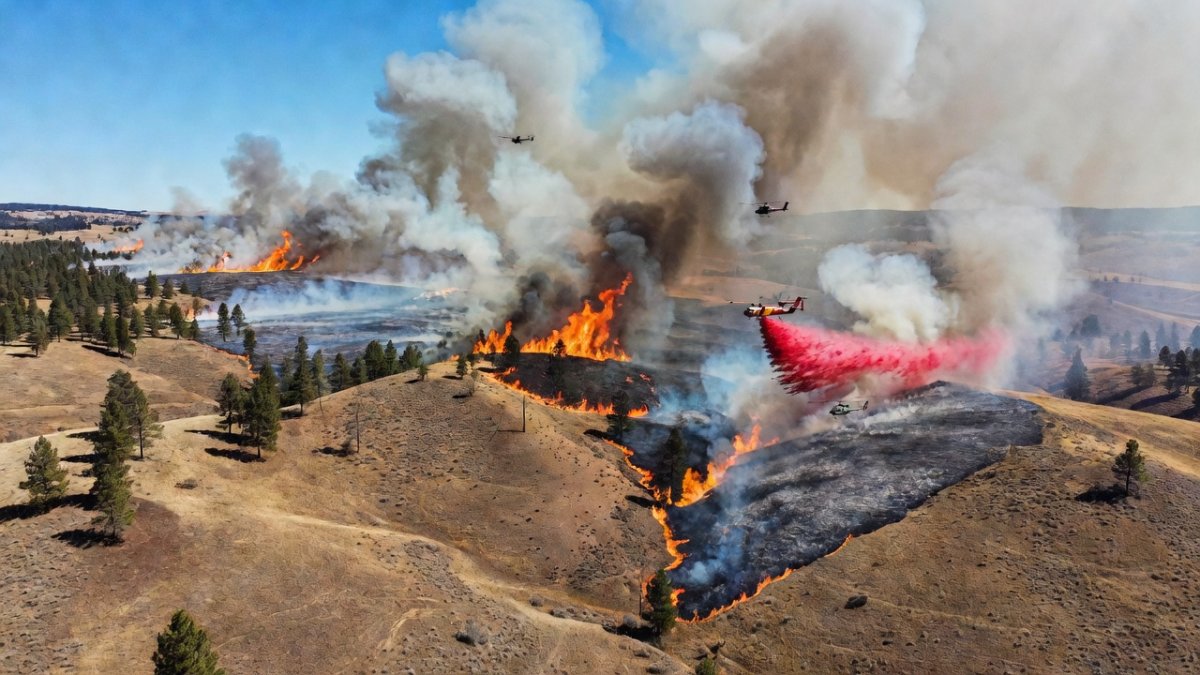
One hundred thirty firefighters from Washington State DNR joined forces with Washington State Patrol and multiple local fire districts to battle the blaze. KIRO 7 reported that air tankers and helicopters were deployed early to drop retardant and water along the advancing edges. Here's the deal, the multi-agency effort required constant coordination to avoid overlap in the rugged terrain. Douglas County Sheriff's Office confirmed to KIRO 7 that unified command was established within the first hours.
Folks, the response included ground crews establishing containment lines while aircraft provided critical support from above. Washington State DNR stated that the 40 percent containment figure by Sunday reflected successful integration of these resources. Let me be clear, the involvement of state patrol ensured traffic management did not interfere with fire operations along U.S. 97. Source ONE News documented the visible presence of heavy equipment carving firebreaks in real time.
Additional support came from neighboring districts that sent personnel and equipment despite the holiday weekend demands. KIRO 7 reported that mutual aid agreements proved essential in scaling up the initial attack. Washington State DNR stated that daily briefings kept all partners aligned on shifting priorities. This collaborative approach prevented the fire from claiming even more ground during its peak growth phase.
Holiday Weekend Logistics Add Layers of Difficulty
The Fourth of July timing created immediate staffing shortages as many seasonal responders were off duty or traveling. KIRO 7 reported that agencies had to recall personnel from family gatherings to fill critical roles. Here's the deal, road closures on SR 97 further delayed the arrival of out-of-area resources needed for sustained operations. Douglas County Sheriff's Office confirmed to KIRO 7 that logistics teams worked around the clock to reroute supplies.
Folks, air support faced extra challenges because of increased recreational air traffic typical on holiday weekends. Washington State DNR stated that coordination with regional airports became necessary to maintain safe flight corridors for tankers. Let me be clear, the combination of evacuations and tourist traffic turned simple movements into complex puzzles. Source ONE News documented crews adapting plans on the fly to keep momentum against the fire.
Even after winds calmed on Sunday, the holiday backlog meant some equipment remained staged at distant locations. KIRO 7 reported that demobilization plans were delayed until all personnel could be safely accounted for. Washington State DNR stated that the 1,842-acre footprint on Sunday still required full staffing to prevent re-ignition. This extended the strain on agencies already stretched by the initial surge.
Vegetation Management Questions Surface Along Highway 97
Concerns quickly arose about the adequacy of vegetation management along U.S. 97 in the months leading up to the ignition. KIRO 7 reported that overgrown fuels near the roadside allowed the fire to establish itself rapidly after the 12:05 a.m. start. Here's the deal, residents and officials alike questioned whether earlier clearing could have altered the outcome. Washington State DNR stated that ongoing reviews would examine fuel loads in the Chelan Hills Acres corridor.
Folks, the fire's ability to jump McNeil Canyon pointed to continuous ladder fuels that carried flames into the canopy. Douglas County Sheriff's Office confirmed to KIRO 7 that post-fire assessments would include highway right-of-way conditions. Let me be clear, climate trends combined with years of accumulated growth created conditions that overwhelmed standard prevention measures. Source ONE News documented calls for increased funding for proactive thinning projects.
Early season fires like this one serve as reminders that traditional management timelines may need adjustment. KIRO 7 reported that local landowners expressed frustration over the speed at which dry grasses and brush had been allowed to accumulate. Washington State DNR stated that partnerships with private property owners would be key to future mitigation. This conversation gained urgency as the Chelan Hills Fire continued to burn through the weekend.
Early Warning Signs for Western Fire Seasons
The Chelan Hills Fire offered a sobering preview of what drier, windier conditions could bring to the broader West this year. KIRO 7 reported that experts viewed the event as consistent with longer-term climate patterns affecting fuel moisture. Here's the deal, the rapid growth to between 15,000 and 20,000 acres before Sunday's containment illustrated how quickly situations can deteriorate. Washington State DNR stated that lessons from this incident would inform regional preparedness plans.
Folks, the destruction of dozens of homes and outbuildings underscored the human cost when fires ignite near populated rural zones. Douglas County Sheriff's Office confirmed to KIRO 7 that recovery efforts would focus on both immediate needs and long-term resilience. Let me be clear, the involvement of 130 firefighters and multiple agencies showed the scale of response required even for a relatively contained final footprint of 1,842 acres. Source ONE News documented the resolve of communities determined to rebuild stronger.
Ultimately, the fire's behavior on the holiday weekend highlighted gaps in both prevention and response infrastructure. KIRO 7 reported that ongoing monitoring would continue until full containment and rehabilitation were complete. Washington State DNR stated that public education on evacuation readiness would be expanded in the wake of the Level 3 orders affecting 500 residents. This event stands as a clear signal that vigilance must remain high throughout the season.
By Jessica Ali, Global 1 News
This article was produced with AI-assisted research and editorial support. Reporting is based on sources cited in the article.
What's Your Reaction?
 Like
0
Like
0
 Dislike
0
Dislike
0
 Love
0
Love
0
 Funny
0
Funny
0
 Wow
0
Wow
0
 Sad
0
Sad
0
 Angry
0
Angry
0

Editor-in-Chief at Global1.News. Atlanta-based journalist who cuts through the BS and tells it like it is. Lead anchor, host, and the voice you hear when the spin stops and the truth starts.















Comments (0)