
Burnham-Starmer Secret Summit: Labour Leadership Handover
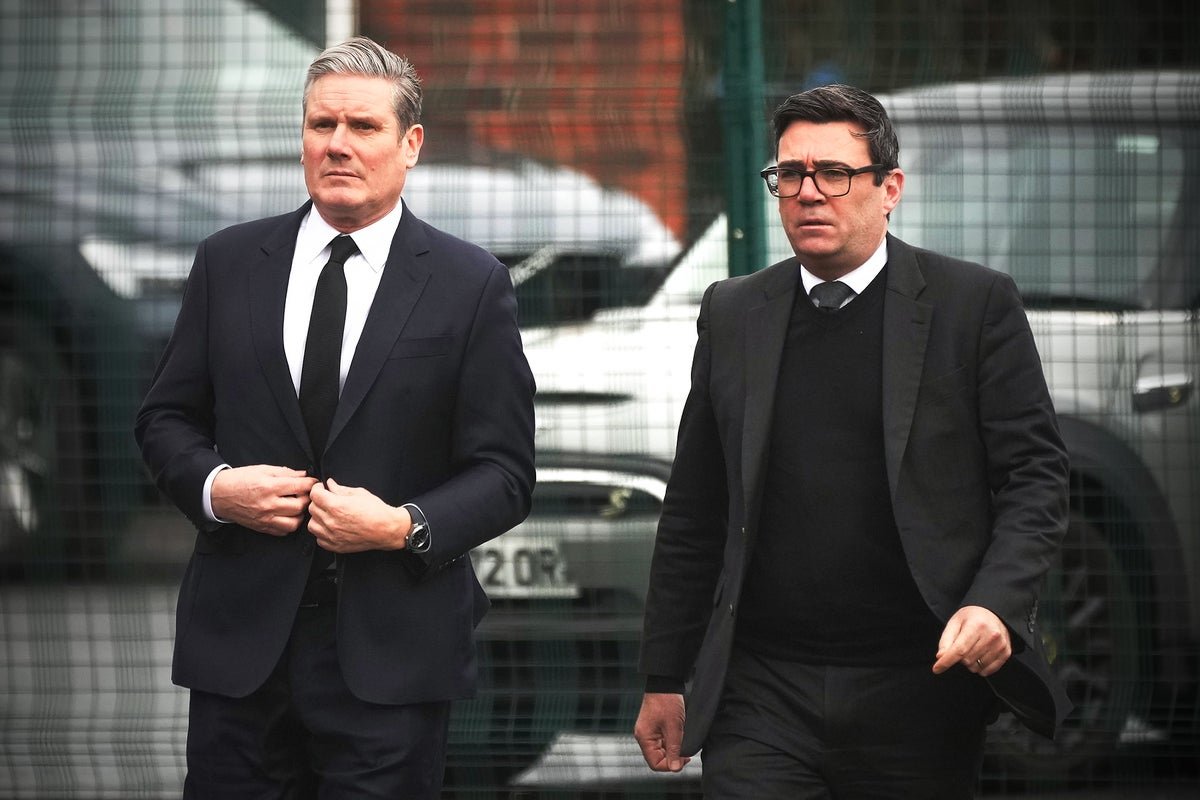
Secret Summit: The Off-Site Meeting The clandestine nature of the hour-long off-site encounter between Andy Burnham and Sir Keir Starmer on Tuesday underscores the delicate choreography now unfolding within the Labour Party. This meeting, understood to be the first direct conversation between the pair since the leadership contest concluded last week, marks a pivotal moment in t
Secret Summit: The Off-Site Meeting
The clandestine nature of the hour-long off-site encounter between Andy Burnham and Sir Keir Starmer on Tuesday underscores the delicate choreography now unfolding within the Labour Party. This meeting, understood to be the first direct conversation between the pair since the leadership contest concluded last week, marks a pivotal moment in the handover of power. The contest itself had paved the way for Mr Burnham’s return to Westminster, positioning him as a central figure in the forthcoming leadership race. Downing Street’s confirmation that Sir Keir has authorised government briefings for prospective candidates, including Mr Burnham, signals an institutional willingness to accelerate preparation for the transition. Such access is not merely procedural; it reflects a calculated effort to equip potential successors with the necessary intelligence to assume office without delay.
Within British political tradition, secret summits of this kind often carry layered significance. They allow for candid exchanges away from the scrutiny of cameras and aides, yet they also risk fuelling speculation about underlying rivalries. The fact that the discussion occurred off-site rather than in the more formal surroundings of Downing Street suggests both men sought a degree of informality that might otherwise be constrained by protocol. For Mr Burnham, the opportunity to receive briefings represents a tangible advantage in a contest where momentum can shift rapidly. Sir Keir’s decision to facilitate this process demonstrates a pragmatic recognition that the party’s next leader must be ready to govern from day one.
Analysts will note that the timing of the meeting coincides with Sir Keir’s final weeks in office, a period during which every public and private action is freighted with consequence. The prime minister’s authorisation of civil service access talks for prospective candidates in the coming weeks further embeds this transition within established machinery. Yet the secrecy surrounding the encounter invites questions about what was discussed and whether any informal understandings were reached. In the context of Labour’s recent history, such private diplomacy has sometimes preceded more public displays of unity or, conversely, sharper divisions. The hour-long duration itself hints at substantive engagement rather than a cursory exchange, suggesting that both men appreciate the gravity of the moment.
Ultimately, this off-site meeting sets the tone for a leadership transition that must balance continuity with renewal. Mr Burnham’s engagement with Sir Keir at this early stage positions him as a serious contender who commands institutional attention. Whether the conversation produced concrete agreements or merely established lines of communication remains unknown, but its occurrence alone illustrates the intricate dance between outgoing and incoming power that defines British politics at moments of change.
Orderly Transition or Tensions Beneath the Surface?
Sir Keir Starmer’s public insistence on an orderly transition during Tuesday’s Cabinet meeting reveals both a desire for stability and the inherent pressures of a compressed timetable. The prime minister emphasised his intention to make the handover as straightforward as possible for his successor, framing the process as one of institutional responsibility rather than personal legacy. Downing Street has reinforced this message by confirming that no major new policy decisions or spending pledges will be made during the leadership transition, a safeguard designed to prevent the outgoing administration from binding its replacement to contentious commitments.
Yet beneath this rhetoric of seamlessness lie structural frictions that cannot be wished away. The authorisation of government briefings for prospective candidates, including Andy Burnham, indicates that preparations for power are already underway even as Sir Keir remains in post. This dual-track approach, while pragmatic, creates an unusual dynamic in which the sitting prime minister must share sensitive information with those who may soon challenge or replace him. The involvement of cabinet secretary Dame Antonia Romeo in agreeing priorities with Sir Keir further formalises a process that will shape the early weeks of the next premiership.
British constitutional practice places considerable weight on the notion of orderly transition, yet history shows that such periods are rarely free of tension. The decision to allow civil service access talks to begin in the coming weeks acknowledges the practical need for incoming leaders to understand the machinery of government. At the same time, it risks creating perceptions of divided authority during Sir Keir’s final days. Allies of Mr Burnham have already signalled that certain decisions should properly rest with the next leader, highlighting the potential for disagreement over where authority ends and begins.
The prime minister’s commitment to resolving difficult issues before departure is therefore double-edged. It demonstrates a sense of duty, yet it also concentrates power in the hands of an administration that is, by its own admission, on borrowed time. The absence of major new spending pledges provides reassurance to markets and allies, but it simultaneously limits the scope for bold action at a moment when global events continue to demand attention. In this environment, the appearance of order may mask deeper questions about who ultimately steers the ship during the interregnum.
Defence Row: The DIP Controversy
The publication of the defence investment plan before the Nato summit on 7 July represents one of the most consequential loose ends Sir Keir Starmer intends to tie up before leaving office. Delayed for months amid prolonged wrangling over funding, the document has already exacted a political cost. The resignations of defence secretary John Healey and former armed forces minister Al Carns underscore the depth of disagreement within government over the resources required to meet Britain’s security commitments. Mr Healey’s accusation that the Treasury was unwilling to commit the resources the nation needs exposes a fundamental rift between strategic ambition and fiscal restraint.
David Lammy’s assertion that the plan will deliver another unprecedented increase in defence spending offers a public defence of the policy, yet it cannot obscure the internal turbulence that preceded its release. The decision to press ahead with publication despite Sir Keir’s resignation on Monday illustrates the prime minister’s determination to shape the agenda on national security even as his tenure draws to a close. For Nato allies, such continuity may provide reassurance ahead of the 7 July summit. Within Labour ranks, however, the timing raises legitimate questions about whether a departing leader should bind his successor to a major spending framework.
The controversy surrounding the DIP highlights the perennial tension in British defence policy between aspiration and affordability. Months of internal debate have delayed the plan, suggesting that competing priorities within the Treasury and the Ministry of Defence proved difficult to reconcile. Mr Healey’s resignation, in particular, signals that these disagreements reached the highest levels. Allies of Andy Burnham have reportedly argued that the decision should fall to the next leader, a position that reflects both constitutional propriety and political calculation. Allowing the incoming prime minister to own the final document would avoid accusations of a lame-duck administration imposing faits accomplis.
Nevertheless, Sir Keir’s resolve to publish before the Nato summit demonstrates an awareness that Britain’s international standing requires visible commitment. The plan’s emphasis on increased spending responds to a deteriorating security environment, yet the resignations that preceded it reveal the domestic political price of that commitment. As the transition unfolds, the DIP stands as both a substantive policy achievement and a potential flashpoint for the leadership contest now gathering pace.
The OBR Appointment
The chancellor’s nomination of Jonathan Haskel to chair the Office for Budget Responsibility introduces a significant institutional development at a moment of political flux. Mr Haskel, who served on the Bank of England’s Monetary Policy Committee between 2018 and 2024, brings extensive experience in economic forecasting and monetary policy to the role. His selection as the preferred candidate to lead the government’s official forecaster reflects a desire to maintain the OBR’s reputation for rigorous, independent analysis during the leadership transition.
The timing of the nomination carries particular weight. With Sir Keir Starmer preparing to depart and a new prime minister poised to take office, the appointment of a respected economist to oversee fiscal projections provides a measure of continuity in economic governance. The OBR’s assessments influence everything from spending reviews to tax policy, making the chairmanship a position of considerable influence. Mr Haskel’s background at the Bank of England equips him to navigate the complex interplay between monetary and fiscal decisions that will confront the next administration.
British political convention holds that major public appointments should, where possible, enjoy cross-party support, particularly during periods of transition. The chancellor’s decision to advance Mr Haskel’s candidacy now suggests confidence that the nomination will withstand scrutiny from prospective leadership candidates, including Andy Burnham. The OBR’s independence is central to its credibility, and any perception that the appointment has been rushed or politicised could undermine that standing. Mr Haskel’s established record offers reassurance on this front, yet the process itself will be watched closely by markets and opposition figures alike.
As government briefings begin for prospective candidates, the OBR appointment serves as a reminder that institutional appointments continue regardless of the leadership contest. The next prime minister will inherit both the individual chosen to lead the forecaster and the forecasts themselves. In an era of heightened economic uncertainty, the OBR’s role in providing authoritative analysis remains vital. Mr Haskel’s nomination therefore represents not only a personnel decision but a statement about the priority attached to evidence-based fiscal policy during the handover of power.
What Lies Ahead for British Politics
The convergence of a secret leadership meeting, a contested defence plan, and a key institutional appointment illustrates the multifaceted challenges facing British politics in the coming weeks. Andy Burnham’s engagement with Sir Keir Starmer and his access to government briefings position him as a frontrunner equipped to assume office with minimal delay. Yet the defence investment plan’s publication before the Nato summit on 7 July risks creating friction if allies of Mr Burnham maintain that such decisions should rest with the next leader. The resignations triggered by the plan already demonstrate the political costs of unresolved funding disputes.
Sir Keir’s commitment to an orderly transition, coupled with restrictions on new spending pledges, seeks to preserve stability. However, the involvement of Dame Antonia Romeo in setting priorities and the authorisation of civil service access talks indicate that the machinery of government is already adapting to the prospect of change. The nomination of Jonathan Haskel to chair the OBR adds another layer of continuity, ensuring that economic forecasting remains insulated from the immediate turbulence of the leadership contest.
For Labour, the period ahead will test the party’s capacity to manage internal expectations while projecting competence to the electorate. The defence row, in particular, highlights the difficulty of reconciling strategic necessity with fiscal discipline at a time when authority is shared between an outgoing and an incoming administration. Mr Burnham’s preparation through briefings may strengthen his hand, yet it also exposes him to the controversies that defined the final weeks of Sir Keir’s premiership.
British politics has long prized the appearance of orderly transition, yet the events of recent days reveal the underlying complexities. As the Nato summit approaches and the leadership contest intensifies, the decisions taken now will shape the parameters within which the next prime minister must operate. The interplay between personal diplomacy, institutional appointments, and policy loose ends will determine whether the transition reinforces or undermines public confidence in the Labour Party’s ability to govern.
By Erica Thornton, Staff Writer
This article was produced with AI-assisted research and editorial support. Reporting is based on sources cited in the article.
What's Your Reaction?
 Like
0
Like
0
 Dislike
0
Dislike
0
 Love
0
Love
0
 Funny
0
Funny
0
 Wow
0
Wow
0
 Sad
0
Sad
0
 Angry
0
Angry
0

US Politics and Policy Correspondent at Global1.News. Based in Washington DC, covering American politics, policy, elections, and the courts. Knows how the system works and tells you what it actually means.















Comments (0)