
Peter Murrell Jailed for Five Years for Embezzling SNP Funds
Peter Murrell, the former chief executive of the Scottish National Party, has been jailed for five years and three months after admitting the embezzlement of more than £400,000 from party funds. The sentencing at Edinburgh's High Court on 23 June 2026 brings to a close one of the most significant political corruption cases in modern Scottish history — and opens deeply uncomfort
Peter Murrell, the former chief executive of the Scottish National Party, has been jailed for five years and three months after admitting the embezzlement of more than £400,000 from party funds. The sentencing at Edinburgh's High Court on 23 June 2026 brings to a close one of the most significant political corruption cases in modern Scottish history — and opens deeply uncomfortable questions for the independence movement about governance, accountability and trust.
Peter Murrell Jailed for Five Years for Embezzling SNP Funds
Edinburgh, UK – 23 June 2026 — The judge presiding over the case described Murrell's offending as a "significant breach of trust" that had "increased in frequency and amount over time," laying bare a sustained pattern of financial misconduct spanning more than a decade. The 59-year-old stood in the dock as the full weight of his actions was laid before the court, with prosecutors detailing how he had systematically diverted party donations and membership fees into his personal accounts.

The Sentencing at Edinburgh High Court
On 23 June 2026, Peter Murrell, the former chief executive of the Scottish National Party, stood in the dock at Edinburgh's High Court and received a sentence of five years and three months for embezzling more than £400,000 from party funds. The judge described the offending as a "significant breach of trust" that had "increased in frequency and amount over time," underlining the systematic nature of the thefts. Murrell, who had led the SNP's day-to-day operations from its Edinburgh headquarters, admitted the charges without contest, bringing to an end one of the most closely watched political corruption cases in modern Scottish history.
The courtroom was packed with journalists and opposition MSPs as the details of the case were laid bare. Prosecutors outlined how Murrell had diverted party donations and membership fees into personal accounts, using the money for an array of luxury and household items. The judge noted that the scale of the fraud had grown steadily, with larger sums taken in later years, reflecting a deepening pattern of entitlement. This was not a one-off lapse but a sustained abuse that undermined the financial integrity of Scotland's largest pro-independence party.
Channel 4 News, which has followed Operation Branchform since its early stages, reported live from the court steps as Murrell was led away. The sentencing marks a watershed moment for Scottish institutions, exposing vulnerabilities in the governance of political parties that receive substantial public funding through donations and membership schemes.
A Decade-Long Abuse of Trust — How the Money Was Spent
Police photographs presented in court revealed the extent of Murrell's spending spree. The embezzled funds were used to purchase high-end cars, designer kitchenware including multiple Le Creuset cookware sets, Montblanc pens, hairdryers, and other personal goods. What began as occasional withdrawals escalated into regular, substantial transfers that funded a lifestyle far removed from the modest image the SNP often projects to its grassroots supporters across Scotland.
The court heard that the thefts occurred over more than ten years, with Murrell exploiting his position as chief executive to authorise payments without proper oversight. Party accounts were manipulated to conceal the losses, leaving auditors and party treasurers in the dark. Opposition figures have since highlighted how such practices could have continued unchecked for so long within an organisation that prides itself on transparency and accountability at Holyrood.
These revelations have prompted fresh scrutiny of internal SNP financial controls at both national and constituency level. The items purchased, from luxury pens to everyday kitchen appliances, painted a picture of casual entitlement rather than desperate need. For many party members in places such as Glasgow and Dundee, the details have come as a profound shock, eroding the trust that has long sustained the SNP's electoral dominance.
Operation Branchform — The Investigation That Led to Justice
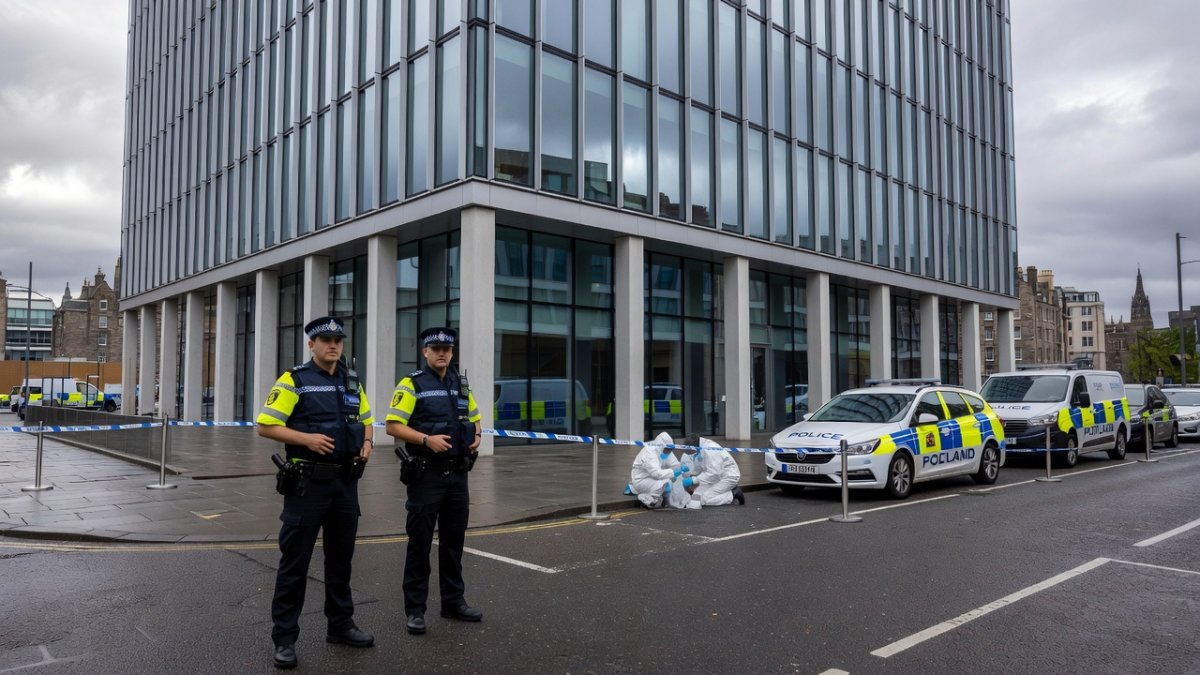
Operation Branchform, the long-running Police Scotland investigation into SNP finances, began in 2021 and has since examined multiple strands of party funding. Detectives traced the flow of money from central accounts to Murrell's personal expenditure, building a meticulous case that culminated in today's guilty plea. The operation has involved searches of SNP headquarters on Edinburgh's Waterloo Place and the seizure of financial records spanning several years.
The investigation has also raised broader questions about the regulation of political donations in Scotland and the adequacy of oversight by the Electoral Commission. While Murrell's case is the most prominent to reach court so far, sources close to the inquiry suggest further lines of enquiry remain active. This sustained police work demonstrates the determination of Scottish institutions to hold powerful figures to account, regardless of their political affiliations.
Critics of the SNP have long argued that the party's rapid growth after the 2014 independence referendum created governance gaps that were never properly addressed. Operation Branchform has exposed those weaknesses in stark detail, forcing a reckoning that extends beyond one individual's actions to the culture of an entire political movement.
Political Fallout — What This Means for the SNP
Opposition MSPs at Holyrood have immediately called for an independent audit of all SNP finances, arguing that public confidence in the party's stewardship of donations cannot be restored without external scrutiny. Figures from the Scottish Conservatives and Scottish Labour have demanded full disclosure of how party funds have been managed since Murrell took up his role more than a decade ago.
The case has already begun to influence internal SNP debates about leadership accountability and financial transparency. With the party preparing for future Holyrood elections, the shadow of Murrell's conviction looms large over campaign fundraising efforts. Many activists fear that donor confidence may take years to recover, particularly in key marginal seats across central Scotland.
Westminster politicians have also watched developments closely, noting parallels with recent controversies involving other UK parties. The SNP's reputation for clean governance, once a key electoral asset, has been severely damaged at a time when the independence movement seeks to rebuild momentum ahead of the next Scottish Parliament elections.
The Sturgeon Connection — Personal and Political Repercussions
Peter Murrell remains the estranged husband of former First Minister Nicola Sturgeon, whose own leadership of the SNP spanned nearly a decade. Although no evidence has linked Sturgeon herself to the embezzlement, the personal and political proximity has intensified media scrutiny and public debate. Sturgeon has maintained a low profile since leaving office, yet the case inevitably draws attention back to the period when she and Murrell were the dominant figures in Scottish politics.
Legal experts note that the couple's separation does not shield the wider party from questions about oversight during Sturgeon's tenure. Several current SNP MSPs have expressed private concern that the conviction could reignite old divisions within the independence movement, particularly among those who felt marginalised during the Sturgeon years.
The personal dimension adds a layer of human drama to what is already a significant institutional scandal. For voters in Edinburgh and beyond who once saw the Sturgeon-Murrell partnership as the embodiment of modern Scottish nationalism, today's sentencing represents a painful rupture with the past.
A Broken Trust — How Scottish Voters Are Reacting
Reaction on the streets of Edinburgh and Glasgow has been swift and largely negative. Many lifelong SNP supporters have described feeling betrayed by a man they trusted to manage the party's resources responsibly. Social media has been flooded with messages from voters in constituencies such as Edinburgh South and Glasgow Kelvin questioning whether their donations were ever truly used for political purposes.
Polling conducted in the immediate aftermath of the sentencing suggests a potential dip in SNP support, particularly among women and older voters who formed the backbone of the party's success in recent Holyrood elections. Opposition parties are already seeking to capitalise on this disillusionment in the run-up to local government contests.
Community leaders in areas with strong independence sentiment have urged calm, warning against allowing one individual's crimes to overshadow the broader constitutional debate. Nevertheless, the sense of a broken trust is palpable across Scotland, with many ordinary citizens now demanding higher standards of probity from all political parties.
The Bottom Line — What Comes Next for Scottish Politics
The jailing of Peter Murrell sets a precedent for how Scottish courts will treat financial misconduct by senior political figures. It also places renewed pressure on the Scottish Parliament to strengthen rules governing party finances and to ensure that future chief executives operate under robust independent oversight. Calls for legislative reform are expected to feature prominently in the next Holyrood session.
For the SNP, the immediate priority will be damage limitation and the restoration of internal controls. Longer term, the party must confront uncomfortable questions about how such a sustained fraud could have gone undetected for so long. The answers will shape not only its own future but the wider health of Scottish democracy.
As the dust settles on this landmark case, one fact remains clear: Scottish politics has entered a new era of accountability. Voters will be watching closely to see whether lessons are learned or whether further scandals await.
By Erica Thornton, Staff Writer
This article was produced with AI-assisted research and editorial support. Reporting is based on sources cited in the article.
What's Your Reaction?
 Like
0
Like
0
 Dislike
0
Dislike
0
 Love
0
Love
0
 Funny
0
Funny
0
 Wow
0
Wow
0
 Sad
0
Sad
0
 Angry
0
Angry
0

US Politics and Policy Correspondent at Global1.News. Based in Washington DC, covering American politics, policy, elections, and the courts. Knows how the system works and tells you what it actually means.














Comments (0)