
Bagong Bag para sa Mag-aaral: Program Launch & DepEd Aid
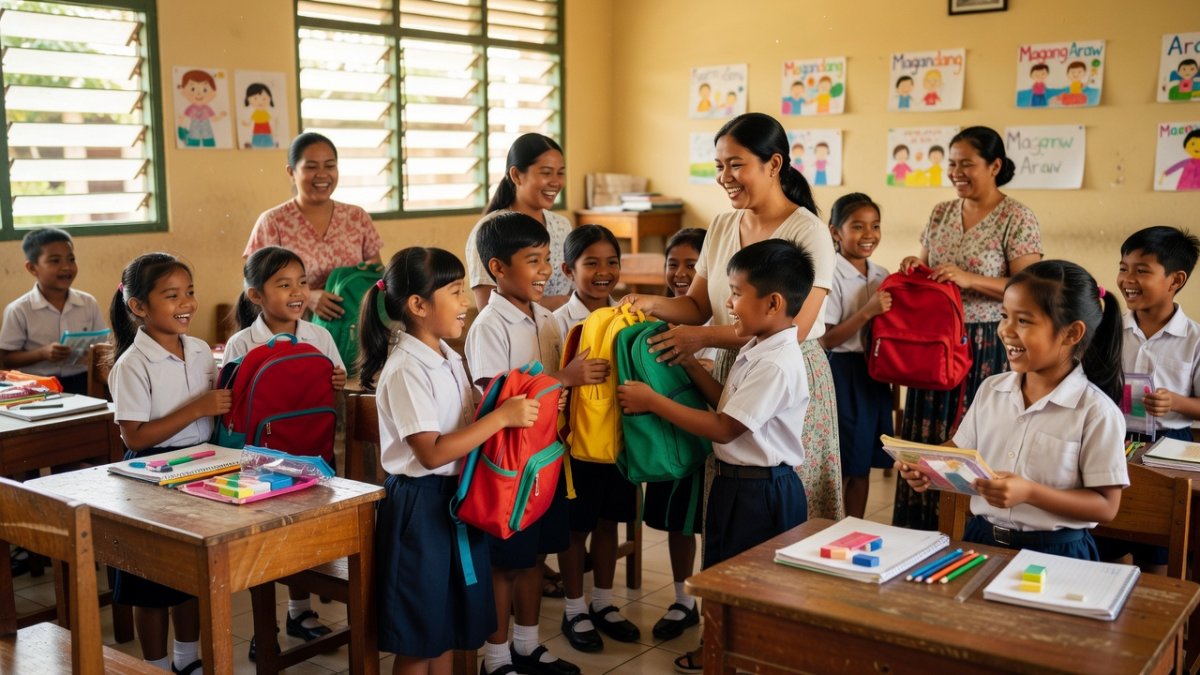
Global 1 News Program Launch The Marcos administration introduced the Bagong Bag para sa Mag-aaral program on June 9 at Taytay Elementary Public School, marking the start of a nationwide effort to support young learners. During the event, 4,000 public school students from Kindergarten to Grade 3 received school bags filled with learning kits that include notebooks, pencils, and
Global 1 News
Program Launch
The Marcos administration introduced the Bagong Bag para sa Mag-aaral program on June 9 at Taytay Elementary Public School, marking the start of a nationwide effort to support young learners. During the event, 4,000 public school students from Kindergarten to Grade 3 received school bags filled with learning kits that include notebooks, pencils, and other basic materials needed for the school year. The distribution took place in the presence of local education officials and community members who gathered to witness the first deliveries under the Presidential Assistance to Primary-Grade Learners initiative.
Department of Education personnel coordinated the handover, ensuring that the items reached identified pupils from nearby barangays. The launch highlighted the administration's focus on easing costs for families at the beginning of the academic calendar. Officials noted that the program aims to reach two million students across public schools throughout the year, with initial supplies serving as the foundation for continued support in the coming months.
Teachers at Taytay Elementary expressed appreciation for the timely assistance, observing that many children arrived with worn or makeshift bags on the first day of classes. The event set the tone for similar distributions planned in other regions, organized through coordination between the Department of Education and local government units.
The Burden of School Expenses on Filipino Families
Many Filipino households continue to face significant pressure when preparing children for the new school year. Sari-sari store owners often set aside small daily earnings to purchase notebooks and uniforms, while jeepney drivers adjust their routes and fuel budgets to cover additional costs for their children's supplies. These everyday decisions reflect the tight margins that define life for working families across urban and rural communities.
Parents who work abroad as overseas Filipino workers send remittances specifically earmarked for school needs, yet the amounts sometimes fall short when prices of paper and writing materials rise. Farmers in the provinces likewise allocate portions of their harvest income to meet the same requirements, frequently borrowing from neighbors when cash is limited. Such patterns repeat in barangays nationwide, where school-related spending competes with food, transportation, and medical needs.
The cumulative effect of these expenses can strain household resources, particularly for families with multiple children in the early grades. Public school teachers regularly observe students sharing limited materials or arriving without complete sets of supplies during the opening weeks of classes. This reality underscores why targeted assistance programs hold practical value for communities already balancing multiple financial demands.
How DepEd Identifies Beneficiaries
The Department of Education relies on existing school records and enrollment data to determine which primary-grade learners may receive support under various assistance efforts. Public school teachers compile lists based on attendance, family background information submitted during registration, and observations of students who lack basic materials at the start of the term. These lists are then reviewed at the division level before supplies are allocated.
Local government units and barangay officials often assist by verifying addresses and confirming that identified pupils attend public schools within their jurisdiction. This process helps ensure that resources reach children from households most likely to benefit, without requiring new applications from parents already occupied with work and daily responsibilities. Coordination between schools and community leaders keeps the identification straightforward and grounded in available information.
Once selections are finalized, school heads coordinate with distribution teams to organize pickup schedules or classroom deliveries. The approach builds on long-standing DepEd practices for managing targeted programs, allowing quick rollout while maintaining accountability through standard reporting channels. Parents seeking clarification can visit their child's school or the nearest DepEd office for guidance on eligibility under current initiatives.
Early-Grade Education as National Priority
Executive Secretary Ralph Recto emphasized that investing in early-grade learners remains a central focus of the current administration. The statement aligns with broader efforts to strengthen foundational skills in reading, writing, and arithmetic during the first years of formal schooling. Public education specialists have long noted that support provided at this stage can influence long-term academic outcomes and reduce later intervention needs.
Kindergarten to Grade 3 represents a critical window when children develop habits that carry through their entire education. In many public schools, classes at this level serve students from varied economic backgrounds, making consistent access to basic supplies an important factor in maintaining equal footing inside the classroom. The Department of Education has introduced several complementary programs over the years aimed at improving early literacy and numeracy, and the new bag distribution adds a practical layer to those initiatives.
Community members recognize that early assistance can ease the transition into formal learning, especially for children whose families have limited resources for enrichment activities outside school hours. By directing attention to these grades, national policy reflects an understanding that strong beginnings contribute to more stable progress in later years of basic education.
Parent and Community Response
Residents in areas surrounding Taytay Elementary and other recipient schools have welcomed the distributions, viewing them as an extension of the bayanihan spirit that encourages neighbors to support one another during challenging times. Barangay captains have helped spread information about the program through local meetings, while kapitbahay networks share updates on when supplies will arrive at nearby public schools. This informal communication helps ensure that eligible families stay informed without additional paperwork.
Parents describe the assistance as a meaningful reduction in the list of items they must purchase each June. Many recount pooling resources with relatives or borrowing from sari-sari stores in previous years, and they see the current program as a way to redirect those savings toward food or transportation. Teachers report that students appear more prepared on the first days of class when basic materials are already provided.
Local government units continue to play a supporting role by offering venues for distributions and assisting with crowd management. The involvement of barangay officials reinforces the sense of collective responsibility that characterizes many Philippine communities when addressing shared concerns such as education costs.
Program Expansion and Sustainability
Education planners are examining how the initial distribution at Taytay Elementary can inform wider rollout across other regions. The target of reaching two million Kindergarten to Grade 3 students suggests a phased approach that will require continued coordination between the Department of Education, local government units, and school administrators. Scaling the effort will depend on steady supply chains and accurate beneficiary lists maintained at the school level.
Parents interested in learning whether their children qualify can inquire directly at their local public school or the nearest DepEd office. Staff there maintain updated information on ongoing assistance programs and can explain the documentation typically required for verification. This decentralized method allows families to receive answers without traveling far from their communities.
Sustainability will also hinge on partnerships with local businesses and civic groups that have historically contributed to school supply drives. By building on these existing relationships, the program can maintain momentum beyond the first year while remaining responsive to feedback from teachers and parents who see the daily impact of the assistance.
Looking Ahead
The emphasis on early-grade support signals a continued commitment to strengthening the foundation of Philippine public education. When young learners receive basic materials without added cost to their families, classrooms can focus more fully on instruction rather than addressing shortages of supplies. This shift can contribute to steadier progress in literacy and numeracy benchmarks tracked by the Department of Education.
Over time, consistent investment in the earliest years of schooling may help reduce disparities that appear later in the education pipeline. Communities that participate in distributions often report a renewed sense of partnership between schools and families, reinforcing the shared goal of preparing children for future opportunities. The involvement of barangay networks and local officials further embeds the program within everyday community life.
As the school year advances, observers will watch how the initiative evolves and whether similar support extends to higher grade levels. For now, the focus on Kindergarten to Grade 3 underscores the belief that equipping young students with essential tools can yield lasting benefits for individuals and the broader society.
By Bella Reyes, Staff WriterThis article was produced with AI-assisted research and editorial support. Reporting is based on sources cited in the article.
What's Your Reaction?
 Like
0
Like
0
 Dislike
0
Dislike
0
 Love
0
Love
0
 Funny
0
Funny
0
 Wow
0
Wow
0
 Sad
0
Sad
0
 Angry
0
Angry
0

Philippines/Southeast Asia Correspondent at Global1.News. Manila-based journalist covering Philippine politics, environment, maritime security, and social issues. Passionate about marine conservation and the communities protecting the Philippines' natural heritage.













Comments (0)