
Argentina Weakens Glacier Protection Law, Sparking Water Crisis Fears Across Andes
In the shadow of the towering Andes, families in Mendoza and San Juan watch their rivers shrink year after year, knowing that the ice fields above them supply the water for their crops, their livestock, and their daily drinking needs. Now, a controversial reform passed in April 2026 threatens to remove the last federal safeguards that once protected those glaciers from mining e
Argentina Dilutes 2010 Glacier Protection Law, Unlocking Billions in Mining While Millions Face Water Risks
Buenos Aires, Argentina – June 22, 2026 — As protests erupted outside Congress and in provincial capitals, Argentina’s Chamber of Deputies approved sweeping changes to the landmark 2010 National Glacier Protection Law, shifting oversight from national scientists to pro-mining provincial governments and raising alarms across Latin America about irreversible water losses in the Andes.
The Law That Protected Argentina's Frozen Water
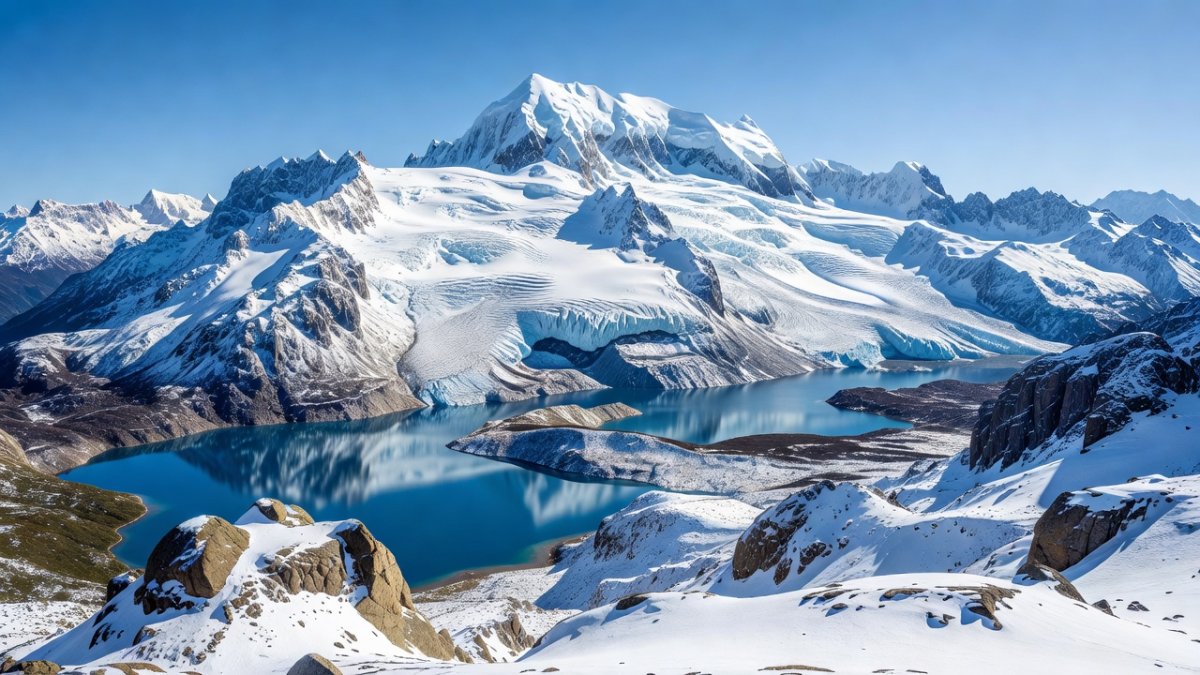
Argentina’s 2010 National Glacier Protection Law, known as Ley 26.639, emerged directly from the intense 2008 conflict surrounding Barrick Gold’s Pascua Lama project that straddled the Chile-Argentina border. The legislation established strict federal rules prohibiting mining, oil exploration, and industrial activities in glacier and periglacial zones. It tasked the Instituto Argentino de Nivología, Glaciología y Ciencias Ambientales (IANIGLA), part of CONICET, with creating a national inventory that ultimately documented more than 17,000 glaciers and periglacial bodies. This inventory became the scientific backbone for protecting water sources that sustain over seven million people dependent on glacial melt for drinking water, irrigation, and agriculture across arid provinces. The law also introduced the non-regression principle of environmental law, preventing any weakening of protections once established. In practice, it blocked numerous projects and forced companies to conduct detailed environmental impact studies before any development near ice bodies. For years, this framework positioned Argentina as a regional leader in glacier governance, influencing similar debates in Chile and Peru where Andean nations also grapple with retreating ice and expanding extractive industries. The law’s emphasis on federal scientific authority ensured consistent standards rather than fragmented provincial rules that often favor short-term economic gains over long-term water security.
The Reform: What Changed and How
The reform passed the Chamber of Deputies by a 137-111 vote in April 2026 following a grueling 12-hour debate. It transfers primary authority from the federal scientific body IANIGLA to provincial governments, many of which openly support mining expansion. Mining Secretary Luis Lucero defended the changes, arguing they eliminate imprecise definitions that created investor uncertainty and stalled legitimate projects. Critics immediately challenged the move, citing the non-regression principle and warning of irreversible damage to Andean basins. A Santa Cruz judge initially suspended the reform through a precautionary measure, but the Federal Chamber of Comodoro Rivadavia overturned that decision, allowing the law to advance. Under the new framework, provinces gain flexibility to reinterpret periglacial protections, potentially opening areas previously off-limits. The Javier Milei administration’s pro-mining and pro-deregulation stance accelerated the process, aligning with broader efforts to attract foreign capital. Environmental groups argue the shift undermines the original intent of Ley 26.639 by replacing national scientific oversight with politically influenced provincial decisions. The 12-hour debate revealed deep divisions, with opposition lawmakers highlighting data from IANIGLA showing ongoing glacier retreat and the risks of relaxing federal standards. This structural change marks a significant departure from the 2010 model that prioritized centralized, evidence-based protection.
Billions in Mining at Stake
Proponents claim the reforms could unlock between 15 and 35 billion dollars in mining investments across Argentina. Major projects include Glencore’s El Pachón copper development valued at 9.5 billion dollars, the BHP-Lundin Vicuña joint venture, and the Los Azules project led by Rob McEwen. Mining Secretary Luis Lucero emphasized that clearer provincial authority would reduce delays caused by federal glacier mapping requirements. While the sector accounts for roughly 10 percent of national water use and often employs closed-circuit systems, local impacts on Andean basins remain severe according to hydrological studies. The changes particularly affect copper and gold exploration in San Juan and Mendoza, where companies have long argued that IANIGLA’s inventory created overly broad restrictions. Supporters point to potential job creation and export revenues as critical for Argentina’s struggling economy. However, independent analyses warn that even modest increases in mining activity near headwaters could compound existing water deficits. The reform’s timing coincides with global demand for copper needed in renewable energy technologies, adding economic pressure to accelerate approvals. Provincial governments in mining-friendly regions have welcomed the shift, viewing it as an opportunity to negotiate directly with investors without federal scientific vetoes. This economic calculus now competes directly with the water security needs of downstream communities.
Glaciers in Retreat: A Climate Crisis Accelerating
Scientific measurements reveal accelerating glacier loss across Argentina’s Andes. Perito Moreno has retreated more than 800 meters since 2019 while thinning at a rate 16 times faster than earlier observations. The 2024 Andes Desérticos inventory documented 3,087 ice bodies covering 249.59 square kilometers, showing a 17 percent surface reduction and 23 percent loss of snow patches compared with previous surveys. Reference glacier Agua Negra recorded a net loss of 6.79 meters water equivalent between 2014 and 2023, equivalent to roughly seven meters of ice thickness. These trends align with global patterns where approximately 9,200 gigatons of ice mass have disappeared worldwide since 1976, with 41 percent of that loss occurring between 2015 and 2024. Venezuela lost its last glacier entirely during 2024-2025, serving as a stark warning for other Andean nations. In San Juan province, rivers now deliver 40 percent less water than official forecasts predicted, prompting authorities to declare a water emergency. Mendoza’s world-renowned wine industry depends heavily on glacial melt for irrigation, making any further reduction in ice volume an existential threat to agricultural output. IANIGLA’s ongoing monitoring through CONICET underscores that these changes are not temporary fluctuations but part of a sustained climatic shift affecting the entire region.
Voices from the Streets: Protesters Fight for Water
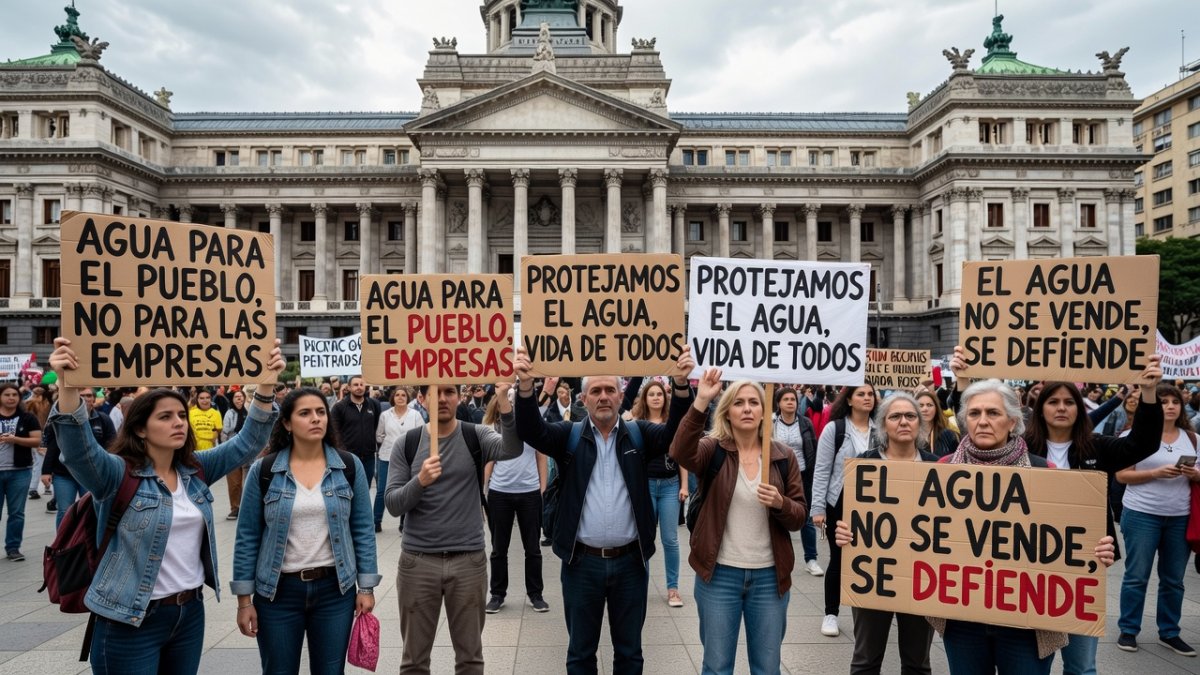
Protests erupted in Buenos Aires outside Congress, as well as in Mendoza and Tierra del Fuego, drawing thousands opposed to the weakening of glacier protections. Greenpeace activists sat on the steps of Congress holding toilets with a sign reading “Senators, don’t shit on the water,” symbolizing fears of contaminated and diminished supplies. Clashes with police occurred in both Buenos Aires and Mendoza as demonstrators blocked access points and demanded the reform be reversed. The April 9, 2026 Al Jazeera English video titled “Argentina protesters rally against glacier law weakening water protections” captured scenes of citizens linking arms to defend the 2010 law. Local communities emphasized that glacial melt provides critical dry-season flows for drinking, irrigation, and livestock across provinces already experiencing shortages. Indigenous groups and environmental organizations framed the reform as a direct threat to water sovereignty. Organizers highlighted that seven million people rely on these ice bodies, making the issue far larger than abstract environmental policy. The protests also referenced the original 2008 Pascua Lama conflict that birthed the law, arguing that history was repeating itself under new political conditions. Despite the demonstrations, the Milei administration maintained its pro-extraction course, dismissing concerns as exaggerated.
What This Means for Latin America
Argentina’s reform sends ripples across the Andes, where Chile and Peru maintain stricter national glacier protection frameworks that still prioritize federal scientific oversight. Chile’s glacier law, for instance, establishes buffer zones and requires detailed inventories managed centrally, while Peru has strengthened protections around Cordillera Blanca following similar water-security concerns. Venezuela’s complete loss of its last glacier in 2024-2025 now stands as a cautionary tale for nations that delay action. Regional experts warn that Argentina’s shift toward provincial control could encourage a race to the bottom, where economic pressures override long-term water planning. The non-regression principle, once a shared legal norm in Latin American environmental law, faces direct challenge. Downstream countries that share Andean watersheds with Argentina, including Chile, are monitoring the situation closely because altered glacier regimes affect transboundary rivers. Agricultural sectors throughout the region, from Mendoza wines to Peruvian highland crops, depend on consistent glacial contributions. The reform also coincides with rising global demand for critical minerals, creating tension between climate adaptation needs and the energy transition’s material requirements. Latin American climate scientists stress that coordinated regional policies, rather than fragmented national approaches, offer the best defense against accelerating ice loss documented by inventories such as IANIGLA’s work.
The Bottom Line — Water vs. Extraction
The 2026 reform of Ley 26.639 fundamentally alters the balance between water protection and mining expansion in Argentina. By moving authority from IANIGLA and CONICET to provincial governments, the changes prioritize investor certainty over the precautionary approach that guided the original law. Data from the Andes Desérticos inventory, Perito Moreno’s rapid retreat, and Agua Negra’s measured losses demonstrate that glaciers are already diminishing at alarming rates. Seven million people and key agricultural industries such as Mendoza’s wine sector now face heightened risks as rivers in San Juan deliver 40 percent less water than expected. While the reform may facilitate 15 to 35 billion dollars in projects including Glencore’s El Pachón and other major copper developments, the long-term costs to water security remain unquantified. Protests across multiple provinces and the legal challenges that reached the Federal Chamber of Comodoro Rivadavia reflect deep societal divisions. In the broader Latin American context, Argentina’s decision contrasts with stronger protections elsewhere and echoes Venezuela’s recent glacier disappearance. The coming years will reveal whether short-term mining gains justify the potential permanent reduction of Andean water sources that millions depend upon daily.
 By Elena Vasquez, Staff Writer
This article was produced with AI-assisted research and editorial support. Reporting is based on sources cited in the article.
What's Your Reaction?
 Like
0
Like
0
 Dislike
0
Dislike
0
 Love
0
Love
0
 Funny
0
Funny
0
 Wow
0
Wow
0
 Sad
0
Sad
0
 Angry
0
Angry
0

Latin America Correspondent at Global1.News. Based in Mexico City, covering politics, economics, energy, and culture across the region. Brings an on-the-ground perspective to stories spanning from the Rio Grande to Patagonia.













Comments (0)