
Are Israel and Turkey on a Military Collision Course?
In a recent i24NEWS English report, the channel examined whether Israel and Turkey are headed for a direct military confrontation as tensions between the two regional powers reach their highest point in years. Turkish President Recep Tayyip Erdoğan's latest parliamentary address, combined with Israeli Prime Minister Benjamin Netanyahu's blistering response, has underscored the
In a recent i24NEWS English report, the channel examined whether Israel and Turkey are headed for a direct military confrontation as tensions between the two regional powers reach their highest point in years. Turkish President Recep Tayyip Erdoğan's latest parliamentary address, combined with Israeli Prime Minister Benjamin Netanyahu's blistering response, has underscored the rapidly deteriorating relationship between Jerusalem and Ankara — two countries whose competing interests in post-Assad Syria, the Eastern Mediterranean, and the broader Middle East are increasingly on a collision course.
Are Israel and Turkey on a Military Collision Course?
Jerusalem – June 10, 2026 — Turkish President Recep Tayyip Erdoğan told lawmakers from his ruling AK Party in parliament on Wednesday that Israel's military operations in Syria and Lebanon had reached a point where they also threaten Turkey, declaring that Israel's "aggression" posed a danger to the entire world and must be stopped. The speech marked one of the most direct threats Ankara has leveled against Jerusalem in recent years, coming amid a broader regional realignment following the collapse of the Assad regime and the ongoing US-Iran war.
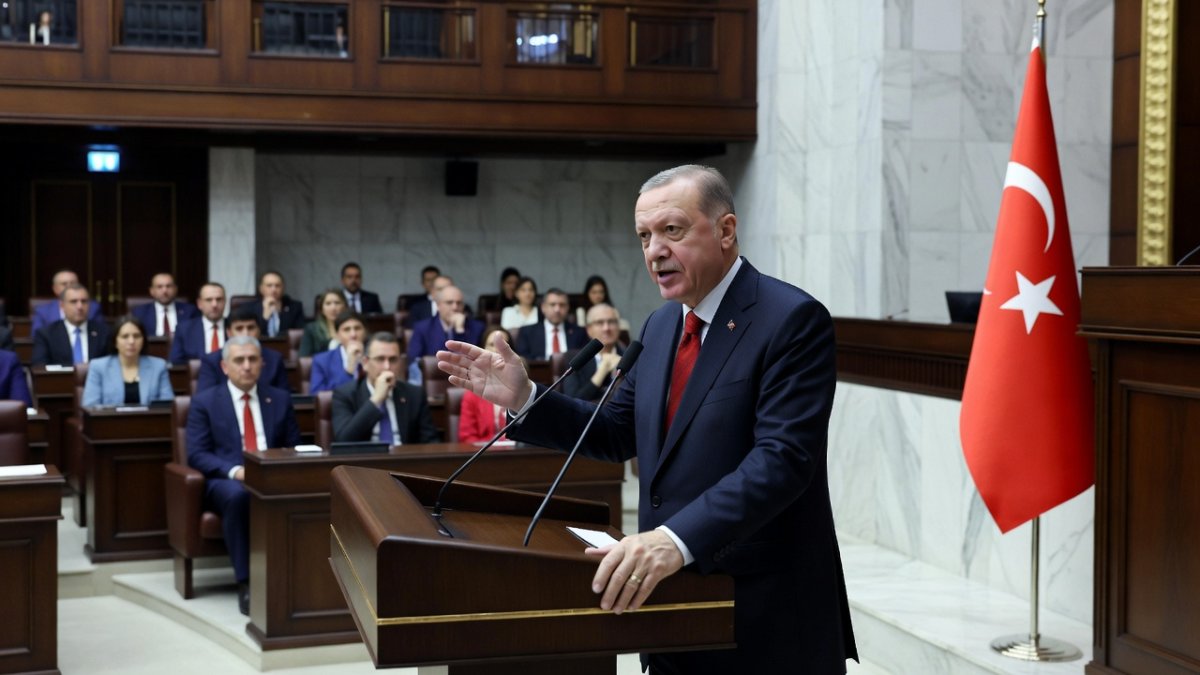
Erdoğan's Warning: 'Turkey's Security Begins in Aleppo, Damascus, and Beirut'
"The attacks by Netanyahu and his network of murder on Lebanon and Syria have brought the issue to a point where it also threatens Turkey," Erdoğan declared, adding that Ankara's security was tied directly to the security of Syria and Lebanon. "Damascus and Beirut are two sister cities of Istanbul. Turkey's security begins in Aleppo, in Damascus, and in Beirut."
The Turkish president accused Israel of pursuing what he called a "Greater Israel" agenda, warning that Ankara would never allow its realization. "We are fully aware of what the ultimate goal of the 'Promised Land' delusion is, and with God's help, we will never allow it," he said. Erdoğan also accused Israel of leading a "sneaky effort" to destabilize African countries and the Mediterranean by igniting "the fire of discord" on the ethnically split island of Cyprus.
In a veiled reference to Greece and Cyprus, which have deepened their defense and energy cooperation with Israel in recent years, Erdoğan warned that "small entities, whose ambitions far exceed their size, have boarded Israel's boat of mischief, taken on the role of Zionist subcontractors, and are pursuing some pipe dreams in the Eastern Mediterranean." He added: "If the rights of Turkey and Turkish Cypriots are violated in the Eastern Mediterranean, our response will be very clear and very strong."
Netanyahu Hits Back: 'The Antisemitic Dictator Erdoğan'
Prime Minister Benjamin Netanyahu responded swiftly on X, firing back at the Turkish leader in unusually personal terms. "The antisemitic dictator Erdoğan, who is committing genocide against the Kurds, backing the Hamas terrorist organization, oppressing his own people, and imprisoning his political rivals, is the last person who should be lecturing the State of Israel," Netanyahu wrote.
The Israeli prime minister added: "The State of Israel and the IDF, the most moral military in the world, will continue to act decisively against Iran and its proxies, which threaten the Middle East and the entire world." The exchange underscores the personal animosity between the two leaders, who have clashed repeatedly since the outbreak of the Gaza war in October 2023.
Erdoğan, for his part, compared Netanyahu to Adolf Hitler during his parliamentary address. "85 years ago, silence in the face of Hitler led to the loss of 80 million lives. Today the same mistake is being repeated," he said. "The genocide of the Gaza butcher Netanyahu and his cabinet is also being watched in great silence, exactly as was done with Hitler." Turkey has halted all trade with Israel and called for measures against Jerusalem at international courts, while consistently blaming Israeli "provocations" for triggering the broader US-Iran war.
The Syria Dimension: A New Theater for Israeli-Turkish Rivalry
At the heart of the escalating tension lies the competition for influence in post-Assad Syria. Since the collapse of the Assad regime, Israel has conducted repeated airstrikes on Syrian military targets, including Hama airport and the T4 base near Homs, in what Israeli officials describe as efforts to prevent hostile forces from establishing positions near the border. The strikes have drawn sharp criticism from Ankara, which is negotiating a joint defense pact with Syria's interim government under President Ahmed al-Sharaa.
According to multiple reports, Turkey is moving to station aircraft and air defense systems at the T4 and Aleppo airbases — a development that Israeli defense officials view as a direct strategic challenge. Israel's defense minister warned Sharaa that he would "pay a very heavy price" if he allowed "hostile forces" to enter Syrian territory. Israeli Foreign Ministry officials have accused Turkey of playing a "negative role" in Syria.
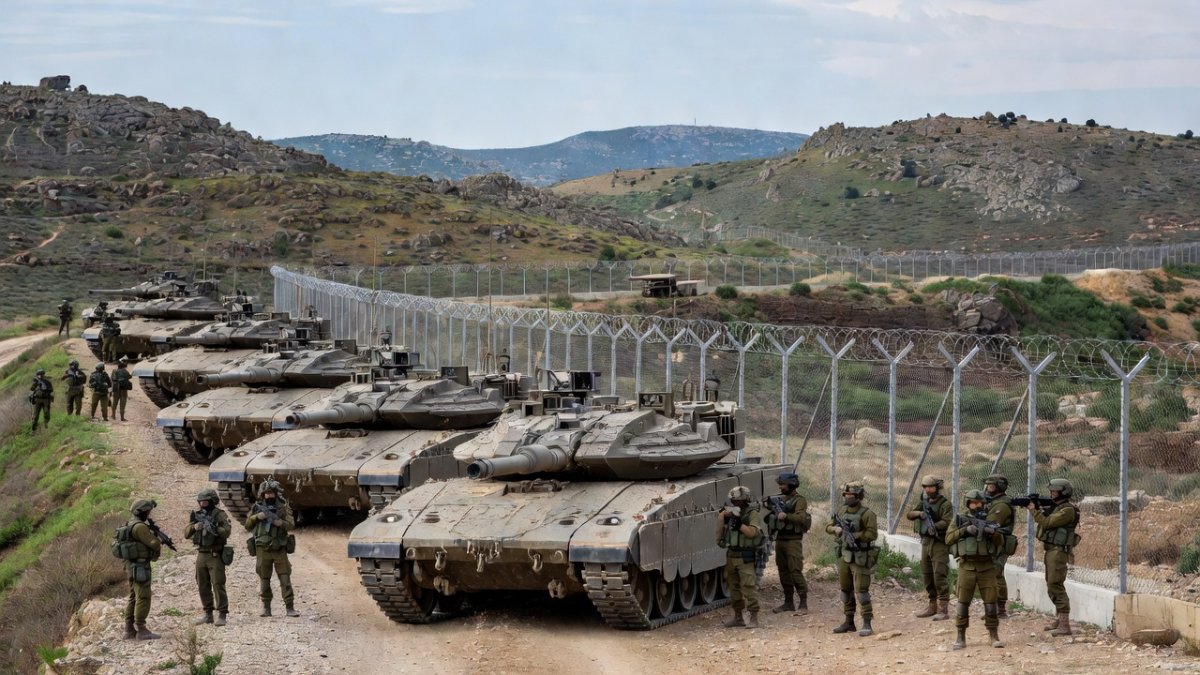
On the ground, Israeli forces have occupied a demilitarized buffer zone established after the 1973 Arab-Israeli war and established nine bases across the area. Charles Lister, head of the Syria Program at the Middle East Institute, has documented more than 70 ground incursions into southwestern Syria since February 2026, describing the situation as "an extraordinarily dangerous moment." Israeli troops are making regular incursions into Syria's southwestern provinces, vowing to prevent the presence of any armed groups or government forces there.
Regional and International Implications
The Israel-Turkey confrontation carries implications far beyond the bilateral relationship. Turkey, a NATO member with the alliance's second-largest standing army, has positioned itself as one of the fiercest critics of Israeli operations in Iran, Gaza, and Lebanon. Erdoğan announced that the NATO summit scheduled for July 7-8 in Ankara will proceed with US President Donald Trump in attendance, raising the prospect that Israeli-Turkish tensions will feature prominently on the agenda.
In the Eastern Mediterranean, where Israel has developed significant gas fields and maintains close cooperation with Greece and Cyprus, Erdoğan's threats have added a new layer of uncertainty. Turkey's interior minister recently declared that Ankara would one day "liberate" Jerusalem — a statement that prompted the Israeli Foreign Ministry to respond that the "Ottoman Empire is gone" and Jerusalem "shall remain the eternal capital of Israel." Erdoğan also warned that if Israel's "rampaging is not stopped, the price will be paid — together with the region — by all of humanity."
Analysis: What This Means for Israel
For Israeli policymakers, the Turkish challenge represents a multi-front strategic concern. On Israel's northern border, the prospect of Turkish air defense systems and aircraft operating from Syrian bases just kilometers from the Golan Heights introduces a new military calculus that the IDF has not faced in decades. The Shin Bet and Military Intelligence Directorate are closely tracking Turkish-Syrian military coordination, while the IDF maintains heightened readiness at northern command posts.
Diplomatically, Israel faces the challenge of managing a deteriorating relationship with a NATO member at a time when Washington's attention is divided among multiple theaters. The personal nature of the Netanyahu-Erdoğan exchange suggests that any de-escalation is unlikely in the near term. For Israeli citizens in northern communities already affected by two years of regional instability, the prospect of a new confrontation on the Syrian border adds to an already fraught security environment.
As both countries continue to deepen their military footprints in Syria, the risk of an unintended escalation — a miscalculated airstrike, a naval incident in the Eastern Mediterranean, or a clash between proxy forces — grows with each passing day. Whether the July NATO summit in Ankara offers a diplomatic off-ramp or becomes the stage for further confrontation remains to be seen.
By Hannah Berg, Staff Writer
This article was produced with AI-assisted research and editorial support. Reporting is based on sources cited in the article.
What's Your Reaction?
 Like
0
Like
0
 Dislike
0
Dislike
0
 Love
0
Love
0
 Funny
0
Funny
0
 Wow
0
Wow
0
 Sad
0
Sad
0
 Angry
0
Angry
0

Israel Correspondent at Global1.News. Based in Tel Aviv, covering Israeli politics, security, technology, and society. Provides balanced, deeply-sourced reporting on one of the most closely-watched regions in the world.














Comments (0)