
2026 World Cup Heat and US Visa Barriers Hit Latin America
The 2026 FIFA World Cup kicks off on June 11 across 16 venues in the United States, Canada, and Mexico, but the tournament is already being overshadowed by a double crisis: extreme heat that threatens player health at over half the venues, and restrictive US immigration policies that are keeping legions of Latin American fans away from the stands. Al Jazeera English's Phil Lave
The 2026 FIFA World Cup kicks off on June 11 across 16 venues in the United States, Canada, and Mexico, but the tournament is already being overshadowed by a double crisis: extreme heat that threatens player health at over half the venues, and restrictive US immigration policies that are keeping legions of Latin American fans away from the stands. Al Jazeera English's Phil Lavelle reports from the front lines of a World Cup where the climate emergency and border politics converge — and Latin America is paying the price.
World Cup 2026: Extreme Heat and US Visa Barriers Create a Crisis for Latin American Fans
Monterrey, Nuevo León – Mexico, June 10, 2026 — The 2026 FIFA World Cup will unfold from June 11 to July 19 across 16 venues in the United States, Canada, and Mexico, yet the tournament already carries the grim distinction of being the most carbon-intensive ever, projected to emit around 9 million tons of CO2. Southern host cities will confront temperatures above 40°C with heat indexes nearing 50°C, turning stadiums into pressure cookers for players and supporters alike. Climate Central data reveals that the number of extremely hot June and July days has tripled since the 1994 World Cup, a direct consequence of our warming planet that hits Latin America hardest. Twenty-six of 104 matches are likely to exceed the 26°C WBGT threshold, while NPR analysis warns of 39 matches at high risk and dozens more at moderate risk—nearly double the danger levels seen three decades ago. FIFPRO has flagged Atlanta, Dallas, Houston, Kansas City, Miami, and Monterrey as high-risk zones for extreme heat stress. The 2025 Club World Cup offered a chilling preview, with players describing conditions as "impossible" and "terribly hot." FIFA's response includes mandatory three-minute hydration breaks each half and air-conditioned dressing rooms for substitutes, yet these measures feel inadequate against the scale of the crisis.
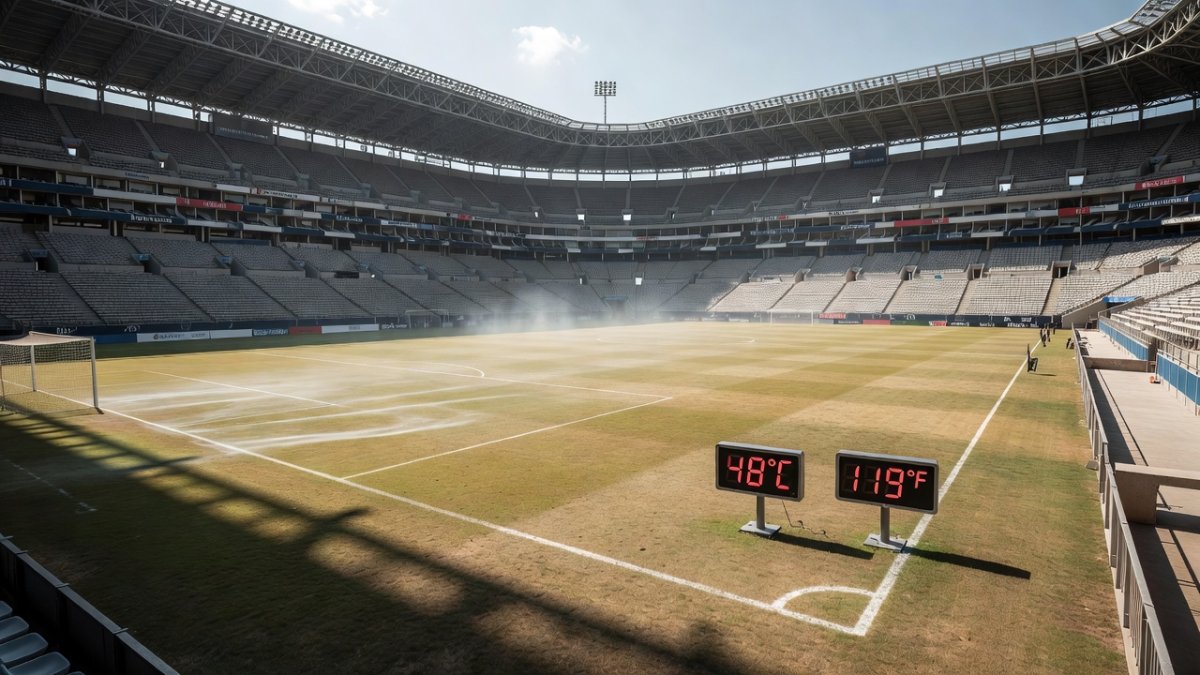
Open Air and Unprotected: Monterrey's Estadio BBVA Under the Sun
Mexico co-hosts matches at Estadio BBVA in Monterrey, an open-air stadium whose pitch remains fully exposed despite a roof over the stands. Local summers already range from 25-35°C with heat indexes climbing far higher, and FIFPRO has classified the venue as high-risk for heat stress. The term "golpe de calor," or heatstroke, echoes daily through fan safety warnings issued by Telediario Monterrey as it monitors forecasts ahead of the tournament. Early 2026 heatwaves forced schools across Mexico to end classes prematurely, a stark signal that CONAGUA and UNAM experts have tracked with growing alarm. Japanese players arriving early remarked that conditions were "not as hot as expected," yet this offers little comfort when the tournament proper arrives. Unlike the enclosed AT&T Stadium in Arlington or NRG Stadium in Houston, Estadio BBVA leaves athletes and spectators directly under the sun. Mexican authorities and local media are preparing detailed heat protocols, but the open design means no amount of shade can fully protect the pitch. For Latin American fans dreaming of witnessing their teams, this venue embodies both national pride and climate vulnerability. The contrast with air-conditioned U.S. domes underscores how Mexico bears disproportionate exposure in this co-hosted event.
More Than a Game: The Climate Science Behind 97 High-Risk Matches
Climate Central's rigorous analysis shows that climate change has made performance-impacting heat above 28°C WBGT more likely in 97 of the 104 scheduled matches. This is not abstract modeling; it translates into real threats of heat exhaustion, heat stroke, dehydration, muscle cramps, and sharply reduced athletic performance. NPR's independent review reached similar conclusions, projecting 39 high-risk encounters and many more in the moderate category—levels nearly twice those of the 1994 tournament. The WBGT index, which accounts for temperature, humidity, wind, and solar radiation, serves as the global standard for assessing heat stress, and the numbers paint a dire picture for June and July in the southern United States and northern Mexico. The tournament's projected 9 million tons of CO2 emissions will only accelerate the very warming that endangers future events. Latin American nations, already experiencing intensified heatwaves, face both sporting and existential stakes. Early heatwaves in 2026 prompted nationwide school closures in Mexico, demonstrating how ordinary life is being upended. These data points demand that FIFA and host governments treat climate adaptation as central to tournament planning rather than an afterthought.
FIFPRO Versus FIFA: Who Protects the Players?
FIFPRO, the worldwide players' union, has identified six high-risk cities and repeatedly called for stronger safeguards, yet FIFA's measures—three-minute hydration breaks and air-conditioned substitute rooms—remain limited in scope. The 2025 Club World Cup exposed the gap between policy and reality when athletes described unbearable conditions. Monterrey's Estadio BBVA, with its exposed pitch, exemplifies the challenge: shade for spectators does little for those competing on the field. Climate Central's finding that 97 matches will likely face elevated WBGT levels places enormous pressure on medical teams and referees. NPR's analysis of nearly doubled risk compared with 1994 further validates FIFPRO's concerns. While FIFA touts its protocols, players from tropical nations already acclimated to heat will still confront unprecedented extremes. The union's warnings extend beyond elite athletes to the broader workforce maintaining venues under brutal conditions. For Latin American federations and supporters, the question lingers whether commercial interests will override athlete welfare. Stronger interventions, including adjusted match schedules and enhanced cooling technologies, must be prioritized before the first whistle blows.
Golpe de Calor: What Extreme Heat Means for Latin American Fans
The phrase "golpe de calor" resonates deeply across Mexico and Central America, where heatstroke already claims lives during ordinary summers. At Estadio BBVA, fans will endure Monterrey's 25-35°C days with far higher heat indexes while watching an open pitch that offers no relief. Telediario Monterrey continues its vigilant coverage, and UNAM researchers stress that vulnerable populations—children, the elderly, and those with pre-existing conditions—face elevated danger. The 2025 Club World Cup precedent showed how quickly discomfort escalates into medical emergencies. Climate Central data indicating 97 matches at heightened risk means supporters traveling from Brazil, Argentina, Colombia, and beyond will confront the same hazards as players. FIFA's hydration breaks help athletes but do little for spectators packed in stands. Early 2026 heatwaves that closed Mexican schools foreshadow what tournament weeks may bring. Latin American fans have waited decades for a World Cup on home soil; climate change now threatens to turn that dream into a health crisis. Community education campaigns and on-site medical preparedness are essential, yet they cannot substitute for the deeper emissions reductions the planet requires.
Immigration and Heat: A Double Barrier for the Global South
Mexican fans already navigate stricter U.S. visa processing, longer wait times, and intensified border scrutiny. FIFA has clarified that a valid match ticket may prioritize an interview but does not override security screening, leaving many applicants uncertain. The U.S. embassy has acknowledged surging demand for 2026 travel visas, yet processing backlogs persist. Iran's national team remains stalled awaiting visas, illustrating how geopolitics compounds climate barriers. Some squads are basing operations in Mexico to circumvent U.S. entry hurdles, while hotel bookings in American host cities lag behind those in Canada and Mexico—partly due to immigration fears. As highlighted in the Al Jazeera English video titled "Extreme heat, US immigration policies affect fan turnout ahead of 2026 FIFA World Cup" by reporter Phil Lavelle, these overlapping obstacles disproportionately affect supporters from Latin America and the Global South. Passionate fans who cheered their teams through qualifiers now weigh health risks against bureaucratic walls. This double barrier threatens to mute the tournament's global spirit and exclude the very communities whose passion fuels football's worldwide appeal.
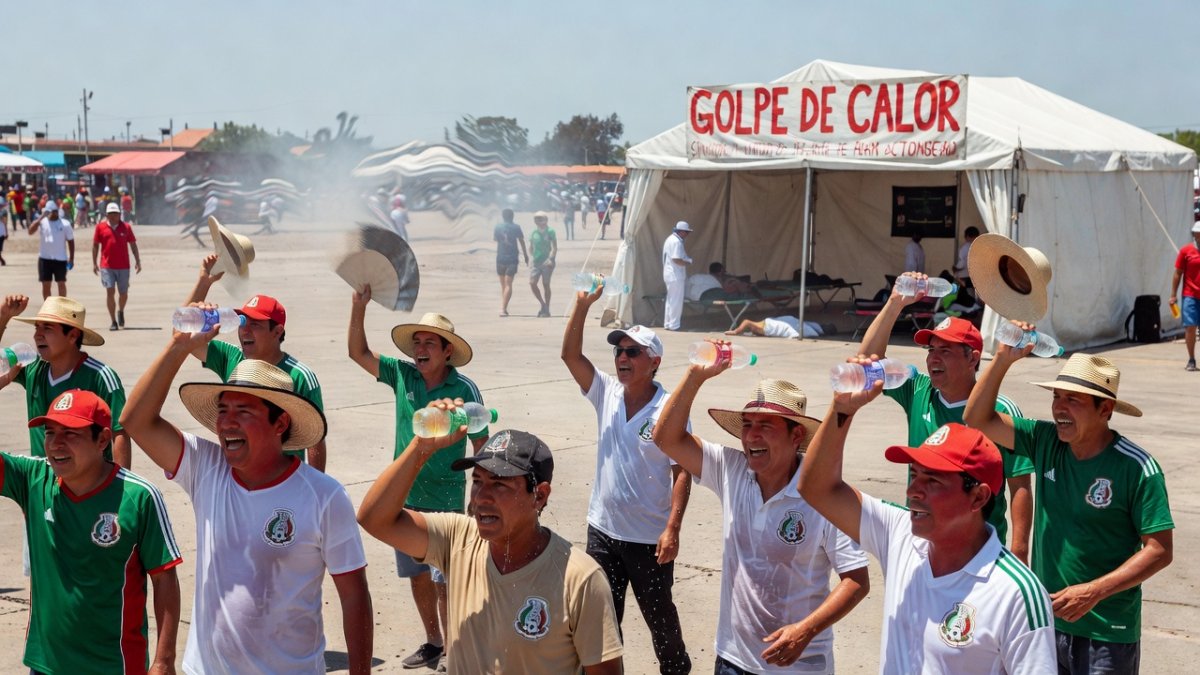
The Bottom Line — What Comes Next
The 2026 World Cup stands at the intersection of climate emergency and migration politics, with Latin America bearing the heaviest burden. From Monterrey's exposed Estadio BBVA to the 97 matches Climate Central flagged for dangerous heat, every data point demands immediate action. FIFPRO's warnings, NPR's risk assessments, and CONAGUA's heat monitoring cannot be ignored. FIFA must expand beyond hydration breaks, while host governments must streamline visa processes so that passionate supporters from Mexico, Brazil, and across the region can attend without fear. The tournament's 9 million tons of CO2 emissions only deepen the crisis we are already living. As a Brazilian climate journalist, I refuse to treat this as inevitable. Coordinated scheduling adjustments, robust medical infrastructure, and honest immigration reform can still salvage the event's promise. The world is watching; our region deserves better than heatstroke and closed borders. The time for half-measures has passed.
By Elena Vasquez, Staff Writer
This article was produced with AI-assisted research and editorial support. Reporting is based on sources cited in the article.
What's Your Reaction?
 Like
0
Like
0
 Dislike
0
Dislike
0
 Love
0
Love
0
 Funny
0
Funny
0
 Wow
0
Wow
0
 Sad
0
Sad
0
 Angry
0
Angry
0

Latin America Correspondent at Global1.News. Based in Mexico City, covering politics, economics, energy, and culture across the region. Brings an on-the-ground perspective to stories spanning from the Rio Grande to Patagonia.














Comments (0)