
Angelique Kidjo's African Symphony: When Classical Music Meets Legendary African Hits
Angelique Kidjo, the five-time Grammy-winning Beninese icon, has been redefining what African music sounds like when it meets a full symphony orchestra. Her ambitious "African Symphony" project — which made its European premiere in June 2024 at Lyon's ancient Roman theatre — transforms beloved African classics into orchestral masterpieces, bridging generations of continental ta
Angelique Kidjo, the five-time Grammy-winning Beninese icon, has been redefining what African music sounds like when it meets a full symphony orchestra. Her ambitious "African Symphony" project — which made its European premiere in June 2024 at Lyon's ancient Roman theatre — transforms beloved African classics into orchestral masterpieces, bridging generations of continental talent with the grandeur of classical arrangement.
Angelique Kidjo's African Symphony: When Classical Music Meets Legendary African Hits
Dakar, Senegal — Angelique Kidjo, raised in the coastal city of Ouidah, Benin, has carried the rhythms of her homeland onto the world's grandest stages for more than four decades. She began her artistic journey singing with her parents' theatre troupe before moving to Paris for formal training. Five Grammy Awards from more than twenty nominations later, TIME magazine named her "Africa's Premier Diva," recognizing not only her musical achievements but her role as a cultural bridge between Africa and the global mainstream. Her Batonga Foundation has funded girls' education programs across multiple African countries, grounding her artistic mission in practical community uplift. Now with the African Symphony project, arranged by the acclaimed Derrick Hodge, Kidjo has taken the songs that shaped Africa's musical identity and reimagined them through symphony orchestras — placing Fela Kuti, Miriam Makeba, Hugh Masekela, Youssou N'Dour, Manu Dibango, Cesária Évora, Burna Boy, and Rema inside concert halls traditionally reserved for European classical repertoire.
The European Premiere: Lyon's Roman Theatre Comes Alive
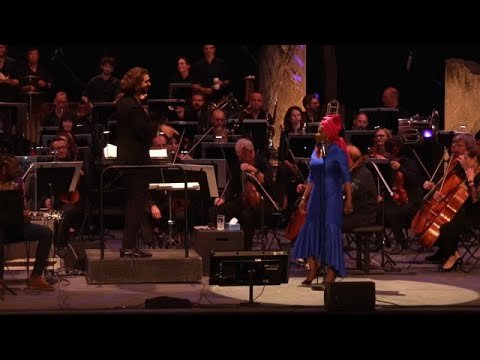
The European premiere took place on June 19, 2024, at Les Nuits de Fourvière festival in Lyon, where Angelique Kidjo brought her African Symphony to the ancient Roman theatre, a UNESCO World Heritage site featuring two major monuments that hosts the annual festival each summer.
Conductor Christian Reif, born in Bavaria, led the Orchestre National de Lyon through a 90-minute performance before an audience of 2,500 people, showcasing Derrick Hodge's intricate arrangements that fused orchestral depth with African rhythmic vitality.
The program opened with "Folon" by Salif Keita, performed alongside French-Israeli singer Yael Naim, followed by Cape Verde's Lura joining Kidjo to honour Cesária Évora in a moving tribute segment.
A highlight came during the tribute to Manu Dibango, when "Soul Makossa" was performed with his son James BKS, demonstrating the project's commitment to generational continuity in African music traditions.
Christian Reif noted that the percussion and brass sections "shine the most" in these arrangements, adding that the project helps "breach the gap" between western classical and Afro-pop forms.
A Benin-born audience member remarked, "I am from Benin and Kidjo is an artist to whom I have listened to since I was a kid," highlighting the personal resonance of the performance, while the Roman theatre's acoustics amplified both classical precision and African sounds with remarkable clarity.
The Kennedy Center and Carnegie Hall: Orchestral Africa in America
The Kennedy Center in Washington DC hosted a performance on June 12, 2024, with the National Symphony Orchestra conducted by Steven Reineke, presenting a vibrant setlist that included Burna Boy's "Anybody", Rema's "Calm Down", Yemi Alade's "Shekere", Master KG & Nomcebo's "Jerusalema", and Fela Kuti's "Lady".
These selections illustrated Kidjo's ability to span decades of African innovation, from foundational Afrobeat to contemporary viral hits, all reimagined for full orchestral forces.
The Carnegie Hall performance on November 2, 2024, celebrated Kidjo's 40 years in music and featured special guests Nile Rodgers and Derrick Hodge, underscoring her stature within American classical institutions.
Kennedy Center and Carnegie Hall represent two pillars of the American classical establishment, and Kidjo's appearances there mark a significant expansion of African music into these revered spaces.
Her journey from Ouidah's theatre troupe to these stages embodies a remarkable trajectory, one that challenges orchestras to groove authentically to African rhythms rather than merely accompany them.
The challenge of making a symphony orchestra "groove" to African rhythms was met through Hodge's detailed charts, allowing the ensembles to capture the essential swing and polyrhythmic drive of each piece.
The Repertoire: From Fela to Burna Boy — Generations of African Genius
The African Symphony repertoire constructs a living timeline of African music, moving from highlife and Afrobeat through mbalax, soukous, and into modern Afrobeats, all unified under Derrick Hodge's orchestral lens.
The Kennedy Center setlist served as a compelling case study, beginning with Fela Kuti's "Lady" as a foundational Afrobeat statement that critiques social norms while driving infectious rhythms.
Miriam Makeba's songs represented the Pan-African classic era, carrying messages of liberation and cultural pride that resonated powerfully within the orchestral setting.
Hugh Masekela's jazz-infused compositions brought trumpet-led energy, while Youssou N'Dour's mbalax rhythms from Senegal introduced intricate Senegalese percussion patterns adapted for symphonic brass and strings.
Burna Boy and Rema brought contemporary Afrobeats to the fore, with Yemi Alade's "Shekere" and Master KG's "Jerusalema" representing the viral African pop era that has dominated global charts.
Christian Reif observed that the arrangements allow the orchestra to "sound groovy and sound really tight," preserving the distinctive feel of each original while expanding its instrumental palette across highlife to Afrobeat to soukous to amapiano-influenced pop.
The UK Premiere: BBC Proms and Bradford 2025
The UK premiere took place on September 7, 2025, at St George's Hall in Bradford as part of the BBC Proms festival and Bradford 2025 UK City of Culture, with Corinne Bailey Rae serving as special guest.
BBC Radio 3 broadcast the concert, extending its reach to listeners across Britain and beyond, many of whom encountered symphonic African music for the first time through the national classical radio network.
The significance of the BBC Proms, one of classical music's most prestigious international series, programming an African orchestral concert marked a deliberate broadening of the classical canon that had long excluded African genres.
Audiences and critics characterized the performance as "joyous" and "beautiful," praising the seamless integration of Kidjo's powerful vocals with the orchestral textures and the warmth of Bailey Rae's contributions.
Bradford proved a fitting venue given its diverse population, including significant African diaspora communities who saw their musical heritage celebrated on a national stage in a historic moment for African representation in British cultural programming.
The concert now stands as a milestone for African representation in British classical programming, building on Kidjo's UNICEF ambassadorship and her lifelong commitment to cultural diplomacy through music, and it has already influenced subsequent BBC Proms programming decisions toward greater inclusion of African repertoire.
The Arrangements: Making Classical Instruments Groove
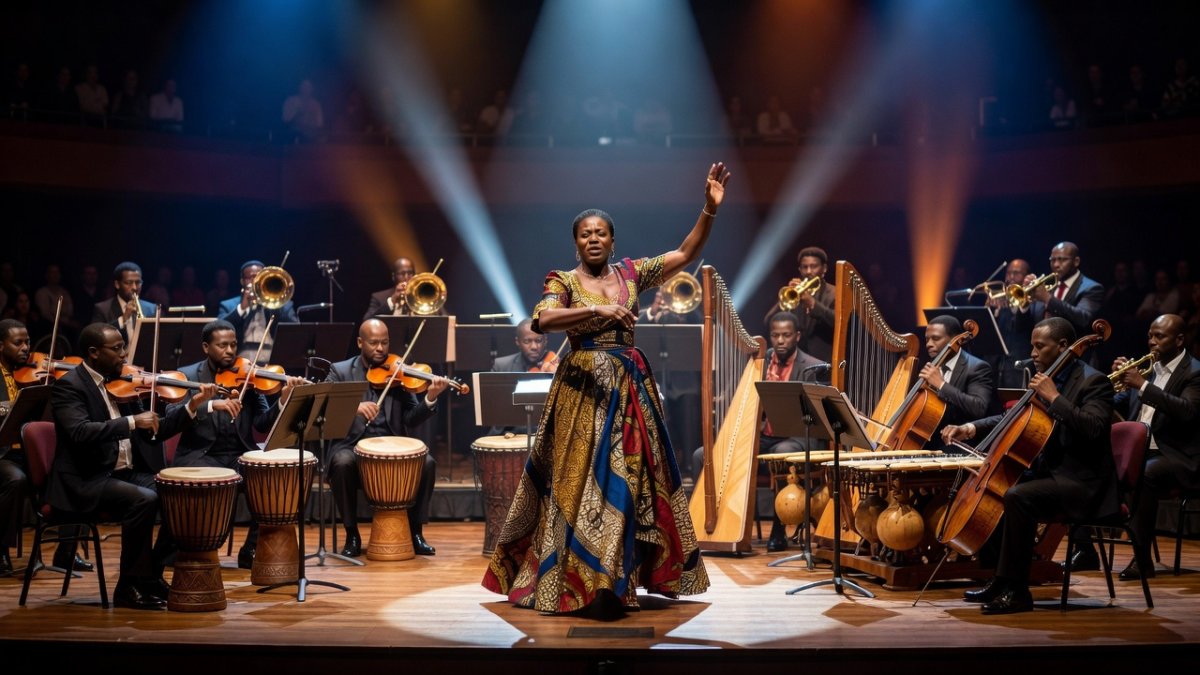
Derrick Hodge, a renowned jazz and R&B bassist and composer, serves as the project's arranger, bringing a deep understanding of groove-based music to the task of reimagining African classics for symphony orchestra.
His arrangements differ markedly from traditional orchestration by prioritizing rhythmic propulsion and polyrhythmic layering over purely harmonic development.
Christian Reif has shared technical observations about how the percussion and brass sections carry the primary responsibility for maintaining the African pulse within the larger ensemble.
The process of transcribing African polyrhythms for western orchestral instruments required careful study of original recordings to ensure the essential "feel" of each song remained intact while expanding its instrumental palette.
Kidjo directed the arrangements to stay true to the source material's rhythmic integrity, ensuring that the orchestral versions honour the spirit of artists ranging from Fela Kuti to Burna Boy.
Pan-African Significance: Reclaiming Classical Spaces for African Sound
Placing African music in Carnegie Hall, the Kennedy Center, the BBC Proms, and Lyon's Roman theatre carries profound meaning for a continent whose genres have shaped global pop for decades yet rarely receive symphonic presentation.
Genres such as mbalax, highlife, Afrobeat, soukous, and Afrobeats have influenced countless international artists, yet Kidjo's project marks one of the first sustained efforts to center them within classical programming.
The growing African classical movement, exemplified by South African opera singers and the Chineke! Orchestra, finds a powerful ally in Kidjo's work as a cultural bridge-builder.
Reference to Fela Kuti's concept of "music as weapon" resonates throughout the project, reminding audiences that these songs carry political and social weight alongside their rhythmic power.
For young African musicians, the African Symphony offers a model showing that their traditions belong at the center of prestigious concert halls rather than on the periphery.
The project demonstrates how African music can be centered in classical programming, creating sustainable pathways for future generations of artists from the continent.
Kidjo's Legacy: Activism, Collaborations, and Cultural Diplomacy
Beyond African Symphony, Kidjo's wider impact includes landmark collaborations with Carlos Santana, Bono, and Philip Glass that have introduced African sounds to new global audiences.
Her UNICEF ambassadorship and the Batonga Foundation's support for girls' education across Africa reflect a consistent commitment to using her platform for tangible social change.
In 2026 she will receive a star on the Hollywood Walk of Fame, adding to her five Grammy wins from more than twenty nominations and her recognition by TIME magazine as "Africa's Premier Diva."
As a female African artist in a historically male-dominated industry, Kidjo has opened doors for younger African women musicians through both her example and her advocacy.
The broader ecosystem she has helped build now includes orchestral projects, educational initiatives, and cross-genre partnerships that continue to expand opportunities for African artists worldwide.
What's Next: HOPE!! Album, European Tour, and the Future of African Symphony
The 2026 "HOPE!!" album and accompanying HOPE TOUR across Europe will extend Kidjo's creative momentum, bringing new material to audiences eager for her distinctive voice and vision.
The upcoming Hollywood Walk of Fame ceremony in 2026 will further cement her status as a global icon whose work transcends musical boundaries.
Future African Symphony performances are already in planning, with Kidjo stating that African orchestral music is "not a one-off" but a sustainable genre with lasting potential.
The precedent set by this project encourages other African artists to explore orchestral arrangements, knowing that major institutions are now receptive to such collaborations.
The Batonga Foundation continues its education mission alongside these artistic endeavors, ensuring that the project's cultural impact is matched by concrete support for African girls and communities.
Ultimately, African Symphony proves that African music belongs in every concert hall, from ancient Roman theatres to the world's most prestigious classical venues.
By Amara Diop, Staff Writer
This article was produced with AI-assisted research and editorial support. Reporting is based on sources cited in the article.
What's Your Reaction?
 Like
0
Like
0
 Dislike
0
Dislike
0
 Love
0
Love
0
 Funny
0
Funny
0
 Wow
0
Wow
0
 Sad
0
Sad
0
 Angry
0
Angry
0

West Africa/Sahel Correspondent at Global1.News. Dakar-based journalist covering politics, security, climate, and development across Francophone and Anglophone West Africa. Tells the stories of a region undergoing profound transformation.













Comments (0)