
European Heatwave 2026: Deadly Temperatures Grip the Continent
Europe is in the grip of a June heatwave that has already turned deadly, and the warnings from meteorological agencies across the continent are getting more urgent by the hour. Spain, France, the UK, Portugal, and Italy have all activated emergency alert systems as temperatures climb past 40 degrees Celsius, with forecasts warning of even hotter days ahead. This isn't just a wa
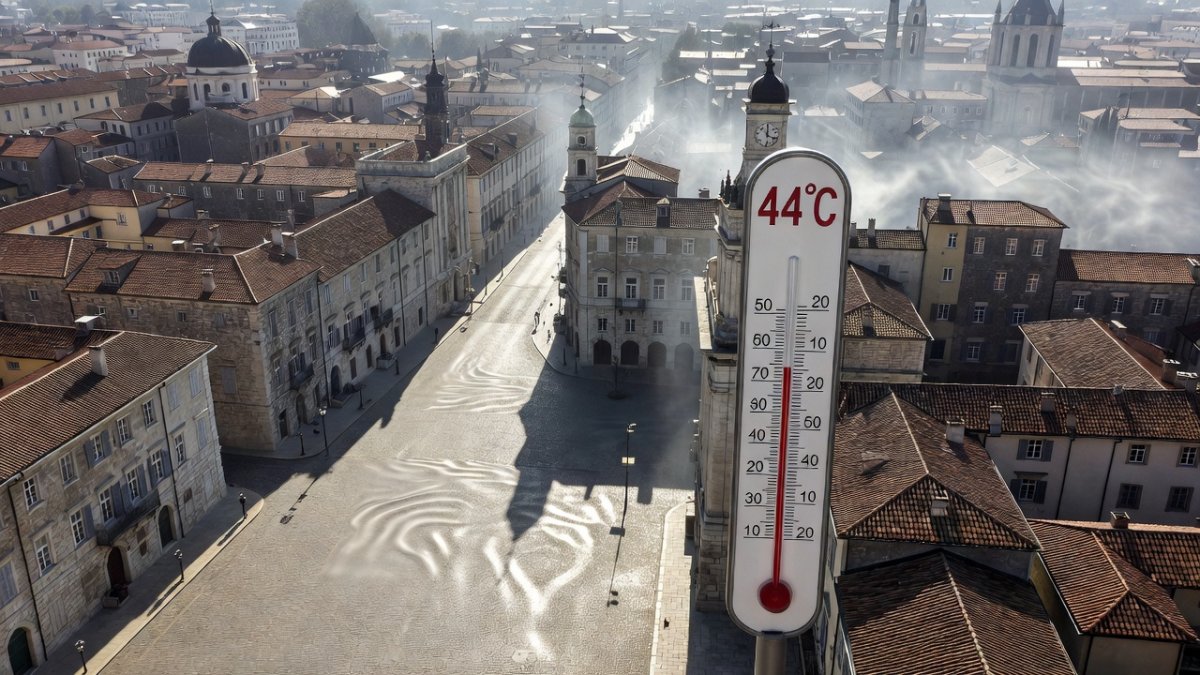
Europe is in the grip of a June heatwave that has already turned deadly, and the warnings from meteorological agencies across the continent are getting more urgent by the hour. Spain, France, the UK, Portugal, and Italy have all activated emergency alert systems as temperatures climb past 40 degrees Celsius, with forecasts warning of even hotter days ahead. This isn't just a warm spell, folks. This is the kind of extreme weather event that scientists have been warning about for decades, and it's unfolding in real time across the entire region.
Spain Under Red Alert as Temperatures Approach 45 Degrees
Spain is taking the hardest hit. The State Meteorological Agency, AEMET, issued red alerts across Andalusia and Extremadura after thermometers hit 41 degrees Celsius in Córdoba, with overnight lows barely dipping to 28 degrees Celsius in the nearby town of Osuna. That means no relief, even after dark. Spain just recorded its hottest June since records began, with a national average of 23.6 degrees Celsius that AEMET described as having "pulverised" previous benchmarks. According to Euronews and Copernicus Climate Change Service data, the heat is being driven by an African heat dome moving north, pushing temperatures toward 45 degrees Celsius in the country's hottest regions. Tourists and locals alike are retreating indoors during peak hours, and the Spanish government has activated its national heat plan with cooling centers and public health advisories.
UK Issues Rare Amber Extreme Heat Warning
Across the English Channel, the UK Met Office issued an amber extreme heat warning for parts of southern England and Wales — the first such warning since August 2022. Forecasts show temperatures reaching 34 to 35 degrees Celsius, potentially challenging June records in some areas. The UK Health Security Agency followed up with its own amber heat health alerts, advising vulnerable populations to take precautions. The Evening Standard reported that London transport authorities are bracing for disruption on the Tube and rail networks, where extreme heat can warp tracks and overheat carriages. When a country famous for its mild climate starts issuing heat warnings at this level, you know the situation is serious.
France Cancels Major Events and Closes Schools
France has implemented red alerts of its own, with temperatures pushing past 40 degrees in multiple regions. Local authorities cancelled the annual Fête De La Musique music festival in several towns — an outdoor celebration of summer that has run for decades. Emergency services reported a 25 percent increase in calls for heat-related medical assistance. France is experiencing its second-hottest June since records began in 1900, according to Meteo-France data cited by multiple outlets. Schools closed in 12 departments to protect children from the extreme conditions, and public health officials have urged residents to stay hydrated and limit outdoor activity during peak hours.
Portugal and Italy Raise the Highest Alerts
The heatwave is not stopping at national borders. Portugal issued red alerts for several regions, and Italy activated its highest-level health alerts for major cities, including Rome, Milan, and Naples. Sky News reported across the continent that temperatures could reach up to 44 degrees Celsius in the worst-affected areas. Italian civil protection teams are distributing water at train stations, and the health ministry has issued guidelines for hospitals already seeing an influx of heat-related cases. The pattern is consistent across southern Europe: red alerts, overwhelmed cooling infrastructure, and authorities scrambling to protect the most vulnerable.
Deadly Toll Across Three Countries
The human cost is already being counted. BBC News reports that the heatwave has "turned deadly," with at least two farmers killed after becoming trapped by a wildfire near the town of Coscó in Spain's Catalonia region. Multiple additional heat-related deaths have been recorded in Spain, Italy, and France, though officials caution that the full toll may not be known for weeks as coroners process cases. Spanish authorities confirmed that heat exposure and wildfire deaths are both contributing to the rising number. These aren't abstract statistics — they're people who had no escape from conditions that are becoming dangerously predictable.
Climate Scientists Point Directly at Human Cause
The United Nations and World Meteorological Organization have weighed in, stating that climate scientists attribute the intensity of this heatwave directly to human-induced climate change. The mechanism is straightforward: greenhouse gas emissions trap heat, raising baseline temperatures and making extreme events like this one more likely and more severe. What was once considered a once-in-a-century event is now occurring every few years. This June's heatwave fits a clear pattern that scientists have been tracking and projecting for decades. The science is settled, and the forecasts are aligning with what researchers predicted.
Infrastructure Under Strain Across the Continent
The strain on infrastructure is mounting. London's transport network is preparing for rail disruptions as steel tracks expand in the heat. French TGV services are running at reduced speeds as a safety measure. Hospitals in affected regions are seeing increased emergency visits. Power grids are facing surging demand from air conditioning use. These pressures compound each other: when the grid is strained, cooling systems fail; when transport is disrupted, people can't reach cooler areas or medical help. The interconnected nature of modern infrastructure means that a heatwave of this scale doesn't just cause discomfort — it produces cascading failures that affect every aspect of daily life.
Copernicus Models Predict More Heat Ahead
Looking forward, the Copernicus Climate Change Service seasonal models project above-average temperatures persisting through July. That means this heatwave is not a one-week event — it's likely part of a longer pattern of elevated temperatures stretching into the heart of summer. Emergency services and public health agencies are planning for extended operations as the risk of additional heatwaves remains elevated. The data from Copernicus, AEMET, the UK Met Office, and Meteo-France all point in the same direction: Europe is experiencing summers that are hotter, longer, and more dangerous than at any point in recorded history.
Comparing to 2003: A Once-in-a-Century Event Now Recurring
The 2003 European heatwave killed an estimated 70,000 people across the continent, with France alone recording 15,000 excess deaths. At the time, scientists described it as a once-in-a-century event. But the conditions we are seeing in June 2026 are already rivaling 2003 in intensity, and they are arriving earlier in the summer. Spain's hottest June on record, France's second-hottest June since 1900, and the UK's first amber warning since 2022 all point to a pattern of accelerating temperatures that experts say is consistent with climate change projections. The difference between 2003 and today is not the weather patterns themselves — it is the frequency. Events that used to happen once every hundred years are now recurring every few summers. That is the reality the data shows, and it is one that demands a structural response, not just temporary fixes.
What Governments Are Doing Now
National responses have been significant but uneven. Spain activated its national heat plan on June 17, opening cooling centers and issuing public health advisories across affected regions. The UK Health Security Agency has coordinated with local authorities to open emergency cooling centers in Birmingham and Bristol. France extended school closures to 12 departments and opened more than 1,200 publicly accessible cooling rooms. Italy's Civil Protection Agency deployed teams to distribute water and check on vulnerable populations in major cities. Portugal mobilized military resources to support firefighting efforts. These measures are necessary and welcome, but they are reactive. The question that remains unanswered is whether European governments will use this crisis to accelerate the emissions reductions that scientists say are needed to prevent these events from becoming even more frequent and severe.
The Bigger Picture: A Continent at a Crossroads
This heatwave is not happening in isolation. It comes during the 2026 FIFA World Cup, which the United States is co-hosting with Mexico and Canada, drawing global attention to the northern hemisphere summer. It follows a pattern of extreme weather events that have struck every continent in recent years, from wildfires in Canada to floods in Pakistan to hurricanes in the Atlantic. The common thread is a warming planet, and the common solution is a rapid, sustained reduction in greenhouse gas emissions. European leaders have set ambitious climate targets, but the gap between those targets and the policies actually in place remains wide. Events like this June 2026 heatwave are not just weather stories. They are policy report cards, and the grade so far is incomplete.
What You Can Do: Practical Steps to Stay Safe
Here is the practical advice from health authorities across the continent. Stay hydrated. Drink water regularly even if you do not feel thirsty. Avoid outdoor activity between 11 a.m. and 4 p.m. Check on elderly neighbors and vulnerable relatives, especially those without air conditioning. Never leave people or pets in parked vehicles. If you are traveling in Europe this month, monitor local weather alerts and plan accordingly. The UK Health Security Agency advises keeping homes cool by closing curtains during the day and opening windows at night when temperatures drop. These steps may seem basic, but they save lives when the mercury rises this high.
This June 2026 heatwave is a stark reminder that climate change is not a future problem. It is here, it is deadly, and it demands a response — from individuals protecting themselves and their communities, and from governments accelerating the transition away from the fossil fuels that are driving these conditions. The data from every major meteorological agency on the continent says the same thing. The question is whether we are ready to listen and act.
By Jessica Ali, Global 1 News
This article was produced with AI-assisted research and editorial support. Reporting is based on sources cited in the article.
What's Your Reaction?
 Like
0
Like
0
 Dislike
0
Dislike
0
 Love
0
Love
0
 Funny
0
Funny
0
 Wow
0
Wow
0
 Sad
0
Sad
0
 Angry
0
Angry
0

Editor-in-Chief at Global1.News. Atlanta-based journalist who cuts through the BS and tells it like it is. Lead anchor, host, and the voice you hear when the spin stops and the truth starts.












Comments (0)