
Iran's Supreme Leader Ties US Peace Deal to Israel Ending Attacks on Lebanon
Iran's new Supreme Leader just drew a line in the sand that could determine whether the Middle East slides into wider war or finds a path to peace — and he made it crystal clear: no deal with Washington unless Israel halts its assault on Lebanon.
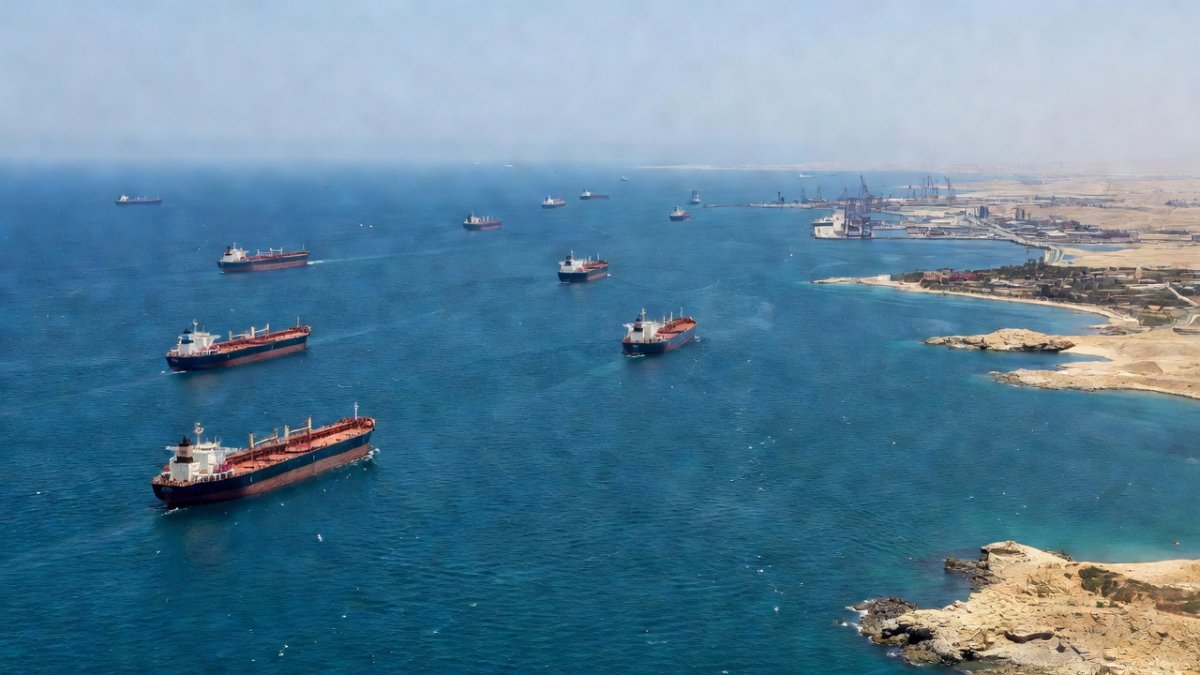
Iran's new Supreme Leader just drew a line in the sand that could determine whether the Middle East slides into wider war or finds a path to peace — and he made it crystal clear: no deal with Washington unless Israel halts its assault on Lebanon.
Khamenei's Ultimatum Reshapes Middle East Peace Calculus
Atlanta, USA – July 27, 2026 — Iranian Supreme Leader Mojtaba Khamenei dropped a geopolitical bombshell late Saturday, posting on X that any peace agreement between Tehran and Washington is contingent on Israel ending its military campaign in Lebanon. The statement landed during a fragile two-day pause in US-Iran strikes that had sent oil prices tumbling — and now threatens to unravel the first real calm the region has seen in weeks.
The Supreme Leader's Ultimatum
Mojtaba Khamenei, who assumed Iran's highest office in March after US-Israeli airstrikes killed his father, Supreme Leader Ali Khamenei, laid out the condition in blunt terms. He demanded "absolute, unconditional termination" of Israeli attacks on Lebanon as the price for any accord between Tehran and Washington. Reuters confirmed the post's authenticity through Iranian state media channels, and BBC analysts described it as a deliberate strategic move to link two separate theaters of conflict.
This is not posturing — it's a calculated escalation. By tying the US-Iran track directly to Israel's Lebanon operations, Khamenei is forcing Washington and Tel Aviv to negotiate as a bloc while giving Tehran leverage it hasn't had since the war began. Al Jazeera sources in Tehran confirmed the strategy is intended to extract maximum concessions by putting Hezbollah's survival at the center of any deal.
The timing is no accident either. With the US and Israel showing signs of war fatigue after five months of sustained operations — and with oil prices already punishing American consumers — Khamenei calculated that this was the moment to strike. Iran's new Supreme Leader, who spent his career operating in the shadows as his father's behind-the-scenes deputy, is proving to be a strategic thinker in his own right. The question now is whether Washington treats this as a genuine negotiating position or as a provocation that justifies ramping up military pressure on Tehran.
How We Got Here: Five Months of War
The conflict that led to this moment erupted on February 28, 2026, when US-Israeli airstrikes killed multiple senior Iranian officials, including Supreme Leader Ali Khamenei. His son Mojtaba was elevated as Iran's third Supreme Leader within days, stepping into a role that had been held by his father for most of the Islamic Republic's existence. The strikes triggered a furious Iranian response — Tehran closed the Strait of Hormuz, the chokepoint for 20 percent of the world's oil supply, sending Brent crude above $140 a barrel.
A ceasefire agreement in June 2026 briefly reopened the Strait, but the truce collapsed when Iran struck a cargo ship with a drone, accusing the vessel of violating Iranian maritime restrictions. Hostilities resumed, with both sides trading strikes until July 25, when a two-day pause took hold. US and Iranian forces both refrained from attacks for the first sustained period since the ceasefire fell apart — and oil markets responded immediately, with Brent crude dropping nearly 8 percent. But Khamenei's Saturday night statement now threatens to shatter that fragile calm.
Lebanon's Humanitarian Catastrophe
While the US-Iran war has dominated headlines, Israel's campaign against Hezbollah in Lebanon has unfolded with devastating consequences since March 2026. Israeli airstrikes have killed thousands of people and displaced hundreds of thousands, with refugees flooding into camps in Syria and Jordan. Entire neighborhoods in southern Beirut and villages in southern Lebanon have been reduced to rubble. Hospitals are struggling without adequate power or medical supplies as the humanitarian crisis deepens with each passing week.
UN Human Rights Chief Volker Türk visited Lebanon in July and issued a stark warning — Israeli strikes "could amount to international crimes," citing patterns of indiscriminate bombing documented by UN field investigators. Türk's condemnation cut through the usual diplomatic language with extraordinary clarity, describing the scale of destruction and civilian suffering as unacceptable under international law.
Israel insists its operations are necessary to degrade Hezbollah's military infrastructure and prevent rocket attacks on northern Israeli communities. Hezbollah has continued launching strikes into Israel, creating a grinding stalemate that shows no signs of resolution. Israel's government has repeatedly stated that its Lebanon campaign is a separate matter from any US-Iran ceasefire — a position that Khamenei's ultimatum directly challenges.
The scale of displacement is staggering. The UN estimates that over 800,000 Lebanese have been forced from their homes since March, with many crossing into Syria despite that country's own ongoing instability. Refugee camps along the border are overflowing, lacking adequate food, clean water, and medical care. Aid organizations warn of a looming public health crisis as summer temperatures push past 100 degrees Fahrenheit and sanitation systems collapse under the strain of so many displaced families.
White House Summit: Trump and Netanyahu Weigh the Options
President Donald Trump and Israeli Prime Minister Benjamin Netanyahu met at the White House on Sunday to discuss the pause in US-Iran strikes and broader regional security. White House National Security Advisor Mike Waltz told reporters that the administration views Khamenei's demand as a non-starter that would reward Iranian aggression. The meeting reportedly included discussions of contingency military plans if the pause collapses.
Domestic politics are a major factor. High gasoline prices and inflation driven by the Hormuz closure have become a potent political issue in an election year. Democrats are hammering the administration over economic pain at the pump, while some Republicans push for even stronger support for Israel regardless of Lebanese casualties. Trump's team is caught between maintaining Israeli freedom of action and the political imperative to bring down energy costs before voters head to the polls.
The Strait of Hormuz Factor: Iran's Ultimate Leverage
The Strait of Hormuz remains the wild card in every calculation. When Iran closed the waterway in March, the global economy felt the shock within days. European manufacturers already reeling from energy costs were hammered further. Asian economies including Japan and South Korea were forced into emergency stockpiling. The United States saw gasoline prices surge as inflation ticked higher — a direct line from Tehran's decision to American pocketbooks.
Iran and Oman are currently engaged in quiet talks to manage shipping through the Strait. Mediators report incremental progress, but all of it depends on stability in Lebanon. Without Israeli restraint, Tehran could again weaponize the waterway, sending oil prices screaming back upward. The two-day pause has already demonstrated the market's sensitivity — Brent crude dropped significantly on the mere prospect of de-escalation. Bloomberg data cited by AP confirmed that Khamenei's X post triggered immediate futures volatility, as traders priced in the renewed risk of Hormuz disruption.
The economic stakes are staggering. Every week the Strait remains open saves the global economy an estimated $15 billion in higher energy costs and supply chain disruptions, according to energy economists. For developing nations across Asia and Africa, even marginal oil price increases can be the difference between solvency and crisis. Pakistan, Sri Lanka, and Bangladesh were among the hardest hit during the initial closure, with fuel shortages forcing factory closures and blackouts.
International Condemnation and Diplomatic Jockeying
The UN Human Rights Chief's warning on Lebanon drew sharp pushback from Israeli officials, who maintain their operations comply with international law and target legitimate military objectives. European diplomats told the BBC they are increasingly frustrated that US-Iran talks are now orbiting Israel's Lebanon policy, leaving them with limited influence over events that directly affect their energy security and refugee flows.
Mediators from Oman and Qatar report incremental progress toward a broader halt in fighting, but acknowledge that casualties in Lebanon continue to rise daily. Washington faces growing pressure from European allies to lean on Israel for a ceasefire, even as Netanyahu's government resists any suggestion that its campaign should be constrained by diplomatic negotiations with Iran.
The diplomatic calculus is complicated by the fact that Russia and China have both used the war to expand their influence in the region. Moscow has deepened its ties with Tehran through military and economic cooperation, while Beijing has positioned itself as a neutral mediator, offering economic incentives to any party willing to negotiate. The longer the conflict drags on, the more space it creates for these powers to erode America's traditional dominance in Middle Eastern affairs.
What Comes Next: Three Scenarios
The coming days will determine which path the region takes. Three scenarios are most likely:
Scenario 1 — Renewed Strikes: Netanyahu rejects any linkage to Iran talks and intensifies Lebanon operations. Khamenei responds by ending the US-Iran pause, and the Strait faces renewed threats. Oil spikes again, and the region slides deeper into multi-front war.
Scenario 2 — Mediated De-escalation: Oman and Qatar broker incremental steps — a partial reopening of the Strait in exchange for restraint on both sides. Israel limits its Lebanon strikes while Iran pauses retaliation. This is the best-case but least likely outcome, as neither side trusts the other.
Scenario 3 — Dangerous Escalation: A Hezbollah rocket barrage kills Israeli civilians, triggering the contingency strikes discussed at the White House. Iran re-closes the Strait entirely, and the conflict expands to include broader Iranian proxy operations across the region. This scenario carries the highest risk of a wider war drawing in multiple actors.
Khamenei's ultimatum has fundamentally changed the strategic landscape. The pretense that the US-Iran track and the Israel-Lebanon track can be managed separately is now dead. Washington must decide whether to press Israel for a Lebanon ceasefire — a move that would anger Netanyahu's government and its US supporters — or accept the economic and human cost of continued conflict.
Markets will provide the clearest signal in the coming days. If oil futures spike and Brent crude pushes back toward $130, the pause is over. If prices hold steady or decline, diplomacy may have a window. Either way, the bombshell from Tehran has collapsed the walls between these conflicts — and the world is now watching to see who blinks first.
For American readers, this isn't just a faraway conflict. The price at the pump, the stability of global markets, and the risk of a broader war that could draw in US troops all hinge on what happens in the next 72 hours. Call your representatives. Demand to know where your government stands. Because in a war that started with a single volley of airstrikes in February, the next shot could come from any direction — and none of us can afford to be caught off guard.
By Jessica Ali, Staff Writer
This article was produced with AI-assisted research and editorial support. Reporting is based on sources cited in the article.
What's Your Reaction?
 Like
0
Like
0
 Dislike
0
Dislike
0
 Love
0
Love
0
 Funny
0
Funny
0
 Wow
0
Wow
0
 Sad
0
Sad
0
 Angry
0
Angry
0

Editor-in-Chief at Global1.News. Atlanta-based journalist who cuts through the BS and tells it like it is. Lead anchor, host, and the voice you hear when the spin stops and the truth starts.









Comments (0)