
The Memory Security Dilemma in Sino-Japanese Relations: Lessons from the April 2026 Taiwan Strait Transit
The April 2026 Transit and Its Symbolic Weight According to reporting in The Diplomat on July 27, 2026, by Professor Mong Cheung of Waseda University, the JS Ikazuchi, a Murasame-class Japan Maritime Self-Defense Force destroyer, passed through the Taiwan Strait on April 17, 2026, while en route to the Balikatan joint exercises. This marked the fourth such transit by Japanese vessels since September 2024 and the first under Prime Minister Sanae Takaichi.
The April 2026 Transit and Its Symbolic Weight
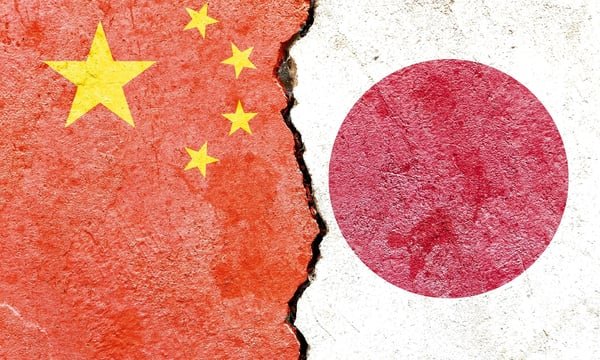
According to reporting in The Diplomat on July 27, 2026, by Professor Mong Cheung of Waseda University, the JS Ikazuchi, a Murasame-class Japan Maritime Self-Defense Force destroyer, passed through the Taiwan Strait on April 17, 2026, while en route to the Balikatan joint exercises. This marked the fourth such transit by Japanese vessels since September 2024 and the first under Prime Minister Sanae Takaichi. The date coincided with the anniversary of the 1895 Treaty of Shimonoseki. Within China's historical narrative, this treaty forms a central element of the Century of Humiliation. Cheung's analysis suggests that the overlap with this date transformed an otherwise routine navigational passage into a perceived provocation in Chinese eyes, even absent explicit Japanese intent.
The four transits since September 2024 indicate an evolving pattern in which MSDF operations through the Taiwan Strait have become more regularized. Under previous administrations, such passages remained infrequent, but Takaichi has overseen a shift toward greater visibility in Taiwan-related policy. This continuity acquires new resonance when placed against her broader security agenda, which prioritizes deterrence signaling.
China's Measured yet Forceful Countermeasures
Reporting by Lee Jeong-yeon, Beijing correspondent for The Hankyoreh, indicates that China responded by directing vessel formation 133, including the Type 052D guided-missile destroyer Baotou, to transit the Yokoate Waterway through Japan's Ryukyu Islands. Official statements framed these actions as standard annual training consistent with international law. At the same time, commentary from military experts and state media outlets emphasized that the maneuvers addressed actions seen as threatening China's sovereignty. Warnings issued through PLA-affiliated channels cautioned against further risky behavior linked to the Taiwan issue.
These responses remained within established patterns of signaling, yet their intensity reflected the additional layer of meaning supplied by historical context. The episode therefore demonstrates how memory can magnify the perceived stakes of limited operational moves, as noted in Cheung's Diplomat analysis.
The Memory Security Dilemma as an Analytical Framework
Cheung introduces the concept of a memory security dilemma to describe the dynamic in which states respond not only to material actions but also to the meanings those actions acquire through historical narratives. In this framework, one state's defensive measures can be read by another as existential challenges because they activate long-standing grievances. China's Century of Humiliation narrative and Japan's postwar historical legacy interact in ways that convert navigational transits into tests of resolve. When meanings are increasingly fixed by memory rather than by observable behavior, the scope for miscalculation widens even in the absence of hostile intent.
Cheung's analysis underscores that China's Century of Humiliation narrative has repeatedly informed foreign policy choices. Japan's postwar commitment to pacifism and its domestic debates over war legacy further complicate these interactions. The resulting interplay narrows the space for neutral interpretations and heightens the risk that routine activities will be read as deliberate challenges.
The theoretical origins of the memory security dilemma lie in security studies scholarship that treats historical memory as an independent variable capable of reshaping threat perceptions. Rather than viewing security interactions solely through material capabilities or alliance structures, this approach examines how collective remembrance of past conflicts embeds itself in contemporary decision-making. Memory functions here as a lens that filters observable events, assigning significance that exceeds the immediate operational context and thereby amplifying the potential for escalation.
China's Century of Humiliation narrative specifically shapes military signaling through a "never again" logic that frames any perceived erosion of sovereignty as a return to earlier vulnerabilities. This historical prism converts routine naval transits into reminders of unequal treaties and territorial losses, prompting countermeasures designed to reassert resolve. The narrative supplies a ready interpretive template in which defensive actions by others are recast as challenges requiring visible rebuttal.
Japan's counter-narrative centers on postwar pacifism as a core element of national identity, in which security enhancements are consistently framed as defensive necessities rather than offensive assertions. Domestic debates over the legacy of war reinforce this framing, positioning incremental steps such as straits transits as contributions to regional stability under international law. The interaction of these two memory systems therefore converts limited operational moves into symbolically charged exchanges even when explicit intent remains absent.
Korea's Position Between Competing Historical Narratives
Korea occupies a distinctive place in this dynamic because the First Sino-Japanese War was fought largely over influence on the Korean Peninsula, and the Treaty of Shimonoseki directly affected Korean sovereignty. Korea therefore shares with China a historical experience of Japanese expansion in the late nineteenth century. At the same time, Korea maintains its own unresolved disputes with Japan over the colonial period from 1910 to 1945. These parallel memory conflicts mean that any intensification of Sino-Japanese tensions reverberates directly through Korean domestic politics, as Lee Jeong-yeon's Hankyoreh reporting highlights.
Geographically situated between the two powers, Korea faces immediate security consequences from escalatory cycles. Prime Minister Takaichi's more assertive security posture since October 2025 has already prompted Korean analysts to reassess the reliability of trilateral coordination with the United States. Should memory-driven signaling continue to shape Chinese and Japanese actions, Seoul may find itself compelled to calibrate its own responses more carefully.
Korea's specific security dilemma arises from the fact that China remains its largest trading partner while the United States serves as its primary security guarantor. This dual dependence compels Seoul to maintain functional relations with both capitals even as memory-infused signaling between Beijing and Tokyo intensifies. Any move perceived as tilting too far toward one side risks economic retaliation or security abandonment, narrowing the range of viable policy options.
Historical memory in Korea, encompassing the colonial period and subsequent democratization struggles, continues to shape foreign policy choices by embedding public expectations that alignment with Japan must be approached with caution. These memories surface in debates over security cooperation, where past grievances inform present calculations and limit the speed or depth of coordination. The result is a persistent tension between strategic necessity and domestic legitimacy.
Korean public opinion further constrains Seoul-Tokyo coordination, as domestic audiences often interpret closer alignment with Japan through the lens of unresolved historical issues. Polling and media commentary reflect skepticism toward initiatives that appear to sideline memory concerns, compelling policymakers to calibrate statements and actions to avoid domestic backlash. This dynamic reduces flexibility precisely when regional signaling accelerates.
The Dokdo/Takeshima territorial dispute adds a further constraint on Seoul-Tokyo coordination by providing a recurring flashpoint that activates nationalist sentiment on both sides. Any joint security measures risk being read domestically as concessions on sovereignty, thereby limiting the scope for sustained trilateral initiatives even when external pressures favor closer alignment.
Historical Memory and Domestic Constraints on Korean Policy
The historical arc is especially salient for Korea: the peninsula served as the central prize in the First Sino-Japanese War, and Japan's subsequent annexation of Korea in 1910 flowed directly from that victory. Today Seoul must navigate a diplomatic tightrope, sustaining deepening US-Japan-Korea trilateral cooperation while managing substantial economic dependence on China. Domestic constraints arise from Korea's own historical memory, including commemorations of the March 1 Independence Movement, ongoing disputes over comfort women, and the 2018 Supreme Court rulings on forced labor. These pressures are compounded by Korea's territorial dispute with Japan over Dokdo/Takeshima.
Cheung's framework suggests that such constraints limit Seoul's flexibility in responding to memory-infused signaling between Beijing and Tokyo. Any perceived alignment with Japanese security initiatives carries immediate political costs at home, complicating efforts to maintain balanced relations with both neighbors.
Strategic Implications for Regional Stability and Korean Policy
The memory security dilemma raises questions about the durability of existing crisis-management mechanisms in East Asia. When historical anniversaries can convert routine transits into perceived threats, the predictability of signaling declines. Korean policymakers must therefore weigh the benefits of closer security cooperation with Japan against the risk that such cooperation may be interpreted in Beijing through the same historical prism that framed the April 2026 transit.
Efforts to institutionalize communication channels that explicitly address historical sensitivities could help reduce the scope for unintended escalation. At the same time, Korea's own memory politics with Japan suggest that any such channels would require sustained political investment. The April 2026 episode serves as a reminder that material capabilities alone do not determine security outcomes; the narratives through which those capabilities are interpreted remain equally consequential.
The US-Japan-Korea trilateral framework established at Camp David in 2023 and reinforced at subsequent summits faces added strain when memory-driven signaling intensifies, as each participant must manage domestic audiences sensitive to historical grievances. Sustaining the momentum of these mechanisms requires explicit attention to how routine activities may be reframed through competing narratives.
Inter-Korean dialogue offers a potential circuit-breaker by providing an alternative channel that can absorb or redirect tensions arising from Sino-Japanese memory interactions. By maintaining open lines with Pyongyang, Seoul can create space for de-escalatory messaging that operates outside the triangular dynamic involving Beijing and Tokyo.
The 2028 Seoul security dialogue could achieve concrete progress by establishing dedicated working groups on historical memory and signaling protocols, thereby translating analytical recognition of the memory security dilemma into operational mechanisms that enhance predictability across the region.
Sources and Attribution
The analysis in this article draws directly on reporting published in The Diplomat on July 27, 2026, by Professor Mong Cheung of Waseda University and on reporting by Lee Jeong-yeon, Beijing correspondent for The Hankyoreh. These publications supply the factual foundation for the description of the April 2026 transit, the Chinese response, and the broader interpretive framework applied to Sino-Japanese interactions.
Conclusion: Navigating Memory and Strategy
The April 2026 Taiwan Strait transit and the subsequent Chinese response highlight a persistent challenge in East Asian security: historical memory continues to shape strategic perceptions even when operational details remain limited and consistent with international practice. For Korea, caught between two neighbors whose narratives intersect on the Korean Peninsula itself, managing this dilemma requires both analytical clarity and diplomatic prudence. Future policy choices will need to account for the possibility that routine actions may acquire outsized significance on particular dates, thereby affecting the broader regional balance.
By Prof. David Park, Staff WriterThis article was produced with AI-assisted research and editorial support. Reporting is based on sources cited in the article.
What's Your Reaction?
 Like
0
Like
0
 Dislike
0
Dislike
0
 Love
0
Love
0
 Funny
0
Funny
0
 Wow
0
Wow
0
 Sad
0
Sad
0
 Angry
0
Angry
0

East Asia/Technology Correspondent at Global1.News. Seoul-based voice covering Korean politics, technology, business, and culture. Analyzes how technology and geopolitics intersect across East Asia.














Comments (0)