
Pentagon Launches Historic Force Posture Review in Europe
The Pentagon has launched a comprehensive review of its military force posture in Europe, with Defense Secretary Pete Hegseth and Under Secretary Elbridge Colby pushing NATO allies to take primary responsibility for conventional defense. The 90-120 day review examines air, ground, naval, and miss...
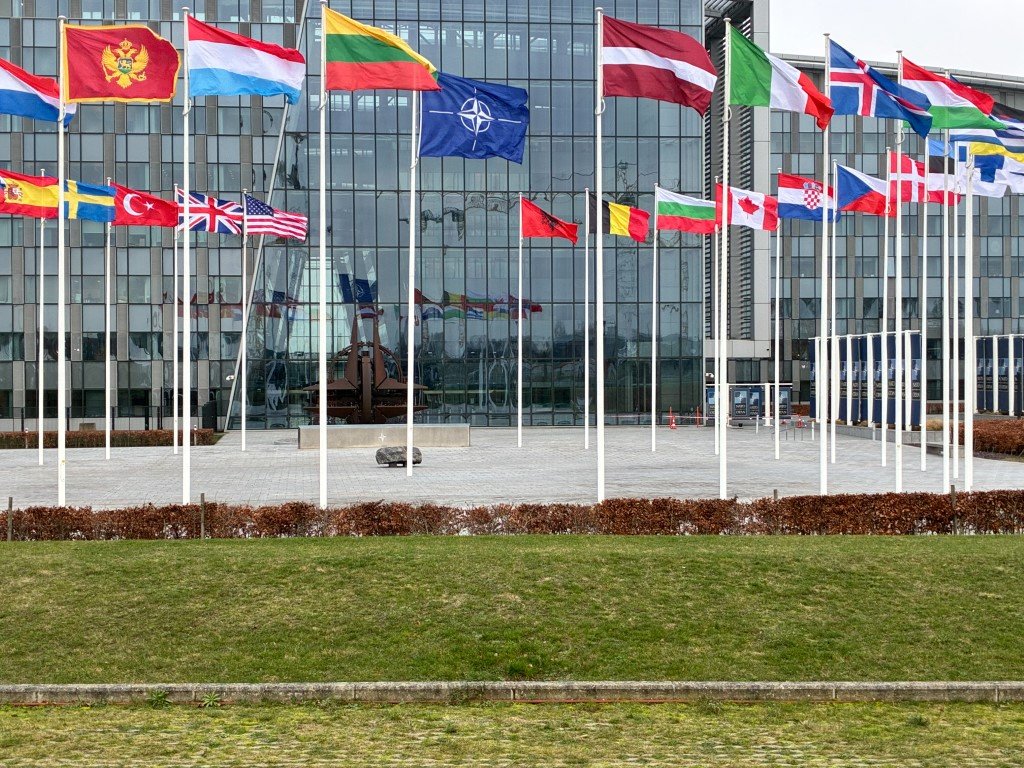
The Pentagon just dropped a bombshell that's sending ripples across NATO — and it's the kind of story that changes the way we think about American power abroad. As of Monday, July 28, the United States has officially launched a comprehensive review of its military presence across Europe, and folks, this is not your routine check-the-box exercise. This is a fundamental rethink of how America defends the continent it helped rebuild after World War II.
Pentagon Launches Historic Force Posture Review In Europe
Washington, D.C. — The Pentagon launched a sweeping review of U.S. military force posture in Europe on Monday, a move designed to accelerate NATO allies' assumption of primary responsibility for the continent's conventional defense, according to senior defense officials.
The review, announced by Under Secretary of Defense for Policy Elbridge Colby, follows Defense Secretary Pete Hegseth's notification to NATO counterparts in June that Washington was planning such an analysis. "This will be a real review," Hegseth told NATO defense ministers at a Brussels meeting last month. "It will be designed to ensure that NATO is moving fast and irreversibly toward Europe leading, stepping up to take primary responsibility for the defence of Europe."
The Big Shift: From American-Led to European-Led Defense
Here's what's actually happening. The United States currently stations approximately 100,000 troops across Europe, with major concentrations in Germany, Italy, the United Kingdom, and newer forward-deployed positions in Eastern European nations like Poland and Romania that were established after Russia's invasion of Ukraine. That force posture represents the largest American military footprint on the continent since the Cold War.
But the strategic calculus has shifted. Washington's primary national security focus has increasingly pivoted toward the Indo-Pacific and competition with China. For years, U.S. policymakers have pressed European allies to increase defense spending and take on a greater share of the burden for their own conventional defense. The NATO commitment that each member spend at least 2% of GDP on defense — long ignored by many European capitals — has slowly gained traction, particularly after Russia's 2022 invasion of Ukraine prompted a major rethink of European security.
"The United States cannot continue to bear the primary burden of Europe's conventional defense indefinitely," a senior Pentagon official told reporters on condition of anonymity. "This review is about ensuring that our European allies are on a clear, irreversible path to taking the lead role in defending their own continent, freeing up American resources for other global priorities."
What the Review Will Examine
The scope of the review is extensive. Pentagon officials say it will examine every major U.S. military installation in Europe, from Ramstein Air Base in Germany to Naval Support Activity Naples in Italy to the newly expanded Camp Kosciuszko in Poland. The review will assess which bases are strategically essential, which could be scaled back, and which European forces could reasonably take over existing missions.
Key areas under examination include:
Air power: The U.S. maintains dozens of air bases across Europe with fighter wings, bomber forward operating locations, and critical aerial refueling capabilities. The review will assess which airfields and which missions could transition to allied control.
Ground forces: U.S. Army Europe and Africa commands rotate armored brigade combat teams through Eastern Europe on a continuous basis. The review will examine whether allied rapid反应 forces — including NATO's new Allied Reaction Force — are ready to assume these rotational commitments.
Naval assets: The U.S. Sixth Fleet, headquartered in Naples, operates throughout the Mediterranean and maintains a constant presence in the Black Sea and the Atlantic. The review will look at burden-sharing arrangements with European navies, particularly those of the UK, France, Italy, and Spain.
Logistics and supply chains: American warfighting capability in Europe depends on a vast logistics network of pre-positioned equipment, fuel depots, and supply routes. The review will assess whether European allies can sustain these logistics chains independently.
Missile defense: The U.S. operates Aegis Ashore missile defense sites in Romania and Poland, part of NATO's broader ballistic missile defense architecture. The future of these sites under a European-led framework is expected to be a key discussion point.
European Reactions: Nervous Allies and New Opportunities
Reaction from European capitals has been mixed. NATO's eastern flank members — Poland, the Baltic states, and Romania — have expressed concern about any reduction in American military presence, viewing U.S. troops as the ultimate deterrent against Russian aggression. Poland, which has hosted a growing American rotational force and eagerly sought a permanent U.S. base, has been particularly vocal in advocating for maintaining the current U.S. footprint.
Western European allies, particularly Germany and France, have taken a more pragmatic approach. Germany, which hosts the largest U.S. military contingent in Europe at approximately 35,000 troops at bases like Ramstein, Spangdahlem, and Grafenwöhr, has signaled willingness to take on greater responsibility — but with conditions. Berlin has insisted that any transition be gradual and that NATO's collective defense guarantee under Article 5 remain ironclad.
"Germany understands that the world has changed," said a German Defense Ministry spokesperson. "We are committed to fulfilling our NATO obligations and to investing in our own defense capabilities. But this cannot happen overnight, and it cannot happen at the expense of the Alliance's core mission: the collective defense of every member state."
France, long an advocate for European strategic autonomy, has welcomed the review as an opportunity to accelerate the development of a genuine European defense identity. President Emmanuel Macron has for years called for Europe to take greater responsibility for its own security, and the Pentagon's review aligns with that vision — even if the timing and motivation are driven by American, not European, priorities.
The Geopolitical Chessboard: Russia, China, and the Future of NATO
The review doesn't exist in a vacuum. Three major geopolitical forces are shaping the Pentagon's thinking:
First, the war in Ukraine continues to drain both Russian and Western resources. While Ukraine has held the line against Russian forces, the conflict has exposed deficiencies in European defense industrial capacity — a key concern that the review will need to address. European allies have struggled to ramp up ammunition production to sustain Ukraine's war effort, raising questions about their readiness to take over conventional defense of the continent.
Second, the Indo-Pacific pivot. The Biden administration and now the current administration have made clear that China, not Russia, is America's primary long-term strategic competitor. Resources devoted to Europe's defense are resources not available for the Pacific theater. Defense Secretary Hegseth has framed the Europe review as part of a broader rebalancing of global forces, telling Congress earlier this year that "we cannot be everywhere, doing everything, at the same level, forever."
Third, domestic political pressure. Both Republican and Democratic lawmakers have increasingly questioned the cost of maintaining 100,000 troops in Europe seventy-five years after the end of World War II. A 2026 Congressional Budget Office report estimated the annual cost of the U.S. military presence in Europe at approximately $45 billion — a figure that has drawn scrutiny as the national debt surpasses $40 trillion.
House Armed Services Committee Chairman Mike Rogers (R-AL) has been particularly critical of what he calls the Pentagon's "opaque" approach to force posture changes. Rogers met with Under Secretary Colby at the Pentagon in recent weeks and expressed frustration with what he described as "poor coordination and weak consultation" with Congress on potential troop reductions in Europe.
The Timeline: What Happens Next
The review is expected to take 90 to 120 days, with initial recommendations due to Secretary Hegseth by late October or early November 2026. Any changes to force posture would then be implemented gradually, with some officials suggesting a transition period of 12 to 24 months before major changes take effect.
NATO Secretary General Mark Rutte has been kept informed of the review's progress and has expressed cautious support, emphasizing that any transition must maintain NATO's overall deterrent capability. "The Alliance is stronger when all members contribute their fair share," Rutte said in a statement. "We welcome this review as an opportunity to demonstrate that Europe is stepping up."
The review's outcome could reshape the map of American military power in Europe for a generation. From the airfields of Germany to the naval bases of the Mediterranean to the forward operating positions along NATO's eastern flank, the strategic landscape of European defense is being redrawn in real time.
The Bottom Line
This is a generational shift in transatlantic security. The United States is telling its European allies, in no uncertain terms, that the era of American-led conventional defense of Europe is drawing to a close. The question isn't whether Europe will take the lead — it's whether Europe is ready to do so before the review forces the issue.
For Americans, this means potential cost savings and a sharper focus on the Indo-Pacific. For Europeans, it means a historic challenge: building a credible, independent defense capability for the first time since 1945. And for the world, it means the end of a security architecture that has defined the Western alliance for eight decades.
The clock is ticking. We'll be watching every move.
By Jessica Ali, Staff Writer
This article was produced with AI-assisted research and editorial support. Reporting is based on sources cited in the article.
What's Your Reaction?
 Like
1
Like
1
 Dislike
0
Dislike
0
 Love
0
Love
0
 Funny
0
Funny
0
 Wow
0
Wow
0
 Sad
0
Sad
0
 Angry
0
Angry
0

Editor-in-Chief at Global1.News. Atlanta-based journalist who cuts through the BS and tells it like it is. Lead anchor, host, and the voice you hear when the spin stops and the truth starts.















Comments (0)