
Al-Shibani’s Historic Arrival in Beirut
**Keywords:** Asaad al-Shibani, Syria Lebanon relations, Ahmed al-Sharaa, Syrian refugees Lebanon, border security, Hezbollah, Joseph Aoun, Nawaf Salam, post-Assad Syria, Arab normalization Al-Shibani’s Historic Arrival in Beirut Syrian Foreign Minister Asaad al-Shibani arrived in Lebanon on July 2, 2026, marking the first high-level Syrian visit since the fall of Bashar al-Ass
Al-Shibani’s Historic Arrival in Beirut
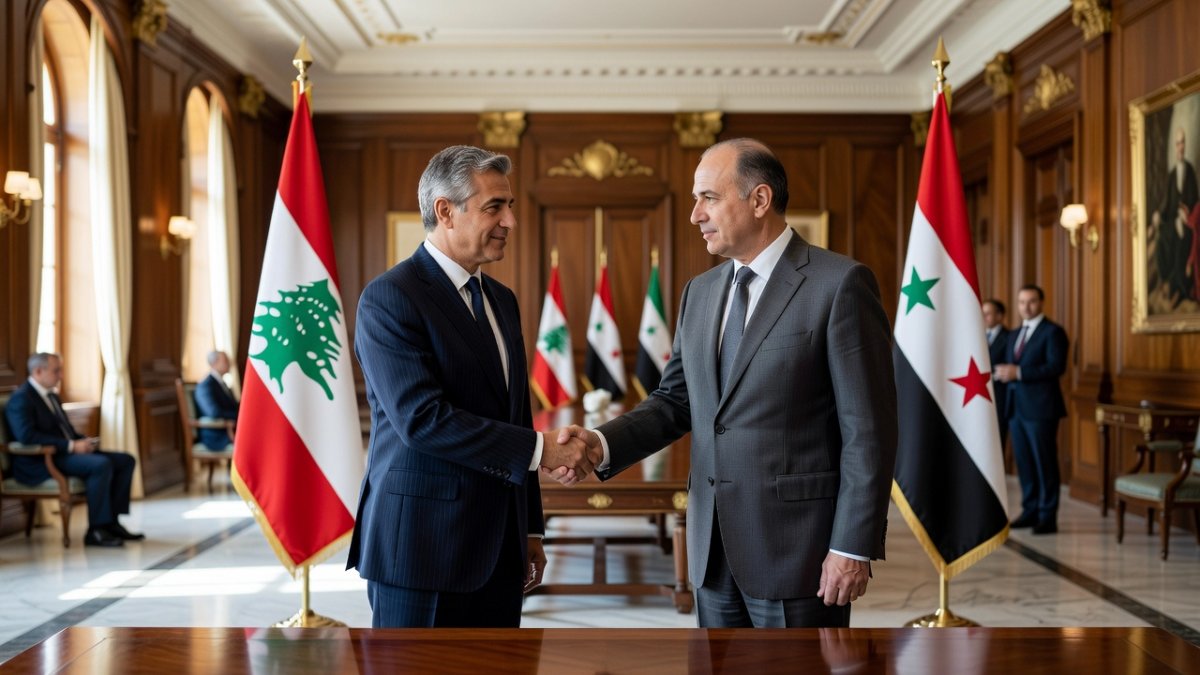
Syrian Foreign Minister Asaad al-Shibani arrived in Lebanon on July 2, 2026, marking the first high-level Syrian visit since the fall of Bashar al-Assad in December 2024. He met President Joseph Aoun, Prime Minister Nawaf Salam, and Foreign Minister Youssef Rajji. Discussions centered on border security, the status of roughly 1.5 million Syrian refugees still in Lebanon, and the fate of approximately 2,000 Syrian nationals held in Lebanese prisons, including 800 detained on security grounds.
Suspension of the Higher Council and Diplomatic Reset
The Lebanese-Syrian Higher Council, established in 1991 as an instrument of Syrian oversight, was formally suspended during the visit. All future cooperation will now route exclusively through standard diplomatic channels. This step removes a key institutional reminder of the 29-year period of Syrian military presence that ended in 2005 after the assassination of Rafik Hariri. Lebanese officials view the change as confirmation that Damascus no longer seeks tutelage over Beirut’s decisions.
Warm Reception in Tripoli and Sunni Political Signals
Al-Shibani traveled north to Tripoli, where crowds carried him on their shoulders and waved Syrian flags while chanting support for President Ahmed al-Sharaa. He met Tripoli Mufti Sheikh Mohammad Imam and Akkar Mufti Sheikh Zaid Bakkar Zakaria, as well as Deputy Prime Minister Tarek Mitri. In public remarks, al-Shibani described the visit as “a gesture of loyalty” to a city that backed the Syrian revolution and stated that Syria has “no intention of interfering in Lebanon’s internal affairs.” The optics underscored Damascus’s interest in building ties with Lebanon’s Sunni communities rather than replicating past patronage networks.
Border Security, Detainees, and Refugee Returns
Both sides reported improved conditions along the border. Syrian forces have intercepted multiple Hezbollah-linked weapons shipments, reducing cross-border smuggling that previously supplied the group. President Aoun noted the positive trend. On detainees, Syria pressed for accelerated case reviews, many of which have lingered without trial. Regarding refugees, Lebanese authorities had offered amnesty for illegal stays provided individuals departed by the end of August 2025; UNHCR data show approximately 850,000 Syrians had returned by September 2025. Remaining returns hinge on security guarantees and property restitution inside Syria.
Declining External Proposals and Regional Calculus
Al-Shibani politely rejected suggestions, including from the Trump administration, that Syrian forces assume responsibilities against Hezbollah. The refusal reflects Damascus’s priority of internal stabilization over entanglement in Lebanon’s sectarian balance. With Hezbollah significantly weakened by its 2024-2025 conflict with Israel, Syria under al-Sharaa is instead pursuing normalized ties with Arab states. Two Lebanese prime ministers have already visited Damascus since Assad’s fall, and Presidents Aoun and al-Sharaa met at the March 2025 Arab summit in Egypt.
Energy Cooperation and Economic Normalization
The 2022 tripartite agreement to transport 650 million cubic meters of Egyptian gas annually through Syria to Lebanon’s Deir Ammar plant remains operational. A March 2025 border demarcation accord further facilitates technical coordination. These practical steps illustrate how Damascus and Beirut can address shared infrastructure needs without reviving political subordination. Gulf states watching Syria’s transition see such functional cooperation as a test of whether al-Sharaa can deliver predictable neighborly relations.
Strategic Implications for Broader Middle East Dynamics
The visit occurs amid shifting Sunni-Shia competition and Arab-Israeli normalization efforts. A Syria that maintains distance from Iran-aligned networks while securing Arab investment alters the regional map. Lebanon gains breathing room to manage its own internal divisions without external vetoes. Turkey’s policy toward northern Syria and Gulf diversification strategies will both be influenced by whether Damascus sustains the non-interference line al-Shibani articulated in Tripoli. If implemented consistently, the new diplomatic framework could reduce flashpoints that once drew in multiple external actors.
By Malik Hassan, Staff WriterThis article was produced with AI-assisted research and editorial support. Reporting is based on sources cited in the article.
What's Your Reaction?
 Like
0
Like
0
 Dislike
0
Dislike
0
 Love
0
Love
0
 Funny
0
Funny
0
 Wow
0
Wow
0
 Sad
0
Sad
0
 Angry
0
Angry
0

Middle East Correspondent at Global1.News. Based in Beirut, covering politics, conflict, energy, and society across the Middle East. Brings context and depth to a region often reduced to headlines.













Comments (0)