
16 Montreal Police Officers Under Investigation for Alleged Racist and Hateful Conduct
A CBC News report has detailed an internal investigation into 16 Montreal police officers from Station 39 in the Montreal-Nord borough for alleged co-ordinated racist and hateful acts targeting Black and Arab people during police stops. The probe, triggered by fellow officers who reported the conduct, has already led to two suspensions while the Directeur des poursuites crimine
A CBC News report has detailed an internal investigation into 16 Montreal police officers from Station 39 in the Montreal-Nord borough for alleged co-ordinated racist and hateful acts targeting Black and Arab people during police stops. The probe, triggered by fellow officers who reported the conduct, has already led to two suspensions while the Directeur des poursuites criminelles et penales (DPCP) reviews evidence for possible criminal charges. Police Chief Fady Dagher held an unprecedented late-night news conference on Friday, June 12, to announce the crackdown.
16 Montreal Police Officers Under Investigation for Alleged Racist and Hateful Conduct
Montreal, Quebec - June 13, 2026 - Station 39 in the Montreal-Nord borough operates as a key police post managing daily law enforcement across one of the city's most diverse areas. The internal investigation into 16 officers there centres on claims of racist and hateful acts directed at Black and Arab residents during routine traffic and pedestrian stops. Two officers have already been suspended while Quebec prosecutors review evidence for possible criminal charges.
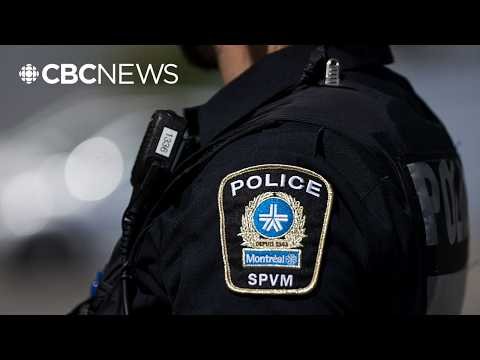
Details of the Alleged Conduct at Station 39
The 16 officers under scrutiny are mostly young men with less than five years of service on the force, according to Chief Dagher. Their alleged actions involved targeted stops that included racist remarks and hateful behaviour toward Black and Arab individuals. Station 39's location in Montreal-Nord places these incidents in a borough with a long and documented history of community-police friction that has drawn national attention over the past two decades.
Colleagues at the same station reported the behaviour to superiors, prompting the internal investigation that has been underway for just over two months. This self-reporting by officers marks a rare instance of peer accountability within the Service de police de la Ville de Montreal (SPVM) and has been highlighted by provincial officials as a positive sign. The probe has already led to the suspension of two officers pending further review by the DPCP, Quebec's independent prosecuting authority.
These claims matter for Canadian readers because they illustrate how individual officer conduct can erode institutional credibility across provinces. Similar patterns of complaints have surfaced in other Canadian urban forces including Toronto and Vancouver, showing that isolated cases in specific stations often reflect broader training and oversight gaps. The focus on young officers with limited experience suggests recruitment and early-career mentorship systems require immediate attention in Montreal and beyond.
Police Chief Fady Dagher's Unprecedented Response
Police Chief Fady Dagher called a late-night news conference on Friday, June 12, to address the allegations directly. This timing, deviating from standard daytime briefings, signalled the seriousness of the internal findings in the eyes of the department's leadership. Dagher outlined the scope of the investigation without naming the officers involved but confirmed that confirmations were made on Thursday and actions taken when the officers started their Friday evening shift.
The chief emphasised that the complaints originated from within Station 39 itself rather than from external community complaints. This detail underscores the force's apparent commitment to internal discipline at a time when public confidence remains fragile. Dagher's conference also referenced ongoing efforts to maintain operational standards at key posts like Station 39, which serves a borough where approximately 30 per cent of residents are visible minorities according to recent census data.
Canadian policing traditions value transparency during moments of institutional crisis, yet late-night press conferences remain uncommon outside major incidents. Dagher's approach may set a precedent for other municipal forces facing similar internal reports. Residents across the country watch these responses closely because they influence national conversations about equitable law enforcement and standards of accountability.
Reactions from Municipal and Provincial Leaders
Mayor Soraya Martinez Ferrada stated emphatically that "the bond of trust between the public and those who are there to protect us has been weakened" by these events. Her comments came during a weekend of mounting calls for swift corrective measures at Station 39. The mayor acknowledged the problem openly, saying "the only way to get through this is to openly acknowledge that it exists so we can implement measures to correct it."
Quebec Public Security Minister Francois Bonnardel highlighted the fact that the actions were first reported by other police officers within Station 39. "What reassures me is that it was police officers themselves who reported these actions," Bonnardel said. "The DPCP has been notified of the case and criminal charges may be filed." He also committed to working with the mayor of Montreal to continue efforts to implement body cameras for frontline officers, a reform long sought by community advocates.
These statements carry weight for Canadian governance because they show elected officials responding to internal police self-correction rather than solely to external pressure. Provincial ministers in other regions such as Ontario and British Columbia often face parallel challenges when internal reports of misconduct emerge. The emphasis on trust erosion connects directly to ongoing national debates about community safety, racial profiling, and oversight mechanisms in diverse urban centres across Canada.
Historical Context of Tensions in Montreal-Nord
The fatal police shooting of 18-year-old Fredy Villanueva in a Montreal-Nord park in August 2008 sparked three days of riots and civil unrest. That incident exposed deep community grievances and led to years of scrutiny over use-of-force practices at stations serving the borough, including Station 39. The Villanueva family's subsequent legal battle and the Quebec coroner's inquest highlighted systemic issues that advocacy groups say have never been fully resolved.
More recently, the death of Abisay Cruz, who died while being restrained by Montreal police, renewed public attention to interactions between officers and racialised residents. Families and community advocates have repeatedly called for independent civilian oversight of stop-and-search practices. The current investigation into Station 39 arrives against this backdrop of accumulated incidents stretching back nearly 18 years.
Understanding this timeline helps Canadian readers recognise why allegations involving 16 officers at a single station can trigger such widespread concern across the country. Past events in Montreal-Nord parallel challenges in Toronto's Jane-Finch corridor and Vancouver's Downtown Eastside, where similar histories of police-community tension have shaped public expectations of accountability and reform.
Montreal Police Five-Year Anti-Racism Plan Under Scrutiny
The SPVM maintains a five-year plan aimed at fighting racism and discrimination within its ranks, a framework introduced in response to the earlier crises. The plan includes mandatory cultural sensitivity training modules, community liaison programs, and data collection on traffic and pedestrian stops. Station 39 was expected to implement these measures as part of the broader departmental rollout across all 34 neighbourhood police stations in the city.
Implementation reports have cited increased oversight and revised protocols at high-volume posts, yet the current allegations raise fundamental questions about whether these initiatives have truly taken root at the operational level. The fact that 16 officers serving at a single station could allegedly engage in co-ordinated racist behaviour suggests significant gaps between policy and daily practice.
For readers across Canada, the Montreal plan represents one municipal attempt to align local forces with national equity standards and the values enshrined in the Canadian Charter of Rights and Freedoms. Other provinces including Ontario and Alberta have launched comparable initiatives following high-profile incidents. The Montreal experience offers instructive lessons on whether policy changes adopted in headquarters translate meaningfully into daily practice at stations like Station 39.
Political Calls for Expanded Investigation
Quebec Solidaire MNA Ruba Ghazal has demanded an expanded criminal investigation to "fully shed light on the scope and severity of the incidents." Ghazal questioned publicly whether these practices are limited to Station 39 and called on Premier Christine Frechette's government to ensure the investigation "uproots the racist and despicable practices that have been plaguing this police station for many years."
Community advocacy groups have supported widening the probe to include all stops conducted by Station 39 personnel over recent years. This broader approach would allow the DPCP and potential oversight bodies to assess the full extent of any hateful behaviour that may have occurred. An expanded scope could also inform substantial revisions to the SPVM's five-year anti-racism plan if evidence shows the conduct was more widespread than initially identified.
Canadian readers should understand these calls for expansion because they reflect wider societal demands for thorough accountability in all public institutions. Similar pushes for comprehensive civilian-led reviews have occurred in Nova Scotia following the 2020 mass shooting inquiry and in British Columbia following police conduct controversies. The outcome in Montreal may influence how future police misconduct cases are investigated and prosecuted across the country.
Broader Implications for Canadian Policing Standards
The events at Station 39 highlight the fundamental challenge of maintaining public confidence in law enforcement when officers themselves identify misconduct within their ranks. This internal reporting mechanism, though encouraging, also raises questions about why peer reporting was necessary after years of external community complaints. The fact that the investigation only began two months ago means the alleged conduct may have continued for some time before fellow officers intervened.
Trust between communities and police remains a foundational element of Canadian public safety and social cohesion. Weakened bonds in one Montreal borough can influence perceptions in neighbouring regions and even other provinces, given that national news coverage of such incidents shapes attitudes nationwide. The disproportionate representation of young officers with limited service points to the critical importance of early-career supervision, mentorship, and cultural competence training in police academies across Canada.
Ultimately, this investigation tests whether Montreal's existing oversight frameworks can deliver timely justice while preserving operational integrity at key stations. The DPCP review and any resulting criminal charges will provide concrete indicators of whether internal accountability mechanisms function effectively. Canadian policing continues to evolve through cases like this one, with Montreal-Nord serving as the current focal point for a national conversation about what fair and equitable law enforcement should look like in a multicultural democracy.
By Alex Thompson, Staff Writer
This article was produced with AI-assisted research and editorial support. Reporting is based on sources cited in the article.
What's Your Reaction?
 Like
0
Like
0
 Dislike
0
Dislike
0
 Love
0
Love
0
 Funny
0
Funny
0
 Wow
0
Wow
0
 Sad
0
Sad
0
 Angry
0
Angry
0
Canada Correspondent at Global1.News. Based in Toronto, covering Canadian politics, energy, trade, and US-Canada relations. Provides the Canadian perspective on North American and global affairs.













Comments (0)