
Ex-Kremlin Loyalist Ilya Remeslo Placed in Moscow Psychiatric Facility
In the shadowed corridors of Russian justice, a onetime Kremlin supporter has become the latest figure swept into a system that blends criminal prosecution with psychiatric confinement.
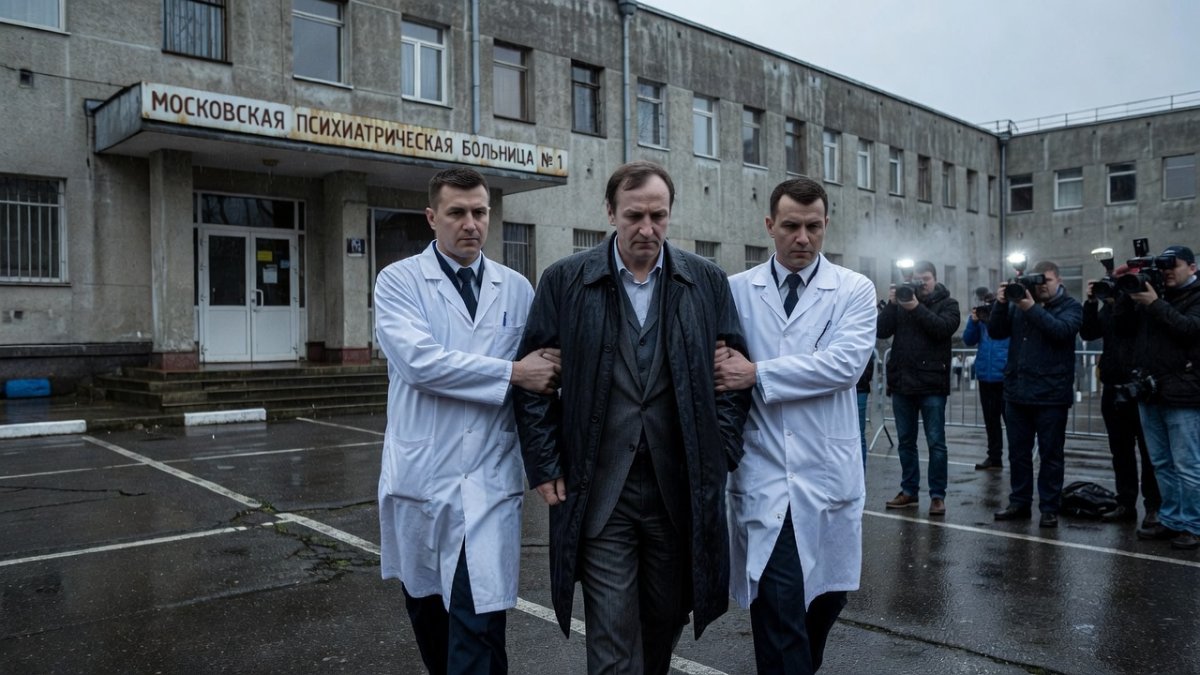
In the shadowed corridors of Russian justice, a onetime Kremlin supporter has become the latest figure swept into a system that blends criminal prosecution with psychiatric confinement. Ilya Remeslo’s abrupt reversal from loyalist to critic triggered a sequence of arrests, hospitalizations, and transfers that now place him inside Moscow’s most storied institution for political psychiatry. The case reveals how legal and medical tools can converge to neutralize dissent without requiring a public trial.
Ex-Loyalist Blogger Held at Serbsky Center
Moscow, Russia — Ilya Remeslo, the former pro-Kremlin blogger, was transferred last month to the Serbsky State Scientific Center for Social and Forensic Psychiatry after spending a month in a St. Petersburg facility earlier this year. He faces charges under the law criminalizing false information about the Russian military, with pre-trial detention ordered until September 16. His lawyer confirmed the move, while an anonymous healthcare source first disclosed the transfer to TASS.
From Kremlin Loyalist to Public Critic
Remeslo built his public profile by filing complaints against critics of the authorities and consistently aligning with official narratives. That record ended when he published the Telegram post titled “Five reasons why I stopped supporting Vladimir Putin,” in which he labeled the president a war criminal and thief. The speed of the reversal stunned his former audience, many of whom had viewed him as a reliable defender of the state line.
Former insiders who publicly break with the Kremlin often encounter accelerated scrutiny. Remeslo’s case fits this pattern: within weeks of his denunciation, authorities moved from monitoring to active measures. The contrast between his earlier complaints against opponents and his own sudden legal jeopardy underscores how quickly the protective shield of loyalty can vanish once criticism turns personal and direct.
Charges Under the Military Disinformation Law
The statute enacted after 2022 carries a maximum penalty of ten years and has been applied broadly to statements about military operations. Remeslo was arrested in St. Petersburg and later moved to a Moscow detention facility earlier this month, where a judge set pre-trial detention through mid-September. Prosecutors have not identified the precise statements that form the basis of the indictment.
Defense arguments center on the claim that the charges arise from Remeslo’s criticism of Putin rather than from any demonstrably false assertion about the armed forces. The Basmanny District Court is scheduled to hear an appeal of the detention order on August 12. Without public disclosure of the evidence, observers note that the proceedings rest largely on the broad wording of the law itself.
First Hospitalization in St. Petersburg
Immediately after the March Telegram post, Remeslo was held for a full month in a St. Petersburg psychiatric hospital. He described the stay as involuntary and directly linked to his political statements. No independent medical assessment has been released to the public.
The timing established a direct sequence: public criticism followed within days by psychiatric intervention. That initial confinement set the stage for the later transfer to Moscow, suggesting authorities viewed the St. Petersburg hospitalization as an initial step rather than a conclusive measure. The absence of transparent clinical justification leaves open the question of whether medical or punitive considerations predominated.
Anatomy of the Serbsky Center Transfer
TASS reported the move to the Serbsky Center on July 27, citing an unnamed source inside the healthcare system. Lawyer Sergei Badamshin verified the transfer by posting a photograph taken outside the facility. Neither the lawyer nor the TASS source provided any medical rationale for relocating Remeslo from St. Petersburg.
The Serbsky Center itself has issued no public statement. This silence, combined with the lack of disclosed clinical grounds, shifts attention to institutional motives. Questions persist about whether the transfer reflects a need for specialized forensic evaluation or serves to place the blogger under tighter central control.
The Serbsky Center's Soviet-Era Legacy
The facility carries a documented history of diagnosing political dissidents with mental disorders to justify confinement. Soviet-era cases such as those of Pyotr Grigorenko and Vladimir Bukovsky illustrate how diagnoses like sluggish schizophrenia were used to bypass ordinary judicial processes. Remeslo’s placement revives those institutional practices in a contemporary setting.
Although the Soviet Union ended decades ago, the center’s role in managing politically inconvenient individuals has not been dismantled. The current transfer therefore connects directly to an established mechanism for neutralizing criticism through medical framing rather than solely through criminal sentencing.
Human Rights Concerns and International Response
Organizations including Amnesty International, Human Rights Watch, and Memorial have recorded repeated instances in which psychiatric facilities serve political ends in Russia. The post-2022 “fake news” laws add a criminal layer that can be paired with psychiatric measures, creating overlapping restrictions on speech and movement.
Kremlin officials routinely characterize such international documentation as external interference. Yet the documented pattern shows that legal charges and psychiatric referrals can operate in tandem, each reinforcing the other without requiring a single transparent proceeding. Remeslo’s trajectory illustrates how these tools can be sequenced against an individual.
Legal Process and Upcoming Hearings
Badamshin has indicated plans to challenge both the underlying charges and the conditions of confinement, including requests for independent medical review. Court documents released so far contain minimal detail on the evidence supporting either the criminal case or the psychiatric transfer.
No trial date has been set. The limited transparency surrounding procedural steps leaves defense counsel and outside observers with few concrete facts on which to base arguments. The August 12 hearing on detention conditions will be the next public test of how much information the court is prepared to disclose.
Implications for Kremlin Power Structures
Remeslo’s case functions as a signal to other former supporters that public defection carries compounded risks. By combining criminal prosecution with psychiatric evaluation, authorities can impose restrictions while framing the measures as protective or therapeutic rather than overtly punitive.
This approach relies on Soviet-era institutions adapted to current political needs. It allows the state to manage internal dissent through established medical and legal channels, reducing the visibility of direct confrontation. The outcome suggests that loyalty tests within pro-government circles have grown stricter and that the cost of reversal has increased.
By Irina Volkov, Staff Writer
This article was produced with AI-assisted research and editorial support. Reporting is based on sources cited in the article.
What's Your Reaction?
 Like
0
Like
0
 Dislike
0
Dislike
0
 Love
0
Love
0
 Funny
0
Funny
0
 Wow
0
Wow
0
 Sad
0
Sad
0
 Angry
0
Angry
0

Russia/Eastern Europe Correspondent at Global1.News. Covering Russian politics, energy, security, and the shifting dynamics of the post-Soviet space. Provides clear-eyed analysis on one of the world's most opaque regions.













Comments (0)