
Xi's Return to Pyongyang Signals Continuity Amid Sino-North Korean Strategic Drift
The Diplomatic Choreography of the June 2026 Summit Chinese leader Xi Jinping conducted his first state visit to North Korea in seven years from June 8 to 9, 2026. Both governments presented the engagement as evidence of enduring bilateral strength, yet the proceedings followed a familiar script without introducing new substantive commitments. The schedule included a large welc
The Diplomatic Choreography of the June 2026 Summit
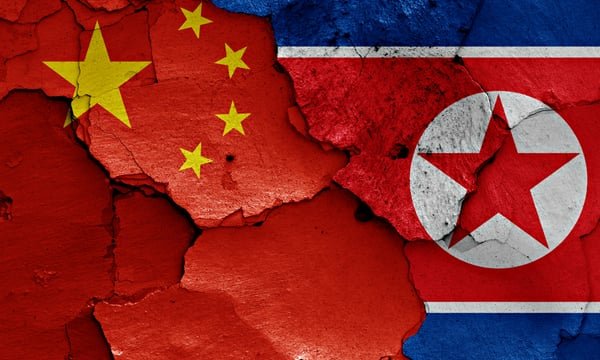
Chinese leader Xi Jinping conducted his first state visit to North Korea in seven years from June 8 to 9, 2026. Both governments presented the engagement as evidence of enduring bilateral strength, yet the proceedings followed a familiar script without introducing new substantive commitments. The schedule included a large welcome ceremony at Kim Il Sung Square, summit talks, a banquet, an arts performance, a floral tribute at the Sino-North Korea Friendship Tower, and a visit to the Central Cadres School of the Workers' Party of Korea, concluding with a small group luncheon involving the leaders and their spouses.
These events adhered closely to established diplomatic precedent rather than signaling innovation. Official commentary published in Rodong Sinmun on the day of arrival reinforced historical bonds without announcing concrete initiatives in trade, security, or other domains. The absence of departures from routine choreography indicated that the visit served primarily to restore a baseline level of contact after prolonged interruption.
Pre-2019 Patterns of Close Coordination
Prior to Xi Jinping's previous visit to Pyongyang in 2019, the relationship featured frequent high-level exchanges. Kim Jong Un traveled to Beijing four times between 2018 and 2019, with each trip positioned ahead of his meetings with then-South Korean President Moon Jae-in and U.S. President Donald Trump. This sequence underscored Xi's central role in North Korea's foreign policy calculations at the time.
Following the 2019 visit, however, bilateral summitry ceased for several years. The pattern of preparatory coordination that had characterized the earlier period gave way to extended silence, creating space for other actors to assume greater prominence in Pyongyang's external engagements.
COVID Isolation as a Period of Internal Reorganization
North Korea's self-imposed COVID lockdown created conditions for a comprehensive policy reset. With limited entry or exit permitted for officials, including foreign diplomats, the regime concentrated on three concurrent tracks: internal stability, military modernization, and external realignment. Measures under the first track targeted black-market networks that had relied on goods and information crossing the Chinese border, including foreign media and communication devices.
The second track emphasized modernization of the Korean People's Army, with particular focus on expanding nuclear delivery options such as rail-launched ballistic missiles, strategic cruise missiles, and nuclear-capable rocket launchers. This development reflected a deliberate move away from reliance on any external nuclear umbrella. The third track involved restructuring external relationships, including acceptance of two sovereign states on the Korean Peninsula and a decision to support Russia in its conflict with Ukraine.
Strategic Drift and the Reemergence of Contact
The years after 2019 revealed stagnation in Sino-North Korean ties as Beijing adjusted to a more self-directed North Korean posture. Rekindling began in 2025 when Kim Jong Un traveled to Beijing for Victory Day commemorations. A one-on-one meeting with Xi during that visit paved the way for the reciprocal trip nine months later. The 2026 summit therefore represented a return to minimal engagement rather than a restoration of the denser coordination seen before 2019.
Working-level exchanges in areas such as trade, tourism, science, and sports are now anticipated. The more consequential uncertainty concerns whether military cooperation will expand beyond current levels, an area left unaddressed by the visit's public program.
North Korea's Pivot Toward Russia and Its Effects on Beijing
During the isolation period, Pyongyang redirected significant attention toward Moscow. Vladimir Putin became the foreign leader most frequently engaged with Kim after 2019, a shift that altered the previous geometry in which China occupied the primary external position. North Korea's provision of support to Russia supplied new leverage in dealings with the Kremlin while simultaneously reducing immediate dependence on Chinese economic and diplomatic channels.
Beijing has had to calibrate its approach to a partner that now possesses alternative options. The 2026 visit did not reverse this reorientation but instead established procedural continuity without attempting to reclaim exclusive influence. This adjustment carries implications for how China manages its border security and economic leverage along the Yalu and Tumen rivers.
Implications for Inter-Korean Dynamics and Regional Stability
The visit's emphasis on continuity rather than breakthrough affects prospects for inter-Korean engagement. North Korea's explicit acceptance of two sovereign states on the peninsula, formalized during the isolation years, reduces the ideological space previously available for unification rhetoric. South Korean policymakers must therefore navigate a landscape in which Pyongyang's external alignments, including its Russian orientation, further complicate any resumption of dialogue.
Regionally, the limited substance of the summit suggests that Sino-North Korean military coordination will remain incremental. This posture influences calculations in Seoul, Tokyo, and Washington regarding extended deterrence and alliance coordination. The Korean Peninsula's security environment continues to reflect the cumulative effects of North Korea's triple-track adjustments, with China's role now one element among several rather than the dominant external factor.
By Prof. David Park, Staff WriterThis article was produced with AI-assisted research and editorial support. Reporting is based on sources cited in the article.
What's Your Reaction?
 Like
0
Like
0
 Dislike
0
Dislike
0
 Love
0
Love
0
 Funny
0
Funny
0
 Wow
0
Wow
0
 Sad
0
Sad
0
 Angry
0
Angry
0
East Asia/Technology Correspondent at Global1.News. Seoul-based voice covering Korean politics, technology, business, and culture. Analyzes how technology and geopolitics intersect across East Asia.













Comments (0)