
Trooping the Colour 2026 King Charles Leads London Parade
Trooping the Colour 2026 drew thousands to central London on a bright June morning, underscoring the enduring pageantry of the British monarchy even as debates over its relevance in a modern constitutional democracy persist. The annual military spectacle at Horse Guards Parade offered a vivid reminder of how tradition intersects with contemporary questions of national identity,
Trooping the Colour 2026 drew thousands to central London on a bright June morning, underscoring the enduring pageantry of the British monarchy even as debates over its relevance in a modern constitutional democracy persist. The annual military spectacle at Horse Guards Parade offered a vivid reminder of how tradition intersects with contemporary questions of national identity, tourism revenue and institutional continuity under King Charles III.
Trooping the Colour 2026: Military Pageantry Meets Monarchy's Modern Test
London, UK – 13 June 2026 — More than 1,400 armed forces personnel, 200 horses and 400 musicians processed through Whitehall this morning as King Charles III marked his official birthday with the traditional Trooping the Colour ceremony. The event, held at Horse Guards Parade, began at 10.30am and concluded with an RAF Red Arrows flypast over Buckingham Palace, drawing spectators from across England, Scotland, Wales and Northern Ireland.
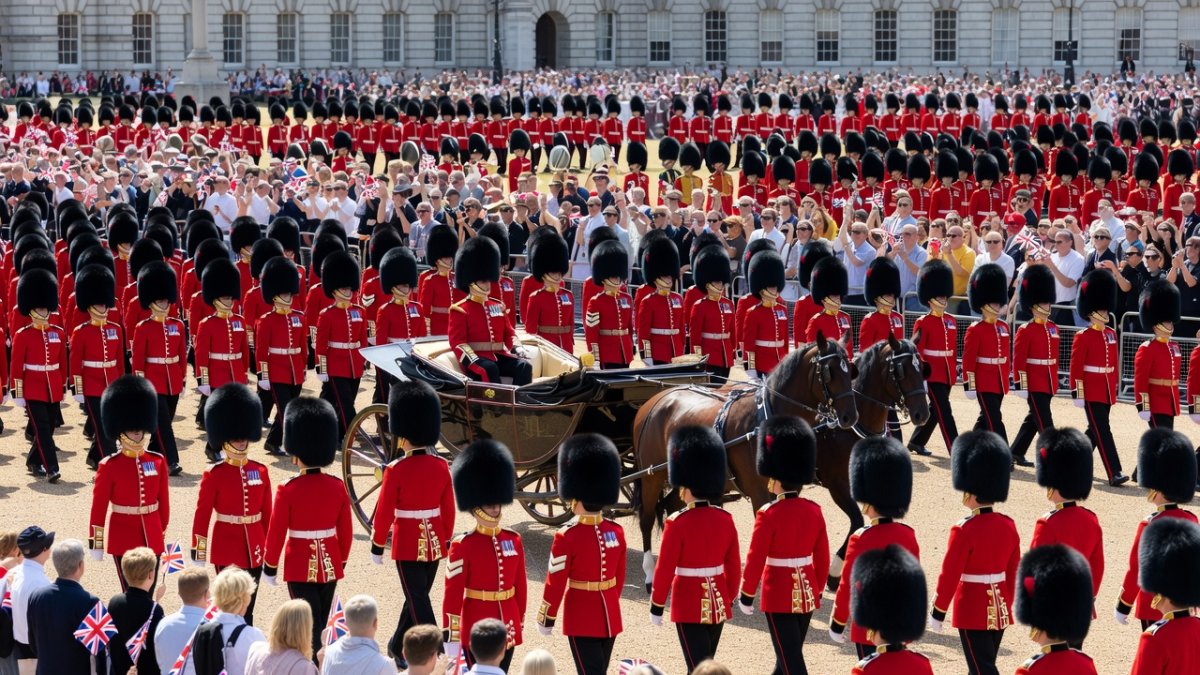
The Military Scale at Horse Guards Parade
The parade featured the King's Colour of the Grenadier Guards, specifically the 1st Battalion, King's Company. Second Lieutenant Alec Goschen, standing 6ft 7ins tall and reaching 8ft 6ins in his bearskin, served as Ensign carrying the colour. Guardsmen in scarlet tunics and bearskin caps executed precision drill movements honed over weeks of intensive practice at the Household Cavalry barracks.
The King's Troop Royal Horse Artillery fired a 41-gun salute to mark the occasion. This historic unit, founded in 1946, maintains its role in state ceremonies despite the recent loss of Lance Bombardier Ciara Sullivan, who died in May after falling from her horse at the Royal Windsor Horse Show and had been due to ride in today's procession. Colleagues in the Household Cavalry noted her absence during the parade.
These numbers reflect the sheer logistical effort required to stage the event each year. The Ministry of Defence coordinates with the Household Division to ensure the safety and timing of 200 horses moving through central London streets, a feat that directly supports the ceremonial functions of the British Army while showcasing its public-facing traditions to domestic and international audiences.
Royal Family Roles and Uniforms
King Charles III appeared in the uniform of the Grenadier Guards, complete with Queen Elizabeth II's cypher and ten medals including those from the 1953 Coronation and the Platinum Jubilee of 2022. Queen Camilla, Colonel of the Grenadier Guards, wore a red Fiona Clarke dress paired with a black beret featuring a white plume designed by Philip Treacy.
Prince William, Colonel of the Welsh Guards, rode Darby, while Princess Anne, Colonel of the Blues and Royals, rode Noble and the Duke of Edinburgh, Colonel of the Scots Guards, rode Sir John. The King and Queen travelled in the Ascot Landau carriage from Queen Victoria's reign, accompanied by other family members in historic vehicles including the No.1 Barouche carrying Sophie, Duchess of Edinburgh and Vice Admiral Sir Tim Laurence.
Princess Kate, Princess of Wales, wore a blue Catherine Walker outfit with a Philip Treacy hat and an Irish Guards brooch. She travelled in a carriage with Prince George, aged 12, Princess Charlotte, aged 11, and Prince Louis, aged 8, described by observers as a gap-toothed eight-year-old on his best behaviour. The balcony appearance at Buckingham Palace placed King Charles between Prince William and Prince George, offering a clear visual reminder of royal continuity.
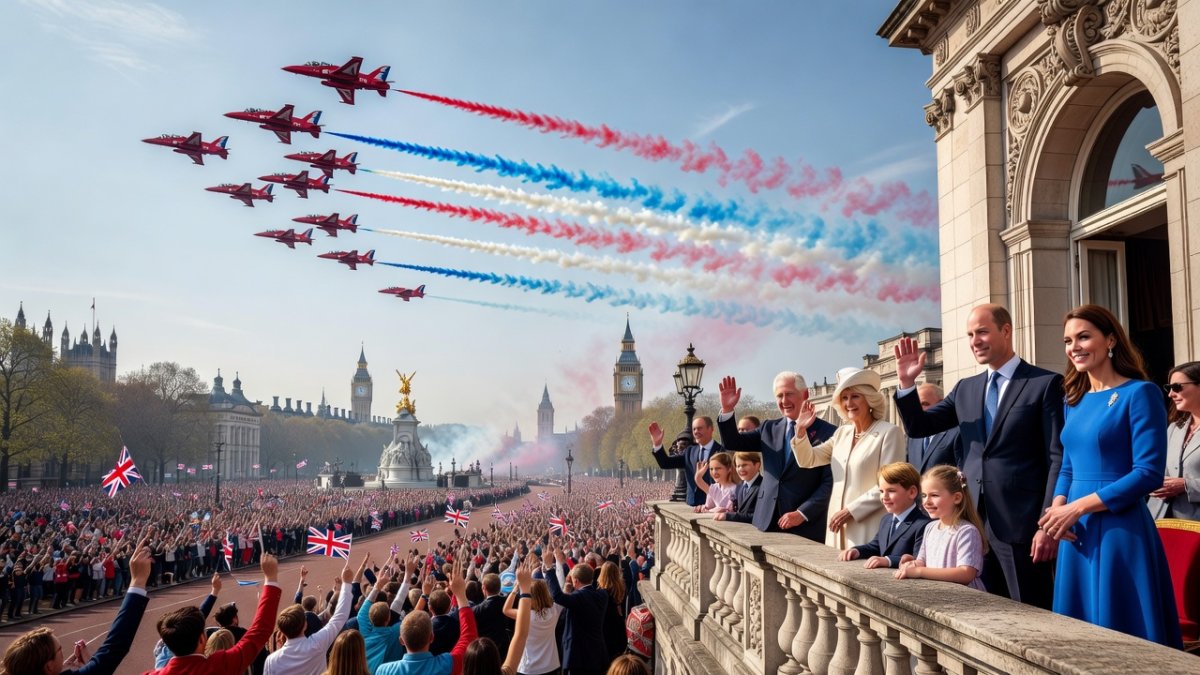
Historical Origins of the Ceremony
Trooping the Colour dates to the 17th and 18th centuries, when regiments displayed their colours so soldiers could recognise their unit amid the chaos of battle. The name derives directly from the "Colours," the flags that represent British Army regiments, with a different regiment's colour trooped each year to preserve this link to regimental identity.
The sovereign's official birthday celebration in June, separate from the actual birthday on 14 November, follows a pattern established by Edward VII, whose November birth prompted the shift to warmer weather for the parade. This separation has become a fixed element of the British calendar, allowing the monarchy to maintain public visibility through established military ritual.
Whitehall institutions continue to treat the event as a core expression of ceremonial duty. The Household Division's involvement reinforces the constitutional role of the armed forces in supporting the head of state, a relationship that remains central to how Britain organises its state occasions without direct political interference.
Public Attendance and Anti-Monarchy Voices
Thousands of spectators lined the route from across the United Kingdom, reflecting the ceremony's continued draw as a national event. The presence of families and tourists alike highlights how such occasions contribute to seasonal tourism in central London, supporting local businesses and reinforcing the capital's identity as a centre of royal heritage.
Anti-monarchist group Republic staged a protest using umbrellas that spelled out "Stop The Reign," with chants of "Not my King" audible during the Red Arrows flypast, as reported by The Independent. These demonstrations occurred alongside the official proceedings, illustrating the space for dissent within British public life even during state ceremonies.
The contrast between the ordered military display and the visible protests underscores ongoing conversations about the monarchy's place in 21st-century Britain. Institutions such as Parliament and the Church of England maintain formal ties to the Crown, yet public opinion remains divided on whether these traditions strengthen or constrain national identity.
Impact on British Tourism and Institutions
Trooping the Colour generates measurable economic activity through visitor spending in Westminster and surrounding areas. Hotels, transport operators and retailers benefit from the concentrated influx of domestic and overseas visitors each June, a pattern documented by VisitBritain in its annual reports on heritage events.
The ceremony also serves the Ministry of Defence's public engagement objectives. By showcasing the Household Division's discipline and the King's Troop's artillery traditions, the event provides a visible link between the armed forces and the civilian population, supporting recruitment and maintaining awareness of the military's ceremonial responsibilities.
Named UK institutions from the Grenadier Guards to the Royal Horse Artillery participate in a coordinated effort that extends beyond spectacle. Their involvement preserves institutional knowledge passed through generations of service personnel, ensuring that the precision required for state events remains intact regardless of broader political shifts.
The Bottom Line — What Comes Next
As the Red Arrows completed their flypast and the royal family withdrew from the balcony, Trooping the Colour 2026 reinforced the monarchy's capacity to command public attention while exposing the fault lines that accompany any display of inherited authority. With Prince George now positioned visibly alongside his father and grandfather, the ceremony pointed toward a future in which the same traditions will be tested against evolving expectations of accountability and representation. The coming years will show whether these annual rituals continue to anchor British national life or become increasingly contested symbols in a changing constitutional landscape.
By Erica Thornton, Staff Writer
This article was produced with AI-assisted research and editorial support. Reporting is based on sources cited in the article.
What's Your Reaction?
 Like
0
Like
0
 Dislike
0
Dislike
0
 Love
0
Love
0
 Funny
0
Funny
0
 Wow
0
Wow
0
 Sad
0
Sad
0
 Angry
0
Angry
0

US Politics and Policy Correspondent at Global1.News. Based in Washington DC, covering American politics, policy, elections, and the courts. Knows how the system works and tells you what it actually means.











Comments (0)