
US $292M AMRAAM Approval and Cheongung-II Export Drive Reshape South Korea's Air Defense Posture
The United States Department of State's Defense Security Cooperation Agency approved a $292 million Foreign Military Sale of 70 AIM-120C-8 Advanced Medium-Range Air-to-Air Missiles to the Republic of Korea on 10 June 2026. This transaction, with RTX Corporation as the principal contractor, forms part of a measured, incremental strengthening of South Korea's beyond-visual-range
The United States Department of State's Defense Security Cooperation Agency approved a $292 million Foreign Military Sale of 70 AIM-120C-8 Advanced Medium-Range Air-to-Air Missiles to the Republic of Korea on 10 June 2026. This transaction, with RTX Corporation as the principal contractor, forms part of a measured, incremental strengthening of South Korea's beyond-visual-range air-combat capability at a time of heightened regional uncertainty. Alongside this AMRAAM procurement, South Korea's indigenous Cheongung-II medium-range surface-to-air missile system has drawn formal interest from Indonesia, while export deliveries to the United Arab Emirates and Saudi Arabia are underway, reflecting the country's growing role as a defense technology exporter.
US $292 Million AMRAAM Approval and Cheongung-II Export Drive Reshape South Korea's Air Defense Posture
Seoul, South Korea – June 15, 2026 — The recent DSCA notification reflects a deliberate, alliance-coordinated approach to maintaining credible deterrence on the Korean Peninsula while South Korean defense exporters simultaneously expand their footprint in Southeast Asia and the Gulf.
The AMRAAM Procurement — Deal Structure and Historical Context
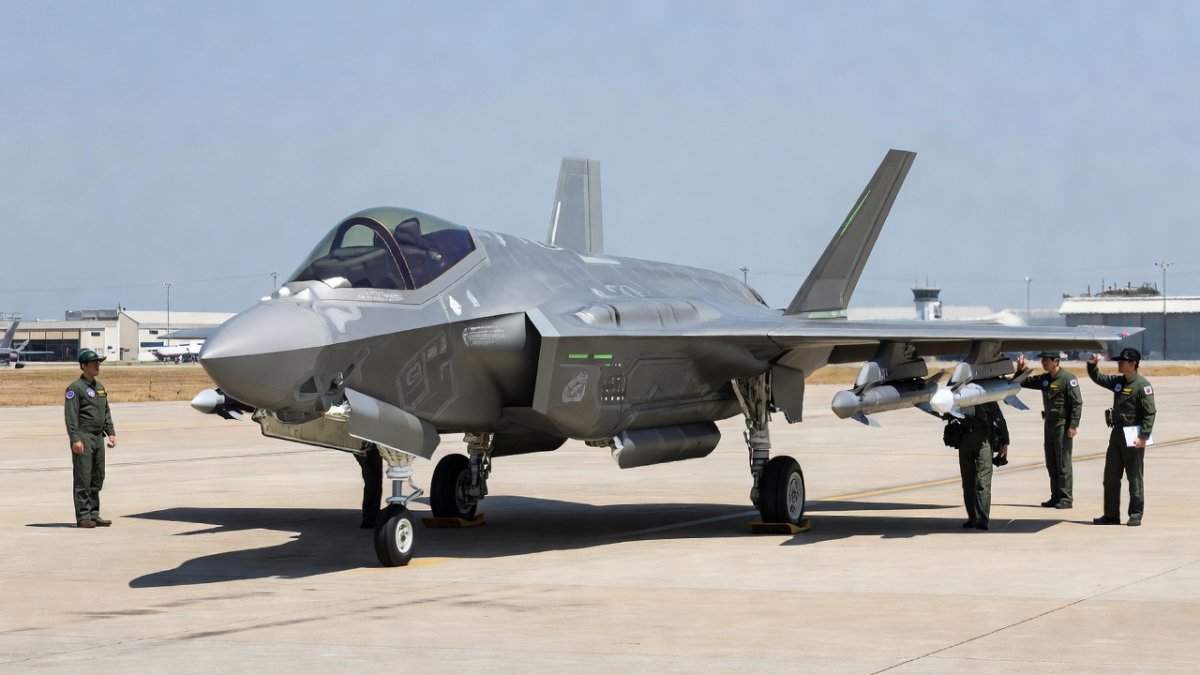
The 10 June 2026 DSCA notification authorizes the Republic of Korea to acquire 70 AIM-120C-8 missiles valued at approximately $292 million. RTX Corporation serves as the principal contractor, supplying missiles equipped with the F3R upgrade that incorporates revised circuit cards, advanced processors, and updated software architecture. This configuration preserves compatibility with the ROKAF's existing F-35A, F-15K, and KF-16 fleets stationed at Cheongju, Daegu, Suwon, and Seosan air bases.
Previous AMRAAM acquisitions provide useful context. In October 2019 the United States approved 120 missiles; a follow-on package of 39 missiles was cleared in December 2023. The current tranche brings the cumulative total of AIM-120C-series missiles approved for South Korea to 229, illustrating a steady, capability-focused replenishment rather than a sudden surge. The same week, a separate $106 million sale of Joint Direct Attack Munition guidance kits was also notified, indicating parallel attention to both air-to-air and air-to-ground precision requirements.
Policy analysts at the Asan Institute for Policy Studies have noted that the incremental nature of these approvals aligns with established Foreign Military Sales procedures that emphasize interoperability and alliance burden-sharing. South Korean officials have framed the purchase as a prudent hedge against evolving aerial threats without altering the fundamental balance of forces on the peninsula.
Cheongung-II — From Homeland Defense to Global Export Platform
Developed by the Agency for Defense Development with production contributions from LIG Nex1 and Hanwha Systems, the Cheongung-II represents South Korea's indigenous medium-range surface-to-air missile system designed to complement lower-tier Patriot batteries. Its active radar seeker and vertical-launch architecture enable engagement of aerodynamic targets and short-range ballistic missiles at ranges comparable to other Patriot-class systems.
Domestic deployment of Cheongung-II batteries has already enhanced point defense around critical national infrastructure and military installations. The system's modular design and proven integration with existing ROK command networks have attracted international interest, positioning it as a credible alternative for nations seeking diversified air-defense suppliers outside the traditional American, European, and Russian market segments.
Export success hinges on demonstrated reliability, competitive pricing, and technology-transfer arrangements that respect end-user requirements. South Korean defense planners view these sales as both commercial opportunities and strategic tools that deepen bilateral security dialogues with recipient states across the Indo-Pacific and Middle East.
The North Korean Threat Calculus
North Korea conducted a series of missile tests in May 2026 that included tactical ballistic missiles, artillery rockets, and AI-guided precision cruise missiles. These activities underscore Pyongyang's continued emphasis on missile diversification and improved guidance accuracy, prompting Seoul to accelerate both offensive counter-air and defensive counter-missile investments across multiple domains.
ROK defense assessments treat these launches as part of a broader pattern of capability development rather than isolated provocations. The combination of ballistic and cruise systems challenges existing early-warning and interception architectures, reinforcing the rationale for layered air and missile defenses that integrate fighter-based and ground-based interceptors.
Within this environment, the AIM-120C-8 procurement and Cheongung-II exports serve complementary functions: one enhances fighter survivability in contested airspace by providing beyond-visual-range engagement capability, while the other strengthens ground-based protection of population centers, military assets, and command infrastructure. Both measures remain calibrated responses within the framework of extended deterrence commitments between Seoul and Washington.
Fighter Fleet Modernization and AMRAAM Integration
The Republic of Korea Air Force currently operates an original fleet of 40 F-35A aircraft with an additional 20 ordered in 2023, alongside the F-15K Slam Eagle and KF-16 fleets. Integration of the AIM-120C-8 on these platforms ensures that ROKAF pilots retain a beyond-visual-range engagement envelope exceeding 20 miles under official parameters, enabling engagement before adversaries can release their own weapons.
The F3R upgrade incorporated in the AIM-120C-8 improves resistance to electronic countermeasures and enhances target discrimination in dense threat environments. This technical refinement directly supports ROKAF operational concepts that emphasize dispersed operations and rapid response from multiple bases. The missile's look-down/shoot-down capability is particularly relevant for Korean air defense, where terrain masking and low-altitude approaches remain tactical concerns.
Training and logistics sustainment remain integral to the Foreign Military Sales package. South Korean maintenance facilities and simulation centers are expected to incorporate updated software and hardware protocols, preserving fleet readiness while minimizing long-term dependency on overseas support. The standardization of AMRAAM across allied aircraft also streamlines combined operations with U.S. Air Force assets stationed in the region.
US-ROK Alliance — FMS as Strategic Signal
Foreign Military Sales approvals function as tangible expressions of alliance commitment. The June 2026 notification coincides with ongoing consultations on combined planning and exercises, reinforcing the message that Washington and Seoul maintain synchronized approaches to deterrence on the peninsula and across the region.
By approving both air-to-air missiles and precision-guided munitions in close succession, the United States signals support for a balanced ROK capability portfolio that addresses multiple threat vectors. This approach avoids over-reliance on any single system while preserving interoperability with US Forces Korea operating in the theater.
Seoul's simultaneous pursuit of indigenous export programs demonstrates growing confidence in its defense-industrial base. The alliance framework accommodates such autonomy, provided core interoperability standards and technology-protection agreements remain intact. This dual-track strategy of importing advanced U.S. systems while exporting Korean-developed platforms represents a distinctive feature of South Korea's contemporary defense posture.
The Cheongung-II Export Trajectory — Indonesia, UAE, Saudi Arabia
Indonesia has signed a Letter of Intent for Cheongung-II batteries, reflecting Jakarta's interest in modernizing its air-defense network with systems that offer both performance and political diversification away from traditional suppliers. Negotiations continue on configuration, training, and sustainment packages, with South Korean officials expressing optimism about concluding a formal contract within 2026.
In June 2026, C-17 transport aircraft delivered initial Cheongung-II components to the United Arab Emirates, marking the first operational deployment of the system outside South Korea. This transfer highlights the logistical maturity of the export program and the UAE's confidence in Korean technical support and maintenance infrastructure.
Saudi Arabia has concluded a $3.2 billion agreement for Cheongung-II units, representing the largest single export order to date. The scale of the transaction underscores Riyadh's strategic intent to broaden its supplier base while acquiring a system capable of addressing regional aerial and missile threats. South Korean defense firms anticipate follow-on opportunities in training, depot-level maintenance, and potential co-production arrangements.
Looking Ahead — Implications for Northeast Asian Security
The June 2026 AMRAAM approval and expanding Cheongung-II exports illustrate parallel tracks of capability enhancement and industrial outreach. Both developments occur within a regional environment characterized by incremental rather than abrupt shifts in military balance, though the cumulative effect of multiple procurement cycles warrants continued scholarly attention.
Policy implications center on the continued importance of alliance consultation mechanisms and export-control discipline. South Korea's ability to field advanced US-origin munitions alongside domestically developed systems strengthens its contribution to combined deterrence without altering fundamental strategic stability calculations in Northeast Asia.
Over the medium term, sustained attention to training, logistics, and command-and-control integration will determine the operational effectiveness of these acquisitions. Regional actors — including China, Japan, and Russia — will continue to monitor these developments closely, yet the measured pace of approvals and exports suggests a preference among stakeholders for predictability over rapid escalation. The interplay between U.S. Foreign Military Sales and indigenous Korean defense programs will remain a central feature of Northeast Asian defense planning in the years ahead.
By Prof. David Park, Staff Writer
This article was produced with AI-assisted research and editorial support. Reporting is based on sources cited in the article.
What's Your Reaction?
 Like
0
Like
0
 Dislike
0
Dislike
0
 Love
0
Love
0
 Funny
0
Funny
0
 Wow
0
Wow
0
 Sad
0
Sad
0
 Angry
0
Angry
0

East Asia/Technology Correspondent at Global1.News. Seoul-based voice covering Korean politics, technology, business, and culture. Analyzes how technology and geopolitics intersect across East Asia.














Comments (0)