
Xi Jinping's Leadership Through the CGTN Documentary Portrait
Xi Jinping's Leadership Through the CGTN Documentary Portrait In a recent CGTN documentary titled "Xi Jinping, a member of the Communist Party of China," the biographical portrait traces the General Secretary's path through decades of party service, from grassroots governance in rural Hebei to the highest levels of national leadership. The film provides a structured account of
In a recent CGTN documentary titled "Xi Jinping, a member of the Communist Party of China," the biographical portrait traces the General Secretary's path through decades of party service, from grassroots governance in rural Hebei to the highest levels of national leadership. The film provides a structured account of his ascent and the ideological framework that shapes current governance priorities, offering viewers a window into the institutional processes that define China's political system.
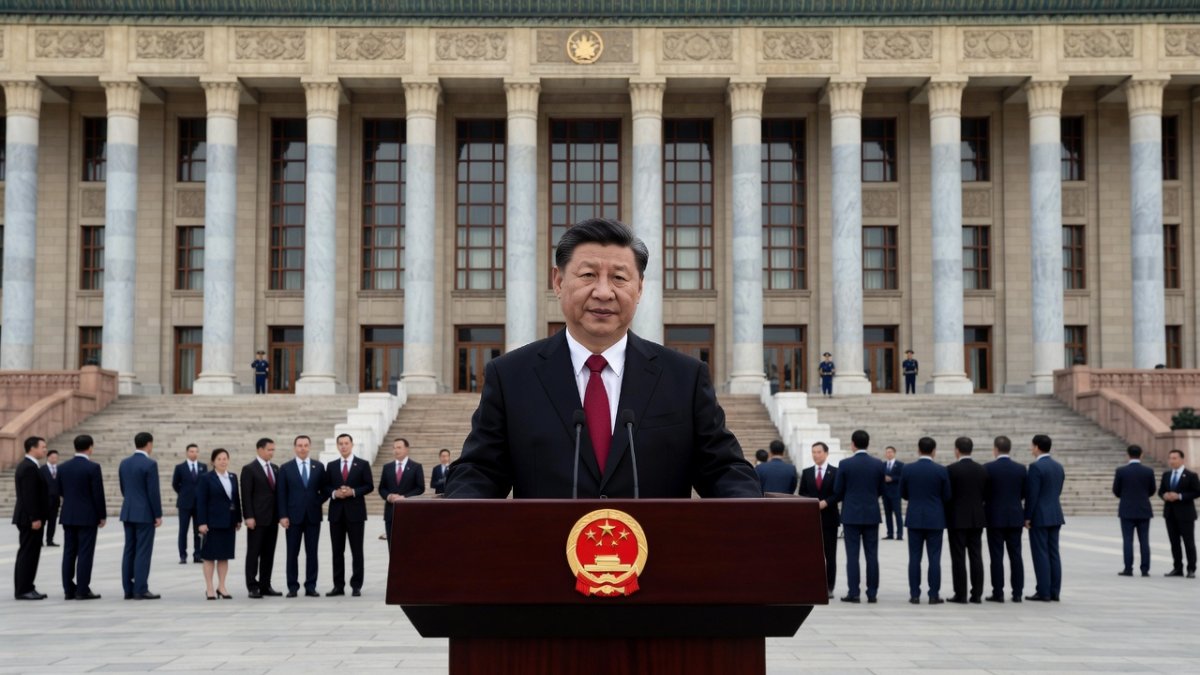
From County Governance to National Stewardship
The CGTN documentary frames Xi Jinping's early assignments as foundational to the party's cadre development model. His service in Zhengding county during the 1980s exposed him to rural reform experiments and local enterprise management at a time when central directives were shifting toward greater market flexibility. Subsequent postings in Fujian, including roles in Xiamen, Ningde, and Fuzhou, placed him at the intersection of coastal opening policies and inland development challenges, where coordination between local governments and foreign investment required careful navigation of both economic targets and social stability requirements.
These provincial experiences illustrate the CCP's emphasis on sequential advancement through increasingly complex administrative layers. In Zhejiang, Xi oversaw industrial upgrading and private sector integration, while his brief tenure in Shanghai involved managing a major financial center amid national stimulus measures. The documentary links these stages to the institutional mechanisms that reward demonstrated capacity in economic coordination and crisis response. Promotion decisions at each level involve evaluation by multiple party organs, ensuring alignment with central priorities before elevation to the national stage.
Analysts note that this trajectory reflects a deliberate cultivation of leaders who combine grassroots legitimacy with strategic oversight. The transition from county-level experimentation to provincial governance allowed for iterative policy testing that later informed national frameworks. Such preparation underscores the party's preference for officials who have managed both growth targets and regulatory enforcement across diverse regional contexts.
Xi Jinping Thought and the Evolution of Party Doctrine
At the 19th National Congress in 2017, Xi Jinping Thought on Socialism with Chinese Characteristics for a New Era was incorporated into the party constitution, marking the first addition of a leader's theoretical contribution since Deng Xiaoping. The documentary connects this doctrinal step to Xi's accumulated administrative record, presenting it as an extension of prior frameworks rather than a rupture. The 2018 amendment to the state constitution further embedded these principles in legal structures guiding state institutions.
Successive iterations of party theory have adapted to changing conditions while preserving core commitments. Mao Zedong Thought addressed revolutionary consolidation, Deng Xiaoping Theory introduced market reforms, the Three Represents expanded the party's social base, and the Scientific Outlook on Development stressed sustainable growth. Xi Jinping Thought synthesizes these elements with emphasis on national rejuvenation, institutional discipline, and integrated development strategies. The documentary highlights how each provincial posting contributed practical insights that shaped this synthesis.
Party theorists describe the incorporation process as iterative refinement rather than replacement. Central documents issued after 2017 direct ministries including the NDRC and MOFCOM to align planning with the new guiding principles. This evolution maintains continuity with earlier doctrines while addressing contemporary challenges such as technological self-reliance and governance modernization.
Domestic Policy Architecture: Dual Circulation, Common Prosperity, and Party Discipline
The 14th Five-Year Plan, adopted in 2021, operationalizes dual circulation by prioritizing domestic demand expansion alongside continued export competitiveness. The strategy directs resources toward high-value manufacturing and consumption upgrading, with NDRC coordinating targets across provinces. The documentary traces this approach to earlier provincial experiments in balancing external linkages with internal market deepening.
Common prosperity initiatives target regional disparities through fiscal transfers and industrial relocation programs. Measures include support for less-developed areas in western provinces and regulatory adjustments in coastal zones to moderate income gaps. Implementation involves multiple agencies, with local governments reporting progress against centrally set benchmarks. These efforts build on observations from Xi's Fujian and Zhejiang tenures regarding uneven development patterns.
The anti-corruption campaign launched after 2012 has restructured disciplinary mechanisms within the party. Central inspection teams have extended oversight to state-owned enterprises and local administrations, producing sustained institutional changes. The documentary presents these measures as reinforcing the merit-based promotion system observed in Xi's own career path, ensuring accountability aligns with long-term governance objectives.
Belt and Road, Global Security, and Multilateral Engagement
The Belt and Road Initiative, launched in 2013, has evolved through successive forums that refine project selection and financing standards. MOFCOM and MFA coordinate implementation across partner countries, with emphasis on infrastructure connectivity and trade facilitation. The documentary situates this framework within Xi's earlier exposure to coastal development zones that required similar cross-border coordination.
China's Global Development Initiative and Global Security Initiative, advanced through multilateral channels, extend engagement with Global South partners. Participation in BRICS and the Shanghai Cooperation Organization provides platforms for policy coordination on development finance and regional stability. These mechanisms allow Beijing to advance alternative governance norms while responding to shifting international conditions.
Second-order effects include expanded supply chain linkages and diversified diplomatic partnerships. Officials such as Wang Yi have articulated these initiatives as contributions to a more balanced global order. The approach reflects lessons from provincial-level management of external economic relations, scaled to national strategy.
Strategic Implications for the Multipolar Order
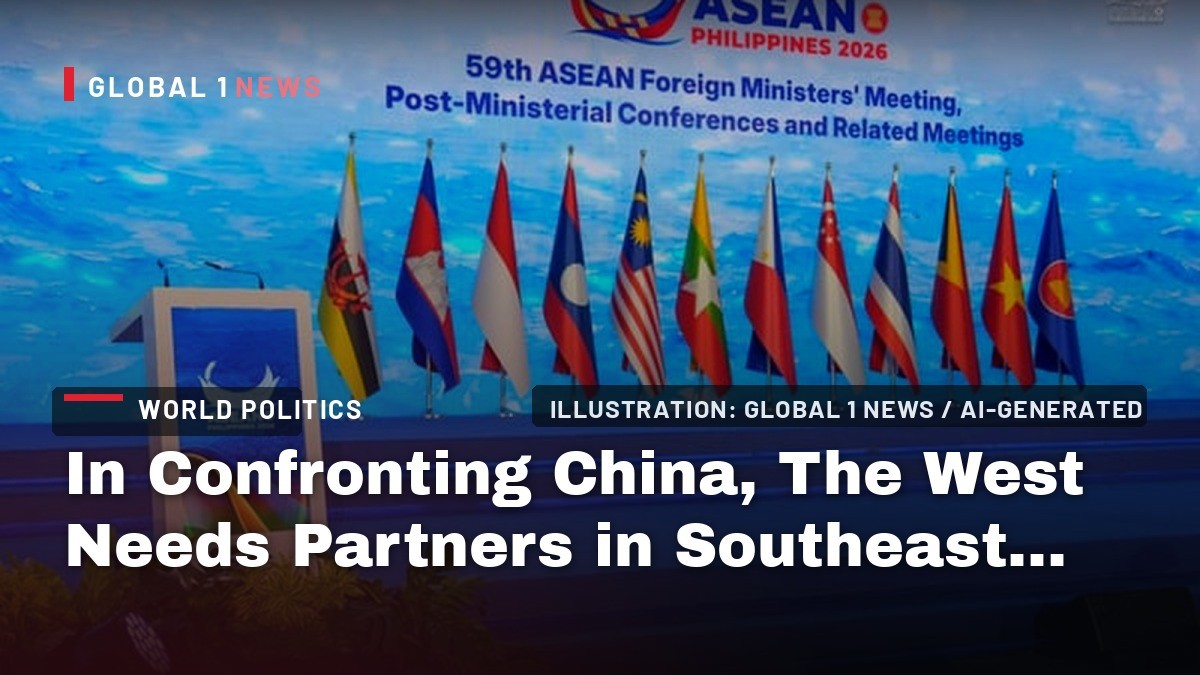
US-China competition has prompted technology controls and investment screening that accelerate supply chain realignment. ASEAN members pursue hedging strategies that maintain economic ties with Beijing while deepening security arrangements with other partners. The documentary's portrayal of Xi's strategic outlook suggests continuity in China's preference for managed competition rather than outright confrontation.
EU regulatory responses, including due diligence requirements on critical minerals, intersect with China's export controls on rare earths and advanced materials. These measures produce reciprocal adjustments in corporate sourcing decisions. NDRC guidance encourages domestic firms to diversify markets and invest in alternative production locations.
Technology decoupling proceeds unevenly across sectors, with semiconductors facing sharper restrictions than consumer goods. The resulting fragmentation encourages parallel standards development in digital infrastructure and green technology. Beijing's response emphasizes self-reliance targets within the dual circulation framework, calibrated to minimize disruption to existing trade volumes.
What to Watch For
Preparations for the next party congress cycle in 2027 will involve leadership evaluations and policy reviews conducted through established institutional channels. Economic indicators such as consumption growth rates and manufacturing investment levels will signal the effectiveness of dual circulation adjustments. Diplomatic engagements scheduled for 2026, including BRICS and SCO summits, are expected to test coordination on development financing and security dialogues.
Monitoring of anti-corruption enforcement patterns and cadre rotation decisions will reveal ongoing refinements to the promotion system. Trade data from MOFCOM and investment approvals processed by NDRC will indicate progress on common prosperity benchmarks. These metrics provide observable benchmarks for assessing continuity in the strategic vision outlined in the documentary.
Global South partnerships will continue through existing multilateral mechanisms, with attention to project implementation timelines and financing terms. Adjustments in response to external regulatory changes, particularly in technology and supply chains, will shape the pace of domestic upgrading efforts. Observers will track statements from MFA officials for indications of evolving multilateral priorities.
By Prof. Marcus Chen, Staff WriterThis article was produced with AI-assisted research and editorial support. Reporting is based on sources cited in the article.
What's Your Reaction?
 Like
0
Like
0
 Dislike
0
Dislike
0
 Love
0
Love
0
 Funny
0
Funny
0
 Wow
0
Wow
0
 Sad
0
Sad
0
 Angry
0
Angry
0
World Politics Analyst at Global1.News. Based in Beijing, covering US-China relations, global trade, and geopolitical strategy. Brings deep analytical perspective to the power dynamics shaping international affairs.










Comments (0)