
Thailand Mourns Princess Bajrakitiyabha: UNODC, Cambodia King, and Local Supporters Pay Tribute
The news of the passing of Her Royal Highness Princess Bajrakitiyabha Narendiradebyavati has brought a wave of sorrow across Thailand and the wider region this week. As the eldest daughter of His Majesty King Maha Vajiralongkorn, the Princess left behind a record of dedicated public service that touched many lives in the criminal justice system. Tributes have arrived from inter
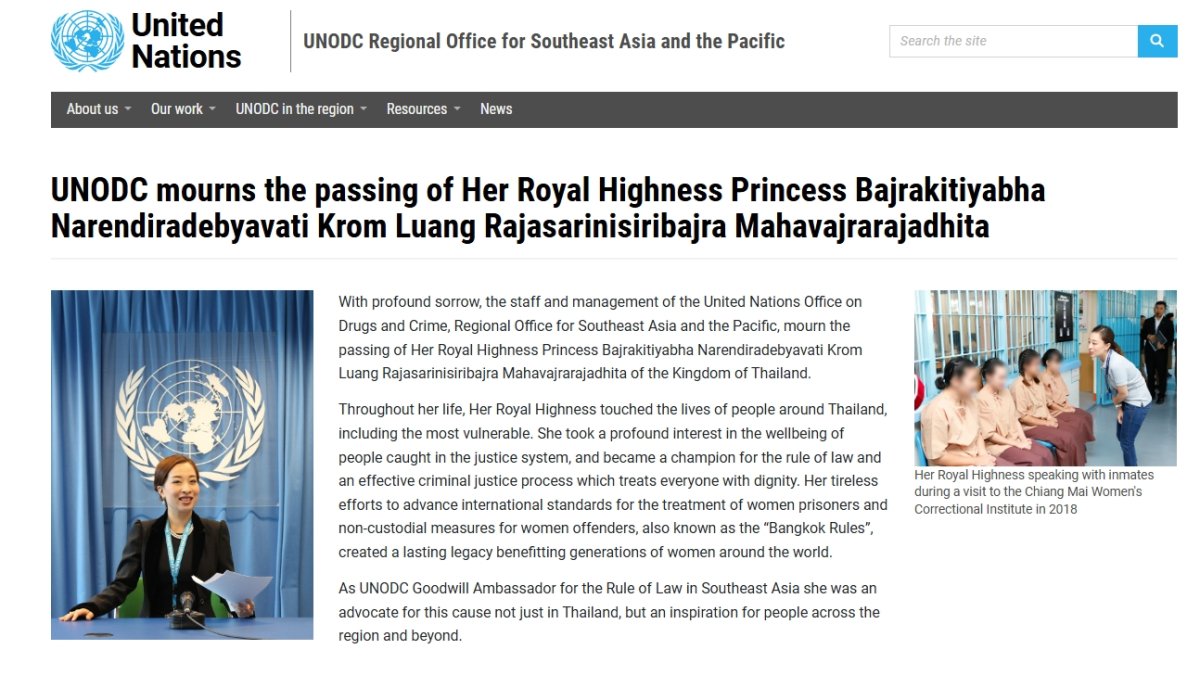
The news of the passing of Her Royal Highness Princess Bajrakitiyabha Narendiradebyavati has brought a wave of sorrow across Thailand and the wider region this week. As the eldest daughter of His Majesty King Maha Vajiralongkorn, the Princess left behind a record of dedicated public service that touched many lives in the criminal justice system. Tributes have arrived from international organizations and neighboring royal houses, reflecting the depth of her influence.
UNODC Expresses Profound Sorrow Over the Loss
The United Nations Office on Drugs and Crime Regional Office for Southeast Asia and the Pacific issued a statement this week mourning the death of Her Royal Highness Princess Bajrakitiyabha Narendiradebyavati on 11 June at the age of 47. Staff and management described their deep sadness at the loss of a figure whose efforts reached countless individuals involved in Thailand's criminal justice processes. The agency emphasized that her commitment to justice and the rule of law stood out as a guiding example for many.
UNODC highlighted how the Princess maintained a consistent focus on the welfare of people caught within the justice system. Her work extended beyond Thailand's borders, offering support to vulnerable populations across Southeast Asia. Colleagues at the Bangkok-based office recalled her steady advocacy for fair treatment and protection of those most in need.
The statement noted that her contributions would continue to shape approaches to justice long after her passing. UNODC staff expressed collective grief while recognizing the lasting value of her initiatives in the region. This response from the international body underscores the Princess's role in advancing shared standards for legal fairness.
Championing Fair Treatment Within Thailand's Justice System
Throughout her public work, Princess Bajrakitiyabha took particular interest in ensuring equitable processes for individuals navigating Thailand's courts and correctional facilities. UNODC observed that she became a steady voice for the rule of law and equal consideration for all participants. Her presence in these discussions helped draw attention to the experiences of those often overlooked in legal proceedings.
Local communities in Bangkok and beyond have reflected on how her efforts aligned with longstanding Thai values of compassion and order. The Princess's involvement encouraged greater awareness of the challenges faced by people in detention or under legal supervision. This focus created pathways for improved conditions within the system.
Observers in Thailand note that her dedication helped bridge gaps between policy and practice in criminal justice matters. By engaging directly with these issues, she supported reforms that aimed to protect dignity at every stage of legal involvement. Such actions resonated with many who work in or study the country's justice institutions.
Advancing the Bangkok Rules as a Global Standard
One of the Princess's most recognized achievements involved promoting international standards for the treatment of women prisoners and non-custodial measures for women offenders. Known as the Bangkok Rules, these guidelines emerged from her sustained advocacy and now serve as a reference point for justice systems worldwide. UNODC described this body of work as a lasting legacy that continues to benefit generations of women.
The rules address specific needs of female offenders, including health care, family responsibilities, and alternatives to imprisonment. Implementation efforts have spread from Thailand to other countries in Southeast Asia and further afield. Her leadership in this area demonstrated how targeted attention to gender considerations can strengthen overall legal frameworks.
Thai justice officials and regional partners have cited the Bangkok Rules in ongoing training and policy reviews. The standards provide practical guidance that helps reduce unnecessary hardship for women in contact with the law. This contribution stands as a concrete example of her influence on both national and international levels.
Service as UNODC Goodwill Ambassador for the Rule of Law
Princess Bajrakitiyabha served as UNODC Goodwill Ambassador for the Rule of Law in Southeast Asia, extending her advocacy across multiple nations. In this capacity, she supported initiatives that promoted legal fairness and institutional integrity throughout the region. The agency noted that her example inspired people both inside Thailand and in neighboring countries.
Her ambassadorial role allowed her to connect Thai experiences with broader ASEAN discussions on justice and governance. Colleagues at the Regional Office for Southeast Asia and the Pacific praised her ability to communicate complex legal principles in accessible ways. This work strengthened ties between Thailand and international partners focused on crime prevention and legal reform.
The position highlighted her commitment to extending the benefits of strong legal systems to vulnerable groups across borders. UNODC staff recalled numerous occasions when her involvement helped advance cooperative projects among member states. Such efforts reinforced Thailand's standing in regional dialogues on the rule of law.
Cambodia's King Norodom Sihamoni Sends Message of Condolence
On 12 June, Cambodia's King Norodom Sihamoni transmitted a royal message of condolence to His Majesty King Maha Vajiralongkorn following the passing of Princess Bajrakitiyabha. The letter expressed profound sorrow upon learning of the news and conveyed sincere sympathies to the Thai Royal Family during this period of grief. Queen Mother Norodom Monineath Sihanouk joined in offering these condolences.
King Sihamoni wrote that his thoughts and prayers remained with the Thai monarch and all members of the Royal Family throughout the mourning period. The message also recognized the Princess's record of public service as a source of continued inspiration. This gesture from the Cambodian court reflects longstanding ties between the two neighboring kingdoms.
The exchange of royal condolences illustrates the diplomatic connections that often accompany personal losses at the highest levels. Thai officials have acknowledged the warmth of the message from Phnom Penh. Such tributes help sustain the spirit of regional cooperation even in times of sadness.
Personal Reflections from Long-Time Supporters in Bangkok
On Friday, a long-time supporter named Donlathon, aged 57, arrived at Chulalongkorn Hospital visibly distressed and in tears. She spoke of her difficulty accepting the loss of the Princess, whom she had followed for many years. Donlathon recalled a personal moment when Princess Bajrakitiyabha told her, "We will encourage one another," words that continued to resonate with her.
Standing outside the hospital in Bangkok, Donlathon expressed a deep sense of attachment shared by many Thai citizens. She stated that she would willingly give her life for Her Royal Highness if it were possible. The supporter noted that countless people across Thailand held similar feelings of affection for the Princess.
Donlathon described the loss as feeling as though part of her heart had disappeared. Her account captures the intimate connection many ordinary citizens felt toward the Princess's work and presence. Such individual stories have emerged alongside larger institutional tributes in recent days.
Implications for Thailand's Justice System and Regional Diplomacy
The Princess's passing has prompted reflection on how her initiatives may continue to guide Thailand's approach to criminal justice reform. UNODC's recognition of her efforts suggests that the Bangkok Rules and related programs will remain active reference points for policymakers. Thai authorities have long incorporated these standards into training and facility improvements.
Regionally, her role as Goodwill Ambassador helped position Thailand as a constructive participant in ASEAN discussions on legal cooperation. The condolences from Cambodia's King Norodom Sihamoni demonstrate how personal royal connections can support broader diplomatic relations. These elements together point to sustained interest in the areas she championed.
Communities in Thailand and neighboring countries have begun considering ways to honor her contributions through continued application of the principles she promoted. The combination of international agency statements and royal messages indicates the wide circle of influence she maintained. Observers expect these themes to feature in future commemorations.
Collective Mourning Across Thai Society and Southeast Asia
Responses to the Princess's death on 11 June have drawn together voices from UNODC, the Cambodian Royal Family, and individual citizens such as Donlathon at Chulalongkorn Hospital. Each tribute emphasizes different aspects of her dedication to justice and public service. Together they illustrate the breadth of her impact within Thailand and beyond its borders.
In Bangkok, gatherings near hospitals and public spaces have provided outlets for quiet remembrance. The themes of encouragement and mutual support that Donlathon recalled appear in many accounts of the Princess's interactions. These personal elements complement the formal statements issued by international organizations.
The period of national mourning in Thailand coincides with ongoing regional conversations about legal standards and prisoner welfare. The legacy of the Bangkok Rules offers one avenue through which her influence may persist in practical policy work. Tributes from across Southeast Asia suggest that her example will continue to resonate in justice-related discussions for years ahead.
By Ann Srisawat, Staff WriterThis article was produced with AI-assisted research and editorial support. Reporting is based on sources cited in the article.
What's Your Reaction?
 Like
0
Like
0
 Dislike
0
Dislike
0
 Love
0
Love
0
 Funny
0
Funny
0
 Wow
0
Wow
0
 Sad
0
Sad
0
 Angry
0
Angry
0

Southeast Asia Correspondent at Global1.News. Based in Bangkok, covering Thai and Southeast Asian politics, economy, technology, and culture. Deep regional perspective on one of the world's most dynamic regions.















Comments (0)