
Werrason's Comeback: King of the Forest Returns to Europe
Congolese music legend Werrason has staged one of the most significant comebacks in African music history, drawing 7,000 fans to the Arena Grand Paris for a career-defining concert that marked his return to the European stage after 14 years. The Roi de la Forêt (King of the Forest) now looks ahead to his next major European date at Brussels' Forest National on July 4, 2026, cem
Congolese music legend Werrason has staged one of the most significant comebacks in African music history, drawing 7,000 fans to the Arena Grand Paris for a career-defining concert that marked his return to the European stage after 14 years. The Roi de la Forêt (King of the Forest) now looks ahead to his next major European date at Brussels' Forest National on July 4, 2026, cementing a remarkable second chapter for the icon of Congolese rumba and ndombolo.
Werrason's Second Half: The Roi de la Forêt Returns to Europe
Dakar, Senegal — When Werrason Ngiama Makanda stepped onto the stage of the Arena Grand Paris on February 15, 2025, he carried more than a flag of the Democratic Republic of Congo — he carried the hopes of a musical tradition that traces back to the 1940s birth of Congolese rumba in Léopoldville. The 7,000-seat venue was filled to capacity, and for nearly three hours, the King of the Forest delivered a performance that reminded Europe what it had been missing for 14 years.
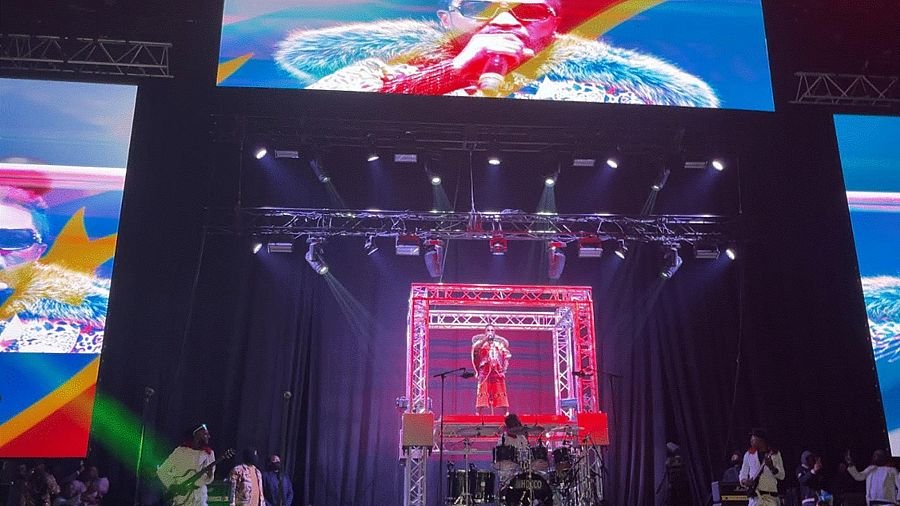
The Comeback Concert: A Night of Unity in Paris
The concert at Arena Grand Paris on February 15, 2025 filled 7,000 seats after a 14-year absence from Europe. Fans traveled from across the continent to witness the return of Werrason, whose real name is Noël Ngiama Makanda. The event sold out completely, proving sustained demand for Congolese live music in European venues.
Werrason entered carrying a Congolese flag and opened with a direct call for unity. He had been elected Peace Ambassador in 2001, and that role shaped the evening's message from the first notes. The performance framed music as a bridge across divisions that have long affected communities in Kinshasa and the diaspora.
He was joined onstage by host Bill Clinton, the Congolese television personality, and singer Héritier Watanabe, his former protégé. Watanabe's appearance created an emotional highlight as the two performed together for the first time in years. Their collaboration underscored the generational ties within Wenge Musica Maison Mère.
The nearly three-hour performance featured core members of Wenge Musica Maison Mère. The band delivered the intricate guitar lines and sharp choreography that defined their sound. Atalaku animation kept the energy high throughout the set.
The concert carried the title "La 2e Mi-Temps" (The Second Half). This framing positioned the show as the start of a new chapter rather than a simple revival. Organizers presented it as both a celebration and a forward-looking statement.
The Adidas Arena show was promoted by Massaï Productions as a historic spectacle. The company handled logistics that brought together thousands of fans under one roof for the first time in over a decade.
From Kikwit to Kinshasa: The Making of a Legend
Noël Ngiama Makanda was born in Kikwit, Kwilu province, DRC. He was raised in Kinshasa, where the city's vibrant streets shaped his early exposure to music. The move to the capital placed him at the center of evolving Congolese sounds in the late 1970s.
In 1981, he founded Wenge Musica with friends in Kinshasa. The group quickly became a phenomenon across Africa through consistent releases and live shows. Their rise coincided with a period when Kinshasa bands dominated regional airwaves.
The band's golden era featured intricate rumba guitars paired with sharp choreography. The "atalaku" animation style became a signature element that energized audiences. These elements helped Wenge Musica stand out from earlier rumba ensembles.
The famous split in 1997 led Werrason to found Wenge Musica Maison Mère. JB Mpiana pursued a separate path at the same time. The schism remains one of Congolese music's most discussed chapters, with lasting fan debates that continue today.
Maison Mère became a talent factory that trained future stars. Ferré Gola and Héritier Watanabe both emerged from its ranks. The structure of the band allowed younger musicians to develop under established leadership.
The loyalty of early fans carried forward into the new formation. This continuity helped Werrason maintain a distinct identity even after the division of the original group.
Musical Legacy: From Rumba to Ndombolo
Werrason bridged classic Congolese rumba, with its 1940s roots in Léopoldville and artists such as Wendo Kolosoy, to modern ndombolo. His arrangements kept melodic guitar foundations while adding faster rhythms suited to contemporary dance floors.
The album "Solola Bien" (1999) achieved gold status in France. This milestone marked a landmark for African music reaching commercial recognition in Europe. The record opened doors for subsequent Congolese releases on the continent.
In September 2000, he became the second African artist ever to perform at Bercy Accor Arena before 17,000 fans. The concert confirmed his drawing power at the largest indoor venues. It also signaled growing European interest in ndombolo sounds.
"Kibuisa Mpimpa" (2001) was hailed as culturally and musically revolutionary. The album won two Kora awards, including Best African Male Vocalist. Its success reinforced Werrason's position among the leading voices of his generation.
His music blends melodic rumba soul with urgent ndombolo dance energy. Lingala lyrics often address social themes that resonate with listeners in Kinshasa and abroad. This combination has kept his catalog relevant across decades.
Powerful vocal delivery remains a consistent signature. The balance between reflective passages and high-energy sections allows concerts to move fluidly between moods while maintaining audience engagement.

Werrason's Global Reach: From Paris to Brussels to Kinshasa
The upcoming Forest National concert in Brussels on July 4, 2026 is just weeks away. Tickets are already moving through official channels as fans prepare for another major European date. The show follows directly from the momentum of the Paris performance.
The event is expected to draw fans from Belgium, France, Netherlands, Luxembourg, the US, and the broader Congolese diaspora. Many will travel specifically to hear the full Wenge Musica Maison Mère sound in a live setting.
The sold-out Paris show reflected growing European demand for African live music. Promoters note increased bookings for Congolese artists across multiple cities in recent seasons. This trend supports longer tours rather than one-off appearances.
The fan base known as "Génération Berceau" remains exceptionally loyal and vocal. Members organize gatherings and share archival material that keeps older recordings in circulation. Their engagement extends beyond concerts into online communities.
Some fans are already discussing ambitions for a Stade de France or Paris La Défense Arena date in 2027. These conversations show confidence that the current resurgence can reach even larger scales.
Werrason also serves as International Red Cross ambassador and philanthropist. His offstage work includes support for health initiatives that connect directly with communities in the Democratic Republic of Congo.
The Congolese Music Ecosystem: Kinshasa's Global Sound
Werrason stands alongside Papa Wemba, Koffi Olomidé, JB Mpiana, and Ferré Gola as pillars of Congolese music. Each artist has contributed distinct chapters to the same evolving tradition rooted in Kinshasa.
DRC government officials have publicly encouraged support for these artists' European tours. Their statements highlight the economic and cultural value of successful international performances by Congolese musicians.
Congolese rumba has been recognized by UNESCO as intangible cultural heritage of humanity. This designation affirms the global significance of the genre that Werrason continues to evolve through ndombolo elements.
Kinshasa's music scene moves from street-level rehearsals to stadium performances. Artists follow a clear progression that begins in neighborhood bands and leads to international recognition when conditions align.
Ferré Gola publicly gave his full support ahead of the Paris show, calling for unity. His endorsement helped frame the concert as a collective moment rather than an individual milestone.
The diaspora's role in sustaining Congolese music globally remains essential. Communities in Europe and North America provide both audiences and financial backing that allow major productions to reach completion.
What's Next for the King of the Forest
On July 4, 2026, Werrason will perform at Forest National in Brussels. Tickets are available via Ticketmaster Belgium, with seating and standing options already listed for the date.
A possible Paris La Défense Arena date remains in discussion for 2027. Such a booking would represent another step in scaling the current European momentum to the largest available indoor venues.
Full three-hour concert footage from the Paris show is available on Werrason's YouTube channel. Viewers can watch the complete set, including guest appearances and extended dance sequences, at any time.
Werrason holds the ambition to mark 30 years of Maison Mère with a major stadium show. Planning conversations have already begun around the logistics required for such an event.
Werrason's resilience embodies Congolese musical pride through a style that is flamboyant, rooted, and enduring. His career demonstrates how artists can maintain relevance while adapting to new audiences and technologies.
His story offers a clear example for African artists seeking global recognition. It shows that consistent artistic identity combined with strategic live performances can reopen doors that once seemed closed for extended periods.
Werrason's journey from the streets of Kinshasa to the grand stages of Europe represents more than one man's comeback. It is a testament to the enduring power of Congolese rumba and the global appetite for Africa's musical heritage. As the King of the Forest prepares to reign once more in Brussels, his message of unity through music resonates across the diaspora and back home — a reminder that the second half can be as powerful as the first.
By Amara Diop, Staff Writer
This article was produced with AI-assisted research and editorial support. Reporting is based on sources cited in the article.
What's Your Reaction?
 Like
0
Like
0
 Dislike
0
Dislike
0
 Love
0
Love
0
 Funny
0
Funny
0
 Wow
0
Wow
0
 Sad
0
Sad
0
 Angry
0
Angry
0
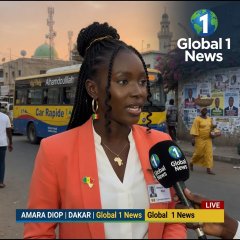
West Africa/Sahel Correspondent at Global1.News. Dakar-based journalist covering politics, security, climate, and development across Francophone and Anglophone West Africa. Tells the stories of a region undergoing profound transformation.











Comments (0)