
DR Congo's Leopards Arrive in Style: Alvin Junior Mak's World Cup Suits Celebrate Congolese Heritage
The Arrival in Houston: A Statement of Pride When DR Congo's national football team, known affectionately as Les Léopards, stepped off their plane in Houston for the 2026 FIFA World Cup, they did more than arrive for a tournament. They carried with them a powerful visual declaration of identity. The players wore custom black suits designed by Congo-born, Paris-based Alvin Junio
The Arrival in Houston: A Statement of Pride
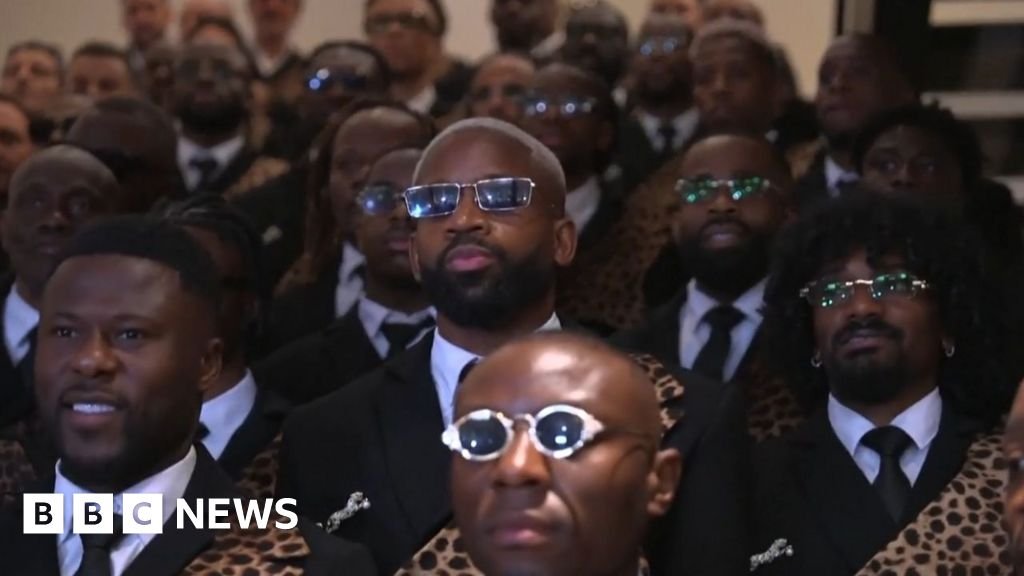
When DR Congo's national football team, known affectionately as Les Léopards, stepped off their plane in Houston for the 2026 FIFA World Cup, they did more than arrive for a tournament. They carried with them a powerful visual declaration of identity. The players wore custom black suits designed by Congo-born, Paris-based Alvin Junior Mak of JMAKxPARIS. Each suit featured asymmetric leopard-print panels that caught the light like the animals themselves moving through the savanna. Gold leopard lapel pins gleamed on every jacket, and the men carried matching star-shaped bags that seemed to hold not just belongings but the weight of national dreams.
Les Léopards of DR Congo arrive in Houston wearing JMAKxPARIS custom suits. (BBC Africa)
As a Senegalese journalist who has watched African teams use every platform to speak, I felt the warmth of recognition. These suits were not mere clothing. They told a story that stretches from Kinshasa's bustling streets to the global stage, reminding us that football and fashion have long walked together in our continent's narrative of resilience and elegance.
Alvin Junior Mak: From Kinshasa to Paris
Alvin Junior Mak, now 30, left Congo for Paris at the age of 11. That early move shaped both his craft and his purpose. From his JMAKxPARIS label he produced 55 suits with a core team of just three people, ensuring every detail carried intention. The result is a collection that feels both modern and rooted, a bridge between the designer's childhood memories and his adopted city's ateliers.
Mak has spoken plainly about his motivation. "My desire was to change the image and perception of my country through my art, to showcase and promote Congolese culture," he said. Those words echo across Francophone Africa, where young creators often turn personal journeys into collective statements. In Senegal we see the same impulse when tailors in Dakar transform grand boubou fabrics into contemporary silhouettes that still honor ancestral lines of embroidery and drape.
Honoring the Léopards of 1974
The design pays direct homage to the legendary Léopards of 1974, the year Zaire became the first sub-Saharan African nation to qualify for the World Cup. That team carried the hopes of an entire continent into West Germany, playing with a spirit that outlasted the final scoreline. Mak's asymmetric leopard panels and leaping-leopard lapel pins reference that pioneering squad without nostalgia alone. They insist that history remains alive in the present.
DR Congo's return to the tournament after more than five decades marks only its second appearance. The current squad qualified by defeating Jamaica 1-0 in a playoff, then joined nine other African nations in what stands as a historic high for the continent. Ten teams from Africa at one World Cup is a milestone that feels both overdue and deeply satisfying to those of us who remember earlier eras of limited representation.

Detail of the asymmetric leopard-print panel and gold lapel pin. (Vogue)
The Spirit of Sape Culture Woven into Every Thread
Central to the suits is a celebration of Congolese Sape culture, the Société des Ambianceurs et des Personnes Élégantes. This movement of elegant dressing originated in Brazzaville and Kinshasa and has influenced generations across Francophone Africa. Sapeurs treat clothing as both armor and poetry, selecting fabrics and cuts with the same care a griot chooses words. The black suits with their bold leopard accents translate that philosophy into sportswear language.
In Senegal we recognize immediate parallels. Our own tradition of grand dressing, whether in flowing boubous or sharply tailored three-piece suits for ceremonies, shares the same conviction that appearance carries dignity and social commentary. Sape culture traveled through migration and music, shaping style in cities from Abidjan to Yaoundé. Mak's work shows how that heritage can travel further still, arriving in Houston with the same quiet confidence that once filled the terraces of Kinshasa.
Star Bags and Leopard Pins: Symbols of Ambition
Every detail carries meaning. The star-shaped bags represent what Mak described as "Congo's ambitions for greatness." The gold lapel pin depicts a leaping leopard, the national animal and team symbol, rendered in metal that catches stadium lights. These elements transform functional accessories into emblems of aspiration, visible each time a player steps forward for photographs or interviews.
The team made immediate history on the pitch as well. Yoane Wissa scored DR Congo's first-ever World Cup goal in a 1-1 draw against Portugal. That moment, paired with the visual arrival, created a layered narrative of achievement that fans across Africa are still discussing. The suits did not merely accompany the goal; they framed it as part of a longer continuum of cultural self-assertion.
DR Congo's Historic Return and the Road Ahead
DR Congo faces Colombia next in the group stage. The path has not been without complication. Attendance at matches has been affected by the ongoing Ebola outbreak and the quarantine measures required to protect public health. Yet the team's presence remains a source of pride that transcends logistics, reminding supporters at home and abroad that Congolese excellence continues to find expression even amid challenges.
The qualification story itself carries weight. After the playoff victory over Jamaica, the players understood they were writing a new chapter that began with the 1974 pioneers. Mak's suits ensured that chapter opened with visual clarity, linking past and present in fabric and cut.
African Fashion as Cultural Diplomacy at the Global Stage
DR Congo's arrival fits into a wider pattern of African teams using fashion to claim space at major tournaments. Nigeria's 2018 World Cup kit remains a reference point for its bold patterns and unapologetic color. Ghana has long paired pre-match style with statements of identity. These choices are never accidental. They respond to a world that often reduces African nations to headlines of crisis rather than celebrations of creativity.
Ten African nations at the 2026 tournament amplifies every such gesture. When Mak speaks of changing perceptions through art, he joins a chorus of designers and athletes who treat clothing as diplomacy. In Senegal, where tailors still cut boubous with the same pride their grandfathers did, we watch these developments with particular interest. The threads that connect Kinshasa, Dakar, and Paris are stronger than distance suggests. They form a living map of how African elegance travels and adapts while remaining unmistakably itself.
Les Léopards have stepped onto the field carrying more than football kits. They carry a reminder that culture and sport together can reshape how the world sees a nation. Alvin Junior Mak's suits stand as one clear expression of that truth, stitched with history, ambition, and the enduring elegance of Sape.
By Amara Diop, Staff WriterThis article was produced with AI-assisted research and editorial support. Reporting is based on sources cited in the article.
What's Your Reaction?
 Like
0
Like
0
 Dislike
0
Dislike
0
 Love
0
Love
0
 Funny
0
Funny
0
 Wow
0
Wow
0
 Sad
0
Sad
0
 Angry
0
Angry
0

West Africa/Sahel Correspondent at Global1.News. Dakar-based journalist covering politics, security, climate, and development across Francophone and Anglophone West Africa. Tells the stories of a region undergoing profound transformation.










Comments (0)