
We Cannot Leave: Displaced Yemeni Women Speak Out Against Harassment in Rural Camps
Displacement Upends Life for Taiz Families Afnan al-Soroori, 22, used to live a comfortable middle-class existence with her family in Taiz, Yemen’s third-largest city. Like others of her kind, she wore clothes common to more liberal and fashionable Yemeni women, would go outside more or less when she wanted, and hung out with other female students also doing their undergraduate degrees at Taiz University, one of the country’s best.
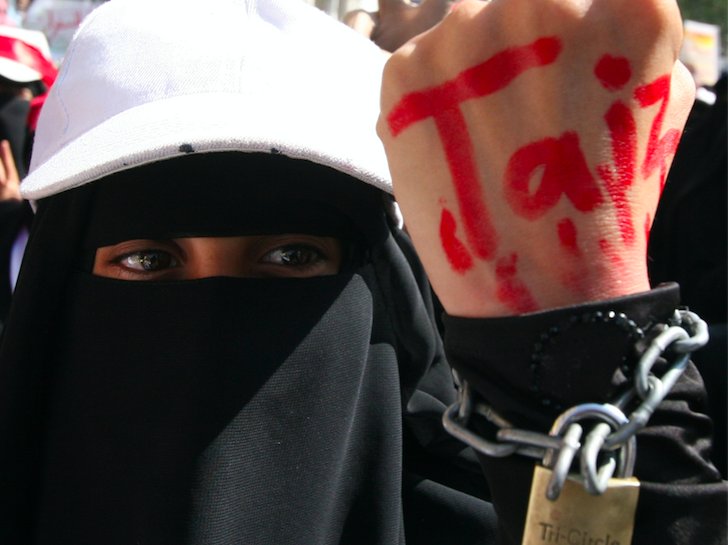
Displacement Upends Life for Taiz Families
Afnan al-Soroori, 22, used to live a comfortable middle-class existence with her family in Taiz, Yemen’s third-largest city. Like others of her kind, she wore clothes common to more liberal and fashionable Yemeni women, would go outside more or less when she wanted, and hung out with other female students also doing their undergraduate degrees at Taiz University, one of the country’s best. As the eldest of five siblings, Soroori helped out around the house, but with an electric oven, washing machine and household appliances aplenty, this was never a burden. The family enjoyed a stable routine where daily tasks were eased by modern conveniences, allowing Afnan time to focus on her education and social connections in the urban environment of Taiz, where women could navigate public spaces with relative freedom compared to more restrictive rural settings.
But a year ago, as Houthi rebels inched closer and closer to her home, that all changed. Her family fled the city and took shelter in a makeshift camp in a school in the al-Safia area, 65 kilometres away. The life they found there could not be more different. The family was forced to leave all their possessions behind and Soroori’s father has not been able to work. These days, just doing simple chores is a grinding ritual that lasts from dawn until after dusk. The sudden uprooting caused by the advancing conflict transformed their existence overnight, stripping away the security of city life and plunging them into conditions where basic survival demands constant physical effort without any of the tools they once relied upon.
The broader context of Yemen's civil war has forced countless families like the Sorooris into such abrupt displacements, with the humanitarian toll falling especially heavily on women who must navigate new environments stripped of familiar support systems. In Taiz, Afnan balanced her studies with household responsibilities that were manageable, yet the flight to al-Safia exposed how the war's reach disrupts not only physical locations but also the social fabrics that once protected personal independence. The makeshift camp in the school building now houses multiple displaced urban families, each confronting the reality that their previous middle-class stability has evaporated amid the ongoing conflict.
Loss of Freedom: Women Trapped at Camp Gates
Instead of a stove, Soroori tries to cook meals in a makeshift oven she fashioned from two stones placed next to firewood. She washes the family’s clothes by hand in a large bowl in the school’s courtyard and says her hands have grown hard from the work. What she hates most is her total lack of independence. "I’m finding it hard to adapt to domestic work without electric appliances, but the worst thing is that I cannot leave the camp,” Soroori said. The confinement extends far beyond mere physical boundaries, creating a psychological prison where the once-vibrant student feels isolated from any semblance of her former routine.
"If I try to leave, I will find several youths waiting to harass me." As soon as she tries to step outside the gates, young men crowd around and either shout abuse or make inappropriate sexual advances, she said. "If you leave the camp, especially in the afternoon, you will hear bad words and see obscene gestures,” Soroori said. “Once this happens, it forces you to stay in the camp and not leave again." This pattern of harassment has effectively sealed the women inside the camp grounds, turning what should be a temporary shelter into a site of enforced seclusion that amplifies the trauma of displacement.
The gendered impact of such restrictions compounds the suffering already inflicted by the war, as women like Afnan, who previously enjoyed the freedoms of Taiz University life, now find every attempt at movement met with hostility. The youths' behavior creates an atmosphere where even brief excursions for fresh air become impossible, leaving the displaced women to endure their days within the school compound without respite. Afnan has internalized this reality to the point of complete withdrawal, recognizing that stepping beyond the gates invites not just verbal assaults but a deeper erosion of her autonomy.
Clothing, Recognition, and the Shifting Blame
She said the clothes she wore so naturally in the city make her a target here. Many middle-class women in the city wear an abaya, a long Muslim dress that covers the whole body, but leaves the face exposed. Traditionally, the abaya has been jet-black and very loose, but in the cities it has become more fitted and has increasingly been worn with different colours and designs. In the countryside, however, women still wear the more conservative abaya or other forms of dress that cover the entire face. The visual and behavioral differences between urban and rural women have become flashpoints, with city attire singled out as provocation despite its prevalence in Taiz.
Even some of the women who either brought more traditional abayas with them or have been able to get some in the countryside have been unable to avoid the harassment. Mariam Abdul-Qader, a 23-year-old who lives in the same camp, has resorted to wearing the same clothes as the rural women, but said local youths still recognise her by her sandals and shout abuse regardless. "I tried to wear the same dress as the women in the al-Safia area, but the awful young men seem to recognise us just from the way we walk and even from the sandals we wear as I do not have the plastic shoes worn by the women here," Abdul-Qader said. Attempts at adaptation fail because subtle markers like footwear or gait betray their origins.
She added that oftentimes women from the camp, who have grown close over the last year, go out in large groups to try and avoid problems, but not even this has stopped the name-calling and aggressive harassment. "I hate this atrocious war that drove us away from our houses and forced us to accept life among these savage people who don't appreciate our suffering,” Abdul-Qader said. The collective efforts of the women underscore their solidarity forged in displacement, yet the persistent recognition and targeting reveal how deeply the rural-urban divide has been weaponized against them amid the wider crisis.
Failed Appeals: Tribal Elders and Mosque Authorities
Soroori’s father, like other men with female relatives in the camp, has appealed to local tribal elders to tell the young men in the community to treat women from the city with respect, but their calls have gone unheeded. Instead of chastising their sons, most men have opted to lash out at the women, saying that they dress and behave inappropriately. "We went to the mosques in the village and told the religious people about this problem, but all of them were against the women and criticised their fashionable clothes and loud voices," he told MEE. Since that day, he has had no choice but to tell his wife and three daughters to stay in the camp until they are able to return to Taiz City.
Soroori said that the city families largely reject this approach and think that local villagers have a skewed interpretation of Islam and Yemeni culture, but that there is little they can do to remedy the situation. "This is not our area, so we have no choice but to be confined by the cultural norms of the rural areas,” Soroori said. “No one can help us here, so I have decided to stay in the camp at all times.” The appeals to authorities in mosques and among elders exposed a complete lack of protection for the displaced, leaving families powerless against entrenched local attitudes.
A local sheikh, Mohammed Gobah, told MEE that sexual harassment had regrettably become a major problem in area, but he blamed the “immodesty” of the city women. "I had never heard of sexual harassment in this area and have only started to hear about it in the last year since the displaced people came here,” Gobah told MEE. “This means that the displaced women are the reason and not our sons.” He said that local women were respectful, wore conservative clothing and rarely left the house. When they did, they knew to be quiet and not disturb the male residents. "I myself observed the displaced women, saw their immodest clothes, which cling close to their bodies, and saw them in the valley listening to music and laughing loudly,” he said. “It is this kind of behaviour that has attracted the young men to the area." Gobah said the new arrivals had caused such an upheaval that he might have to see them removed from the school if they did not rein in the immodest behaviour of their women.
Survival Under Confinement
The situation has now deteriorated into a standoff from which neither side seems ready to back down because of the deep cultural and social rifts that separate Yemen's cities from its many villages. Daily existence in the camp revolves around endless manual tasks performed without any modern aid, from dawn preparations using improvised stone ovens to hand-washing clothes in courtyard bowls that leave skin calloused and raw. Women like Afnan al-Soroori and Mariam Abdul-Qader must sustain entire households through these rituals, their former access to electric appliances now replaced by physical labor that consumes every hour.
"I know there is a beautiful bit of green land outside, but I cannot go out to enjoy it,” Afnan added, highlighting how even the natural surroundings remain inaccessible due to the harassment at the gates. The confinement forces all activities into the limited space of the school compound, where multiple families share resources and the grind of survival leaves little room for rest or reflection beyond prayers for release.
Fadhl al-Thobhani, a sociology professor at Taiz University, noted the structural nature of these tensions, observing that "There is a social gap between the rural and urban areas and the disputes between the displaced and residents is a normal consequence of this gap,” and that "Because of this gap, the displaced women have to imitate the women of the rural areas to avoid any harassment." Yet even imitation proves insufficient, as the women remain trapped in a cycle of labor and isolation that defines their new reality under the shadow of the war.
The Gendered Toll of Yemen's War
For city women trapped in rural life, that day seems an eternity away. "I never thought I was destined to live a terrible life like this, which has brought me to this prison,” Soroori said. “I stopped my studies in Taiz University and fled to this camp, but people here don't appreciate our suffering and impose restrictions on our way of life. “I always pray to Allah to free me from this prison." The war's displacement has layered additional burdens onto women, who must not only endure the loss of homes and education but also confront harassment that reinforces their confinement in alien cultural landscapes.
The humanitarian crisis in Yemen amplifies these experiences, as families from Taiz and similar urban centers find themselves negotiating survival in rural camps where traditional norms clash violently with their previous freedoms. Women bear the brunt through restricted movement, intensified domestic demands, and the absence of recourse when appeals to local leaders fail, turning displacement into a gendered ordeal that stretches indefinitely.
Professor Fadhl al-Thobhani sees no quick resolution to the crisis and feels the issue would only be solved once the war ended and people were allowed to return to their homes. Until then, women like Afnan al-Soroori and Mariam Abdul-Qader remain locked in this prison of conflict-induced exile, their voices documenting the profound personal costs of a war that continues to fracture lives across Yemen's divided terrain.
By Fatima Al-Rashid, Staff WriterThis article was produced with AI-assisted research and editorial support. Reporting is based on sources cited in the article.
What's Your Reaction?
 Like
0
Like
0
 Dislike
0
Dislike
0
 Love
0
Love
0
 Funny
0
Funny
0
 Wow
0
Wow
0
 Sad
0
Sad
0
 Angry
0
Angry
0

Gulf/MENA Correspondent at Global1.News. Based in Doha, covering Gulf politics, energy markets, diplomacy, and development across the Middle East and North Africa. Tracks the economic transformation of the Gulf states.













Comments (0)