
AI agents are finally useful and here's proof
From Klarna handling two-thirds of customer service to Shopify building features with AI, agents have finally stopped being a punchline and started doing real work. Jessica Ali breaks down the three shifts that made AI agents actually useful and why they are finally delivering on their promise.
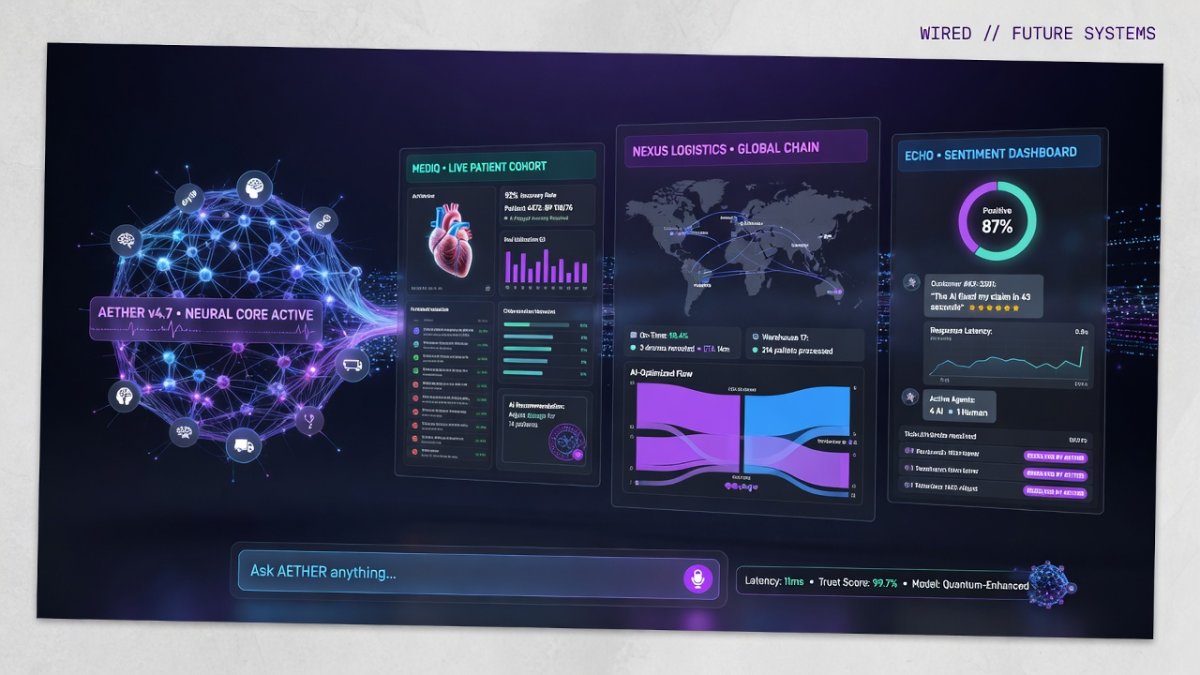
AI agents are finally useful and here’s proof
Remember when AI was just a fancy autocomplete?
Folks, let me take you back to late 2022. The world lost its collective mind over a chatbot that could write a halfway decent limerick. CEOs rushed to declare “AI-first” strategies. Every startup slapped “powered by AI” on their pitch deck. And honestly? Most of it was smoke. You couldn’t trust it to book a flight, it hallucinated your grandmother’s name, and the most useful thing it did was write passive-aggressive emails to your landlord.
But something shifted. Not with a bang or a press release, but quietly, in the trenches of actual software engineering and customer service. AI agents stopped being demoware and started doing real work. The kind that saves money, fixes bugs, and actually delivers on the decade-old promise of a digital assistant that doesn’t make you want to throw your phone into traffic.
I’ve been watching this space like a hawk, and let me tell you: the proof is everywhere now. It’s not in a hype video from a Silicon Valley keynote. It’s in the bottom line of companies you already use every single day.
Shopify’s Sidekick showed us what “helpful” actually looks like
Okay friends, let’s talk about the moment I first sat up and paid attention. Shopify rolled out something called Sidekick to its merchants. Not a chatbot floating in the corner asking if you need help with returns. No. This thing lives inside a merchant’s actual workflow. You ask it “Which products had the worst return rate last quarter?” and it doesn’t give you a paragraph of fluffy advice — it gives you a table. It surfaces the data, makes a recommendation, and lets you act on it right there.
That’s the distinction that matters. The old wave of AI answered questions. The new wave of agents completes tasks. Sidekick doesn’t just talk about discounts — it can create a discount code and set the conditions. That’s not a chatbot. That’s an employee. A Junior one, sure. But one that works 24/7 and doesn’t complain about the coffee machine being broken.
Shopify reported that merchants using Sidekick saw measurable improvements in setup time for new campaigns. Real numbers. Real time saved. Real money.
The real revolution happened in customer service, and you didn’t notice
Here’s where it gets spicy. Everyone hates talking to automated phone trees. We’ve all screamed “REPRESENTATIVE!” into a handset while contemplating a new life in the woods. But the next generation of AI agents is quietly rewriting that experience from the ground up, and the company leading the charge is Klarna.
Klarna’s AI assistant handles two-thirds of all customer service conversations. Two-thirds. That’s not a pilot program or a beta test. That’s production. They reported it does the work of 700 full-time human agents. Let that sink in. Seven hundred people worth of repetitive, soul-crushing refund questions and “where is my package” inquiries, handled in seconds instead of minutes. Customer satisfaction scores? Flat. In some categories, better than humans.
I’m not here to cheerlead automation that kills jobs — I’m here to tell you that the AI finally works well enough that companies are deploying it at scale. And the customers aren’t complaining. That is a first. You don’t see headlines about “Klarna chatbot disaster” because there isn’t one. The thing just works.
The lesson? When you give an agent a focused job with clear guardrails and a feedback loop, it outperforms both the old script-reading bots and the average human at routine tasks.
Developers are the canary in the coal mine, and they’re singing
If you really want to know whether AI agents are useful, ask a software engineer. Not a manager at a conference — an actual engineer shipping code on a Tuesday night. And here’s what you’ll hear: AI-assisted coding tools have fundamentally changed how developers work.
Take a company like Replit. They built an AI agent directly into their development environment that doesn’t just suggest the next line of code. It builds entire features. You describe what you want in plain English, and it writes the code, sets up the database, deploys it, and tells you if something broke. Developers using this agent report building software 2x to 5x faster for certain types of projects.
Is it perfect? No. I’ve watched it generate a beautifully formatted button that had no backend connection whatsoever. But here’s the thing — it doesn’t need to be perfect. It needs to be useful. And when an agent writes 80% of a feature in the time it would take you to finish your coffee, that’s useful. That’s not a gimmick. That’s a productivity multiplier we haven’t seen since the spreadsheet.
At companies like GitLab, engineers regularly report that AI-powered code review agents catch security vulnerabilities human reviewers miss. Injection flaws. Auth bypasses. The boring, dangerous stuff that keeps security teams awake at night. The agent doesn’t get tired. It doesn’t skip the fifth code review of the day because it’s bored. It catches the bug, every single time.
It’s not Silicon Valley hype — it’s happening in healthcare, logistics, and accounting
Here’s where my inner skeptic went quiet. The most impressive AI agent deployments aren’t at tech companies. They’re in the grubby, high-stakes world of hospitals, warehouses, and accounting firms.
Cleveland Clinic deployed an AI agent for prior authorization — that soul-destroying process where a doctor has to convince an insurance company to let them treat a patient. The agent interfaces directly with hospital systems, pulls the relevant records, drafts the submission, and tracks it through the approval pipeline. The result? Prior authorizations that used to take two days now take 30 minutes. Two days down to half an hour. That’s not efficiency — that’s a lifeline for overworked medical staff.
In logistics, DHL has been running AI agents that dynamically reroute packages based on weather, traffic, and capacity. Not a theoretical model — actual packages moving through actual hubs. Delays have dropped, costs have dropped, and the system adapts in real time without a human staring at a dashboard.
Even accounting — the profession everyone jokes about replacing with a script — is seeing real agent deployment. Firms using AI agents for reconciliations and audit preparation report cutting month-end close from two weeks to three days. The agents flag anomalies, cross-reference invoices, and draft the variance report. The human accountant reviews, signs, and goes home at five. That’s the dream, friends.
What changed? Three things that made agents actually work
So what flipped the switch? Why are agents useful now when they weren’t two years ago? I’ve been digging into this, and I think it comes down to three shifts.
First: tool use. Early AI couldn’t do anything — it could only talk. Modern agents are wired into APIs, databases, and software tools. They can check inventory, update a ticket, send an email, or run a query. That changes everything. An agent that can act is infinitely more valuable than one that can only advise.
Second: memory and context. The old wave treated every conversation like a goldfish meeting another goldfish for the first time. Modern agents can remember what you asked yesterday, what you approved last week, and how your preferences have evolved. That continuity is what makes them feel like a colleague instead of a kiosk.
Third: the human in the loop. The smartest companies aren’t trying to fully automate humans out of the equation. They’re building agents that draft, suggest, and flag — and then hand off to a human for the final call. That reduces errors, builds trust, and gets the agent into production without needing to be perfect. It’s the difference between “AI replaces you” and “AI makes you 10x better.”
The bottom line: this is the year agents stop being a punchline
Look, I’ve been wrong about tech hype before. I’ve watched crypto explode and deflate. I’ve seen “metaverse” become a corporate buzzword and then a punchline. But the difference with AI agents is tangible. There are receipts. Shopify has them. Klarna has them. Cleveland Clinic has them. Your doctor, your delivery driver, and your developer are all benefiting from agents that do actual work.
Are we headed toward some sci-fi dystopia where nobody works and machines run everything? No. Not yet. What we’re seeing is far more boring and far more important: software that finally does what we told it to do thirty years ago. It’s a tool. A good one. One that books your appointments, writes your boilerplate code, and gets your packages from Dubai to Detroit without a hitch.
So the next time someone tells you AI is just a fancy autocomplete, ask them how many hours they’ve spent on hold with customer service this year. Ask them if they’d like their prior authorization in two days or half an hour. Ask them if having a junior developer’s worth of help at zero extra salary sounds like a gimmick to them.
AI agents aren’t coming. They’re here. And they’re finally, actually, genuinely useful.
— Jessica Ali, Staff Writer
This article was produced with AI-assisted research and editorial support. Reporting is based on sources cited in the article.
What's Your Reaction?
 Like
1
Like
1
 Dislike
0
Dislike
0
 Love
0
Love
0
 Funny
0
Funny
0
 Wow
0
Wow
0
 Sad
0
Sad
0
 Angry
0
Angry
0

Editor-in-Chief at Global1.News. Atlanta-based journalist who cuts through the BS and tells it like it is. Lead anchor, host, and the voice you hear when the spin stops and the truth starts.















Comments (0)