
Sara Duterte Impeachment: Prosecutors Drop Key Witnesses
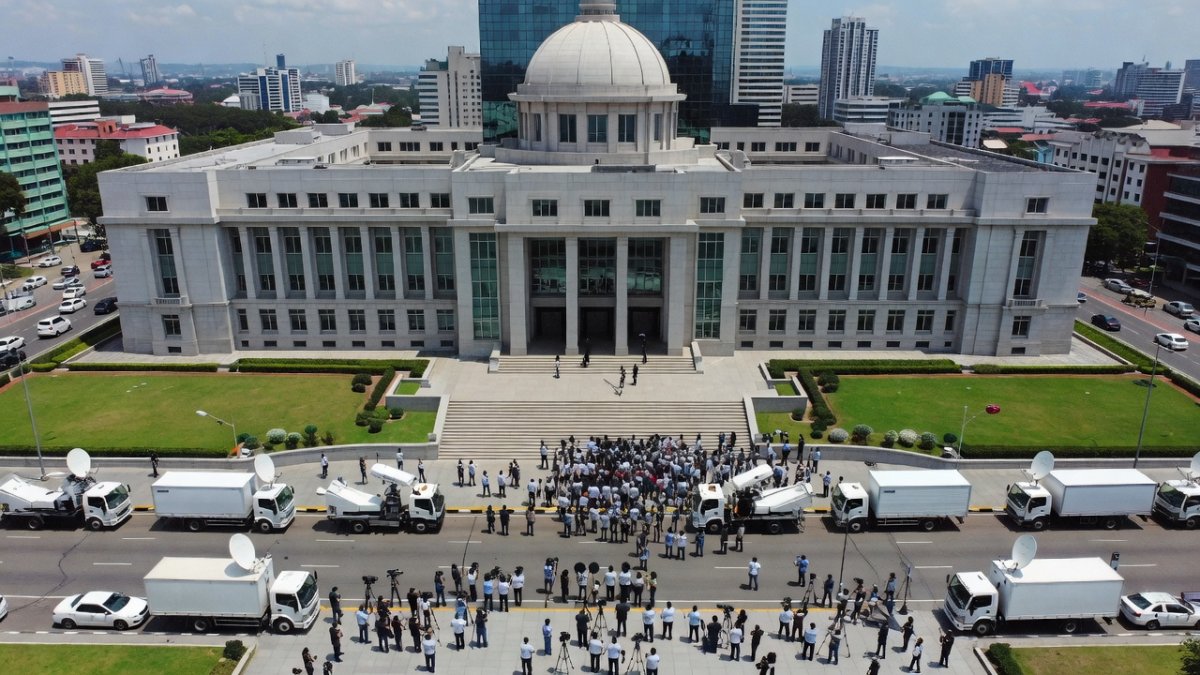
Prosecution Streamlines Witness List at Critical Juncture The House prosecution team moved swiftly on July 14 to dispense with the testimonies of Vice President Sara Duterte's chief of staff, Zuleika Lopez, and House security official Capt. Belinda Bello. Prosecution lawyer Lorna Kapunan told the impeachment court that the witnesses' planned appearances had become redundant and unnecessary after the cross-examination of National Bureau of Investigation Regional Director Jeremy Lotoc.
Prosecution Streamlines Witness List at Critical Juncture
The House prosecution team moved swiftly on July 14 to dispense with the testimonies of Vice President Sara Duterte's chief of staff, Zuleika Lopez, and House security official Capt. Belinda Bello. Prosecution lawyer Lorna Kapunan told the impeachment court that the witnesses' planned appearances had become redundant and unnecessary after the cross-examination of National Bureau of Investigation Regional Director Jeremy Lotoc. "We have said and I have said on behalf of the public prosecutors, your Honors, that we will no longer be presenting Attorney Zuleika Lopez," Kapunan stated. She added that Bello's testimony, which was meant only to corroborate a Nov. 23, 2024, detention center transfer order shown in a video, was likewise no longer required.
Lotoc had already taken the stand since July 13, where both the defense and prosecution, along with several senator-judges, questioned him extensively on the authenticity of 64 documentary exhibits the NBI submitted to the Department of Justice. These exhibits form the core evidence for the articles charging inciting to sedition and grave threats. By streamlining the witness list, the prosecution avoided repetition and allowed the trial to advance directly toward documentary evidence. Lopez had been subpoenaed for July 13 to 14 to address Duterte's November 2024 Zoom press conference remarks, but the shift underscores the prosecution's focus on authenticated records rather than additional live testimony.
NBI Director Confirms Threat Was Real, 'Romanov' Claim Traced to Baste's Rally
NBI Regional Director Jeremy Lotoc testified on July 14 that the bureau had classified "Operation Romanov" as unvalidated information. The NBI's open-source verification traced the earliest known use of the term to a Hakbang ng Maisug rally in Davao City, where Davao City Mayor Baste Duterte publicly invoked the Romanovs in reference to President Ferdinand Marcos Jr. and his family. Lotoc quoted the mayor as saying, "When you go to bed tonight, think about the Romanovs." The Romanovs were Russia's last imperial dynasty, whose members were executed by Bolshevik revolutionaries in 1918 after the dynasty's ouster in 1917. Lotoc also disclosed that the individual who first raised the plot during Duterte's press conference, identified as "Princess Maui," never appeared before the NBI despite the bureau's invitation to explain her warning about "Operation Romanov."
Sen. Alan Peter Cayetano cautioned against rushing to conclusions, noting there is a thin line between a warning and a threat. Sen. Pia Cayetano pressed the prosecution on whether the grave threats charge requires proof that the target actually felt fear. Prosecutor Amando Virgil Ligutan responded by citing Supreme Court rulings that no private complainant is required to establish the crime of grave threat. Presiding officer Sen. Chiz Escudero framed the distinction in Filipino terms: "Warning in Filipino is babala; threat is banta... Ang tanong ni Senator Pia: kailan nagiging banta?" These exchanges clarified the legal thresholds while highlighting how the NBI's findings on the unvalidated "Operation Romanov" reference now anchor the prosecution's case on the grave threats article.
BIR Box and the Battle Over Financial Records
With the witness presentations dispensed with, the impeachment court is scheduled to hear oral arguments on July 15 regarding the "BIR Box," which was returned unopened to the Bureau of Internal Revenue on July 7. The box contains the tax records of Vice President Duterte and her husband, Manases Carpio. The prosecution is now seeking subpoenas for additional bank and Anti-Money Laundering Council records to support the unexplained wealth article of impeachment. This marks a clear pivot from live witness testimony to the examination of financial documents that could directly address allegations of unexplained wealth and graft and corruption.
The shift places renewed emphasis on documentary evidence that could illuminate the misuse of confidential funds article as well. Senator-judges will weigh whether the unopened BIR Box and related financial records provide sufficient basis to advance the case. Because a single guilty finding on any of the four articles is enough for conviction, the financial phase carries significant weight in determining whether the two-thirds vote threshold among the 24 senator-judges can be reached. The prosecution's decision to move quickly into this phase reflects its strategy of relying on authenticated records rather than additional oral testimony.
Trial Timeline: 92 Days, Day 5, and Concerns About Pace
The impeachment trial entered its fifth day on July 14 out of the 92 trial days allocated by the Senate. Vice President Duterte has not attended any session. NBI Director Melvin Matibag successfully requested that his own appearance be moved to July 20, citing an overseas engagement tied to keeping the Philippines off the Financial Action Task Force's money laundering grey list. The court granted the rescheduling, illustrating how external institutional obligations can intersect with the trial calendar.
The four articles of impeachment—grave threats, unexplained wealth, misuse of confidential funds, and graft and corruption—remain before the tribunal. A conviction on any single article requires a two-thirds vote of the senator-judges. The prosecution's streamlining of witnesses on day five signals an intent to accelerate the presentation of documentary evidence within the fixed 92-day framework, even as scheduling adjustments for key officials continue to shape the pace.
Duterte's Absence and Impact on Ordinary Filipinos
Vice President Duterte's continued absence from the proceedings has left many Filipinos in barangays across the country watching the trial unfold through live broadcasts while grappling with the practical effects of the ongoing Marcos-Duterte rift. Local government units that depend on timely budget releases for health services, education programs, and community infrastructure now face uncertainty over how the misuse of confidential funds and graft articles could affect future allocations. In provinces where confidential fund disbursements have historically supported barangay-level projects, the trial's focus on financial records raises direct questions about accountability for resources meant to reach ordinary households.
Overseas Filipino workers sending remittances home are also monitoring peso stability amid the political tension, as any prolonged institutional strain could influence investor confidence and currency movements. Sari-sari store owners and tricycle drivers in Davao and Manila alike report that political uncertainty over the unexplained wealth and confidential funds charges is already affecting daily cash flow and local spending. These ground-level concerns underscore how the Senate's handling of the four articles will shape not only institutional outcomes but also the everyday economic security of Filipino families who rely on stable local governance.
Historic Precedent and the Test of Philippine Institutions
The current proceedings test the strength of Philippine democratic institutions in ways that echo the legacy of EDSA, where public accountability and checks on power were reclaimed through constitutional processes. Congress, the Senate as impeachment court, and the Supreme Court each play defined roles in ensuring that the four articles receive thorough examination under the two-thirds conviction standard. The live broadcasts have turned the trial into a real-time civic education lesson for younger Filipinos, who are witnessing how evidence authentication, witness management, and financial subpoenas operate within the constitutional framework.
At the heart of the process lies the bayanihan spirit that has long guided Filipino communities through political transitions. Public trust now hinges on whether the Senate can deliver a fair, evidence-based resolution within the 92-day schedule while addressing the grave threats, unexplained wealth, misuse of confidential funds, and graft and corruption articles. The outcome will influence how future generations view the capacity of these institutions to uphold accountability without fracturing the social fabric that binds barangays, cities, and the nation together.
By Bella Reyes, Staff WriterThis article was produced with AI-assisted research and editorial support. Reporting is based on sources cited in the article.
What's Your Reaction?
 Like
0
Like
0
 Dislike
0
Dislike
0
 Love
0
Love
0
 Funny
0
Funny
0
 Wow
0
Wow
0
 Sad
0
Sad
0
 Angry
0
Angry
0

Philippines/Southeast Asia Correspondent at Global1.News. Manila-based journalist covering Philippine politics, environment, maritime security, and social issues. Passionate about marine conservation and the communities protecting the Philippines' natural heritage.













Comments (0)