
Israel-Lebanon Rome Talks Face Test Amid Iran Tensions
US-Iran Hostilities Frame the Rome Negotiations The Israeli-Lebanese talks in Rome unfold against renewed US-Iran tensions centered on the Strait of Hormuz. On June 17, Iran secured a ceasefire demand for Lebanon as part of its memorandum of understanding with Washington, yet clashes have intensified since. This linkage turns the Rome venue into more than a bilateral forum; it tests whether Washington can extract concessions from Tehran’s Lebanese proxy while managing energy-route security.
US-Iran Hostilities Frame the Rome Negotiations
The Israeli-Lebanese talks in Rome unfold against renewed US-Iran tensions centered on the Strait of Hormuz. On June 17, Iran secured a ceasefire demand for Lebanon as part of its memorandum of understanding with Washington, yet clashes have intensified since. This linkage turns the Rome venue into more than a bilateral forum; it tests whether Washington can extract concessions from Tehran’s Lebanese proxy while managing energy-route security.
Lebanon’s 4,300 deaths since March 2026, according to Lebanese authorities, and the displacement of over one million people illustrate the human cost of this proxy dynamic. Israel reports 32 soldiers and four civilians killed by Hezbollah, underscoring the mutual attrition that both sides now seek to cap through US mediation.
US Central Command’s coordination role in implementation adds another layer. A US military delegation visited Lebanon over the weekend preceding the July 14 round, signaling that any withdrawal timetable will be monitored by American officers rather than solely diplomatic channels.
President Joseph Aoun’s instructions to his delegation reflect Beirut’s awareness that Iranian leverage remains decisive. By demanding immediate Israeli withdrawal from pilot zones before further talks, Aoun seeks to test whether Washington can deliver Israeli movement without first neutralizing Hezbollah’s arsenal.
The broader Hormuz context raises the stakes. Renewed US-Iran hostilities threaten Gulf shipping lanes, giving Tehran additional incentive to keep Hezbollah armed as a deterrent. Rome therefore becomes a secondary arena for managing escalation that originates in the Gulf.
Analysts note that any framework ignoring this linkage risks rapid unraveling once US attention returns to Hormuz patrols. The 6th round thus serves as a barometer for whether limited de-escalation in Lebanon can survive renewed great-power friction.
The Rome Talks: Venue, Delegations and Italian Ambitions
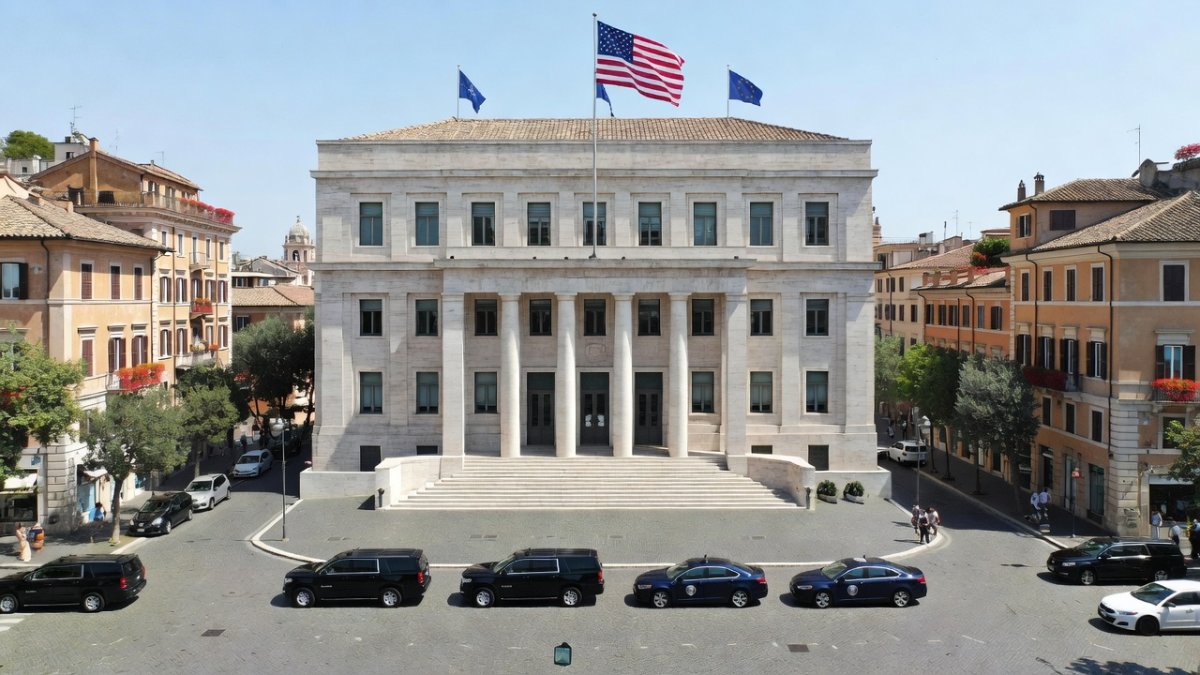
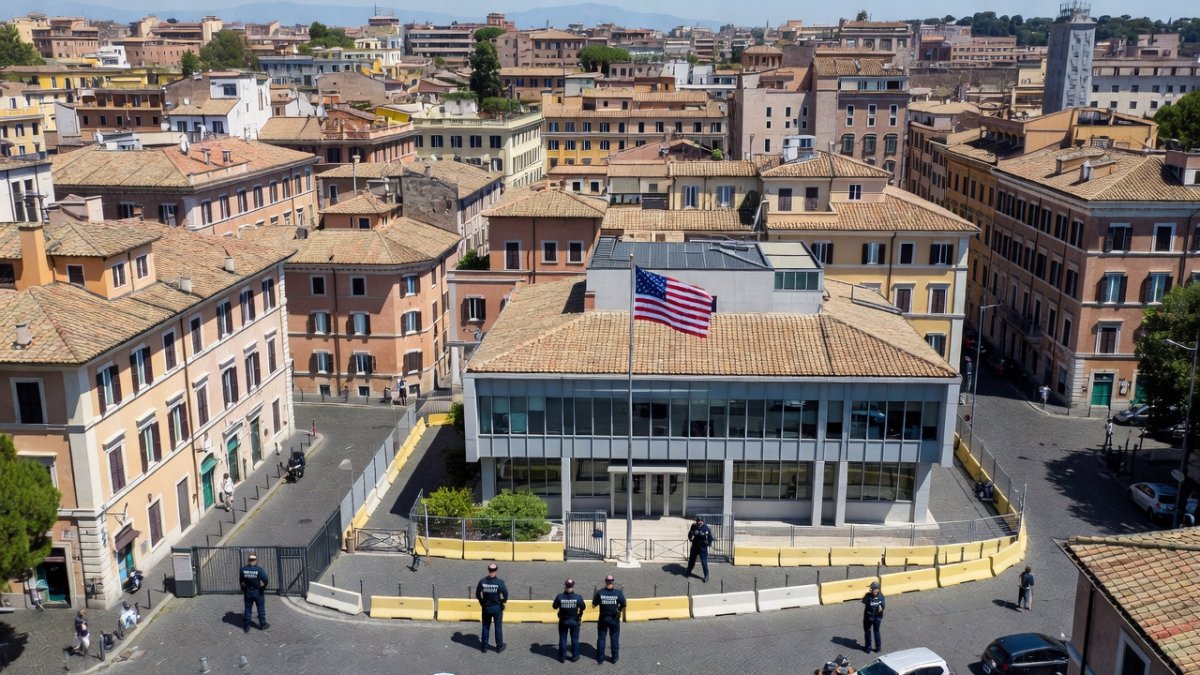
On July 14, 2026, Israeli and Lebanese delegations convened at the US Embassy in Rome for the sixth round of US-mediated negotiations. The choice of venue followed five earlier sessions in Washington that produced the June 26 framework agreement. Italy’s foreign minister, Antonio Tajani, framed the shift by stating that “Rome can serve as the venue… in this way, our capital becomes a capital of peace.”
The US Embassy setting underscores Washington’s continued control over logistics and security guarantees. Lebanese and Israeli teams operate under American facilitation, with CENTCOM officers present to discuss implementation mechanics rather than political language alone.
Italian diplomacy seeks visibility without ownership. Rome offers neutral ground that avoids the domestic political sensitivities attached to Washington or Beirut, yet Italy lacks the leverage to enforce outcomes if either party walks away.
Atmosphere inside the embassy remains guarded. Lebanese sources describe Israeli counterparts reiterating that troops will stay in the 10-kilometer buffer zone along the entire border as long as Hezbollah remains armed. This precondition shapes every agenda item.
US military personnel who visited Lebanon the previous weekend briefed both sides on monitoring arrangements for the two pilot zones. These briefings focus on verification protocols rather than political concessions, reflecting the technical emphasis of the current round.
Karim Bitar of Sciences Po Paris has assessed that “the chances of a breakthrough in Rome are quite limited,” citing the absence of Hezbollah representation and the gap between Aoun’s instructions and Israeli red lines.
The venue therefore functions as a controlled environment for testing incremental steps while the larger US-Iran confrontation continues elsewhere.
The June 26 Framework Agreement and Its Pilot Zones
The framework signed on June 26 after five Washington rounds outlines a sequenced process: Israeli withdrawal from southern Lebanon, Hezbollah disarmament, and deployment of the Lebanese army to the border area. Two pilot zones were identified as the initial testing ground for this sequence.
President Joseph Aoun directed his delegation to insist on immediate Israeli withdrawal from these zones before any discussion of subsequent phases. This demand reflects Beirut’s concern that partial Israeli presence could become permanent without enforceable timelines.
Israeli officials counter that withdrawal remains conditional. Orna Mizrahi of the Institute for National Security Studies in Tel Aviv stated that Israel seeks withdrawal “on the condition that there will be no presence of Hezbollah in the areas that Israel is withdrawing from.” The pilot zones therefore serve as both opportunity and trap.
The 10-kilometer buffer zone currently occupied by Israeli forces spans the entire border. Any pilot-zone withdrawal would require Hezbollah to vacate positions first, creating a verification challenge that US military observers are now tasked with addressing.
Lebanese army deployment capacity remains limited. Years of economic crisis have degraded equipment and training, raising questions about whether Beirut can fill the vacuum left by Israeli withdrawal without renewed Hezbollah entrenchment.
The framework’s sequencing therefore hinges on simultaneous movement that neither side trusts the other to execute. Rome’s sixth round tests whether external monitoring can bridge this trust deficit.
Failure to advance the pilot zones risks freezing the current lines of control, turning a temporary buffer into a de facto border adjustment.
Hezbollah’s Rejection and Lebanon’s Dual-Power Reality
Hezbollah has rejected the June 26 framework outright and refuses to discuss disarmament. This stance stems from the group’s assessment that its arsenal constitutes the only credible deterrent against Israeli re-entry into Lebanese territory.
Lebanon’s dual-power structure complicates implementation. While President Aoun leads the official delegation, Hezbollah maintains independent command over southern strongholds. Any agreement signed in Rome lacks enforcement mechanisms inside areas under Hezbollah control.
The disarmament paradox is stark. Israel conditions withdrawal on the absence of Hezbollah fighters, yet Hezbollah views disarmament as surrender that would invite future Israeli operations. This circular logic blocks progress on the pilot zones.
Lebanese casualties exceeding 4,300 since March 2026 have not shifted Hezbollah’s calculus. The group calculates that sustained attrition, combined with Iranian backing, preserves its leverage more effectively than compliance with the framework.
US military coordination efforts face the same structural barrier. CENTCOM officers can verify Lebanese army positions, but they cannot compel Hezbollah units to relocate or surrender weapons without political agreement from the group’s leadership.
The rejection therefore exposes the limits of US-mediated talks that exclude the actor controlling the territory in question. Rome may produce diplomatic language, yet implementation remains hostage to Hezbollah consent.
Second-order effects include further erosion of Lebanese state authority, as the army appears unable to assert monopoly on force even with international backing.
US-Iran Escalation and the Strait of Hormuz Shadow
Renewed US-Iran hostilities over the Strait of Hormuz directly constrain the Rome talks. Tehran secured Lebanese ceasefire language in the June 17 memorandum, yet continues to view Hezbollah’s arsenal as insurance against US pressure on Gulf shipping lanes.
Any Israeli-Lebanese breakthrough risks being subordinated to Hormuz calculations. If Washington escalates naval activity near the strait, Tehran may instruct Hezbollah to maintain or expand operations in southern Lebanon to create a second front.
The 4,000-plus Lebanese killed and one million displaced since March already reflect this proxy dynamic. Further escalation tied to Hormuz would multiply these figures without resolving the underlying territorial dispute.
US Central Command’s dual role—monitoring Lebanon implementation while preparing Hormuz contingencies—creates divided attention. Resources allocated to verification in the pilot zones could be redirected if shipping attacks intensify.
Iran’s June 17 demand for a Lebanese ceasefire was therefore tactical rather than strategic. It aimed to reduce immediate pressure while preserving Hezbollah’s long-term deterrent value against broader US-Iran confrontation.
Lebanese negotiators in Rome operate with limited autonomy. Any concession on disarmament that appears to weaken Iran’s regional posture faces swift rejection from Tehran, regardless of Italian or American facilitation.
The Hormuz context thus renders the Rome round a holding operation rather than a decisive breakthrough venue.
Strategic Calculus Across Five Actors
Israel seeks withdrawal only after verified Hezbollah absence from the pilot zones, preserving the 10-kilometer buffer as leverage. Its calculus prioritizes security over diplomatic optics, accepting prolonged presence if disarmament stalls.
Lebanon under President Aoun wants immediate Israeli withdrawal from the pilot zones to demonstrate state authority and begin army deployment. Beirut’s leverage is weak, resting mainly on US interest in regional de-escalation.
Hezbollah calculates that retaining arms preserves both deterrence and domestic political influence. Disarmament would eliminate its primary source of power, making rejection the rational choice absent ironclad guarantees against future Israeli action.
Iran treats the Lebanon file as one element within its Hormuz strategy. It supports Hezbollah rejectionism to maintain pressure on Washington while avoiding direct confrontation that could close the strait entirely.
The United States wants incremental progress that reduces Lebanese casualties and stabilizes the border without triggering wider war. CENTCOM’s presence signals commitment to verification, yet Washington lacks tools to compel Hezbollah compliance.
Second-order effects include accelerated Lebanese state erosion if talks fail, potential spillover into Israeli domestic politics, and Iranian consolidation of influence across the Levant if the framework collapses.
Each actor’s leverage is asymmetric: military force for Israel and Hezbollah, diplomatic cover for the US, and veto power for Iran. Rome tests whether these asymmetries can produce sequenced movement or merely prolong stalemate.
Regional Implications of Success or Failure
Success in Rome would open limited space for Arab-Israeli normalization talks by demonstrating that border disputes can be managed without full-scale war. Failure, however, would reinforce the perception that Hezbollah remains the decisive veto player in Lebanese affairs.
Stability outlook remains poor. The 10-kilometer buffer zone would harden into a semi-permanent feature, displacing additional Lebanese civilians and sustaining low-level exchanges that have already killed over 4,300 people.
Normalization prospects with Gulf states would suffer. Sunni Arab capitals watching Hezbollah’s rejectionism would see little incentive to deepen ties with Israel while Iranian proxies retain operational freedom in Lebanon.
Turkish foreign policy could gain maneuvering room. Ankara has positioned itself as an alternative mediator in past Lebanese crises; prolonged Rome deadlock might invite Turkish offers framed as more inclusive of Hezbollah concerns.
Energy markets would feel secondary effects. Renewed border fighting risks disrupting Lebanese gas exploration plans and increasing insurance costs for eastern Mediterranean shipping already pressured by Hormuz tensions.
Great-power competition would intensify. Russia and China could exploit US diplomatic frustration by offering alternative security arrangements to Beirut, further complicating Washington’s regional posture.
Ultimately, the Rome talks reveal the structural limits of US-mediated agreements that exclude Iran’s most capable regional partner. Without addressing Hezbollah’s rejection directly, the framework risks becoming another frozen conflict in an already crowded Middle East landscape.
This article was produced with AI-assisted research and editorial support. Reporting is based on sources cited in the article.
What's Your Reaction?
 Like
0
Like
0
 Dislike
0
Dislike
0
 Love
0
Love
0
 Funny
0
Funny
0
 Wow
0
Wow
0
 Sad
0
Sad
0
 Angry
0
Angry
0
Middle East Correspondent at Global1.News. Based in Beirut, covering politics, conflict, energy, and society across the Middle East. Brings context and depth to a region often reduced to headlines.










Comments (0)