
Gaza Bookseller Rebuilds Library from Rubble in Act of Cultural Resistance
In a recent Middle East Eye report, the story of Mohamed Saad unfolds as he sifts through the ruins of his former life in Beit Lahia, pulling books from the debris left by Israeli attacks. The 58-year-old bookseller, who has spent 35 years in the trade, now operates a modest roadside tent bookstore in Deir el-Balah after losing his home, his large bookstore, and his son.
In a recent Middle East Eye report, the story of Mohamed Saad unfolds as he sifts through the ruins of his former life in Beit Lahia, pulling books from the debris left by Israeli attacks. The 58-year-old bookseller, who has spent 35 years in the trade, now operates a modest roadside tent bookstore in Deir el-Balah after losing his home, his large bookstore, and his son.
Saad's efforts highlight the determination to maintain access to literature despite widespread destruction of cultural sites across Gaza.
Recovering Treasures from the Rubble
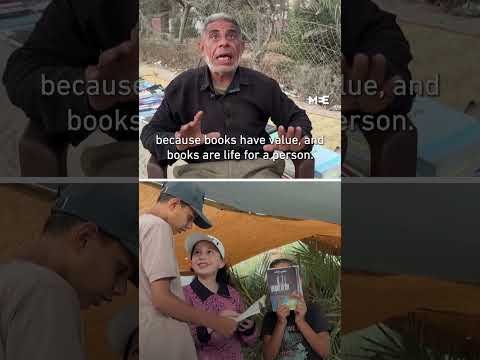
Mohammed Saad returned repeatedly to the site of his destroyed home and bookstore in Beit Lahia. He described the moment when "the shooting was right above our heads, and I was grabbing books because books are precious." Over weeks, he salvaged volumes he had collected across decades, carrying them by hand amid ongoing strikes.
Before the war, Saad sold books outside the Islamic University gate and later in Gaza City's old Firas market. He eventually opened a larger bookstore in Beit Lahia, building a collection that reflected years of trade in Palestinian literature and educational materials. The loss of his physical stock and family member marked a profound rupture in his personal and professional life.
A Tent Becomes a Sanctuary for Stories
In Deir el-Balah, Saad has arranged the rescued books inside a roadside tent. Without proper shelves or climate control, the volumes remain exposed to heat, dust, and weather. He continues to add to the collection by purchasing books from residents who might otherwise discard them.
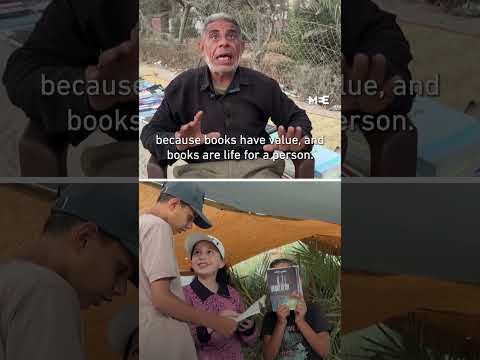
Saad has publicly appealed to people across Gaza not to burn books for fuel or disposal. He offers to buy any volumes they no longer need, emphasizing their enduring worth. One of his repeated statements captures this conviction: "Books have value, and books are life for a person."
Daily operations involve arranging titles on makeshift surfaces while customers, many of them displaced families, browse under the tent fabric. The setup provides a small point of continuity for readers seeking familiar texts amid displacement.
The Human Cost of Lost Libraries
Israeli attacks have destroyed numerous libraries and bookstores throughout Gaza, erasing physical repositories of knowledge built over generations. Saad's experience mirrors that of many residents who have seen educational and cultural infrastructure reduced to rubble.
The impact reaches beyond individual loss. Students and families in central Gaza now travel to the tent in Deir el-Balah for access to reading material. The absence of formal library buildings forces reliance on such informal efforts to sustain literacy and intellectual engagement.
Saad's 35 years in the book trade give him direct insight into how reading shaped daily life in northern Gaza before the current war. He notes that the destruction has severed connections to those routines for thousands of people.
Appeals to Preserve Knowledge Amid Crisis
Saad's calls to residents reflect a practical response to the risk of further loss. By offering to purchase books rather than allowing them to be burned, he seeks to keep printed material in circulation within the community.
His tent operation functions as both a commercial space and a reminder of pre-war cultural activity. Customers include children and adults who once visited larger bookstores in Beit Lahia or Gaza City. The limited stock still allows some continuity in access to titles on history, literature, and education.
Conditions in the tent underscore the material challenges. Dust accumulates on covers, and temperature fluctuations affect paper quality. Saad maintains the collection through constant attention, viewing each volume as part of a larger effort to protect Palestinian written heritage.
Echoes of Resistance: Other Cultural Efforts
Similar initiatives have emerged elsewhere in Gaza. The Phoenix Library in Gaza City opened in April 2026, also built from salvaged books. These projects operate independently but share the goal of rebuilding spaces for reading after the destruction of established institutions.
Such efforts connect to longer patterns of cultural preservation under occupation and conflict. Saad's work in Deir el-Balah contributes to this pattern by keeping books available even when formal infrastructure no longer exists.
Residents who visit the tent often speak of the role literature played in their earlier lives in Beit Lahia and other northern areas. The tent provides a physical link to those experiences while adapting to current displacement.
A Vision for Rebuilding Community Knowledge
Saad has expressed the hope of eventually establishing a proper library for his community. He continues to collect volumes with this longer-term aim in mind, despite immediate constraints of space and resources.
The tent bookstore in Deir el-Balah stands as one response to the broader erasure of cultural sites. By recovering and displaying books that survived the destruction of his Beit Lahia property, Saad keeps a thread of literary life intact for those who remain in central Gaza.
His story illustrates how individuals maintain practices of reading and collection when larger systems have been dismantled. The emphasis on "books are life" guides his daily decisions about what to save and how to present it to others.
By Fatima Al-Rashid, Staff WriterThis article was produced with AI-assisted research and editorial support. Reporting is based on sources cited in the article.
What's Your Reaction?
 Like
0
Like
0
 Dislike
0
Dislike
0
 Love
0
Love
0
 Funny
0
Funny
0
 Wow
0
Wow
0
 Sad
0
Sad
0
 Angry
0
Angry
0
Gulf/MENA Correspondent at Global1.News. Based in Doha, covering Gulf politics, energy markets, diplomacy, and development across the Middle East and North Africa. Tracks the economic transformation of the Gulf states.












Comments (0)