
Typhoon Bavi Threatens East Asia with Record-Scale Rainfall and Regional Disruptions
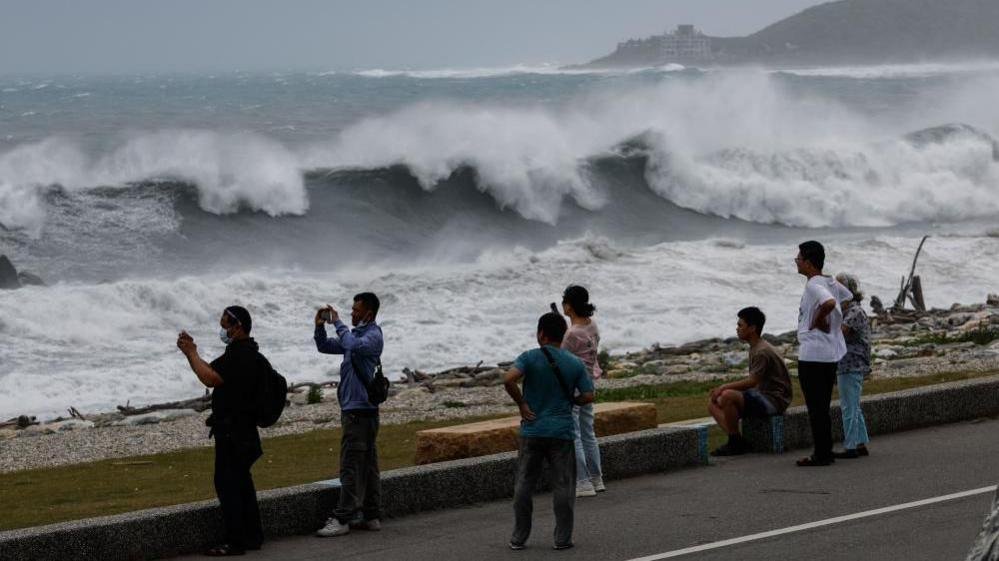
The Scale and Trajectory of Typhoon Bavi Typhoon Bavi stands out as one of the largest weather systems observed in the western Pacific in recent years, measuring approximately 1,000 kilometres across at its widest point. This immense size, comparable to the width of France, allows the storm to draw substantial moisture and energy from the ocean, setting the stage for prolonged and widespread precipitation across multiple territories. Forecasters anticipate that Bavi will first affect Taiwan's no
The Scale and Trajectory of Typhoon Bavi
Typhoon Bavi stands out as one of the largest weather systems observed in the western Pacific in recent years, measuring approximately 1,000 kilometres across at its widest point. This immense size, comparable to the width of France, allows the storm to draw substantial moisture and energy from the ocean, setting the stage for prolonged and widespread precipitation across multiple territories. Forecasters anticipate that Bavi will first affect Taiwan's northern and eastern regions before brushing remote Japanese islands and then striking south-eastern China.
The storm's path across the Pacific has prompted authorities to issue increasingly urgent advisories as it approaches land. Its arrival in south-eastern China is projected for Saturday, with some models indicating the possibility of a second landfall if remnants track northward. Such dual-impact scenarios underscore the need for coordinated monitoring across provincial boundaries, particularly as outer rainbands extend influence far beyond the initial point of contact.
Human and Environmental Toll in the Philippines
Landslides triggered by powerful preceding storms have already claimed at least 15 lives on the Philippine island of Mindanao, where families were buried overnight beneath debris. Rescue teams continue to search for missing individuals amid difficult terrain, highlighting the secondary hazards that often follow intense rainfall in mountainous areas. These events serve as a stark reminder of how quickly tropical systems can overwhelm local infrastructure and communities.
The southern Philippines has faced repeated exposure to severe weather in recent seasons, amplifying vulnerabilities in rural districts. With Bavi now advancing, officials remain alert to the risk of additional landslides should outer bands deliver further heavy precipitation. Evacuation protocols and early-warning systems are being tested once again in regions still recovering from earlier incidents.
Taiwan's Preparations and Historical Context
Taiwanese authorities have warned that Bavi could deliver up to one metre of rainfall in vulnerable catchments, a volume capable of triggering flash floods and widespread landslides. The Taiwan Central Weather Administration has described the system as the largest storm by size to approach the island since 1987, prompting extensive mobilisation of resources. Approximately 29,000 soldiers have been placed on standby by the island defence ministry to support relief operations should conditions deteriorate rapidly.
Residents have responded by clearing supermarket shelves of essential supplies, while schools have suspended classes and numerous flights have been cancelled. Farmers worked urgently on Friday to harvest or shield crops before the weather deteriorated, and fishermen secured vessels in harbours. A 60-year-old fisherman, Chen Ming-hui, noted that calm conditions preceding the storm can mask its potential ferocity, urging caution among coastal communities.
China's Southeastern Provinces on High Alert
China has issued warnings of significant impacts as Bavi is expected to make landfall in Fujian province. Provincial governments are distributing thousands of sandbags to flood-prone neighbourhoods and coordinating with local authorities to protect critical infrastructure. The storm's large circulation means that even areas distant from the centre could experience prolonged heavy rain and strong winds.
Agricultural losses remain a primary concern, given the timing of the typhoon during key harvest periods. Farmers across affected zones have accelerated protective measures for remaining crops, while livestock operations face heightened risks from flooding. These preparations reflect broader efforts to safeguard food supplies amid recurring extreme weather events.
Potential Northward Progression and Northern Vulnerabilities
Ma Jun, director of the China Institute of Public and Environmental Affairs, has noted that Bavi's size and energy could allow remnants and outer rainbands to track from Jiangsu and Anhui provinces toward the Bohai Sea region. Northern provinces, which encounter typhoons less frequently than southern counterparts, have been advised to intensify readiness measures. Limited historical exposure may leave some localities underprepared for the volume of rainfall projected.
Forecasts suggesting a possible second landfall in China further complicate planning for inland provinces. Authorities are therefore expanding coordination between coastal and interior regions to manage cascading effects such as river swelling and reservoir management. These steps aim to reduce the likelihood of secondary disasters in areas less accustomed to tropical cyclone impacts.
Aftermath of Typhoon Maysak and Cumulative Strain
Parts of southern China are still recovering from Typhoon Maysak, which struck earlier in the week and left at least 39 people dead. More than 130,000 residents were evacuated, primarily from the Guangxi region, while extensive damage to livestock and agricultural land compounded economic pressures. The storm also generated two rare tornadoes in central Hubei province, an unusual phenomenon that added to the complexity of response operations.
The successive arrival of Bavi risks overwhelming already stretched emergency services and recovery teams. Agricultural losses from Maysak have yet to be fully assessed, and additional rainfall could further degrade soil conditions and irrigation systems. Policymakers are therefore prioritising rapid damage assessments to inform resource allocation for the new threat.
Economic and Supply-Chain Implications
Disruptions to maritime traffic and aviation have already begun to ripple through regional supply chains, with cancelled flights affecting both passenger movement and cargo logistics. Ports in Taiwan and south-eastern China are implementing precautionary closures, potentially delaying shipments of electronics, agricultural products, and industrial components. Such interruptions carry second-order effects for manufacturing schedules across East Asia.
Retail sectors have witnessed sharp spikes in demand for emergency supplies, illustrating the immediate economic footprint of public preparedness. While these purchases support short-term resilience, they also strain distribution networks already adjusting to weather-related delays. Long-term agricultural shortfalls could influence commodity prices if harvests in multiple provinces suffer simultaneous setbacks.
Strategic and Regional Stability Considerations
The approach of Bavi intersects with ongoing regional dynamics, as Taiwan's deployment of defence ministry personnel for relief operations demonstrates the dual-use nature of military assets in disaster response. Cross-strait coordination on weather monitoring, though limited, remains relevant when storms threaten shared maritime zones. Effective management of such events can influence perceptions of governance capacity on both sides.
China's emphasis on strengthening northern provincial preparedness aligns with broader domestic priorities of enhancing resilience under the 14th Five-Year Plan framework. By addressing gaps in typhoon experience, authorities seek to protect economic corridors extending toward the Bohai Sea. These measures also support foreign policy objectives of demonstrating reliable disaster management to neighbouring states.
Second-order effects may include shifts in regional insurance markets and renewed focus on climate-adaptation financing. Neighbouring economies will watch how Fujian and adjacent provinces absorb the impact, as lessons learned could inform future joint early-warning initiatives. Ultimately, Bavi's passage offers a test of institutional coordination across diverse administrative systems in East Asia.
By Prof. Marcus Chen, Staff WriterThis article was produced with AI-assisted research and editorial support. Reporting is based on sources cited in the article.
What's Your Reaction?
 Like
0
Like
0
 Dislike
0
Dislike
0
 Love
0
Love
0
 Funny
0
Funny
0
 Wow
0
Wow
0
 Sad
0
Sad
0
 Angry
0
Angry
0

World Politics Analyst at Global1.News. Based in Beijing, covering US-China relations, global trade, and geopolitical strategy. Brings deep analytical perspective to the power dynamics shaping international affairs.















Comments (0)