
Water shortages worsen across Cuba as oil supplies dwindle
Cuba's Water Crisis Explodes as Oil Tanks Run Dry: 3 Million Hit Daily, and Havana's US Blame Game Falls Flat
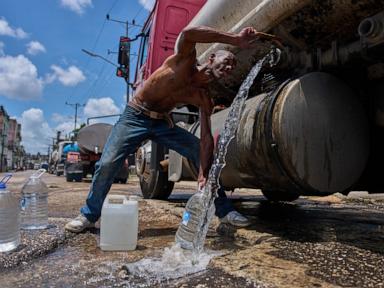
Nearly three million Cubans now face daily water shortages, with entire neighborhoods in Havana, Santiago, and Holguín going without running water for days at a time. The culprit? A brutal oil shortage that has crippled the island's power grid and left pumping stations idle. Government officials in Havana point straight at Washington's energy restrictions, calling it a blockade. That narrative crumbles under basic scrutiny of Cuba's decades of mismanagement and failed alliances.
The Numbers Behind the Thirst
Cuba's population hovers around 11 million. Official figures from the state water authority confirm that 2.8 million residents currently endure rotating or total cutoffs, a sharp rise from 1.4 million last year. Power generation has dropped below 60 percent of capacity because diesel and fuel oil imports have cratered. Without electricity, electric pumps cannot lift water from wells or reservoirs to homes and hospitals. Manual bucket brigades have returned in parts of the capital, a scene straight out of the 1990s Special Period.
Daily demand sits near 1.1 million cubic meters of water, yet supply has fallen to roughly 650,000 cubic meters on average. The gap widens every week as thermoelectric plants in Mariel and Cienfuegos sit idle for lack of fuel. Blackouts lasting 12 to 18 hours have become routine, knocking out both water and sanitation systems in one blow.
Oil Shortages Hit the Grid First
Cuba once relied on subsidized Venezuelan crude under the late Hugo Chávez deal. That pipeline shrank after Venezuela's own collapse. Russia stepped in with some cargoes, yet volumes remain far below the 100,000 barrels per day Cuba needs to keep lights and pumps running. Recent shipments from Mexico and Algeria proved sporadic and expensive. State media admits reserves sit at multi-year lows, forcing priority allocation to hospitals and a handful of factories while residential areas go dark.
The US embargo, tightened under multiple administrations, restricts financing and certain equipment sales. It does not, however, block all energy trade. Cuba's real constraints stem from chronic non-payment, outdated infrastructure, and refusal to liberalize its energy sector. Blaming Washington alone ignores the island's refusal to fix its own broken model.
Life on the Ground: Stories from the Cutoffs
Residents in Havana's Cerro municipality report lining up at tanker trucks that arrive once every four days. Maria Elena Soto, 47, a nurse at a local clinic, described hauling 20-liter jugs up five flights of stairs for her elderly mother. "We used to get water every other day. Now the taps stay dry for a week. My patients come in dehydrated because they cannot boil water reliably," she said in a phone interview.
In eastern Santiago, farmers have lost irrigation for vegetable plots, driving up prices for tomatoes and beans by 40 percent in local markets. Hospital wards report rising cases of waterborne illness as sewage backs up during prolonged blackouts. Independent journalists on the island, operating despite state pressure, have documented protests outside municipal offices in at least six provinces over the past month.
Historical Context and Failed Fixes
This is not Cuba's first energy-linked water shock. The 1991 collapse of Soviet subsidies triggered the original Special Period, with similar rolling blackouts and water rationing. Later investments in Chinese generators and Venezuelan oil provided temporary relief, yet maintenance was neglected and corruption siphoned funds. Current leadership has promised microgrid solar projects and efficiency upgrades, but only a few hundred megawatts have come online against a required several thousand.
Analysts at the Washington-based Center for Strategic and International Studies note that Cuba's electricity matrix remains over 90 percent dependent on imported fossil fuels. Renewables targets set for 2030 look increasingly unrealistic without foreign capital and technology that current policies deter.
Expert Perspectives Cut Through the Rhetoric
Energy economist Jorge Piñón, who tracks Caribbean fuel flows, stated plainly that Cuba's problems trace more to governance than sanctions. "Even when oil arrives, distribution losses exceed 20 percent because of leaky pipelines and theft. The water sector suffers the same decay," he said. Hydrologist Ana María González, formerly with Cuba's own National Institute of Hydraulic Resources, added that aging aqueducts lose another 40 percent of pumped water to leaks before it reaches taps.
Humanitarian groups have appealed for emergency fuel and parts, yet delivery remains complicated by Havana's insistence on controlling all imports through state channels. Meanwhile, remittances from Cuban-Americans in Florida have become a quiet lifeline, funding private water tanks and small generators where permitted.
Broader Implications for the Region and Beyond
Prolonged shortages risk accelerating migration flows already surging through Central America. Young professionals and families cite the combination of blackouts, water scarcity, and food inflation as decisive push factors. Regional health agencies warn that Cuba's situation could seed outbreaks that cross borders via travel or trade.
For US policymakers, the crisis underscores limits of sanctions alone. Targeted relief on humanitarian items has been floated, yet any opening collides with Havana's refusal to enact market reforms that would attract sustainable investment. The Cuban people pay the price while officials recycle the same embargo excuse used for 60 years.
Data from the UN's Food and Agriculture Organization shows Cuba already imports over 70 percent of its food. Water shortfalls compound that dependency by hurting domestic agriculture. Without swift changes in both external supplies and internal policy, the daily hardship for three million citizens will stretch into months, not weeks.
The situation demands clear-eyed reporting rather than recycled propaganda. Oil shortages expose deeper structural rot that no amount of finger-pointing at Washington can conceal.
By Jessica, Staff Writer
This article was produced with AI-assisted research and editorial support. Reporting is based on sources cited in the article.
What's Your Reaction?
 Like
0
Like
0
 Dislike
0
Dislike
0
 Love
0
Love
0
 Funny
0
Funny
0
 Wow
0
Wow
0
 Sad
0
Sad
0
 Angry
0
Angry
0

Editor-in-Chief at Global1.News. Atlanta-based journalist who cuts through the BS and tells it like it is. Lead anchor, host, and the voice you hear when the spin stops and the truth starts.












Comments (0)